Soto Daniela C, Uribe-Salazar José M, Kaya Gulhan, Valdarrago Ricardo, Sekar Aarthi, Haghani Nicholas K, Hino Keiko, La Gabriana N, Mariano Natasha Ann F, Ingamells Cole, Baraban Aidan E, Turner Tychele N, Green Eric D, Simó Sergi, Quon Gerald, Andrés Aida M, Dennis Megan Y
Department of Biochemistry & Molecular Medicine, MIND Institute, University of California,Davis, CA 95616, USA.
Genome Center, University of California, Davis, CA 95616, USA.
bioRxiv. 2024 Sep 26:2024.09.26.615256. doi: 10.1101/2024.09.26.615256.
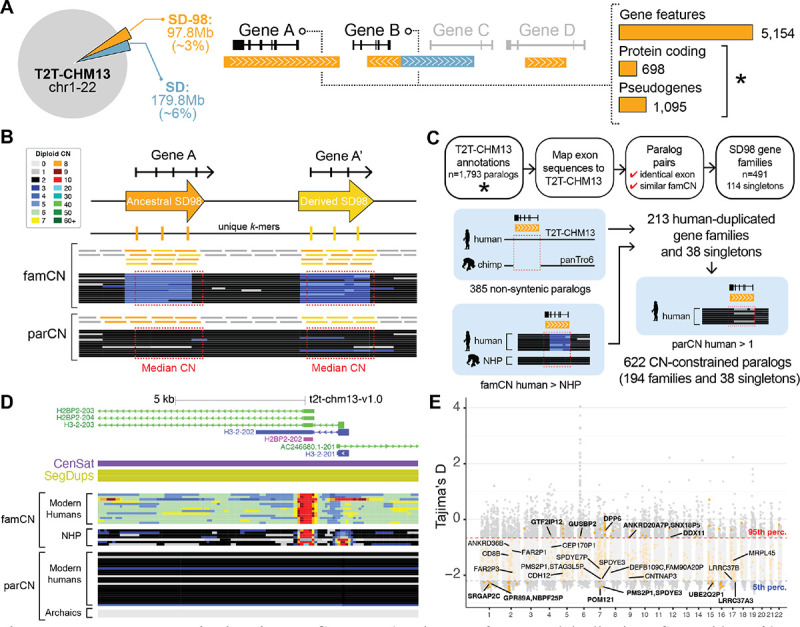
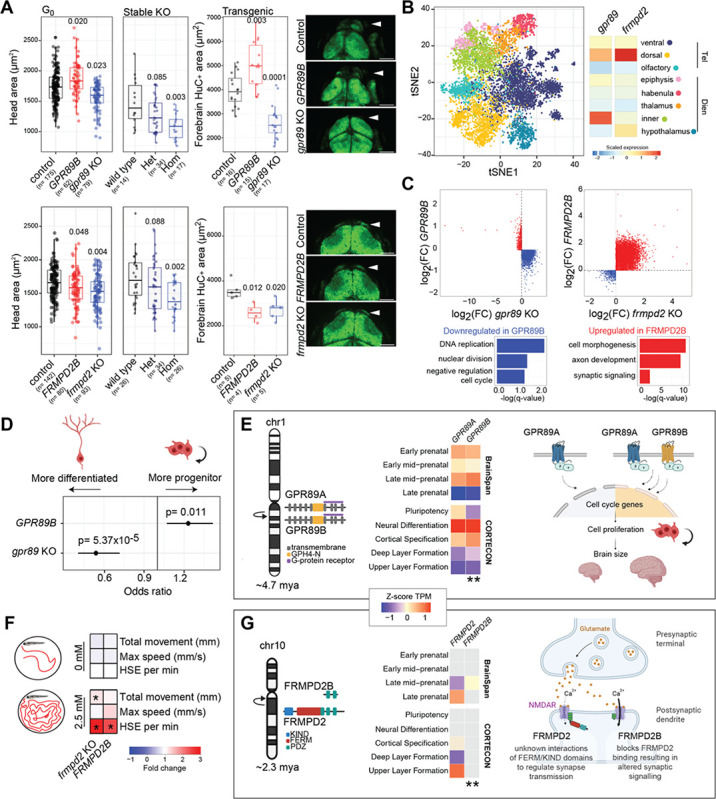
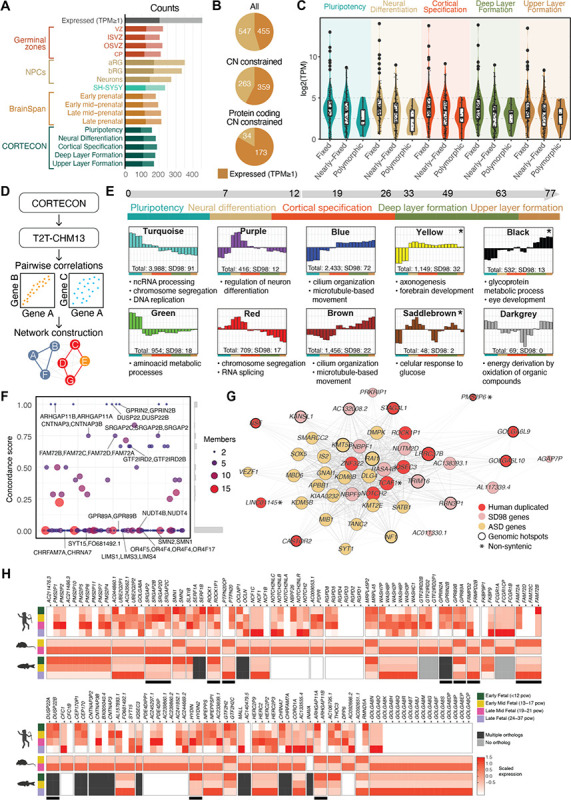
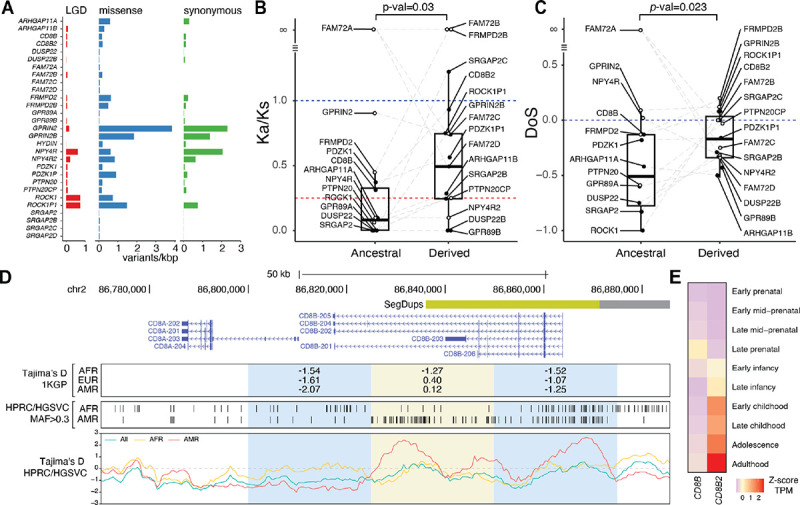
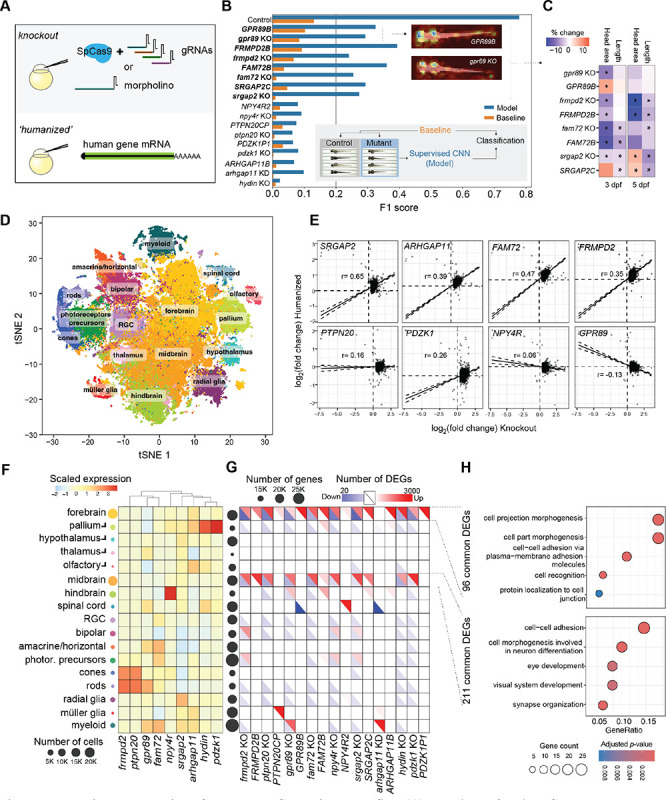
Genomic drivers of human-specific neurological traits remain largely undiscovered. Duplicated genes expanded uniquely in the human lineage likely contributed to brain evolution, including the increased complexity of synaptic connections between neurons and the dramatic expansion of the neocortex. Discovering duplicate genes is challenging because the similarity of paralogs makes them prone to sequence-assembly errors. To mitigate this issue, we analyzed a complete telomere-to-telomere human genome sequence (T2T-CHM13) and identified 213 duplicated gene families likely containing human-specific paralogs (>98% identity). Positing that genes important in universal human brain features should exist with at least one copy in all modern humans and exhibit expression in the brain, we narrowed in on 362 paralogs with at least one copy across thousands of ancestrally diverse genomes and present in human brain transcriptomes. Of these, 38 paralogs co-express in gene modules enriched for autism-associated genes and potentially contribute to human language and cognition. We narrowed in on 13 duplicate gene families with human-specific paralogs that are fixed among modern humans and show convincing brain expression patterns. Using long-read DNA sequencing revealed hidden variation across 200 modern humans of diverse ancestries, uncovering signatures of selection not previously identified, including possible balancing selection of . To understand the roles of duplicated genes in brain development, we generated zebrafish CRISPR "knockout" models of nine orthologs and transiently introduced mRNA-encoding paralogs, effectively "humanizing" the larvae. Morphometric, behavioral, and single-cell RNA-seq screening highlighted, for the first time, a possible role for in dosage-mediated brain expansion and function in altered synaptic signaling, both hallmark features of the human brain. Our holistic approach provides important insights into human brain evolution as well as a resource to the community for studying additional gene expansion drivers of human brain evolution.
人类特有的神经特征的基因组驱动因素在很大程度上仍未被发现。在人类谱系中独特扩展的复制基因可能对大脑进化做出了贡献,包括神经元之间突触连接复杂性的增加以及新皮层的急剧扩展。发现复制基因具有挑战性,因为旁系同源物的相似性使其容易出现序列组装错误。为了缓解这个问题,我们分析了一个完整的端粒到端粒的人类基因组序列(T2T-CHM13),并鉴定出213个可能包含人类特有的旁系同源物(>98%的同一性)的复制基因家族。假定在人类普遍大脑特征中重要的基因在所有现代人类中应至少有一个拷贝并在大脑中表达,我们将范围缩小到362个旁系同源物,这些旁系同源物在数千个祖先多样化的基因组中至少有一个拷贝并且存在于人类大脑转录组中。其中,38个旁系同源物在富含自闭症相关基因的基因模块中共同表达,并可能对人类语言和认知做出贡献。我们将范围缩小到13个具有人类特有的旁系同源物的复制基因家族,这些旁系同源物在现代人类中是固定的,并显示出令人信服的大脑表达模式。使用长读长DNA测序揭示了200个不同祖先的现代人类中的隐藏变异,发现了以前未识别的选择特征,包括可能的平衡选择。为了了解复制基因在大脑发育中的作用,我们生成了9个直系同源物的斑马鱼CRISPR“敲除”模型,并瞬时引入编码旁系同源物的mRNA,有效地使幼虫“人源化”。形态测量、行为和单细胞RNA测序筛选首次突出了在剂量介导的大脑扩展中的可能作用以及在改变的突触信号传导中的功能,这两者都是人类大脑的标志性特征。我们的整体方法为人类大脑进化提供了重要见解,并为该领域提供了一个资源,用于研究人类大脑进化的其他基因扩展驱动因素。