Fenstermacher Sara J, Vonasek Ann, Gattuso Hannah, Chaimowitz Corryn, Dymecki Susan M, Jessell Thomas M, Dasen Jeremy S
Neuroscience Institute, Department of Neuroscience and Physiology, NYU School of Medicine.
Department of Genetics, Harvard Medical School.
bioRxiv. 2024 Oct 1:2024.09.26.615260. doi: 10.1101/2024.09.26.615260.
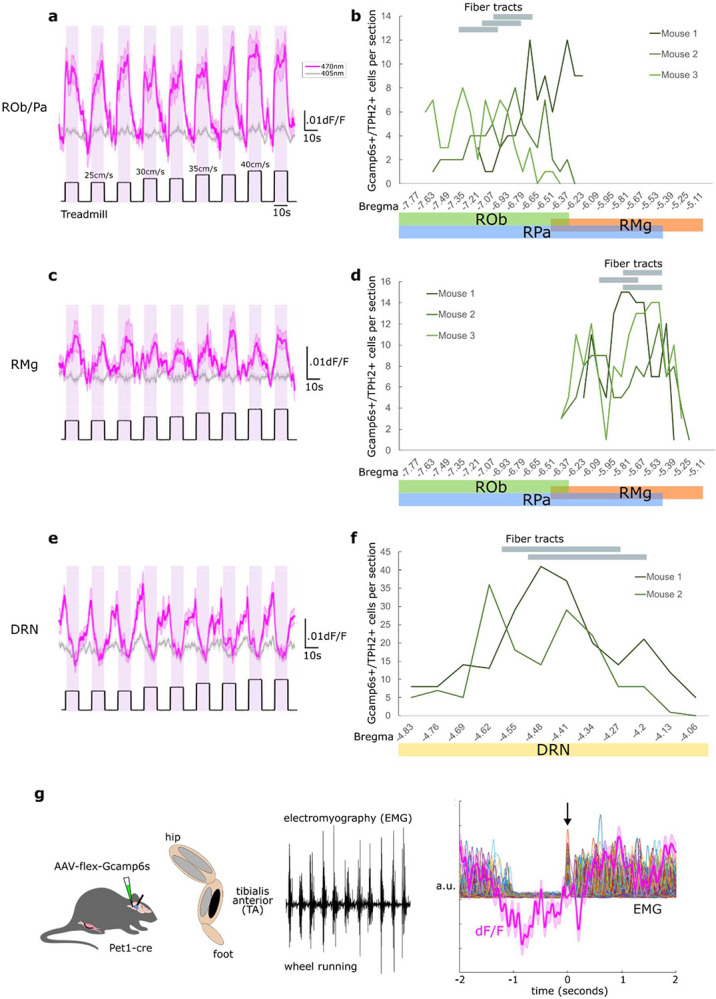
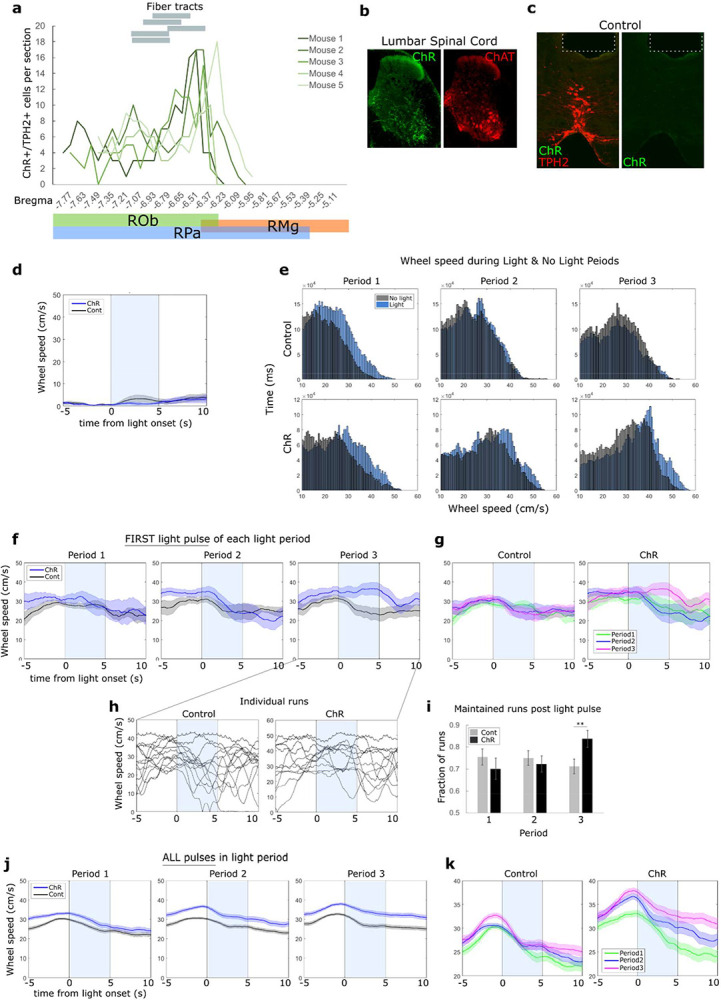
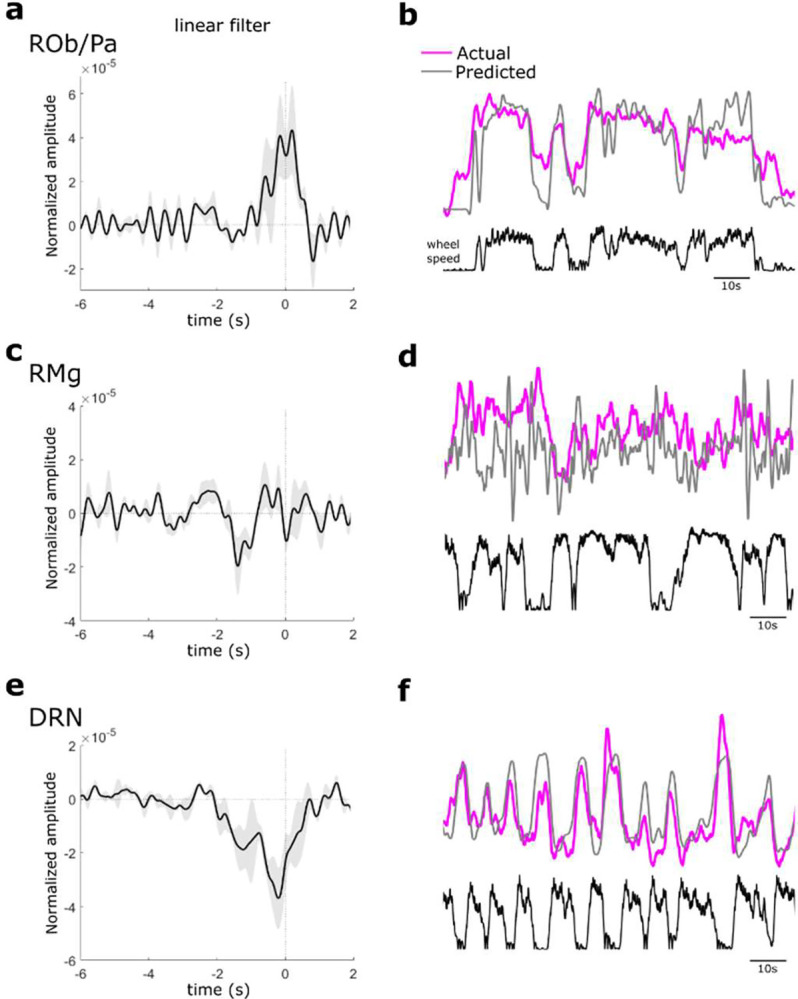
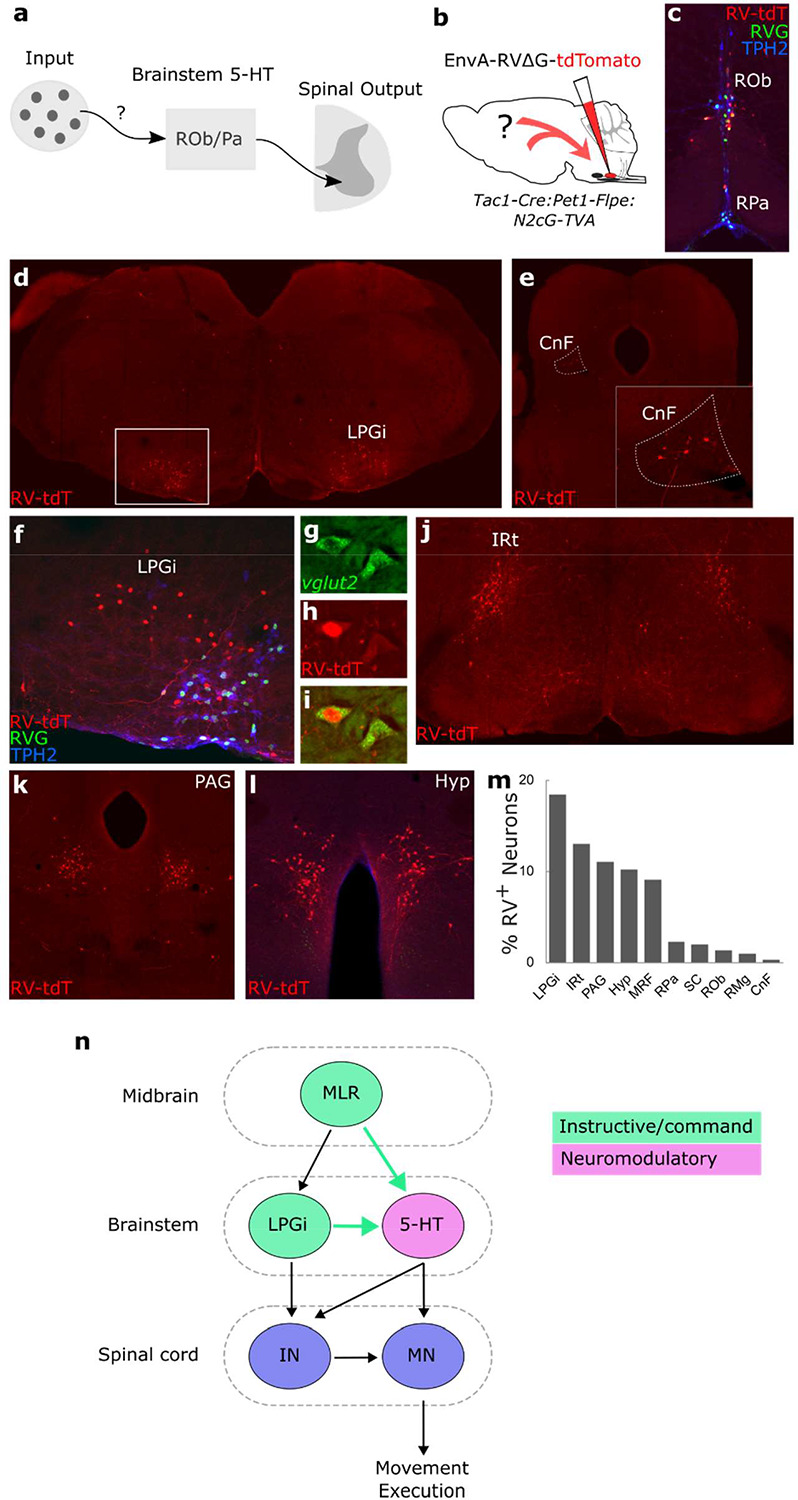
Animals produce diverse motor actions that enable expression of context-appropriate behaviors. Neuromodulators facilitate behavioral flexibility by altering the temporal dynamics and output of neural circuits. Discrete populations of serotonergic (5-HT) neurons target circuits in the brainstem and spinal cord, but their role in the control of motor behavior is unclear. Here we define the pre- and post-synaptic organization of the spinal-projecting serotonergic system and define a role in locomotor control. We show that while forebrain-targeting 5-HT neurons decrease their activity during locomotion, subpopulations of spinal projecting neurons increase their activity in a context-dependent manner. Optogenetic activation of ventrally projecting 5-HT neurons does not trigger initiation of movement, but rather enhances the speed and duration of ongoing locomotion over extended time scales. These findings indicate that the descending serotonergic system potentiates locomotor output and demonstrate a role for serotonergic neurons in modulating the temporal dynamics of motor circuits.
动物会产生多种多样的运动行为,这些行为能够表达出与环境相适应的动作。神经调质通过改变神经回路的时间动态和输出,促进行为的灵活性。离散的血清素能(5-HT)神经元群体靶向脑干和脊髓中的神经回路,但其在运动行为控制中的作用尚不清楚。在这里,我们定义了投射到脊髓的血清素能系统的突触前和突触后组织,并确定了其在运动控制中的作用。我们发现,虽然靶向于前脑的5-HT神经元在运动过程中会降低其活动,但投射到脊髓的神经元亚群会以上下文依赖的方式增加其活动。光遗传学激活腹侧投射的5-HT神经元不会触发运动的启动,而是会在更长的时间尺度上提高正在进行的运动的速度和持续时间。这些发现表明,下行血清素能系统增强了运动输出,并证明了血清素能神经元在调节运动回路的时间动态方面的作用。