• 文献检索
  • 文档翻译
  • 深度研究
  • 学术资讯
  • Suppr Zotero 插件Zotero 插件
  • 邀请有礼
  • 套餐&价格
  • 历史记录
应用&插件
Suppr Zotero 插件Zotero 插件浏览器插件Mac 客户端Windows 客户端微信小程序
定价
高级版会员购买积分包购买API积分包
服务
文献检索文档翻译深度研究API 文档MCP 服务
关于我们
关于 Suppr公司介绍联系我们用户协议隐私条款
关注我们

Suppr 超能文献

核心技术专利:CN118964589B侵权必究
粤ICP备2023148730 号-1Suppr @ 2026

文献检索

告别复杂PubMed语法,用中文像聊天一样搜索,搜遍4000万医学文献。AI智能推荐,让科研检索更轻松。

立即免费搜索

文件翻译

保留排版,准确专业,支持PDF/Word/PPT等文件格式,支持 12+语言互译。

免费翻译文档

深度研究

AI帮你快速写综述,25分钟生成高质量综述,智能提取关键信息,辅助科研写作。

立即免费体验

Sitetack:一种通过使用已知的 PTM 来改进 PTM 预测的深度学习模型。

Sitetack: a deep learning model that improves PTM prediction by using known PTMs.

机构信息

Department of Chemistry, Massachusetts Institute of Technology, Cambridge, MA 02139, United States.

Broad Institute of MIT and Harvard, Cambridge, MA 02143, United States.

出版信息

Bioinformatics. 2024 Nov 1;40(11). doi: 10.1093/bioinformatics/btae602.

DOI:10.1093/bioinformatics/btae602
PMID:39388212
原文链接:https://pmc.ncbi.nlm.nih.gov/articles/PMC11552626/
Abstract

MOTIVATION

Post-translational modifications (PTMs) increase the diversity of the proteome and are vital to organismal life and therapeutic strategies. Deep learning has been used to predict PTM locations. Still, limitations in datasets and their analyses compromise success.

RESULTS

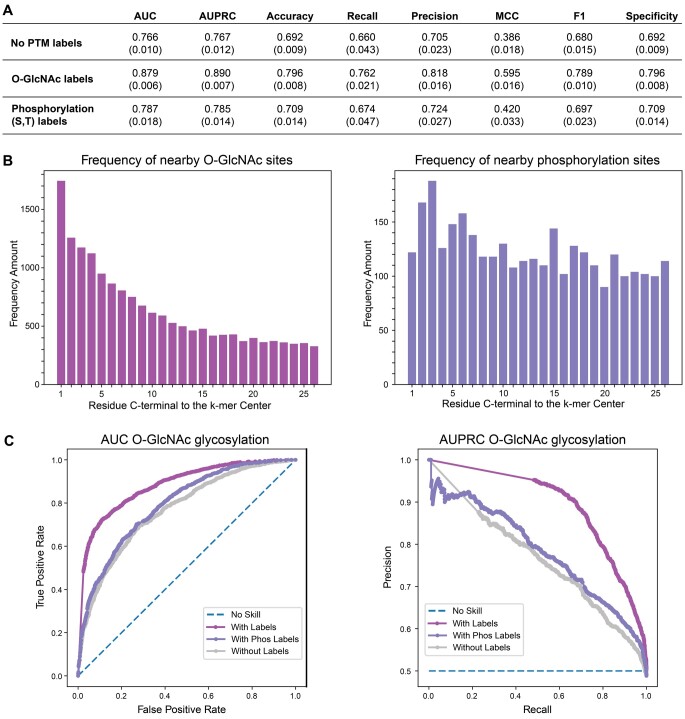
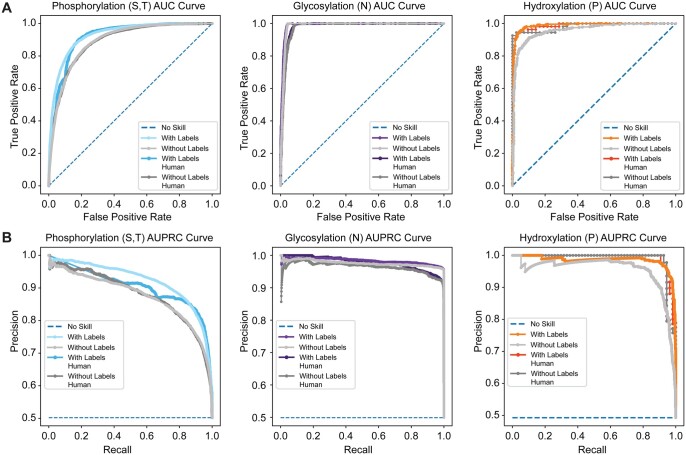
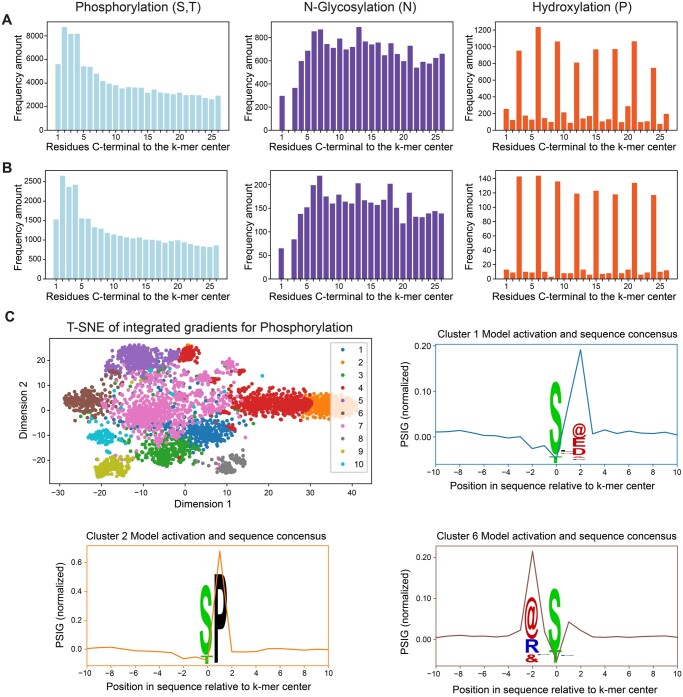
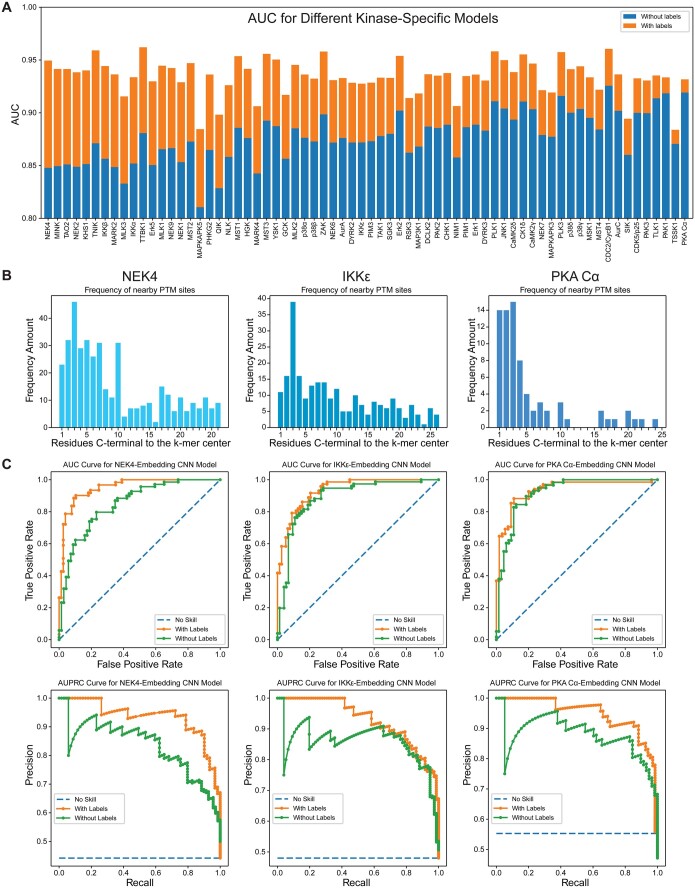
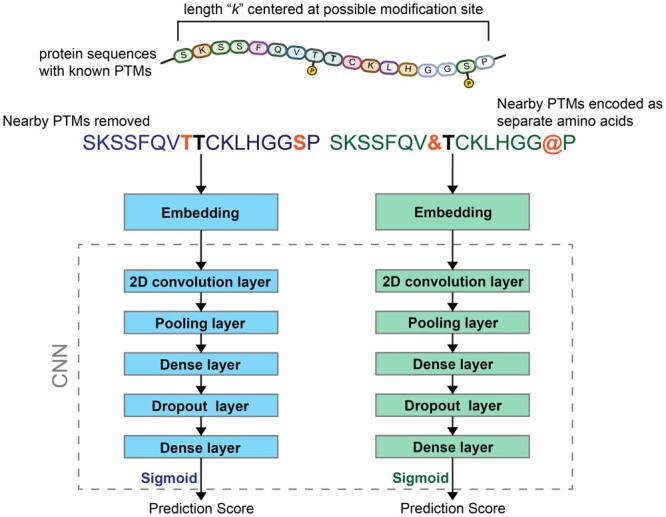
We evaluated the use of known PTM sites in prediction via sequence-based deep learning algorithms. For each PTM, known locations of that PTM were encoded as a separate amino acid before sequences were encoded via word embedding and passed into a convolutional neural network that predicts the probability of that PTM at a given site. Without labeling known PTMs, our models are on par with others. With labeling, however, we improved significantly upon extant models. Moreover, knowing PTM locations can increase the predictability of a different PTM. Our findings highlight the importance of PTMs for the installation of additional PTMs. We anticipate that including known PTM locations will enhance the performance of other proteomic machine learning algorithms.

AVAILABILITY AND IMPLEMENTATION

Sitetack is available as a web tool at https://sitetack.net; the source code, representative datasets, instructions for local use, and select models are available at https://github.com/clair-gutierrez/sitetack.

摘要

动机

翻译后修饰 (PTMs) 增加了蛋白质组的多样性,对生物的生命和治疗策略至关重要。深度学习已被用于预测 PTM 位置。然而,数据集及其分析的局限性影响了成功。

结果

我们通过基于序列的深度学习算法评估了使用已知 PTM 位点进行预测的效果。对于每种 PTM,将该 PTM 的已知位置编码为单独的氨基酸,然后通过单词嵌入对序列进行编码,并将其输入到预测给定位置 PTM 概率的卷积神经网络中。在不标记已知 PTM 的情况下,我们的模型与其他模型相当。然而,通过标记,我们大大提高了现有的模型。此外,了解 PTM 位置可以提高另一种 PTM 的可预测性。我们的研究结果强调了 PTM 对于安装附加 PTM 的重要性。我们预计包含已知 PTM 位置将增强其他蛋白质组机器学习算法的性能。

可用性和实现

Sitetack 可作为网络工具在 https://sitetack.net 上使用;源代码、代表性数据集、本地使用说明和选择模型可在 https://github.com/clair-gutierrez/sitetack 上获得。
https://cdn.ncbi.nlm.nih.gov/pmc/blobs/d3b3/11552626/c6a53efb188c/btae602f5.jpg
https://cdn.ncbi.nlm.nih.gov/pmc/blobs/d3b3/11552626/b45661866e75/btae602f1.jpg
https://cdn.ncbi.nlm.nih.gov/pmc/blobs/d3b3/11552626/1e431765135b/btae602f2.jpg
https://cdn.ncbi.nlm.nih.gov/pmc/blobs/d3b3/11552626/1245e20dce7a/btae602f3.jpg
https://cdn.ncbi.nlm.nih.gov/pmc/blobs/d3b3/11552626/1e26fb34717e/btae602f4.jpg
https://cdn.ncbi.nlm.nih.gov/pmc/blobs/d3b3/11552626/c6a53efb188c/btae602f5.jpg
https://cdn.ncbi.nlm.nih.gov/pmc/blobs/d3b3/11552626/b45661866e75/btae602f1.jpg
https://cdn.ncbi.nlm.nih.gov/pmc/blobs/d3b3/11552626/1e431765135b/btae602f2.jpg
https://cdn.ncbi.nlm.nih.gov/pmc/blobs/d3b3/11552626/1245e20dce7a/btae602f3.jpg
https://cdn.ncbi.nlm.nih.gov/pmc/blobs/d3b3/11552626/1e26fb34717e/btae602f4.jpg
https://cdn.ncbi.nlm.nih.gov/pmc/blobs/d3b3/11552626/c6a53efb188c/btae602f5.jpg

相似文献

1
Sitetack: a deep learning model that improves PTM prediction by using known PTMs.Sitetack:一种通过使用已知的 PTM 来改进 PTM 预测的深度学习模型。
Bioinformatics. 2024 Nov 1;40(11). doi: 10.1093/bioinformatics/btae602.
2
Sitetack: A Deep Learning Model that Improves PTM Prediction by Using Known PTMs.Sitetack:一种通过使用已知的蛋白质翻译后修饰来改进蛋白质翻译后修饰预测的深度学习模型。
bioRxiv. 2024 Jun 4:2024.06.03.596298. doi: 10.1101/2024.06.03.596298.
3
PhosphOrtholog: a web-based tool for cross-species mapping of orthologous protein post-translational modifications.磷酸化直系同源物:一种用于跨物种映射直系同源蛋白质翻译后修饰的基于网络的工具。
BMC Genomics. 2015 Aug 19;16(1):617. doi: 10.1186/s12864-015-1820-x.
4
Large-scale comparative assessment of computational predictors for lysine post-translational modification sites.大规模比较评估赖氨酸翻译后修饰位点的计算预测因子。
Brief Bioinform. 2019 Nov 27;20(6):2267-2290. doi: 10.1093/bib/bby089.
5
MusiteDeep: a deep-learning based webserver for protein post-translational modification site prediction and visualization.MusiteDeep:一个基于深度学习的蛋白质翻译后修饰位点预测和可视化的网络服务器。
Nucleic Acids Res. 2020 Jul 2;48(W1):W140-W146. doi: 10.1093/nar/gkaa275.
6
Systematic analysis of non-structural protein features for the prediction of PTM function potential by artificial neural networks.通过人工神经网络对非结构蛋白特征进行系统分析以预测翻译后修饰功能潜力
PLoS One. 2017 Feb 22;12(2):e0172572. doi: 10.1371/journal.pone.0172572. eCollection 2017.
7
Cross-Species PTM Mapping from Phosphoproteomic Data.基于磷酸化蛋白质组学数据的跨物种蛋白质翻译后修饰图谱绘制
Methods Mol Biol. 2017;1558:459-469. doi: 10.1007/978-1-4939-6783-4_22.
8
Computational refinement of post-translational modifications predicted from tandem mass spectrometry.基于串联质谱预测的翻译后修饰的计算精修。
Bioinformatics. 2011 Mar 15;27(6):797-806. doi: 10.1093/bioinformatics/btr017. Epub 2011 Jan 22.
9
MSModDetector: a tool for detecting mass shifts and post-translational modifications in individual ion mass spectrometry data.MSModDetector:一种用于检测单离子质谱数据中质量位移和翻译后修饰的工具。
Bioinformatics. 2024 Jun 3;40(6). doi: 10.1093/bioinformatics/btae335.
10
The Methods Employed in Mass Spectrometric Analysis of Posttranslational Modifications (PTMs) and Protein-Protein Interactions (PPIs).用于翻译后修饰(PTMs)和蛋白质-蛋白质相互作用(PPIs)的质谱分析方法。
Adv Exp Med Biol. 2019;1140:169-198. doi: 10.1007/978-3-030-15950-4_10.

引用本文的文献

1
A Novel Missense Variant of in Juvenile Polyposis Syndrome: Assessment of Structural and Functional Alternations.青少年息肉病综合征中一种新的错义变异:结构和功能改变的评估。
Hum Mutat. 2025 Feb 18;2025:7317429. doi: 10.1155/humu/7317429. eCollection 2025.

本文引用的文献

1
O-GlcNAcPRED-DL: Prediction of Protein O-GlcNAcylation Sites Based on an Ensemble Model of Deep Learning.O-GlcNAcPRED-DL:基于深度学习集成模型的蛋白质 O-GlcNAc 化位点预测。
J Proteome Res. 2024 Jan 5;23(1):95-106. doi: 10.1021/acs.jproteome.3c00458. Epub 2023 Dec 6.
2
Systematic analysis of the impact of phosphorylation and O-GlcNAcylation on protein subcellular localization.系统分析磷酸化和 O-GlcNAc 化对蛋白质亚细胞定位的影响。
Cell Rep. 2023 Jul 25;42(7):112796. doi: 10.1016/j.celrep.2023.112796. Epub 2023 Jul 14.
3
An inventory of crosstalk between ubiquitination and other post-translational modifications in orchestrating cellular processes.
泛素化与其他翻译后修饰在协调细胞过程中的相互作用清单。
iScience. 2023 Feb 26;26(5):106276. doi: 10.1016/j.isci.2023.106276. eCollection 2023 May 19.
4
LMNglyPred: prediction of human N-linked glycosylation sites using embeddings from a pre-trained protein language model.LMNglyPred:使用预先训练的蛋白质语言模型的嵌入来预测人类 N-连接糖基化位点。
Glycobiology. 2023 Jun 3;33(5):411-422. doi: 10.1093/glycob/cwad033.
5
MIND-S is a deep-learning prediction model for elucidating protein post-translational modifications in human diseases.MIND-S 是一种用于阐明人类疾病中蛋白质翻译后修饰的深度学习预测模型。
Cell Rep Methods. 2023 Mar 27;3(3):100430. doi: 10.1016/j.crmeth.2023.100430.
6
An atlas of substrate specificities for the human serine/threonine kinome.人类丝氨酸/苏氨酸激酶组的底物特异性图谱
Nature. 2023 Jan;613(7945):759-766. doi: 10.1038/s41586-022-05575-3. Epub 2023 Jan 11.
7
UniProt: the Universal Protein Knowledgebase in 2023.UniProt:2023 年的通用蛋白质知识库。
Nucleic Acids Res. 2023 Jan 6;51(D1):D523-D531. doi: 10.1093/nar/gkac1052.
8
Phosphoproteomics of three exercise modalities identifies canonical signaling and C18ORF25 as an AMPK substrate regulating skeletal muscle function.三种运动方式的磷酸蛋白质组学鉴定出经典信号通路和 C18ORF25 作为 AMPK 底物,调节骨骼肌功能。
Cell Metab. 2022 Oct 4;34(10):1561-1577.e9. doi: 10.1016/j.cmet.2022.07.003. Epub 2022 Jul 25.
9
Ageing - Oxidative stress, PTMs and disease.衰老——氧化应激、翻译后修饰与疾病。
Mol Aspects Med. 2022 Aug;86:101099. doi: 10.1016/j.mam.2022.101099. Epub 2022 Jun 8.
10
Pathological implication of protein post-translational modifications in cancer.蛋白质翻译后修饰在癌症中的病理意义
Mol Aspects Med. 2022 Aug;86:101097. doi: 10.1016/j.mam.2022.101097. Epub 2022 Apr 7.