Tao Chu, Lin Sixiong, Shi Yujia, Gong Weiyuan, Chen Mingjue, Li Jianglong, Zhang Peijun, Yao Qing, Qian Dongyang, Ling Zemin, Xiao Guozhi
School of Life Science and Technology Harbin Institute of Technology Harbin China.
Department of Biochemistry, School of Medicine, Shenzhen Key Laboratory of Cell Microenvironment, Guangdong Provincial Key Laboratory of Cell Microenvironment and Disease Research Southern University of Science and Technology Shenzhen China.
JOR Spine. 2024 Oct 8;7(4):e70006. doi: 10.1002/jsp2.70006. eCollection 2024 Dec.
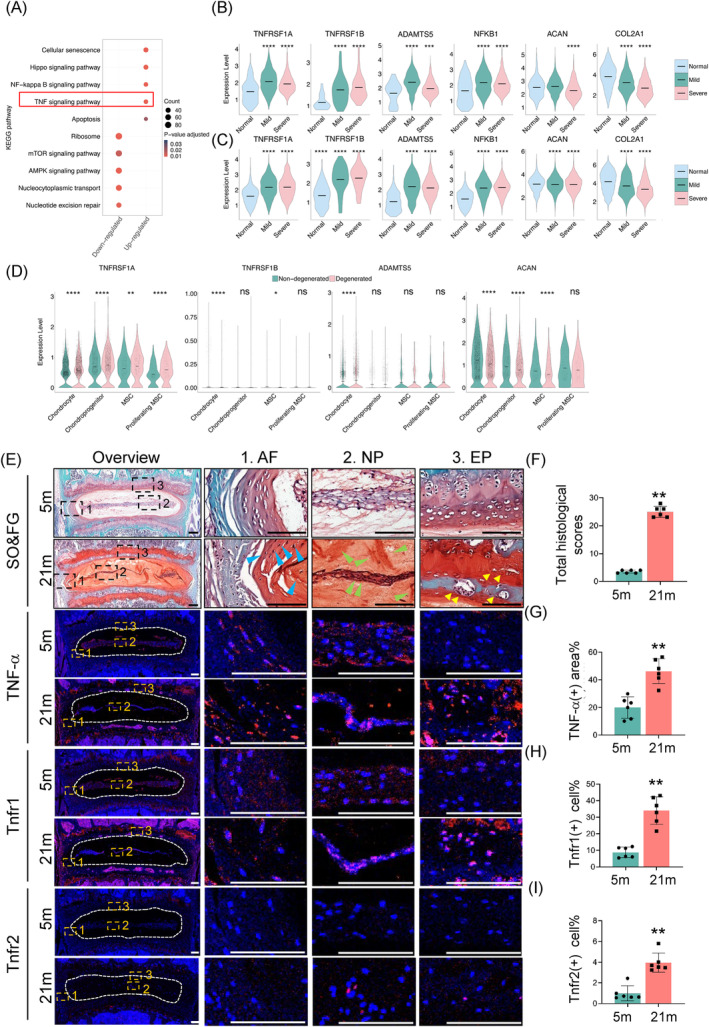
Intervertebral disc degeneration (IVDD) is a major cause of low back pain (LBP), worsened by chronic inflammatory processes associated with aging. Tumor necrosis factor alpha (Tnf-α) and its receptors, Tnf receptor type 1 (Tnfr1) and Tnf receptor type 2 (Tnfr2), are upregulated in IVDD. However, its pathologic mechanisms remain poorly defined.
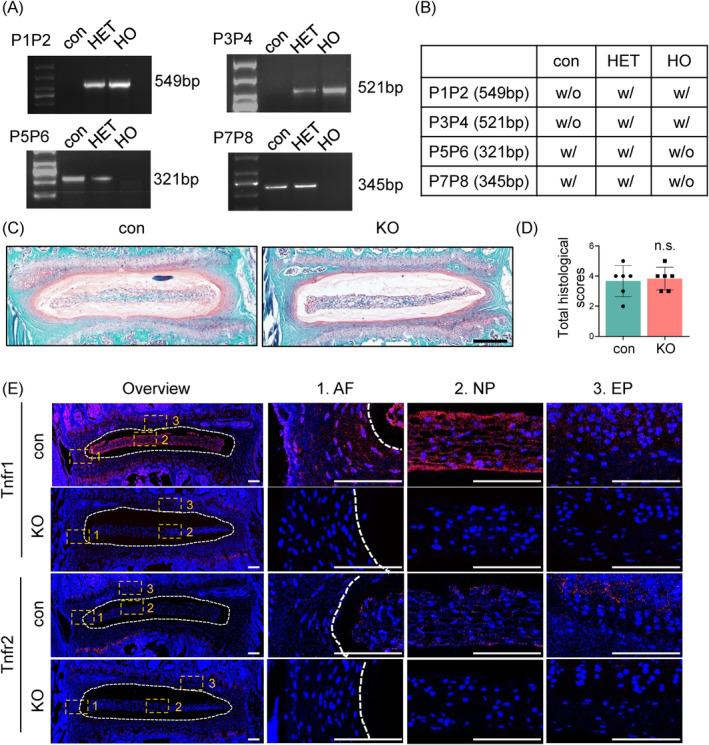
To investigate the role of Tnfr in IVDD, we generated global Tnfr1/2 double knockout (KO) mice and age-matched control C57BL/6 male mice, and analyzed intervertebral disc (IVD)-related phenotypes of both genotypes under physiological conditions, aging, and lumbar spine instability (LSI) model through histological and immunofluorescence analyses and μCT imaging. Expression levels of key extracellular matrix (ECM) proteins in aged and LSI mice, especially markers of cell proliferation and apoptosis, were evaluated in aged (21-month-old) mice.
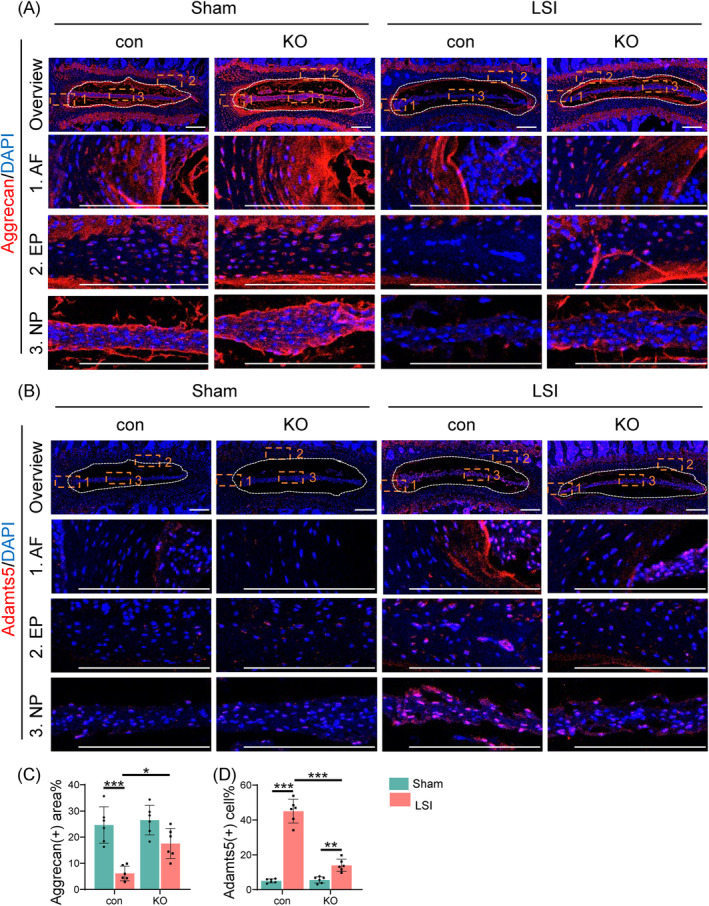
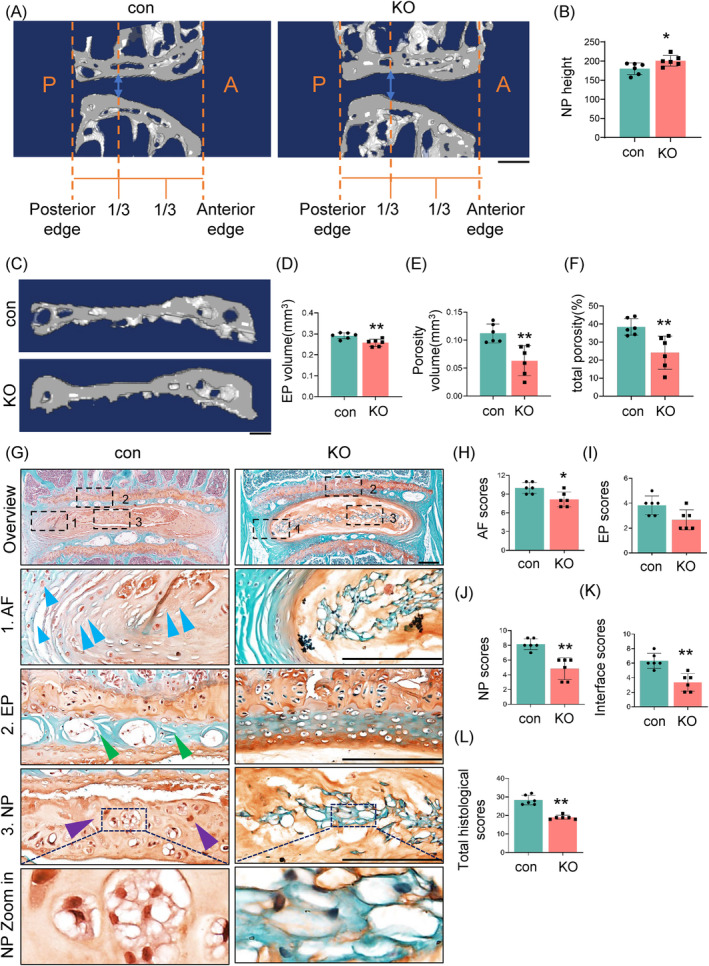
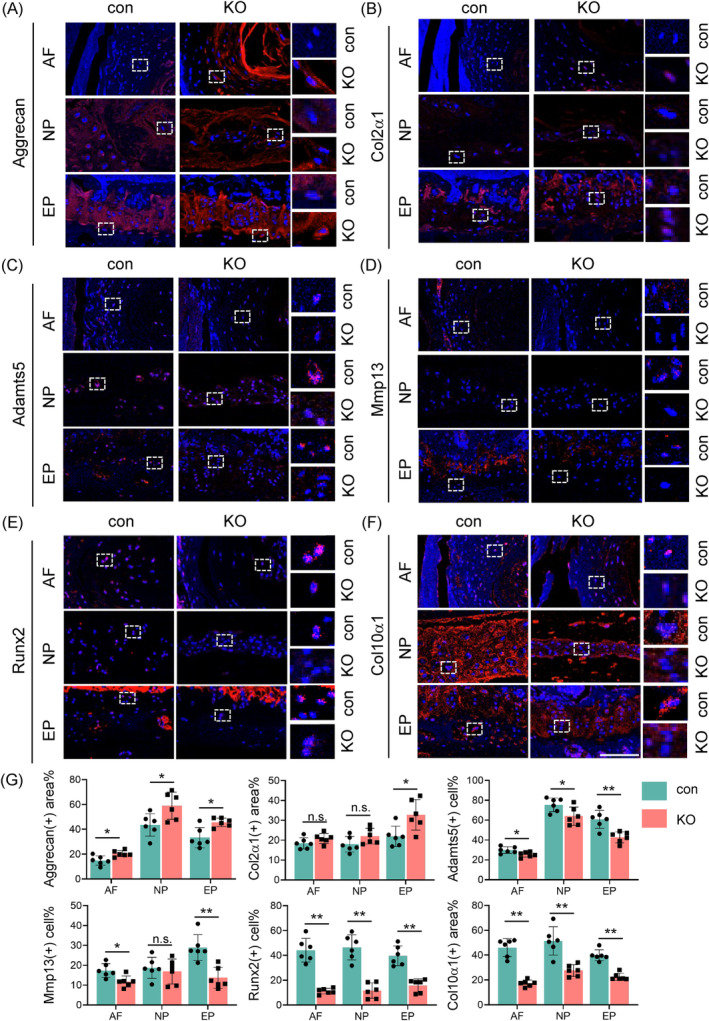
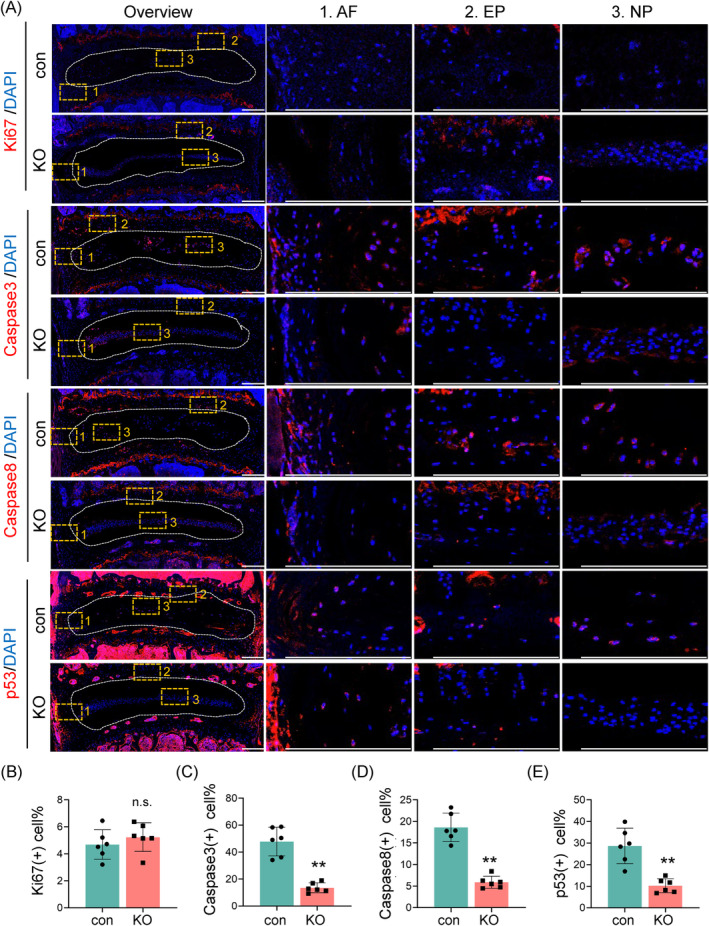
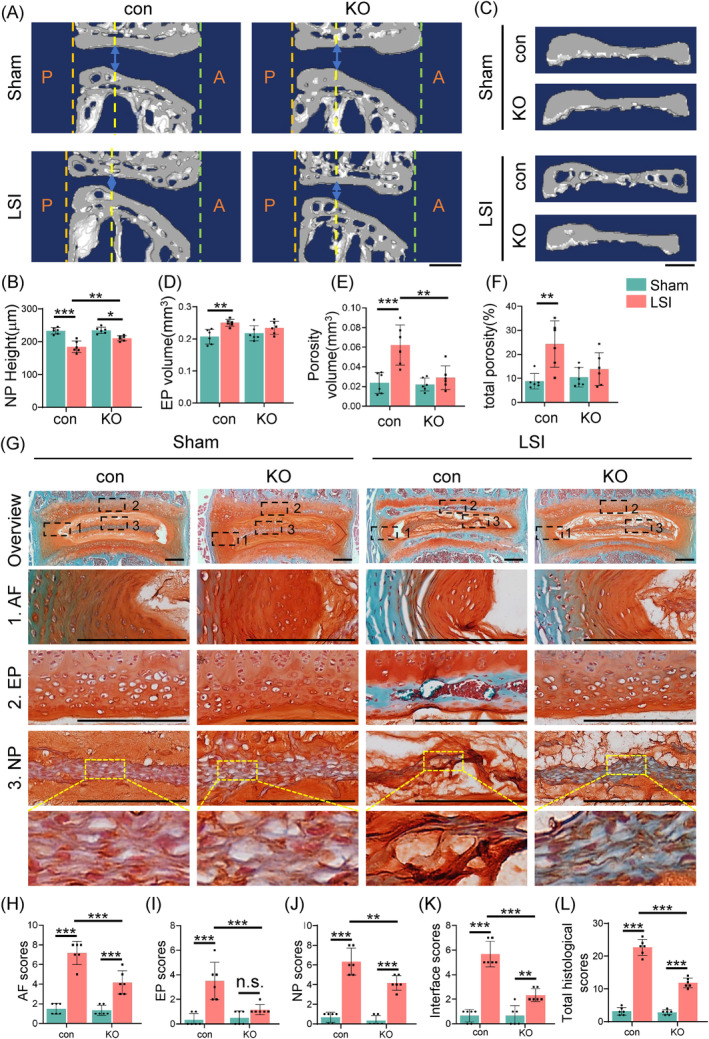
At 4 months, KO and control mice showed no marked differences of IVDD-related parameters. However, at 21 months of age, the loss of Tnfr expression significantly alleviated IVDD-like phenotypes, including a significant increase in height of the nucleus pulposus (NPs) and reductions of endplates (EPs) porosity and histopathological scores, when compared to controls. Tnfr deficiency promoted anabolic metabolism of the ECM proteins and suppressed ECM catabolism. Tnfr loss largely inhibited hypertrophic differentiation, and, in the meantime, suppressed cell apoptosis and cellular senescence in the annulus fibrosis, NP, and EP tissues without affecting cell proliferation. Similar results were observed in the LSI model, where Tnfr deficiency significantly alleviated IVDD and enhanced ECM anabolic metabolism while suppressing catabolism.
The deletion of Tnfr mitigates age-related and LSI-induced IVDD, as evidenced by preserved IVD structure, and improved ECM integrity. These findings suggest a crucial role of Tnf-α/Tnfr signaling in IVDD pathogenesis in mice. Targeting this pathway may be a novel strategy for IVDD prevention and treatment.
椎间盘退变(IVDD)是下腰痛(LBP)的主要原因,与衰老相关的慢性炎症过程会使其恶化。肿瘤坏死因子α(Tnf-α)及其受体,即肿瘤坏死因子受体1型(Tnfr1)和肿瘤坏死因子受体2型(Tnfr2),在IVDD中上调。然而,其病理机制仍不清楚。
为了研究Tnfr在IVDD中的作用,我们构建了全身性Tnfr1/2双敲除(KO)小鼠和年龄匹配的对照C57BL/6雄性小鼠,并通过组织学、免疫荧光分析和μCT成像,分析了两种基因型在生理条件、衰老和腰椎不稳(LSI)模型下与椎间盘(IVD)相关的表型。在老年(21月龄)小鼠中评估了老年和LSI小鼠中关键细胞外基质(ECM)蛋白的表达水平,尤其是细胞增殖和凋亡的标志物。
在4个月时,KO小鼠和对照小鼠在IVDD相关参数上没有明显差异。然而,在21月龄时,与对照相比,Tnfr表达缺失显著减轻了IVDD样表型,包括髓核(NP)高度显著增加、终板(EP)孔隙率降低和组织病理学评分降低。Tnfr缺乏促进了ECM蛋白的合成代谢并抑制了ECM分解代谢。Tnfr缺失在很大程度上抑制了肥大分化,同时抑制了纤维环、NP和EP组织中的细胞凋亡和细胞衰老,而不影响细胞增殖。在LSI模型中也观察到了类似的结果,其中Tnfr缺乏显著减轻了IVDD并增强了ECM合成代谢,同时抑制了分解代谢。
Tnfr的缺失减轻了与年龄相关的和LSI诱导的IVDD,IVD结构得以保留以及ECM完整性得到改善证明了这一点。这些发现表明Tnf-α/Tnfr信号通路在小鼠IVDD发病机制中起关键作用。靶向该通路可能是预防和治疗IVDD的新策略。