London Kory, Matsubara Jokichi, Christianson Davis, Gillingham Jeffrey, Reed Megan K
Emergency Medicine, Thomas Jefferson University, Philadelphia, USA.
Internal Medicine, Temple University Hospital, Philadelphia, USA.
Cureus. 2024 Sep 12;16(9):e69274. doi: 10.7759/cureus.69274. eCollection 2024 Sep.
People with substance use disorders have regular contact with the emergency department (ED). Peer recovery specialists with lived experiences of substance use can provide critical linkages to substance use treatment and other services for patients who use drugs. Patient populations seen by peer recovery specialists remain largely undescribed.
This paper describes the demographics, substance use patterns, and barriers to treatment of patients seen by peer recovery specialists in an ED in Philadelphia.
A review of patient records about demographics, the reason for ED visits, housing, primary drug of choice, previous treatment, treatment barriers, and urine toxicology screening results was conducted.
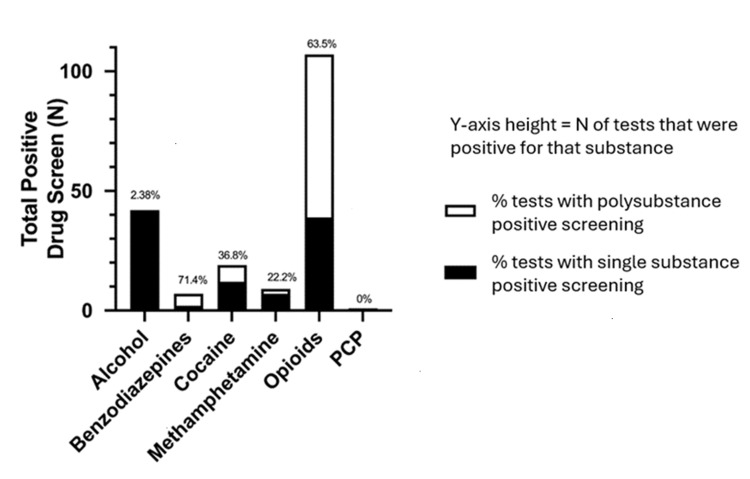
Of 228 patients seen between December 1, 2020, and April 8, 2021, those who listed alcohol as their drug of choice (n=56, 24.6%) came to the ED primarily for withdrawal symptoms (n=19, 33.9%). Patients who listed other drug use (n=172, 75.4%) were largely seen for infection (n=57, 33.1%). Polysubstance use was prevalent in patients whose primary drugs of choice were not alcohol. Inpatient treatment was the most common previous treatment previously (n=106, 46.5%) and the most desired treatment preferred for future treatment (n=97, 42.5%). The most common barriers to treatment for patients were medical comorbidities (n=70, 30.7%) and difficulty navigating the healthcare system (n=43, 18.9%).
Patients consulted by peer recovery specialists had distinct demographics, substance use patterns, and perceived goals and barriers to care. These findings highlight the importance of recognizing and treating polysubstance use for people who use drugs and the critical role of peer recovery programs in navigating subsequent care.
患有物质使用障碍的人经常前往急诊科(ED)就诊。有物质使用生活经历的同伴康复专家可以为吸毒患者提供与物质使用治疗及其他服务的关键联系。同伴康复专家所接触的患者群体在很大程度上仍未得到描述。
本文描述了费城一家急诊科中同伴康复专家所接触患者的人口统计学特征、物质使用模式及治疗障碍。
对患者记录进行回顾,内容包括人口统计学信息、急诊科就诊原因、住房情况、首选主要药物、既往治疗情况、治疗障碍以及尿液毒理学筛查结果。
在2020年12月1日至2021年4月8日期间就诊的228名患者中,将酒精列为首选药物的患者(n = 56,24.6%)主要因戒断症状前来急诊科就诊(n = 19,33.9%)。将其他药物使用列为原因的患者(n = 172,75.4%)大多因感染前来就诊(n = 57,33.1%)。首选主要药物不是酒精的患者中多药使用很普遍。住院治疗是之前最常见的治疗方式(n = 106,46.5%),也是未来最希望接受的治疗方式(n = 97,42.5%)。患者最常见的治疗障碍是合并症(n = 70,30.7%)和难以应对医疗系统(n = 43,18.9%)。
同伴康复专家咨询的患者具有不同的人口统计学特征、物质使用模式以及感知到的护理目标和障碍。这些发现凸显了识别和治疗吸毒者多药使用的重要性,以及同伴康复项目在后续护理中的关键作用。