D'Silva Adrijana, Hua Nicolle, Modayil Mary V, Seidel Judy, Marshall Deborah A
Department of Community Health Sciences, Cumming School of Medicine, University of Calgary, Calgary, Alberta, Canada.
Primary Health Care, Alberta Health Services, Edmonton, Alberta, Canada.
Dig Dis Sci. 2025 Feb;70(2):644-664. doi: 10.1007/s10620-024-08672-7. Epub 2024 Oct 14.
Digital health interventions (DHIs) could be a valuable self-management tool for patients with irritable bowel syndrome (IBS), but little research exists on IBS-focused DHIs and their effectiveness. This review aimed to identify DHIs for IBS and evaluate their characteristics, effectiveness, and feasibility.
Our study team, including patient partners, conducted a systematic review using Medline, PsycINFO, Embase, Web of Science, and CINAHL from database inception to May 2024. Experimental and observational studies evaluating DHIs designed for use by IBS patients were included. Data extraction and assessment included study and DHI characteristics, effectiveness outcomes (symptom severity, quality of life, psychological indices, patient empowerment), and feasibility measures (adherence, usability, user satisfaction). Study quality and bias were assessed using a modified checklist of Downs and Black.
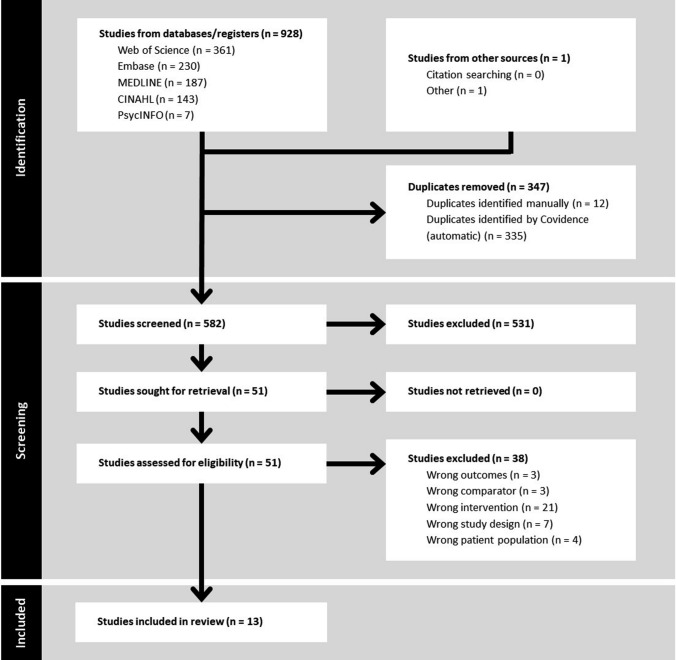
Of the 929 identified, 13 studies of DHIs were included and deemed good quality on average (21,510 total participants) with six primary areas of focus: education, diet, brain-gut behavior skills, physiological support, health monitoring, and community engagement. Most DHIs were self-directed and reported statistically significant improvements in most effectiveness outcomes. Evidence suggests that DHIs focusing on brain-gut behavior skills or health monitoring may be most effective compared to other types of DHIs. However, their feasibility remains unclear, and the generalization of their impacts is limited.
This review underscores the potential of DHIs in supporting IBS patients and improving their outcomes. However, additional research is warranted for continued intervention use in this population, including assessments on feasibility, safety, cost-effectiveness, and patient empowerment and experiences.
数字健康干预措施(DHIs)可能是肠易激综合征(IBS)患者的一种有价值的自我管理工具,但针对IBS的DHIs及其有效性的研究较少。本综述旨在识别针对IBS的DHIs,并评估其特征、有效性和可行性。
我们的研究团队,包括患者合作伙伴,从数据库建立到2024年5月,使用Medline、PsycINFO、Embase、Web of Science和CINAHL进行了一项系统综述。纳入了评估为IBS患者设计使用的DHIs的实验性和观察性研究。数据提取和评估包括研究和DHI特征、有效性结果(症状严重程度、生活质量、心理指标、患者赋权)以及可行性指标(依从性、可用性、用户满意度)。使用修改后的唐斯和布莱克清单评估研究质量和偏倚。
在识别出的929项研究中,纳入了13项关于DHIs的研究,平均质量良好(共有21510名参与者),重点关注六个主要领域:教育、饮食、脑肠行为技能、生理支持、健康监测和社区参与。大多数DHIs是自我指导的,并且在大多数有效性结果方面报告了具有统计学意义的改善。有证据表明,与其他类型的DHIs相比,专注于脑肠行为技能或健康监测的DHIs可能最有效。然而,它们的可行性仍不明确,其影响的普遍性也有限。
本综述强调了DHIs在支持IBS患者和改善其结局方面的潜力。然而,有必要进行更多研究,以便在该人群中继续使用干预措施,包括对可行性、安全性、成本效益以及患者赋权和体验的评估。