Department of Molecular Pharmacology and Experimental Therapeutics, Clinic College of Medicine, 200 First Street SW, Rochester, MN, 55905, USA.
Department of Pharmacology College of Medicine, Soonchunhyang University, 22 Soonchunhyango-ro, Ansan, Chungcheongnam-do, 31508, South Korea.
Sci Rep. 2024 Oct 14;14(1):23989. doi: 10.1038/s41598-024-75202-w.
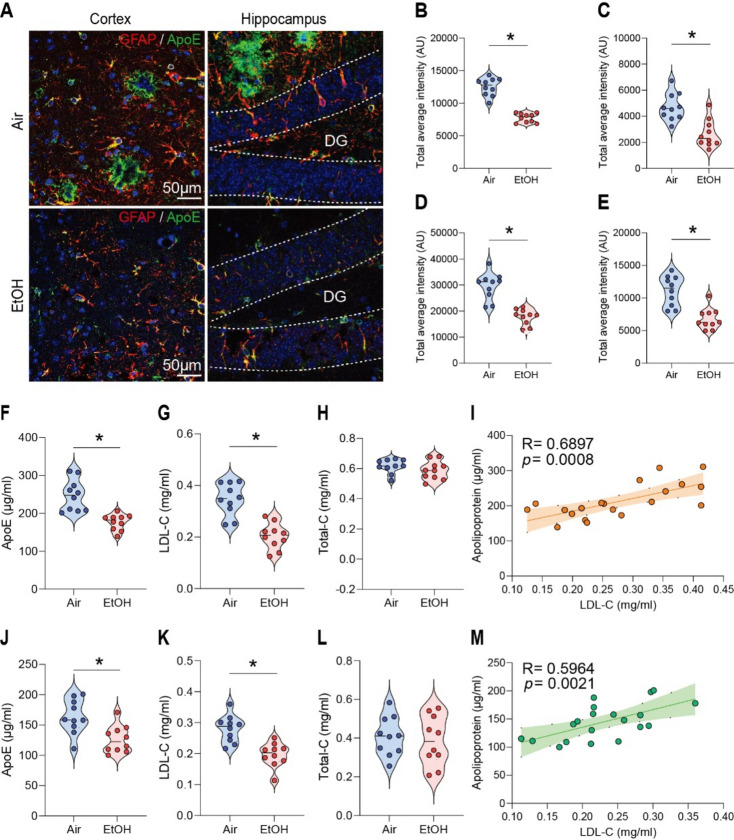
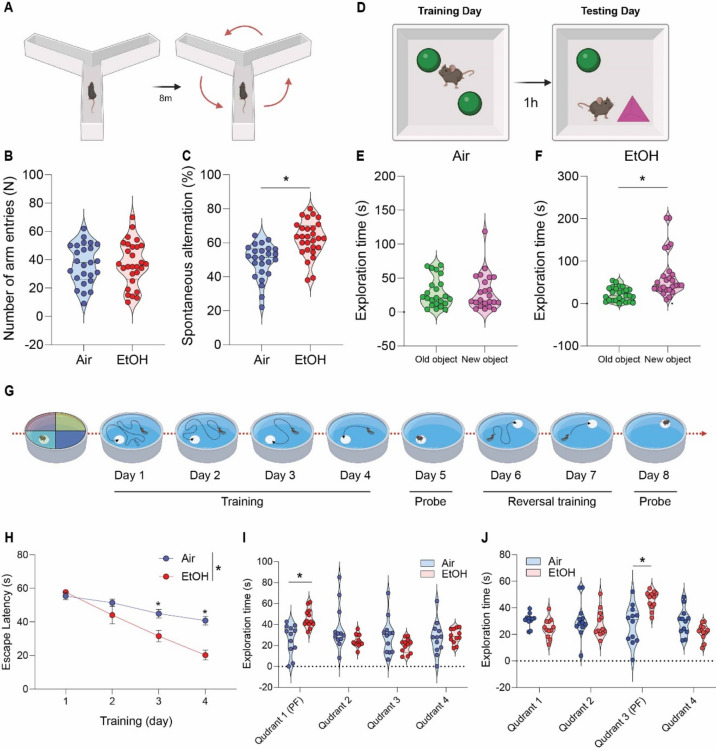
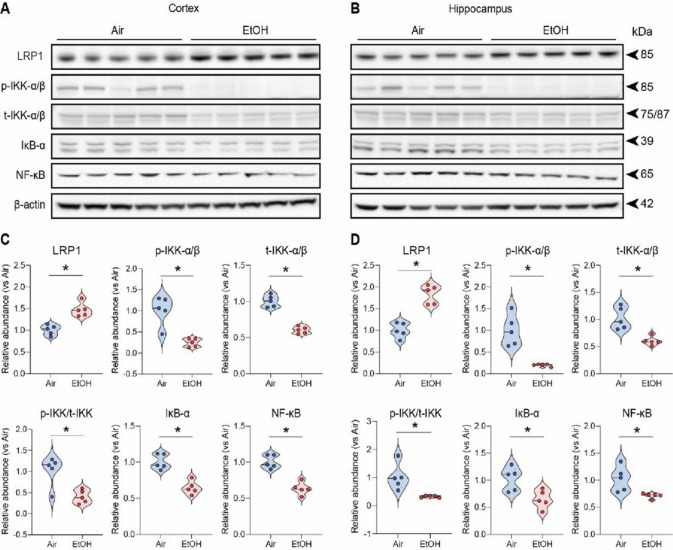
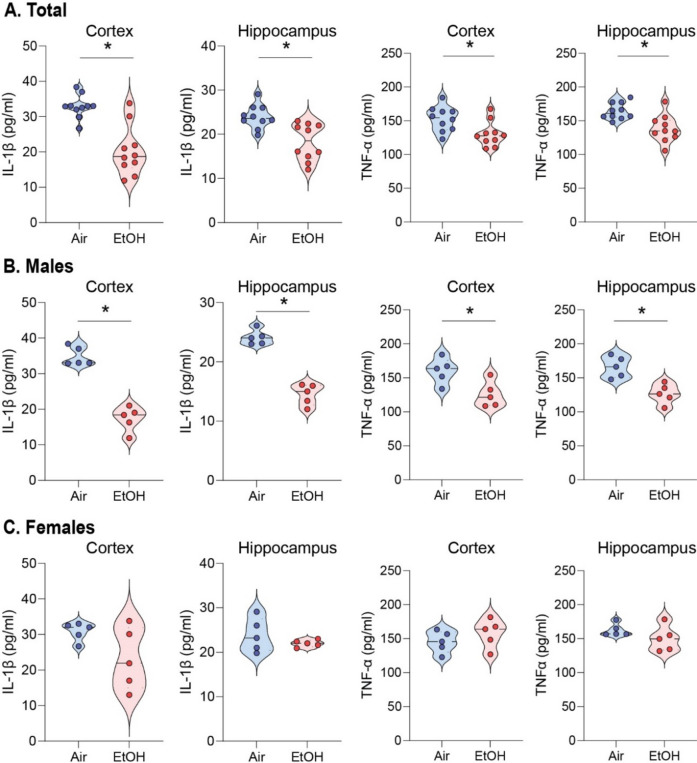
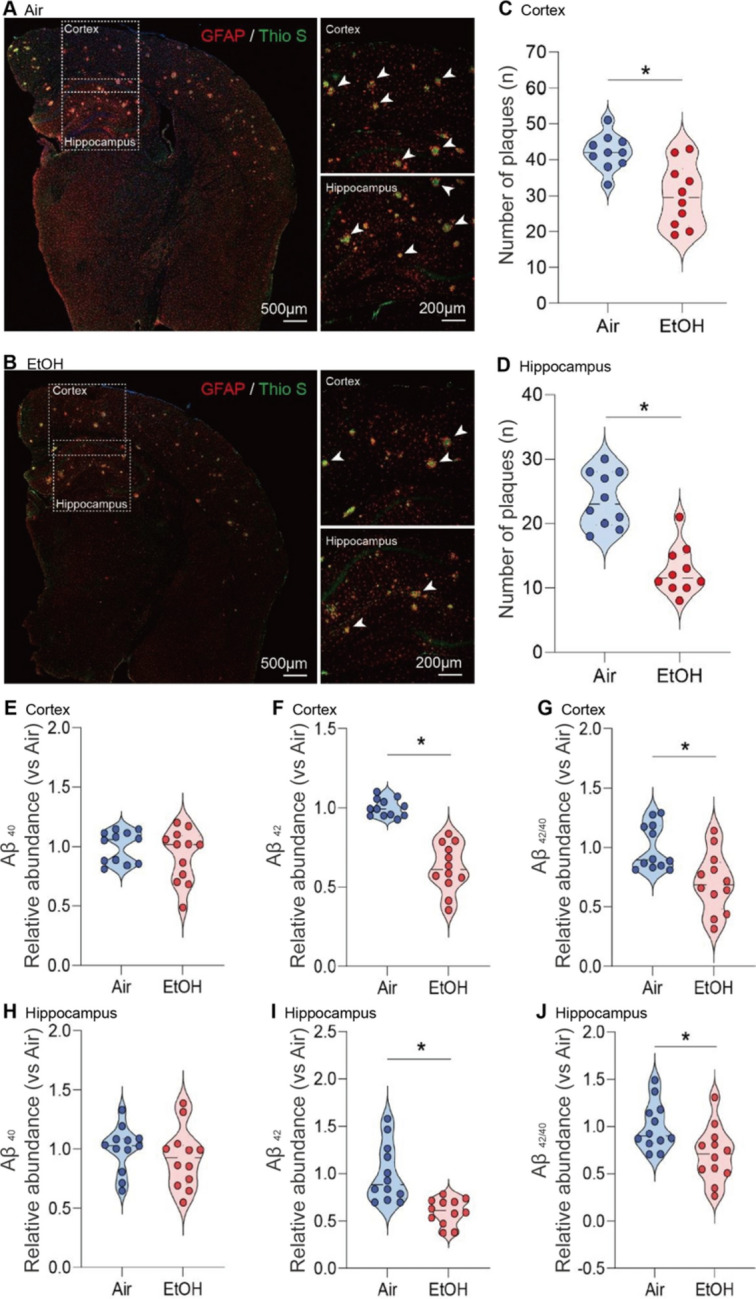
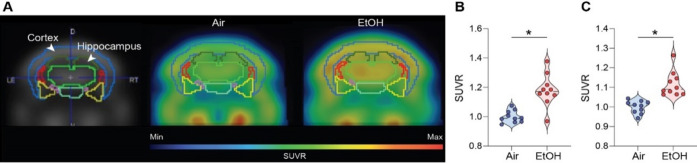
Alcohol use disorder has been associated with the development of neurodegenerative diseases, including Alzheimer's disease (AD). However, recent studies demonstrate that moderate alcohol consumption may be protective against dementia and cognitive decline. We examined astrocyte function, low-density lipoprotein (LDL) receptor-related protein 1 (LRP1), and the NF-κB p65 and IKK-α/β signaling pathways in modulating neuroinflammation and amyloid beta (Aβ) deposition. We assessed apolipoprotein E (ApoE) in the brain of APP/PS1 mice using IHC and ELISA in response to low to moderate ethanol exposure (MEE). First, to confirm the intracerebral distribution of ApoE, we co-stained with GFAP, a marker for astrocytes that biosynthesize ApoE. We sought to investigate whether the ethanol-induced upregulation of LRP1 could potentially inhibit the activity of IL-1β and TNF-α induced IKK-α/β towards NF-κB p65, resulting in a reduction of pro-inflammatory cytokines. To evaluate the actual Aβ load in the brains of APP/PS1 mice, we performed with a specific antibody Aβ (Thioflavin S) on both air- and ethanol-exposed groups, subsequently analyzing Aβ levels. We also measured glucose uptake using 18F- fluorodeoxyglucose (FDG)-positron emission tomography (PET). Finally, we investigated whether MEE induced cognitive and memory changes using the Y maze, noble object recognition test, and Morris water maze. Our findings demonstrate that MEE reduced astrocytic glial fibrillary acidic protein (GFAP) and ApoE levels in the cortex and hippocampus in presymptomatic APP/PS1 mice. Interestingly, increased LRP1 protein expression was accompanied by dampening the IKK-α/β-NF-κB p65 pathway, resulting in decreased IL-1β and TNF-α levels in male mice. Notably, female mice show reduced levels of anti-inflammatory cytokines IL-4, and IL-10 without altering IL-1β and TNF-α concentrations. In both males and females, Aβ plaques, a hallmark of AD, were reduced in the cortex and hippocampus of APP/PS1 mice exposed to ethanol starting at pre-symptomatic stage. Consistently, MEE increased FDG-PET-based brain activities and normalized cognitive and memory deficits in the APP/PS1 mice. Our findings suggest that MEE may benefit AD pathology via modulating LRP1 expression, potentially reducing neuroinflammation and attenuating Aβ deposition. Our study implies that reduced astrocyte-derived ApoE and LDL cholesterol levels are critical for attenuating AD pathology.
酒精使用障碍与神经退行性疾病的发展有关,包括阿尔茨海默病(AD)。然而,最近的研究表明,适量饮酒可能对痴呆症和认知能力下降具有保护作用。我们研究了星形胶质细胞功能、低密度脂蛋白(LDL)受体相关蛋白 1(LRP1)以及 NF-κB p65 和 IKK-α/β 信号通路在调节神经炎症和淀粉样β(Aβ)沉积中的作用。我们使用免疫组化和 ELISA 评估了 APP/PS1 小鼠大脑中的载脂蛋白 E(ApoE)对低至中等乙醇暴露(MEE)的反应。首先,为了确认 ApoE 的脑内分布,我们与 GFAP 共染色,GFAP 是合成 ApoE 的星形胶质细胞的标志物。我们试图研究乙醇诱导的 LRP1 上调是否可能抑制 IL-1β 和 TNF-α 诱导的 IKK-α/β 对 NF-κB p65 的活性,从而减少促炎细胞因子。为了评估 APP/PS1 小鼠大脑中的实际 Aβ 负荷,我们使用针对 Aβ(硫黄素 S)的特异性抗体对空气和乙醇暴露组进行了处理,随后分析了 Aβ 水平。我们还使用 18F-氟脱氧葡萄糖(FDG)-正电子发射断层扫描(PET)测量了葡萄糖摄取。最后,我们使用 Y 迷宫、高贵物体识别测试和 Morris 水迷宫研究了 MEE 是否引起认知和记忆变化。我们的研究结果表明,MEE 降低了 APP/PS1 小鼠皮质和海马中的星形胶质细胞胶质纤维酸性蛋白(GFAP)和 ApoE 水平。有趣的是,LRP1 蛋白表达增加伴随着 IKK-α/β-NF-κB p65 途径的减弱,导致雄性小鼠中 IL-1β 和 TNF-α 水平降低。值得注意的是,雌性小鼠表现出抗炎细胞因子 IL-4 和 IL-10 水平降低,而不改变 IL-1β 和 TNF-α 浓度。在雄性和雌性小鼠中,乙醇暴露于预症状阶段的 APP/PS1 小鼠的大脑皮质和海马中的 Aβ 斑块减少,这是 AD 的标志。一致地,MEE 增加了基于 FDG-PET 的大脑活动,并使 APP/PS1 小鼠的认知和记忆缺陷正常化。我们的研究结果表明,MEE 通过调节 LRP1 表达可能有益于 AD 病理学,从而可能减少神经炎症和减轻 Aβ 沉积。我们的研究表明,减少星形胶质细胞衍生的 ApoE 和 LDL 胆固醇水平对于减轻 AD 病理学至关重要。