Dai Yanmei, Wang Jinmei, Tao Zijuan, Luo Liangli, Huang Changshun, Liu Bo, Shi Hanbing, Tang Lan, Ou Zhimin
College of Pharmaceutical Science, Zhejiang University of Technology, Hangzhou, 310014, China.
College of Biological & Environmental Sciences, Zhejiang Wanli University, Ningbo, 315199, China.
Bioresour Bioprocess. 2024 Oct 15;11(1):99. doi: 10.1186/s40643-024-00814-z.
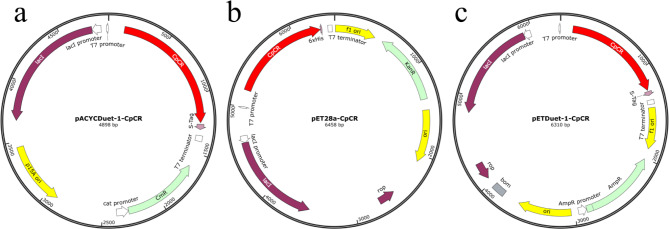
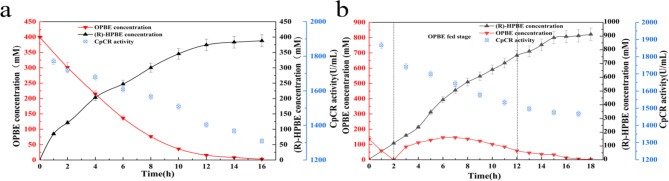
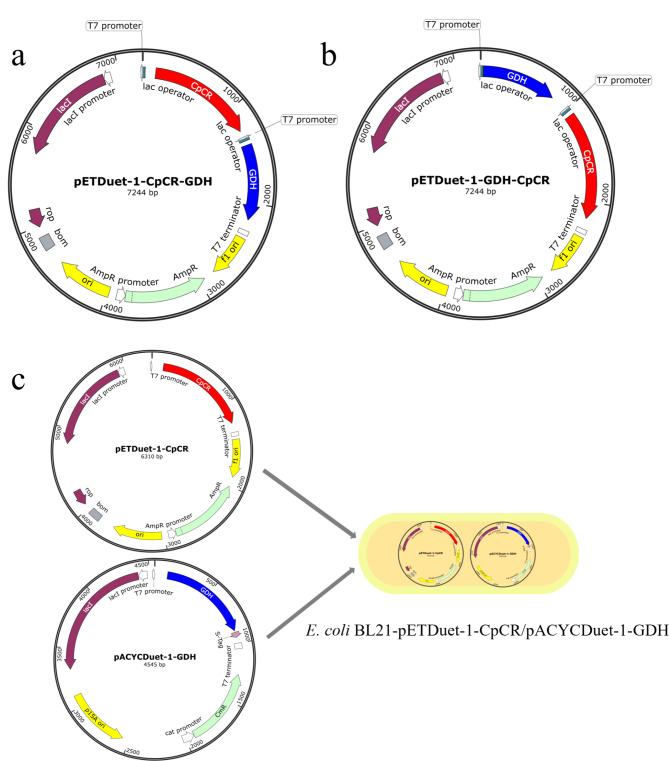
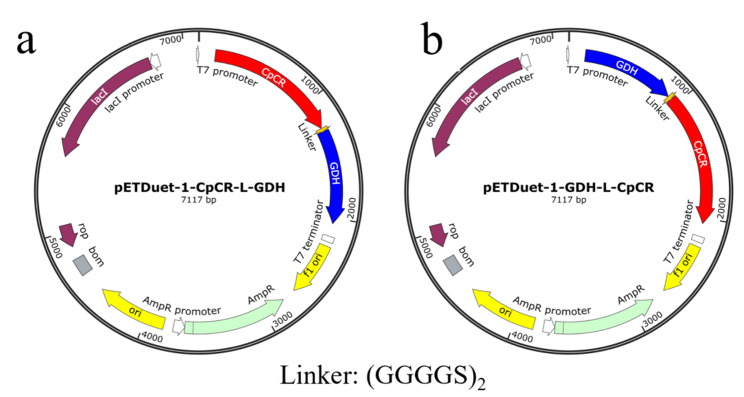
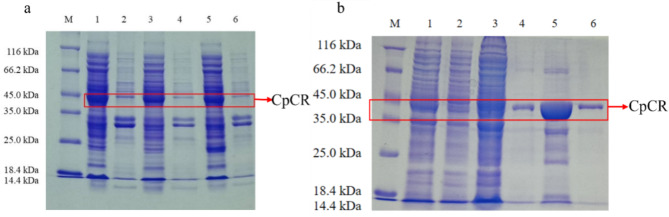
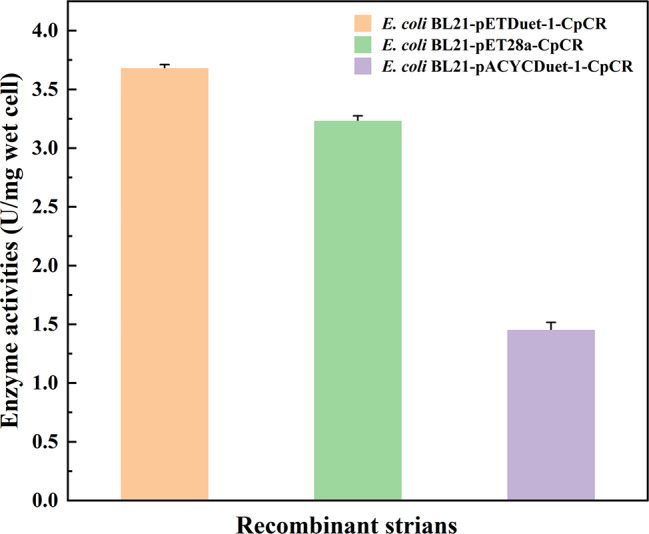
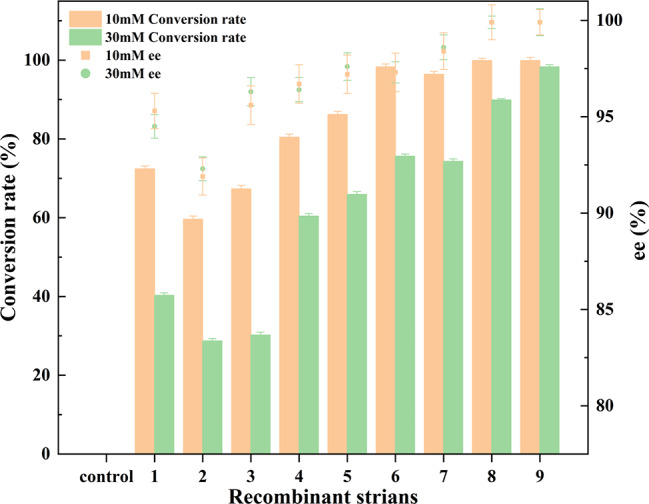
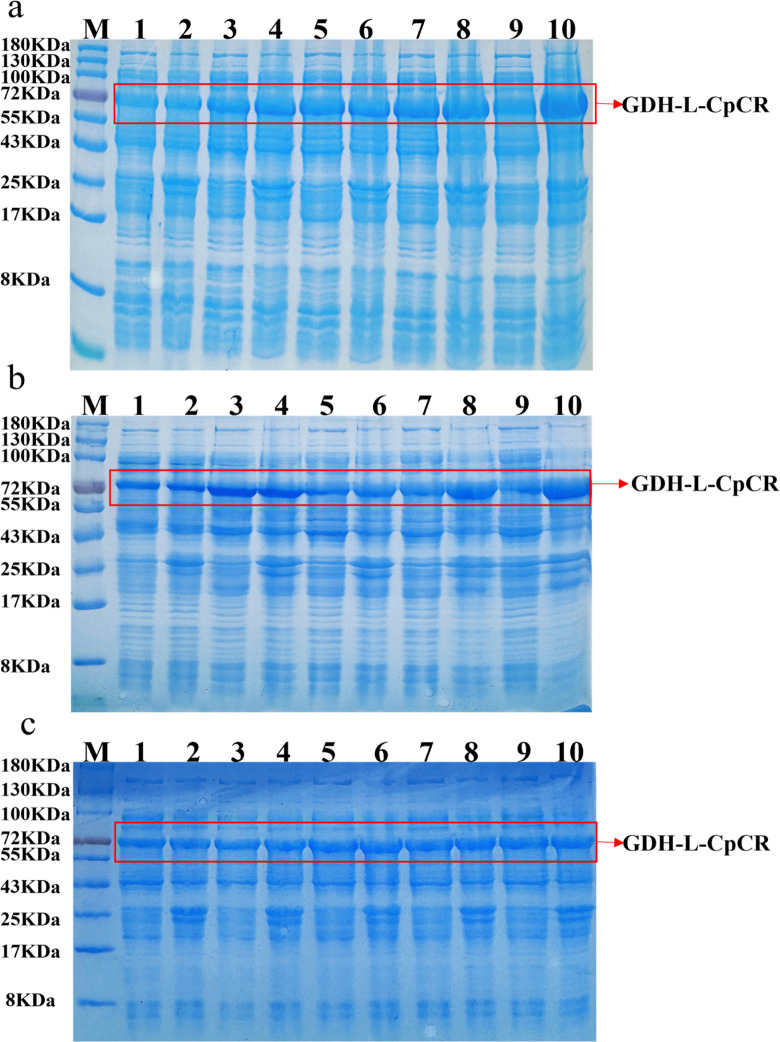
(R)-2-Hydroxy-4-phenylbutyric acid ethyl ester ((R)-HPBE) is an essential chiral intermediate in the synthesis of angiotensin-converting enzyme (ACE) inhibitors. Its production involves the highly selective asymmetric reduction of ethyl 2-oxo-4-phenylbutyrate (OPBE), catalyzed by carbonyl reductase (CpCR), with efficient cofactor regeneration playing a crucial role. In this study, an in-situ coenzyme regeneration system was developed by coupling carbonyl reductase (CpCR) with glucose dehydrogenase (GDH), resulting in the construction of five recombinant strains capable of NADPH regeneration. Among these, the recombinant strain E. coli BL21-pETDuet-1-GDH-L-CpCR, where CpCR is fused to the C-terminus of GDH, demonstrated the highest catalytic activity. This strain exhibited an enzyme activity of 69.78 U/mg and achieved a conversion rate of 98.3%, with an enantiomeric excess (ee) of 99.9% during the conversion of 30 mM OPBE to (R)-HPBE. High-density fermentation further enhanced enzyme yield, achieving an enzyme activity of 1960 U/mL in the fermentation broth, which is 16.2 times higher than the volumetric activity obtained from shake flask fermentation. Additionally, the implementation of a substrate feeding strategy enabled continuous processing, allowing the strain to efficiently convert a final OPBE concentration of 920 mM, producing 912 mM of (R)-HPBE. These findings highlight the system's improved catalytic efficiency, stability, and scalability, making it highly suitable for industrial-scale biocatalytic production.
(R)-2-羟基-4-苯基丁酸乙酯((R)-HPBE)是合成血管紧张素转换酶(ACE)抑制剂的重要手性中间体。其生产涉及通过羰基还原酶(CpCR)催化2-氧代-4-苯基丁酸乙酯(OPBE)的高选择性不对称还原,高效的辅因子再生起着关键作用。在本研究中,通过将羰基还原酶(CpCR)与葡萄糖脱氢酶(GDH)偶联开发了一种原位辅酶再生系统,从而构建了五种能够进行NADPH再生的重组菌株。其中,CpCR融合到GDH C末端的重组菌株大肠杆菌BL21-pETDuet-1-GDH-L-CpCR表现出最高的催化活性。该菌株的酶活性为69.78 U/mg,转化率达到98.3%,在将30 mM OPBE转化为(R)-HPBE的过程中对映体过量(ee)为99.9%。高密度发酵进一步提高了酶产量,发酵液中的酶活性达到1960 U/mL,比摇瓶发酵获得的体积活性高16.2倍。此外,实施底物补料策略实现了连续加工,使该菌株能够有效转化最终浓度为920 mM的OPBE,生产出912 mM的(R)-HPBE。这些发现突出了该系统提高的催化效率、稳定性和可扩展性,使其非常适合工业规模的生物催化生产。