Orthopedics and Traumatology, Kirşehir Ahi Evran University, Kirsehir, Turkey.
Orthopedics and Traumatology, Izmir Bakircay University, Orthopedics and Traumatology, Cigli Training and Research Hospital, Izmir, 35620, Turkey.
BMC Musculoskelet Disord. 2024 Oct 14;25(1):810. doi: 10.1186/s12891-024-07933-w.
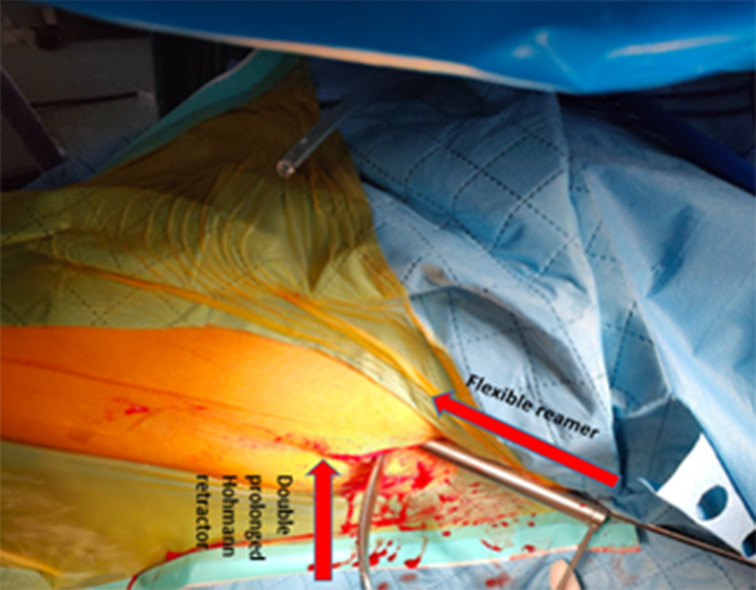
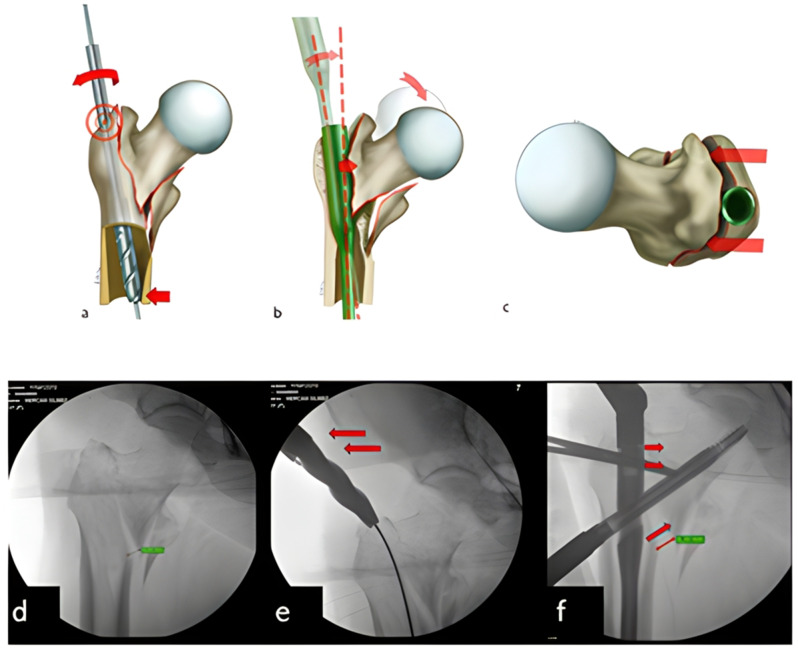
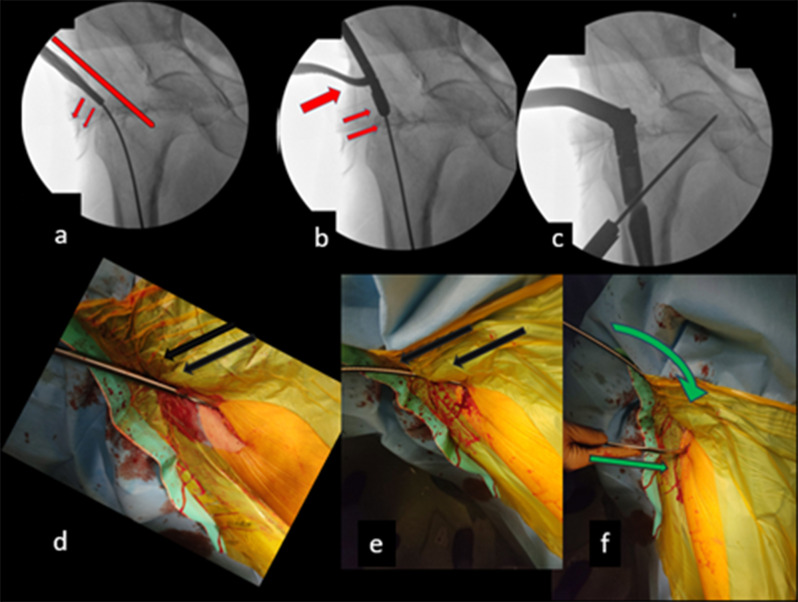
Proximal femoral nailing (PFN) offers biomechanical benefits for intertrochanteric fractures but can lead to higher complication rates from poor reduction and technique errors, particularly in obese patients. Incorrect entry points may cause reduction loss, iatrogenic fractures, and misplaced lag screws. The study aims to investigate the effect of using an oriented flexible reamer instead of a rigid reamer on clinical and radiological results to obtain a medial entry point and better positioning of the nail in the intramedullary area in obese intertrochanteric fracture patients.
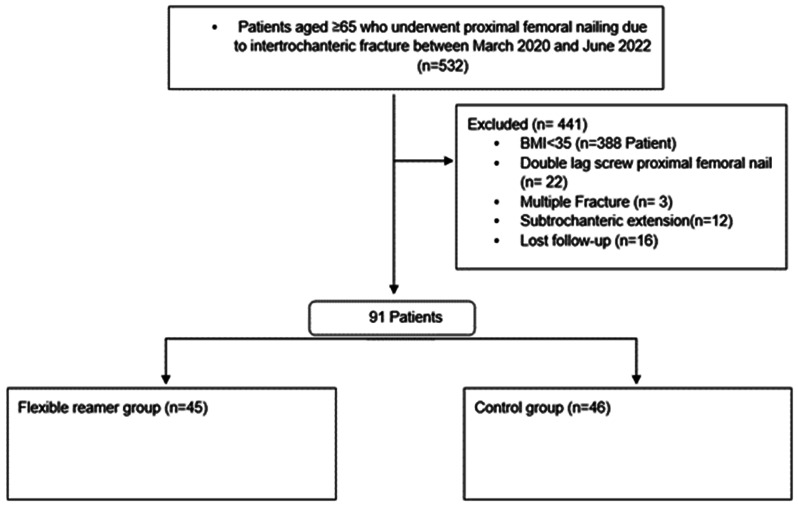
A retrospective analysis was conducted on patients aged 65 years and older who underwent PFN treatment between March 2020 and June 2022 at a single institution, with at least 1-year postoperative follow-up. Patients were divided into two groups: those applied with a flexible reamer and a rigid reamer. Parameters analyzed from postoperative radiographs included tip-apex distance (TAD), calcar-referenced tip-apex distance (CalTAD), reduction quality, femoral neck-shaft angle, and lag screw placement. Complication rates and types were recorded for each group.
The analysis included 91 patients, with 45 treated using a flexible reamer and 46 treated using a rigid reamer. There was no statistical difference between the two groups regarding age, gender, BMI, and AO class distributions of the patients (p > 0.05). The Femur neck shaft angle was significantly higher in the flexible reamer group (p < 0.001). As a result of the reduction types analysis, medial type reduction was significantly higher in the group where the flexible reamer was applied (p < 0.001). The CalTAD was shorter in the Flexible reamer group (p = 0.005). Complications and the need for reoperation were statistically significantly higher in the rigid reamer group (p < 0.048).
The oriented flexible reamer reduces application-related errors in patients undergoing proximal femoral nail (PFN) treatment due to intertrochanteric fracture. The oriented flexible reamer technique allows a more medial entry point. Oriented flexible reamer creates enough space on both fracture sides at the level of intertrochanteric fracture to avoid nail pass-related complications.
Level III, Case-control study.
股骨近端髓内钉(PFN)为股骨转子间骨折提供了生物力学优势,但由于复位不佳和技术失误,尤其是在肥胖患者中,可能会导致更高的并发症发生率。不正确的入钉点可能导致复位丢失、医源性骨折和拉力螺钉错位。本研究旨在探讨使用定向柔性扩孔器代替刚性扩孔器对临床和影像学结果的影响,以获得内侧入钉点,并改善肥胖型股骨转子间骨折患者髓内区域的钉位。
回顾性分析 2020 年 3 月至 2022 年 6 月在一家机构接受 PFN 治疗的年龄在 65 岁及以上的患者,术后至少随访 1 年。患者分为两组:应用柔性扩孔器和刚性扩孔器组。从术后 X 线片分析的参数包括尖顶距(TAD)、参照距尖顶距(CalTAD)、复位质量、股骨颈干角和拉力螺钉位置。记录每组的并发症发生率和类型。
分析共纳入 91 例患者,其中 45 例采用柔性扩孔器,46 例采用刚性扩孔器。两组患者的年龄、性别、BMI 和 AO 骨折分型分布无统计学差异(p>0.05)。股骨颈干角在柔性扩孔器组显著较高(p<0.001)。由于复位类型分析,在应用柔性扩孔器的组中,内侧型复位显著较高(p<0.001)。CalTAD 在柔性扩孔器组更短(p=0.005)。刚性扩孔器组的并发症和再次手术的需要明显更高(p<0.048)。
定向柔性扩孔器减少了因股骨转子间骨折而行股骨近端髓内钉(PFN)治疗的患者的应用相关误差。定向柔性扩孔器技术允许更内侧的入钉点。定向柔性扩孔器在股骨转子间骨折水平在骨折两侧都能创造足够的空间,以避免与钉道相关的并发症。
三级,病例对照研究。