• 文献检索
  • 文档翻译
  • 深度研究
  • 学术资讯
  • Suppr Zotero 插件Zotero 插件
  • 邀请有礼
  • 套餐&价格
  • 历史记录
应用&插件
Suppr Zotero 插件Zotero 插件浏览器插件Mac 客户端Windows 客户端微信小程序
定价
高级版会员购买积分包购买API积分包
服务
文献检索文档翻译深度研究API 文档MCP 服务
关于我们
关于 Suppr公司介绍联系我们用户协议隐私条款
关注我们

Suppr 超能文献

核心技术专利:CN118964589B侵权必究
粤ICP备2023148730 号-1Suppr @ 2026

文献检索

告别复杂PubMed语法,用中文像聊天一样搜索,搜遍4000万医学文献。AI智能推荐,让科研检索更轻松。

立即免费搜索

文件翻译

保留排版,准确专业,支持PDF/Word/PPT等文件格式,支持 12+语言互译。

免费翻译文档

深度研究

AI帮你快速写综述,25分钟生成高质量综述,智能提取关键信息,辅助科研写作。

立即免费体验

基于肾小球滤过率的缩放方法是否足以预测具有被动肾小管重吸收的药物的儿科肾清除率?来自生理药代动力学建模的见解。

Is the GFR-based scaling approach adequate for predicting pediatric renal clearance of drugs with passive tubular reabsorption? Insights from PBPK modeling.

作者信息

Li Sanwang, Ye Xuexin, Wang Qiushi, Cheng Zeneng, Liu Feiyan, Xie Feifan

机构信息

Division of Biopharmaceutics and Pharmacokinetics, Xiangya School of Pharmaceutical Sciences, Central South University, Changsha, China.

Department of Pharmacy, The Second Xiangya Hospital, Central South University, Changsha, China.

出版信息

CPT Pharmacometrics Syst Pharmacol. 2025 Jan;14(1):152-163. doi: 10.1002/psp4.13254. Epub 2024 Oct 15.

DOI:10.1002/psp4.13254
PMID:39403008
原文链接:https://pmc.ncbi.nlm.nih.gov/articles/PMC11706418/
Abstract

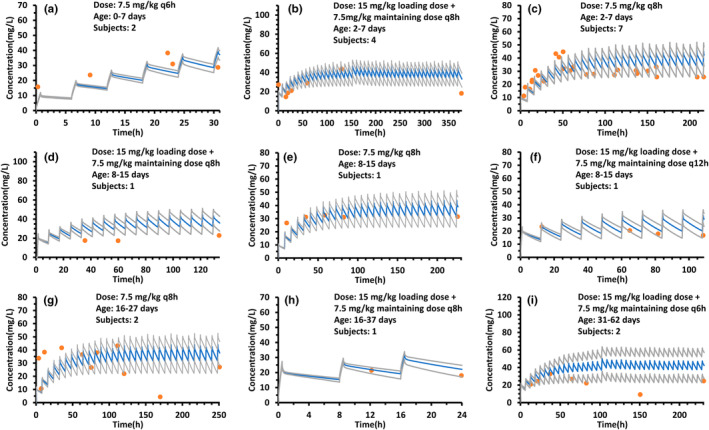
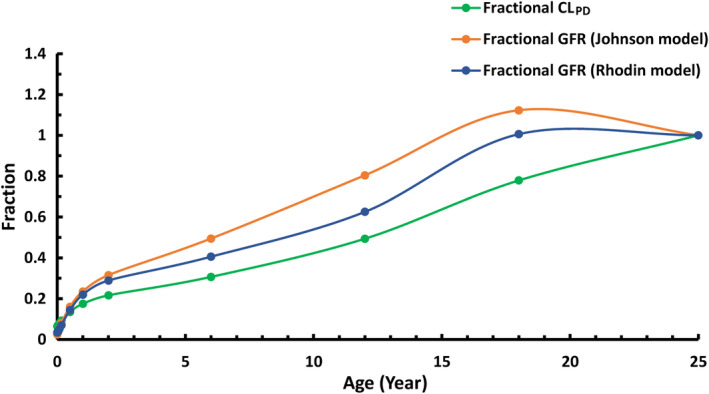
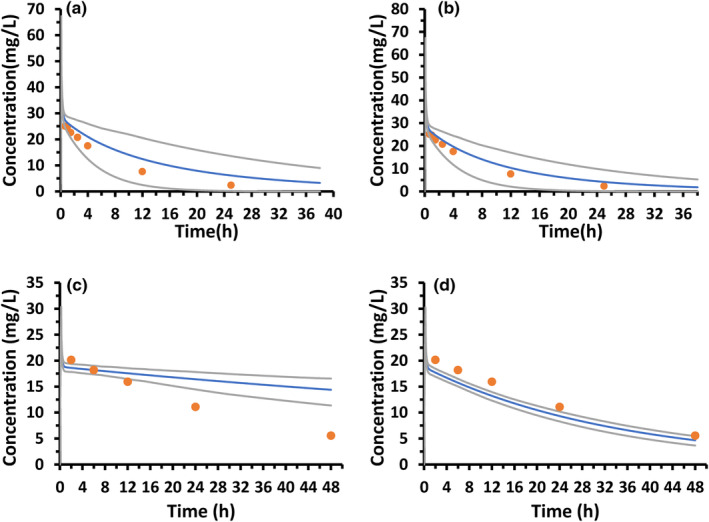
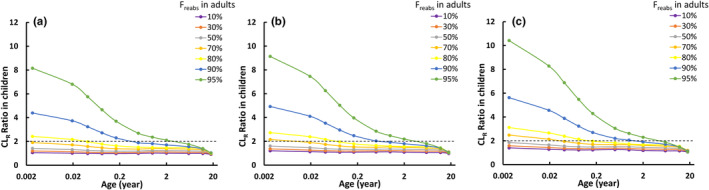
Empirical maturation models (e.g., Johnson and Rhodin models) for glomerular filtration rate (GFR) are commonly used as scaling factors for predicting pediatric renal clearance, but their predictive performance for drugs featured with tubular reabsorption is poorly understood. This study investigated the adequacy of GFR-based scaling models for predicting pediatric renal clearance in drugs with passive tubular reabsorption by comparing with a mechanistic kidney model (Mech-KiM) that encompasses the physiological processes of glomerular filtration, tubular secretion, and reabsorption. The analysis utilized hypothetical drugs with varying fractions of tubular reabsorption (F), alongside the model drug metronidazole, which has a F of 96%. Our simulations showed that when F is ≤70%, the discrepancies between the GFR-based scaling methods and the Mech-KiM model in predicting pediatric renal clearance were generally within a twofold range throughout childhood. However, for drugs with substantial tubular reabsorption (e.g., F > 70%), discrepancies greater than twofold were observed between the GFR-based scaling methods and the Mech-KiM model in predicting renal clearance for young children. In neonates, the differences ranged from 5- to 10-fold when the adult F was 95%. Pediatric physiologically based pharmacokinetic (PBPK) modeling of metronidazole revealed that using a GFR-based scaling method (Johnson model) significantly overestimated drug concentrations in children under 2 months, whereas utilizing the Mech-KiM model for renal clearance predictions yielded estimates closely aligned with observed concentrations. Our study demonstrates that using GFR-based scaling models to predict pediatric renal clearance might be inadequate for drugs with extensive passive tubular reabsorption (e.g., F > 70%).

摘要

肾小球滤过率(GFR)的经验性成熟模型(如约翰逊模型和罗丁模型)通常用作预测小儿肾清除率的比例因子,但对于具有肾小管重吸收特性的药物,其预测性能尚不清楚。本研究通过与一个包含肾小球滤过、肾小管分泌和重吸收生理过程的机制性肾脏模型(Mech-KiM)进行比较,研究了基于GFR的比例模型在预测具有被动肾小管重吸收的药物小儿肾清除率方面的适用性。该分析使用了具有不同肾小管重吸收分数(F)的假设药物,以及模型药物甲硝唑,其F为96%。我们的模拟结果表明,当F≤70%时,基于GFR的比例方法与Mech-KiM模型在预测小儿肾清除率方面的差异在整个儿童期通常在两倍范围内。然而,对于具有大量肾小管重吸收的药物(如F>70%),基于GFR的比例方法与Mech-KiM模型在预测幼儿肾清除率方面观察到的差异大于两倍。在新生儿中,当成人F为95%时,差异范围为5至10倍。甲硝唑的小儿生理药代动力学(PBPK)模型显示,使用基于GFR的比例方法(约翰逊模型)显著高估了2个月以下儿童的药物浓度,而使用Mech-KiM模型进行肾清除率预测得到的估计值与观察到的浓度密切一致。我们的研究表明,对于具有广泛被动肾小管重吸收的药物(如F>70%),使用基于GFR的比例模型来预测小儿肾清除率可能是不够的。
https://cdn.ncbi.nlm.nih.gov/pmc/blobs/fa0c/11706418/95eb456e2d7f/PSP4-14-152-g001.jpg
https://cdn.ncbi.nlm.nih.gov/pmc/blobs/fa0c/11706418/9a6b6a974840/PSP4-14-152-g003.jpg
https://cdn.ncbi.nlm.nih.gov/pmc/blobs/fa0c/11706418/5265e81fd133/PSP4-14-152-g004.jpg
https://cdn.ncbi.nlm.nih.gov/pmc/blobs/fa0c/11706418/4dde2903113c/PSP4-14-152-g002.jpg
https://cdn.ncbi.nlm.nih.gov/pmc/blobs/fa0c/11706418/95eb456e2d7f/PSP4-14-152-g001.jpg
https://cdn.ncbi.nlm.nih.gov/pmc/blobs/fa0c/11706418/9a6b6a974840/PSP4-14-152-g003.jpg
https://cdn.ncbi.nlm.nih.gov/pmc/blobs/fa0c/11706418/5265e81fd133/PSP4-14-152-g004.jpg
https://cdn.ncbi.nlm.nih.gov/pmc/blobs/fa0c/11706418/4dde2903113c/PSP4-14-152-g002.jpg
https://cdn.ncbi.nlm.nih.gov/pmc/blobs/fa0c/11706418/95eb456e2d7f/PSP4-14-152-g001.jpg

相似文献

1
Is the GFR-based scaling approach adequate for predicting pediatric renal clearance of drugs with passive tubular reabsorption? Insights from PBPK modeling.基于肾小球滤过率的缩放方法是否足以预测具有被动肾小管重吸收的药物的儿科肾清除率?来自生理药代动力学建模的见解。
CPT Pharmacometrics Syst Pharmacol. 2025 Jan;14(1):152-163. doi: 10.1002/psp4.13254. Epub 2024 Oct 15.
2
Novel minimal physiologically-based model for the prediction of passive tubular reabsorption and renal excretion clearance.用于预测被动肾小管重吸收和肾排泄清除率的新型最小生理模型。
Eur J Pharm Sci. 2016 Oct 30;94:59-71. doi: 10.1016/j.ejps.2016.03.018. Epub 2016 Mar 28.
3
Novel Mechanistic PBPK Model to Predict Renal Clearance in Varying Stages of CKD by Incorporating Tubular Adaptation and Dynamic Passive Reabsorption.新型机制性 PBPK 模型,通过纳入肾小管适应和动态被动重吸收,预测不同 CKD 阶段的肾清除率。
CPT Pharmacometrics Syst Pharmacol. 2020 Oct;9(10):571-583. doi: 10.1002/psp4.12553. Epub 2020 Sep 25.
4
The Predictive Value of Glomerular Filtration Rate-Based Scaling of Pediatric Clearance and Doses for Drugs Eliminated by Glomerular Filtration with Varying Protein-Binding Properties.肾小球滤过率校正的儿童清除率和药物剂量预测值,这些药物具有不同的蛋白结合特性,通过肾小球滤过消除。
Clin Pharmacokinet. 2020 Oct;59(10):1291-1301. doi: 10.1007/s40262-020-00890-2.
5
A GFR-Based Method to Predict the Effect of Renal Impairment on the Exposure or Clearance of Renally Excreted Drugs: A Comparative Study Between a Simple GFR Method and a Physiologically Based Pharmacokinetic Model.基于肾小球滤过率的方法预测肾功能损害对肾排泄药物暴露或清除的影响:一种简单肾小球滤过率方法与基于生理的药代动力学模型的比较研究。
Drugs R D. 2020 Dec;20(4):377-387. doi: 10.1007/s40268-020-00327-y. Epub 2020 Nov 4.
6
The Influence of Drug Properties and Ontogeny of Transporters on Pediatric Renal Clearance through Glomerular Filtration and Active Secretion: a Simulation-Based Study.药物特性和转运体的个体发育对肾小球滤过和主动分泌途径的儿科肾清除率的影响:基于模拟的研究。
AAPS J. 2020 Jun 21;22(4):87. doi: 10.1208/s12248-020-00468-7.
7
Prediction of Kidney Drug Clearance: A Comparison of Tubular Secretory Clearance and Glomerular Filtration Rate.预测肾脏药物清除率:肾小管分泌清除率与肾小球滤过率的比较。
J Am Soc Nephrol. 2021 Feb;32(2):459-468. doi: 10.1681/ASN.2020060833. Epub 2020 Nov 25.
8
A review of physiologically based pharmacokinetic modeling of renal drug disposition.基于生理学的肾脏药物处置药代动力学建模综述。
Drug Metab Dispos. 2025 Mar;53(3):100042. doi: 10.1016/j.dmd.2025.100042. Epub 2025 Jan 21.
9
Renal clearance parameters for PBPK model analysis of early lifestage differences in the disposition of environmental toxicants.用于环境毒物处置早期生命阶段差异的基于生理学的药代动力学(PBPK)模型分析的肾清除参数。
Regul Toxicol Pharmacol. 2008 Jun;51(1):66-86. doi: 10.1016/j.yrtph.2008.02.005. Epub 2008 Feb 29.
10
[Investigation of tubular reabsorption of phosphates in patients with chronic kidney disease].[慢性肾脏病患者磷酸盐肾小管重吸收的研究]
Vnitr Lek. 2015 Dec;61(12):1034-8.

本文引用的文献

1
Foetal and neonatal exposure prediction and dosing evaluation for ampicillin using a physiologically-based pharmacokinetic modelling approach.使用基于生理学的药代动力学建模方法对氨苄西林进行胎儿和新生儿暴露预测及剂量评估。
Br J Clin Pharmacol. 2023 Apr;89(4):1402-1412. doi: 10.1111/bcp.15589. Epub 2022 Nov 27.
2
Development and application of a pediatric mechanistic kidney model.儿科机制肾脏模型的开发与应用。
CPT Pharmacometrics Syst Pharmacol. 2022 Jul;11(7):854-866. doi: 10.1002/psp4.12798. Epub 2022 May 4.
3
Physiologically Based Pharmacokinetic Models Are Effective Support for Pediatric Drug Development.
基于生理的药代动力学模型对儿科药物研发具有有效支持作用。
AAPS PharmSciTech. 2021 Jul 26;22(6):208. doi: 10.1208/s12249-021-02076-w.
4
Predicting blood-to-plasma concentration ratios of drugs from chemical structures and volumes of distribution in humans.从化学结构和人体分布容积预测药物的血-血浆浓度比。
Mol Divers. 2021 Aug;25(3):1261-1270. doi: 10.1007/s11030-021-10186-7. Epub 2021 Feb 10.
5
Does "Birth" as an Event Impact Maturation Trajectory of Renal Clearance via Glomerular Filtration? Reexamining Data in Preterm and Full-Term Neonates by Avoiding the Creatinine Bias.“出生”这一事件是否通过肾小球滤过影响肾脏清除率的成熟轨迹?通过避免肌酐偏倚重新检查早产儿和足月儿的数据。
J Clin Pharmacol. 2021 Feb;61(2):159-171. doi: 10.1002/jcph.1725. Epub 2020 Sep 3.
6
Pediatric Renal Ontogeny and Applications in Drug Development.小儿肾脏发育及其在药物开发中的应用。
J Clin Pharmacol. 2019 Sep;59 Suppl 1:S9-S20. doi: 10.1002/jcph.1490.
7
A Comprehensive Analysis of Ontogeny of Renal Drug Transporters: mRNA Analyses, Quantitative Proteomics, and Localization.肾脏药物转运体的个体发生全面分析:mRNA 分析、定量蛋白质组学和定位。
Clin Pharmacol Ther. 2019 Nov;106(5):1083-1092. doi: 10.1002/cpt.1516. Epub 2019 Jul 3.
8
Development of a Dynamic Physiologically Based Mechanistic Kidney Model to Predict Renal Clearance.开发动态生理基于机制的肾脏模型以预测肾清除率。
CPT Pharmacometrics Syst Pharmacol. 2018 Sep;7(9):593-602. doi: 10.1002/psp4.12321. Epub 2018 Aug 11.
9
Metronidazole Metabolism in Neonates and the Interplay Between Ontogeny and Genetic Variation.新生儿体内甲硝唑的代谢以及个体发育与基因变异之间的相互作用
J Clin Pharmacol. 2017 Feb;57(2):230-234. doi: 10.1002/jcph.797. Epub 2016 Aug 23.
10
Novel minimal physiologically-based model for the prediction of passive tubular reabsorption and renal excretion clearance.用于预测被动肾小管重吸收和肾排泄清除率的新型最小生理模型。
Eur J Pharm Sci. 2016 Oct 30;94:59-71. doi: 10.1016/j.ejps.2016.03.018. Epub 2016 Mar 28.