Richmond-Cosie Logan, Schaffer Bruce, Shahid Muhammad A, Chaparro José X, Sarkhosh Ali
Horticultural Sciences Department University of Florida Gainesville Florida USA.
Tropical Research and Education Center University of Florida Homestead Florida USA.
Plant Environ Interact. 2024 Oct 14;5(5):e70007. doi: 10.1002/pei3.70007. eCollection 2024 Oct.
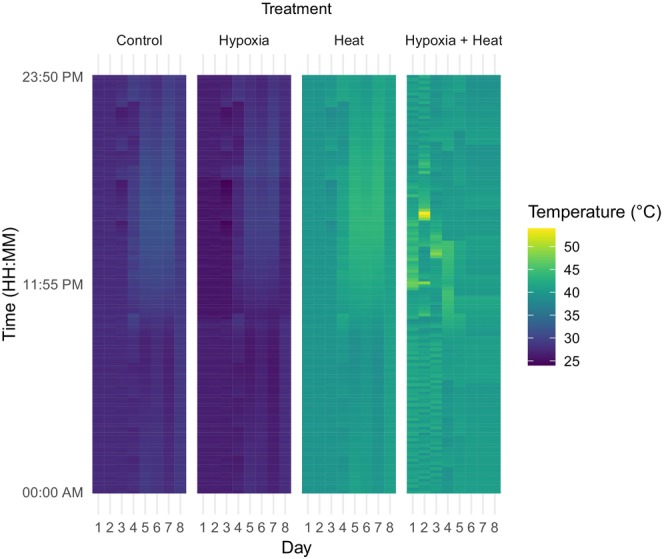
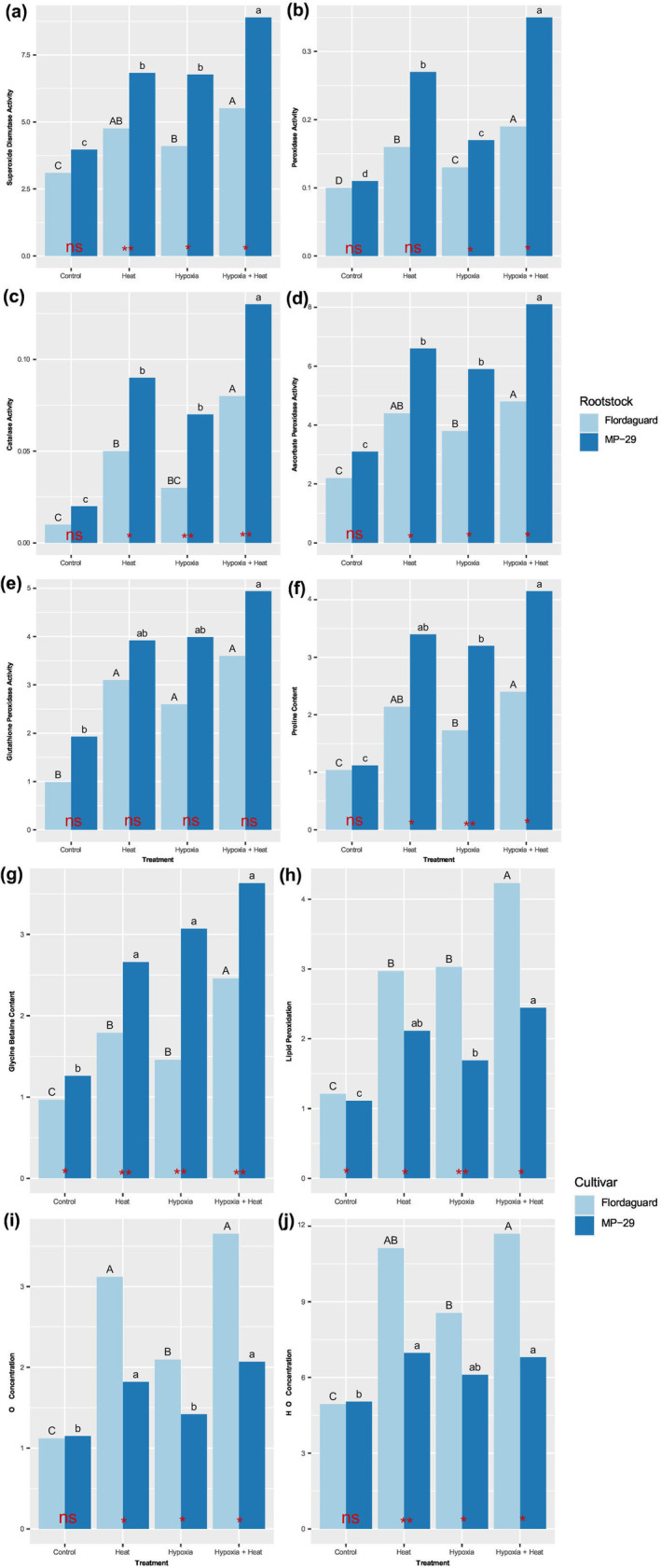
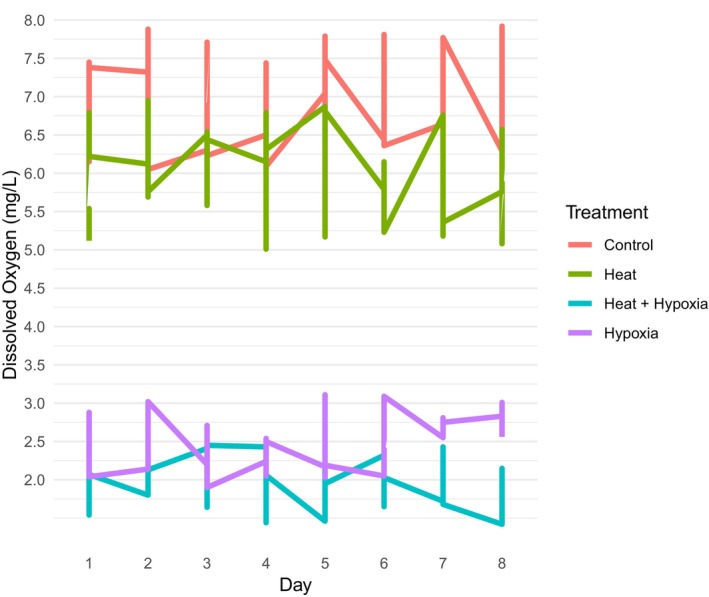
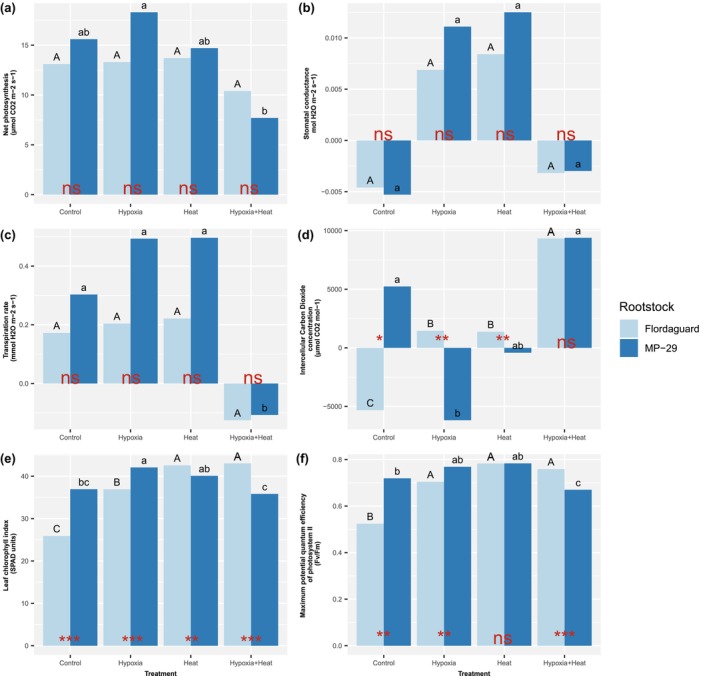
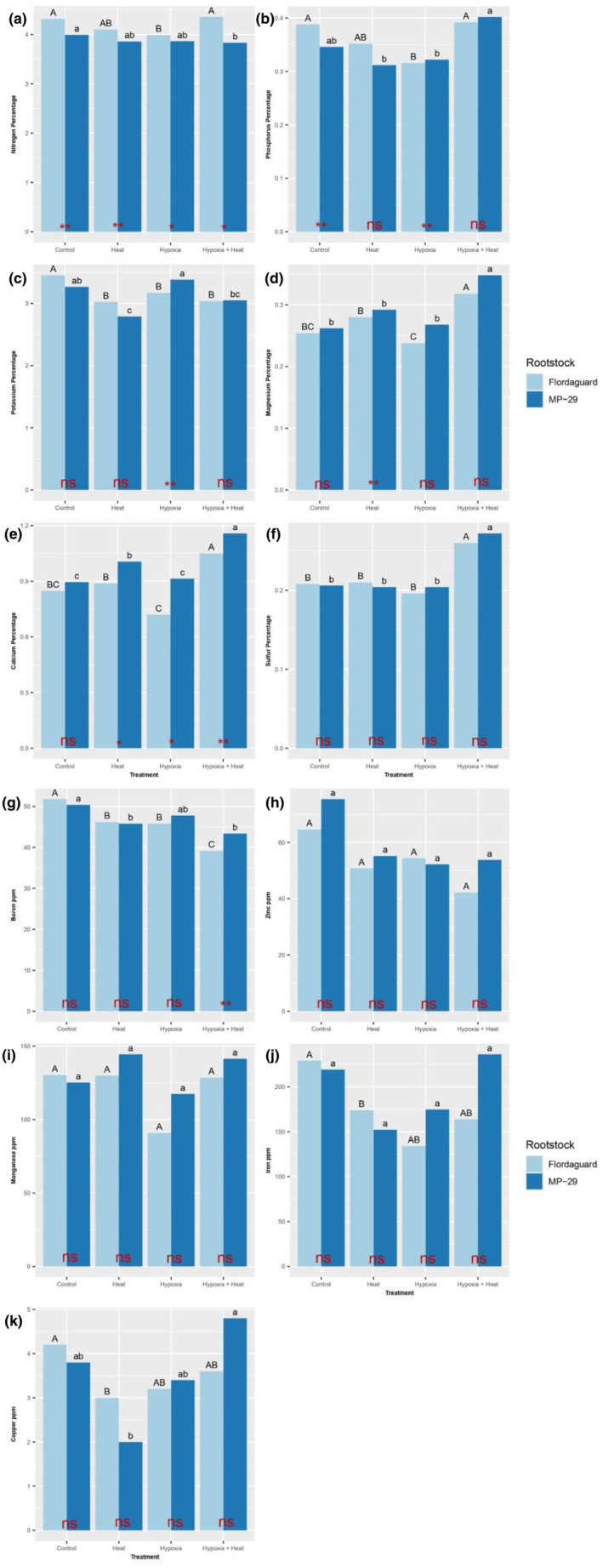
Selecting the right rootstock is crucial for successful fruit production and managing both biotic and abiotic stresses in commercial fruit orchards. To enhance the resilience of peach orchards, this study evaluated the physiological and biochemical responses of spp. rootstocks , 'Flordaguard' and 'MP-29,' under normoxia (sufficient oxygen content) or short-term hypoxia (low-oxygen content) and ambient or high temperature (40°C) in the root zone. Physiological responses measured were net photosynthesis, stomatal conductance, transpiration, intercellular CO concentration, water use efficiency, the leaf chlorophyll index, and the maximum potential quantum efficiency of photosystem II. The leaf concentrations of nitrogen, phosphorus, potassium, magnesium, calcium, sulfur, boron, zinc, manganese, iron, and copper were also analyzed. Reactive oxygen species (ROS) and antioxidants analyzed were superoxide dismutase (SOD) activity, peroxidase (POD) activity, catalase (CAT) activity, ascorbate peroxidase (APX) activity, glutathione peroxidase (GPX) activity, proline content, glycine betaine content (GB), lipid peroxidation (LPO), superoxide (O ) concentration, and hydrogen peroxide (HO) concentration. When subjected to root zone hypoxia or high temperature individually, 'MP-29' performed better physiologically than 'Flordaguard'. However, when root zone hypoxia and high temperature were combined, 'MP-29' performed better biochemically with enhanced antioxidant activity, osmolyte content, and nutrient absorption. Nutrient analysis of leaves revealed that 'MP-29' had higher N, P, K, Ca, and B concentrations than 'Flordaguard'. Consequently, 'MP-29' demonstrated greater tolerance to short-term exposure to the combined effects of high root zone temperature and hypoxia. This research contributes to identifying a suitable rootstock within the genus able to withstand root zone conditions that often result from severe weather events commonly experienced in Florida and other parts of the world.
选择合适的砧木对于商业果园水果生产的成功以及应对生物和非生物胁迫至关重要。为提高桃园的抗逆性,本研究评估了“佛罗里达卫士”(‘Flordaguard’)和‘MP - 29’这两种砧木在根区常氧(充足氧含量)或短期低氧(低氧含量)以及环境温度或高温(40°C)条件下的生理和生化反应。所测量的生理反应包括净光合作用、气孔导度、蒸腾作用、细胞间二氧化碳浓度、水分利用效率、叶片叶绿素指数以及光系统II的最大潜在量子效率。还分析了叶片中氮、磷、钾、镁、钙、硫、硼、锌、锰、铁和铜的浓度。所分析的活性氧(ROS)和抗氧化剂包括超氧化物歧化酶(SOD)活性、过氧化物酶(POD)活性、过氧化氢酶(CAT)活性、抗坏血酸过氧化物酶(APX)活性、谷胱甘肽过氧化物酶(GPX)活性、脯氨酸含量、甘氨酸甜菜碱含量(GB)、脂质过氧化(LPO)、超氧化物(O )浓度和过氧化氢(HO)浓度。当根区单独出现低氧或高温时,‘MP - 29’在生理上比“佛罗里达卫士”表现更好。然而,当根区低氧和高温同时存在时,‘MP - 29’在生化方面表现更好,其抗氧化活性、渗透溶质含量和养分吸收增强。叶片养分分析表明,‘MP - 29’的氮、磷、钾、钙和硼浓度高于“佛罗里达卫士”。因此,‘MP - 29’对根区高温和低氧联合作用的短期暴露表现出更强的耐受性。这项研究有助于在该属中确定一种合适的砧木,能够承受佛罗里达州和世界其他地区常见的恶劣天气事件所导致的根区条件。