School of Life Sciences, Jawaharlal Nehru University, New Delhi, India.
School of Environmental Sciences, Jawaharlal Nehru University, New Delhi, India.
Plant Signal Behav. 2023 Dec 31;18(1):2030082. doi: 10.1080/15592324.2022.2030082. Epub 2022 Feb 7.
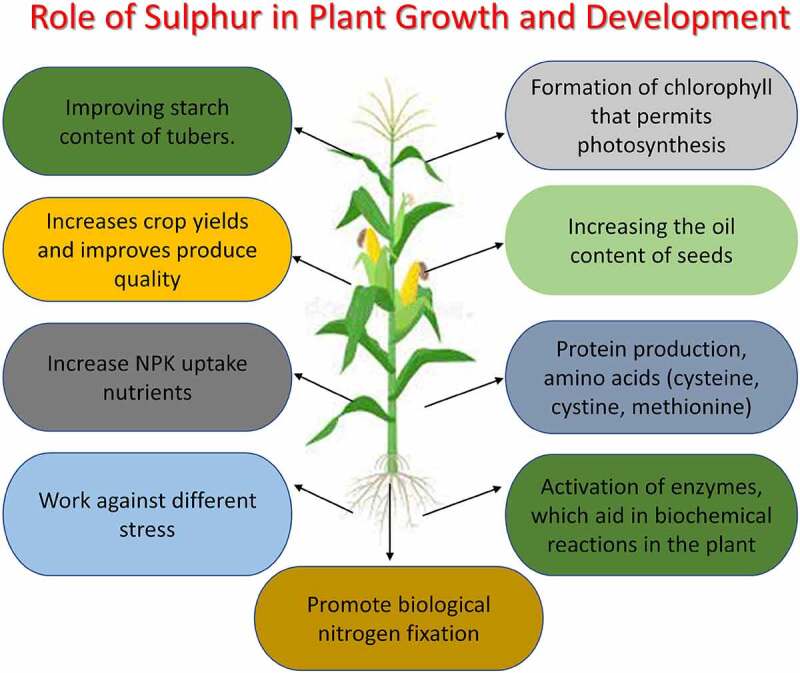
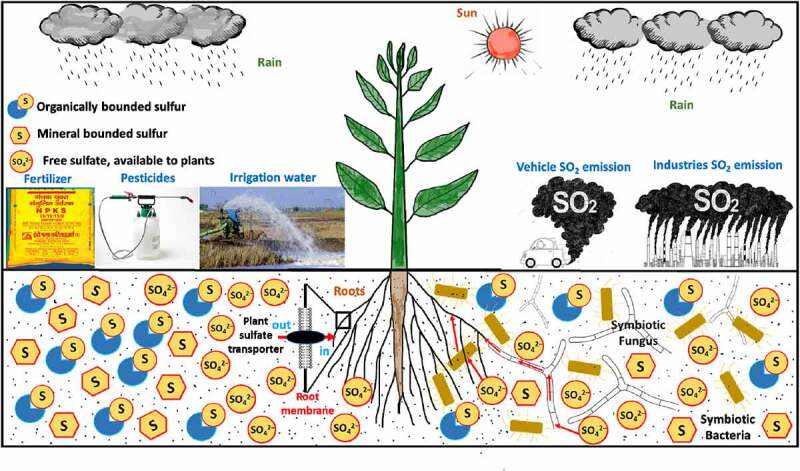
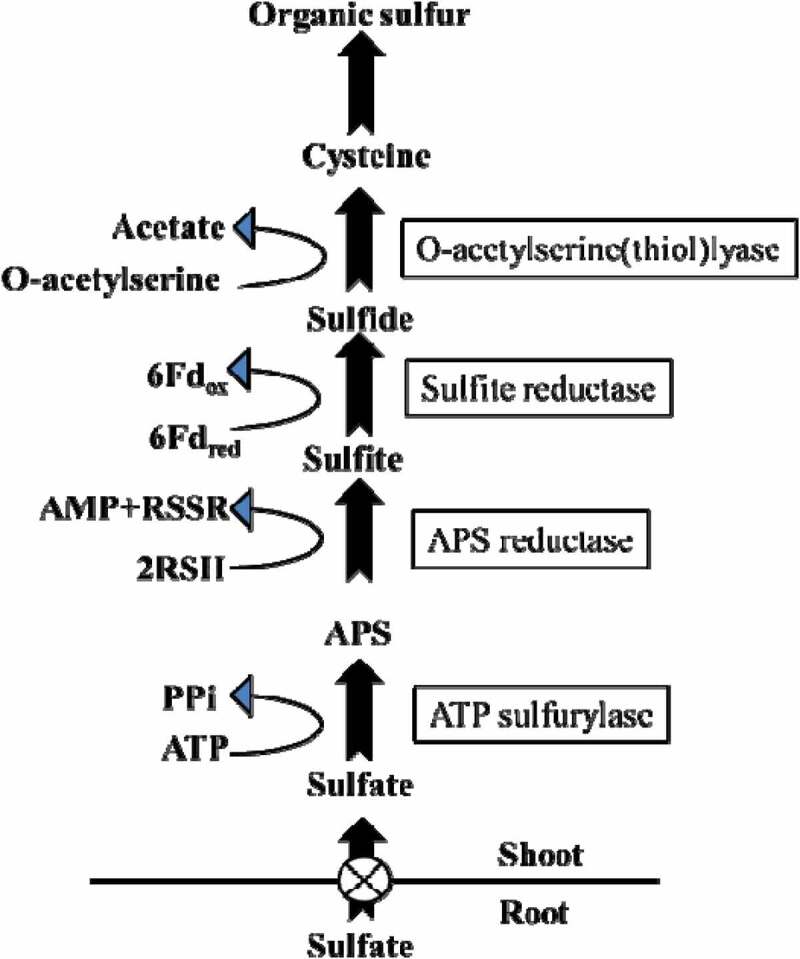
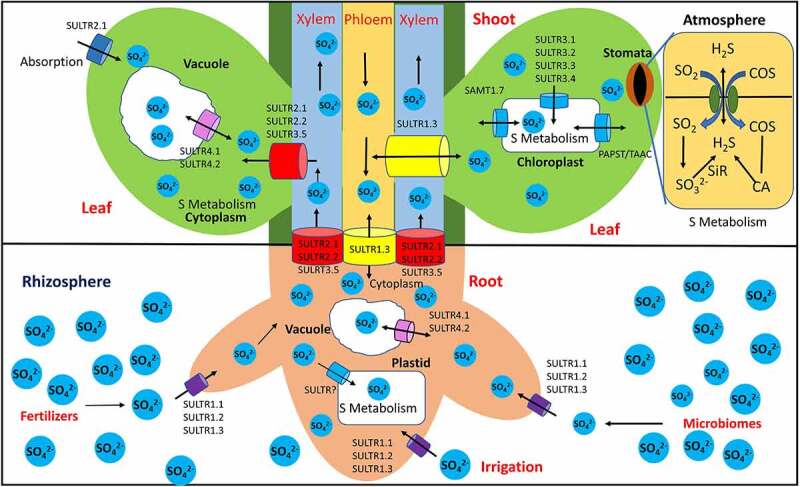
Sulfur is one of the essential nutrients that is required for the adequate growth and development of plants. Sulfur is a structural component of protein disulfide bonds, amino acids, vitamins, and cofactors. Most of the sulfur in soil is present in organic matter and hence not accessible to the plants. Anionic form of sulfur (SO) is the primary source of sulfur for plants that are generally present in minimal amounts in the soil. It is water-soluble, so readily leaches out of the soil. Sulfur and sulfur-containing compounds act as signaling molecules in stress management as well as normal metabolic processes. They also take part in crosstalk of complex signaling network as a mediator molecule. Plants uptake sulfate directly from the soil by using their dedicated sulfate transporters. In addition, plants also use the sulfur transporter of a symbiotically associated organism like bacteria and fungi to uptake sulfur from the soil especially under sulfur depleted conditions. So, sulfur is a very important component of plant metabolism and its analysis with different dimensions is highly required to improve the overall well-being of plants, and dependent animals as well as human beings. The deficiency of sulfur leads to stunted growth of plants and ultimately loss of yield. In this review, we have focused on sulfur nutrition, uptake, transport, and inter-organismic transfer to host plants. Given the strong potential for agricultural use of sulfur sources and their applications, we cover what is known about sulfur impact on the plant health. We identify opportunities to expand our understanding of how the application of soil microbes like AMF or other root endophytic fungi affects plant sulfur uptake and in turn plant growth and development.
硫是植物生长和发育所必需的营养物质之一。硫是蛋白质二硫键、氨基酸、维生素和辅因子的结构组成部分。土壤中的大部分硫存在于有机物中,因此植物无法利用。阴离子形式的硫(SO)是植物的主要硫源,一般在土壤中含量很少。它是水溶性的,因此很容易从土壤中淋失。硫和含硫化合物在应激管理以及正常代谢过程中作为信号分子发挥作用。它们还作为介体分子参与复杂信号网络的串扰。植物通过专用的硫酸盐转运蛋白直接从土壤中吸收硫酸盐。此外,植物还利用与共生体相关的生物体(如细菌和真菌)的硫转运蛋白从土壤中吸收硫,尤其是在硫缺乏的情况下。因此,硫是植物代谢的重要组成部分,对其进行多维分析对于提高植物、依赖动物以及人类的整体健康状况非常重要。硫的缺乏会导致植物生长受阻,最终导致产量下降。在这篇综述中,我们重点关注了硫的营养、吸收、运输以及向宿主植物的转移。鉴于农业对硫源的利用及其应用具有巨大潜力,我们涵盖了硫对植物健康的影响的已知信息。我们确定了扩大我们对土壤微生物(如 AMF 或其他根内生真菌)的应用如何影响植物硫吸收以及进而影响植物生长和发育的理解的机会。