Hatano Mai, Nakajima Waki, Tani Hideaki, Uchida Hiroyuki, Miyazaki Tomoyuki, Arisawa Tetsu, Takada Yuuki, Tsugawa Sakiko, Sano Akane, Nakano Kotaro, Eiro Tsuyoshi, Abe Hiroki, Suda Akira, Asami Takeshi, Hishimoto Akitoyo, Nagai Nobuhiro, Koizumi Teruki, Nakajima Shinichiro, Kurokawa Shunya, Ohtani Yohei, Takahashi Kie, Kikuchi Yuhei, Yatomi Taisuke, Honda Shiori, Jinzaki Masahiro, Hirano Yoji, Mitoma Ryo, Tamura Shunsuke, Baba Shingo, Togao Osamu, Kosaka Hirotaka, Okazawa Hidehiko, Kimura Yuichi, Mimura Masaru, Takahashi Takuya
Department of Physiology, Yokohama City University Graduate School of Medicine, Yokohama, Japan.
Department of Neuropsychiatry, Keio University School of Medicine, Tokyo, Japan.
Mol Psychiatry. 2025 May;30(5):1780-1790. doi: 10.1038/s41380-024-02785-1. Epub 2024 Oct 15.
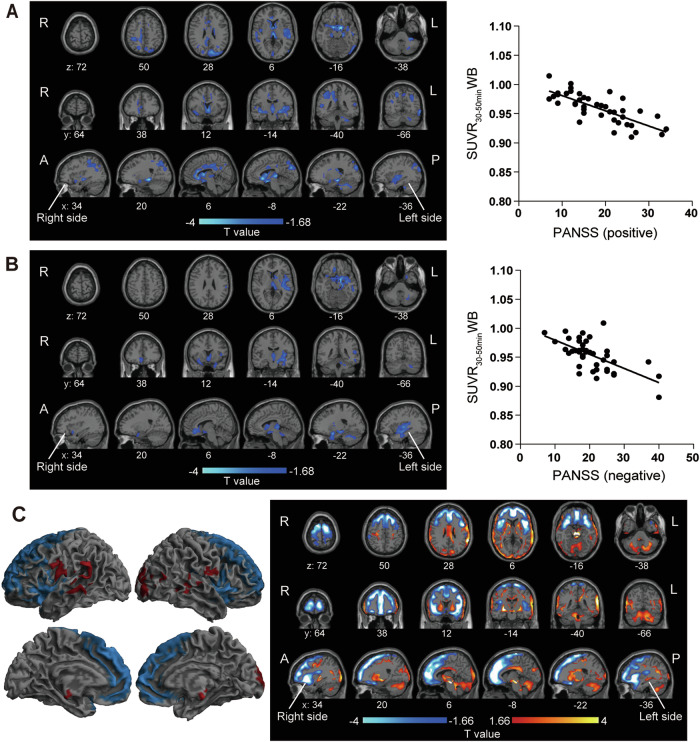
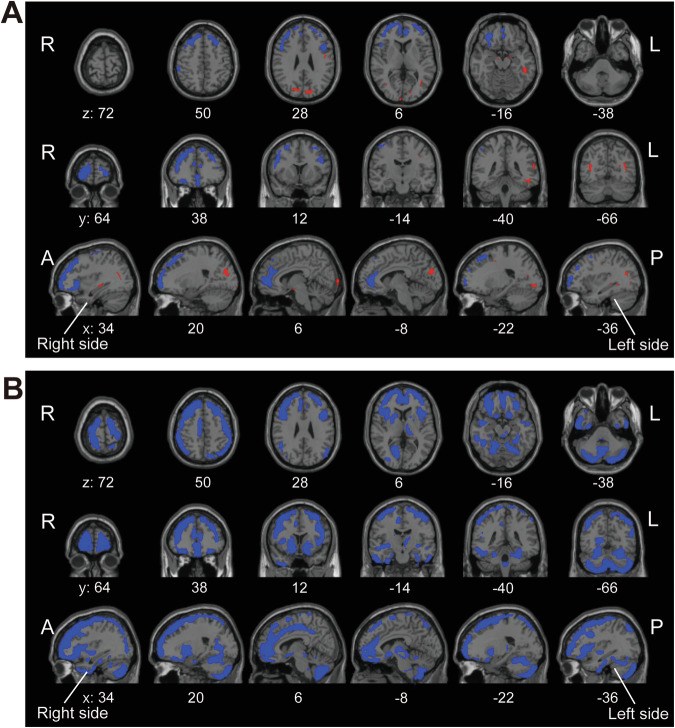
Synaptic phenotypes in living patients with psychiatric disorders are poorly characterized. Excitatory glutamate α-amino-3-hydroxy-5-methyl-4-isoxazole propionic acid receptor (AMPAR) is a fundamental component for neurotransmission. We recently developed a positron emission tomography (PET) tracer for AMPAR, [C]K-2, the first technology to visualize and quantify AMPARs density in living human brain. In this study, we characterized patients with major psychiatric disorders with [C]K-2. One hundred forty-nine patients with psychiatric disorders (schizophrenia, n = 42; bipolar disorder, n = 37; depression, n = 35; and autism spectrum disorder, n = 35) and 70 healthy participants underwent a PET scan with [C]K-2 for measurement of AMPAR density. We detected brain regions that showed correlation between AMPAR density and symptomatology scores in each of four disorders. We also found brain areas with significant differences in AMPAR density between patients with each psychiatric disorder and healthy participants. Some of these areas were observed across diseases, indicating that these are commonly affected areas throughout psychiatric disorders. Schizophrenia, bipolar disorder, depression, and autism spectrum disorder are uniquely characterized by AMPAR distribution patterns. Our approach to psychiatric disorders using [C]K-2 can elucidate the biological mechanisms across diseases and pave the way to develop novel diagnostics and therapeutics based on the synapse physiology.
患有精神疾病的活体患者的突触表型特征尚不明确。兴奋性谷氨酸α-氨基-3-羟基-5-甲基-4-异恶唑丙酸受体(AMPAR)是神经传递的基本组成部分。我们最近开发了一种用于AMPAR的正电子发射断层扫描(PET)示踪剂[C]K-2,这是第一项能够在活体人脑中可视化并量化AMPAR密度的技术。在本研究中,我们用[C]K-2对患有主要精神疾病的患者进行了特征分析。149名患有精神疾病的患者(精神分裂症,n = 42;双相情感障碍,n = 37;抑郁症,n = 35;自闭症谱系障碍,n = 35)和70名健康参与者接受了用[C]K-2进行的PET扫描,以测量AMPAR密度。我们在四种疾病中的每一种疾病中都检测到了显示AMPAR密度与症状评分之间存在相关性的脑区。我们还发现,每种精神疾病患者与健康参与者之间在AMPAR密度上存在显著差异的脑区。其中一些区域在多种疾病中都有观察到,这表明这些是整个精神疾病中普遍受影响的区域。精神分裂症、双相情感障碍、抑郁症和自闭症谱系障碍具有独特的AMPAR分布模式特征。我们使用[C]K-2研究精神疾病的方法能够阐明跨疾病的生物学机制,并为基于突触生理学开发新的诊断方法和治疗方法铺平道路。