Department of Internal Medicine and Oncology, Semmelweis University, 1083 Budapest, Hungary.
Hungarian Research Network SE-ENDOMOLPAT Research Group, 1085 Budapest, Hungary.
Int J Mol Sci. 2024 Sep 29;25(19):10488. doi: 10.3390/ijms251910488.
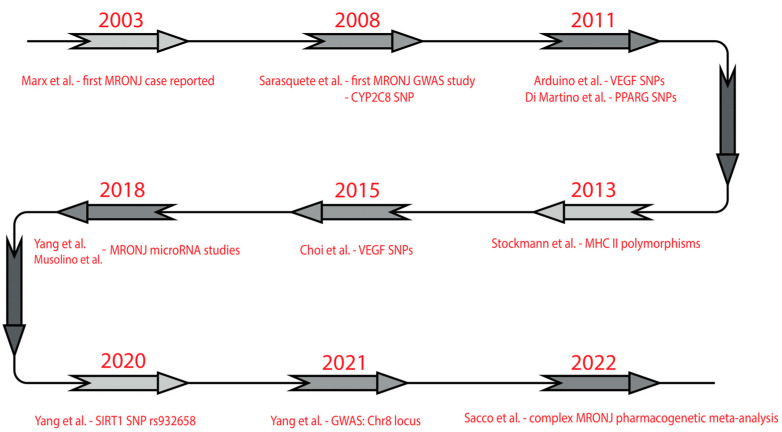
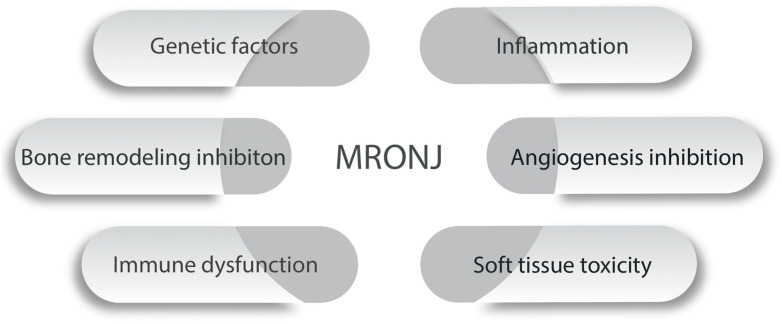
Medication-related osteonecrosis of the jaw (MRONJ) is a rare side effect of antiresorptive drugs that significantly hinders the quality of life of affected patients. The disease develops in the presence of a combination of factors. Important pathogenetic factors include inflammation, inhibition of bone remodeling, or genetic predisposition. Since the first description of this rare side effect in 2003, a growing body of data has suggested a possible role for genetic factors in the disease. Several genes have been suggested to play an important role in the pathogenesis of MRONJ such as , , and . With the development of molecular biology, newer methods such as miRNA and gene expression studies have been introduced in MRONJ, in addition to methods that can examine the base sequence of the DNA. Describing the complex genetic background of MRONJ can help further understand its pathophysiology as well as identify new therapeutic targets to better manage this adverse drug reaction.
药物相关性下颌骨坏死(MRONJ)是一种抗吸收药物的罕见副作用,严重影响了受影响患者的生活质量。该疾病的发生是多种因素共同作用的结果。重要的发病因素包括炎症、骨重塑抑制或遗传易感性。自 2003 年首次描述这种罕见的副作用以来,越来越多的数据表明遗传因素可能在该疾病中起作用。有几个基因被认为在 MRONJ 的发病机制中起重要作用,如 、 和 。随着分子生物学的发展,除了可以检查 DNA 碱基序列的方法外,miRNA 和基因表达研究等更新的方法也已被引入 MRONJ。描述 MRONJ 复杂的遗传背景有助于进一步了解其病理生理学,并确定新的治疗靶点,以更好地管理这种药物不良反应。