Chen Yang, Qin Chao, Zhou Honghai, Xu Zhenbang, Xu Anpeng, Li Hang
Changchun Institute of Optics, Fine Mechanics and Physics, Chinese Academy of Sciences, Changchun 130033, China.
University of Chinese Academy of Sciences, Beijing 100049, China.
Sensors (Basel). 2024 Sep 27;24(19):6265. doi: 10.3390/s24196265.
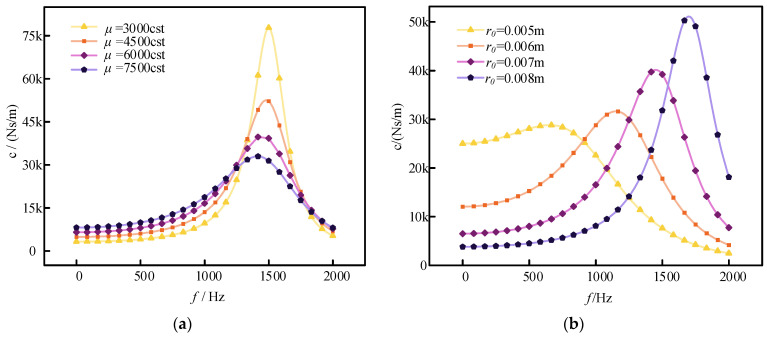
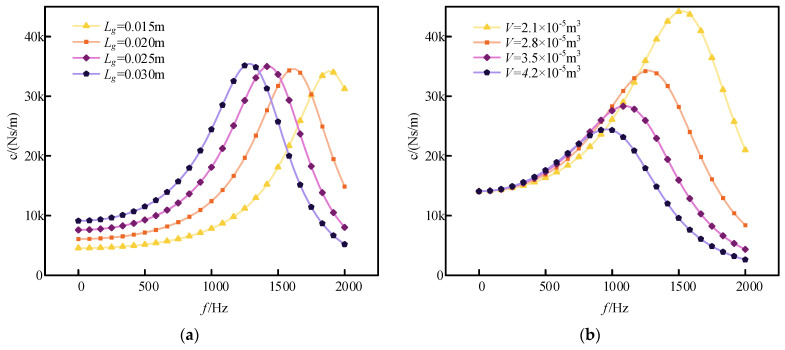
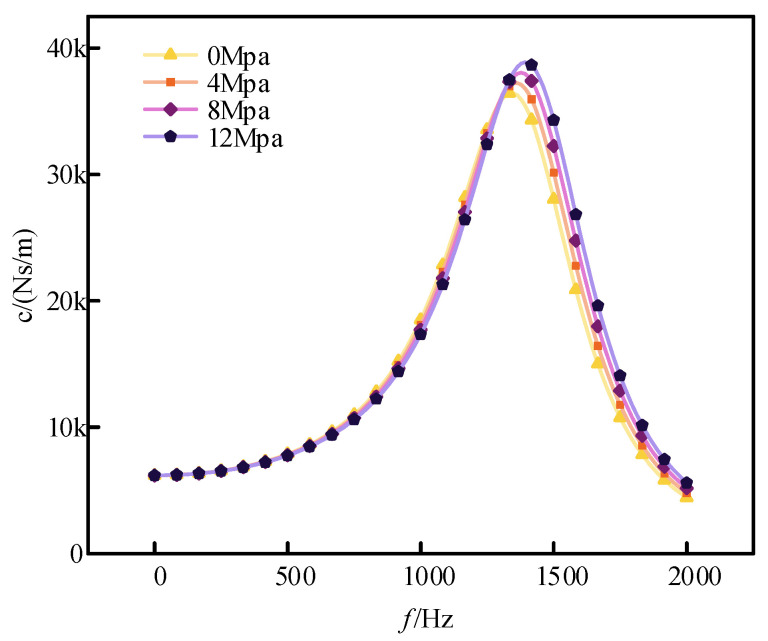
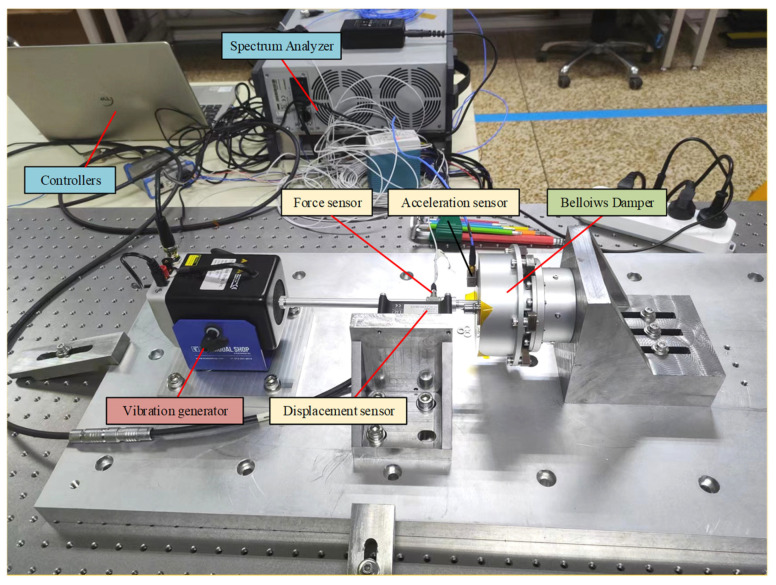
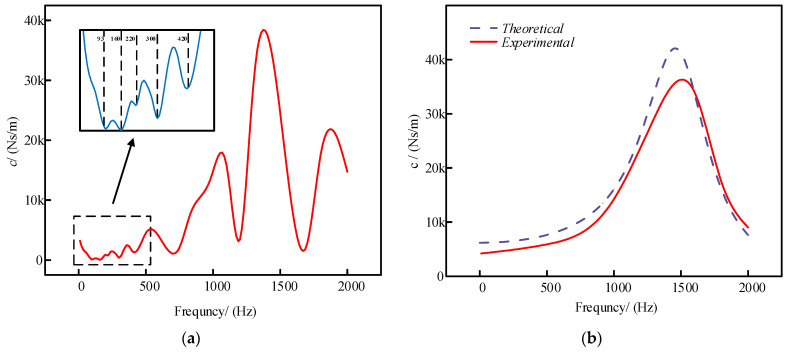
Micro-vibrations during the operation of space remote sensing equipment can significantly affect optical imaging quality. To address this issue, a bellows-type viscous damper serves as an effective passive damping and vibration isolation solution. This paper introduces a bellows-type viscous damper with adjustable damping capabilities, designed for mid- to high-frequency applications. We developed a system damping model based on hydraulic fluid dynamics to examine how different factors-such as viscous coefficients, damping hole lengths, hole diameters, chamber pressures, and volumes-influence the damping characteristics. To validate the theoretical model, we constructed an experimental platform. The experimental results show that the theoretical damping curves closely match the measured data. Moreover, increasing the chamber pressure effectively enhances the damper's damping coefficient, with the deviation from theoretical predictions being approximately 4%.
空间遥感设备运行过程中的微振动会显著影响光学成像质量。为解决这一问题,波纹管式粘性阻尼器是一种有效的被动阻尼和隔振解决方案。本文介绍了一种具有可调阻尼能力的波纹管式粘性阻尼器,专为中高频应用而设计。我们基于液压流体动力学开发了一个系统阻尼模型,以研究粘性系数、阻尼孔长度、孔径、腔室压力和体积等不同因素如何影响阻尼特性。为验证理论模型,我们搭建了一个实验平台。实验结果表明,理论阻尼曲线与实测数据紧密匹配。此外,增加腔室压力可有效提高阻尼器的阻尼系数,与理论预测的偏差约为4%。