Caetano Edmilson Júnio Medeiros, Silva André Alisson Rodrigues da, Lima Geovani Soares de, Azevedo Carlos Alberto Vieira de, Veloso Luana Lucas de Sá Almeida, Arruda Thiago Filipe de Lima, Souza Allesson Ramos de, Soares Lauriane Almeida Dos Anjos, Gheyi Hans Raj, Dias Mirandy Dos Santos, Borborema Lucyelly Dâmela Araújo, Sousa Vitória Dantas de, Fernandes Pedro Dantas
Academic Unit of Agricultural Engineering, Federal University of Campina Grande, Campina Grande 58430-380, PB, Brazil.
Academic Unit of Agrarian Sciences, Federal University of Campina Grande, Pombal 58840-000, PB, Brazil.
Plants (Basel). 2024 Sep 28;13(19):2718. doi: 10.3390/plants13192718.
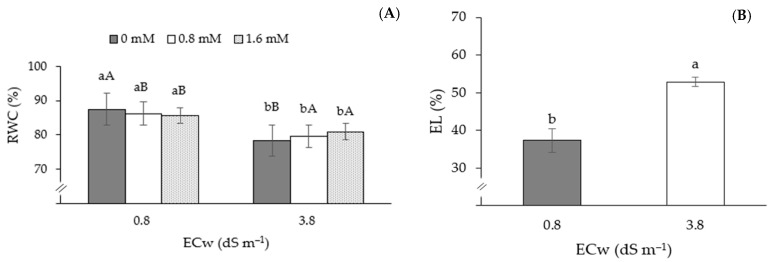
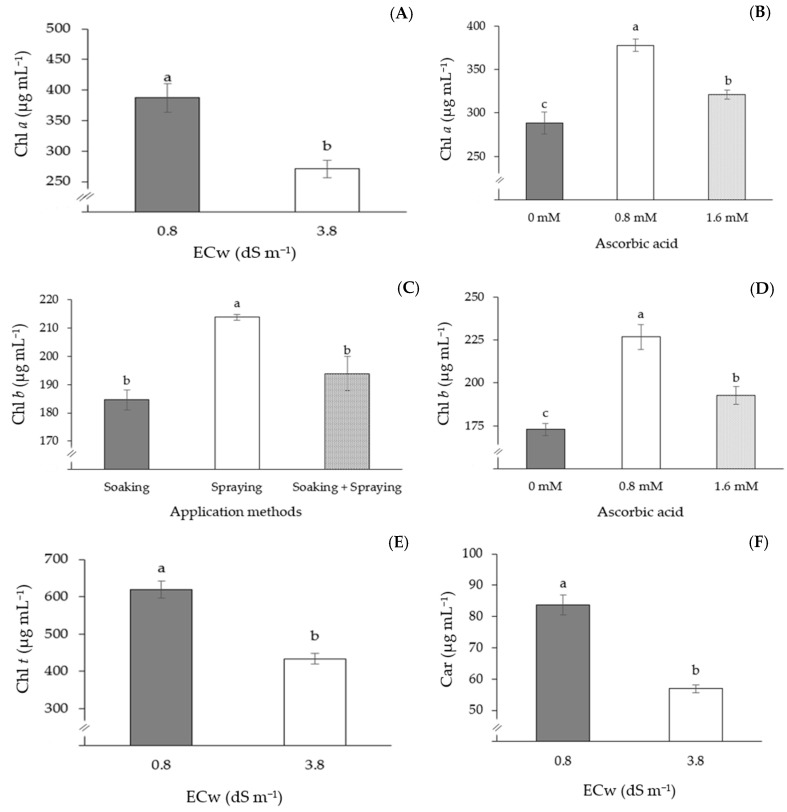
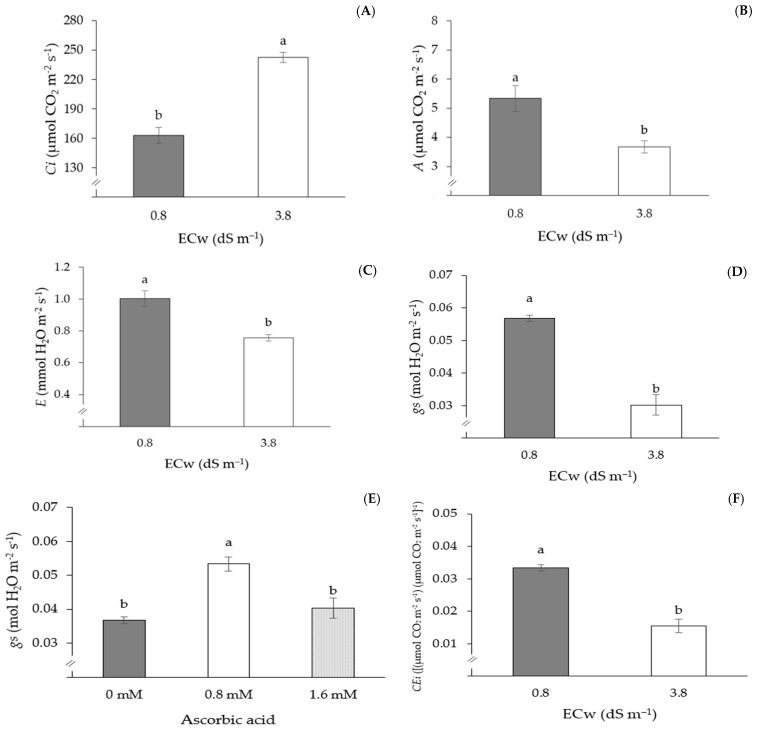
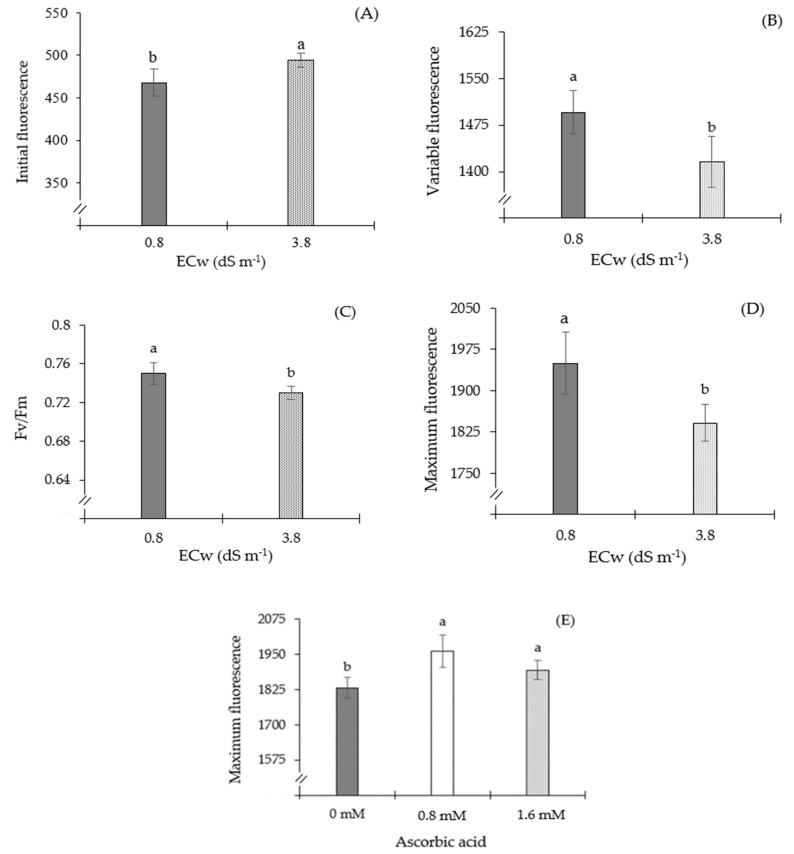
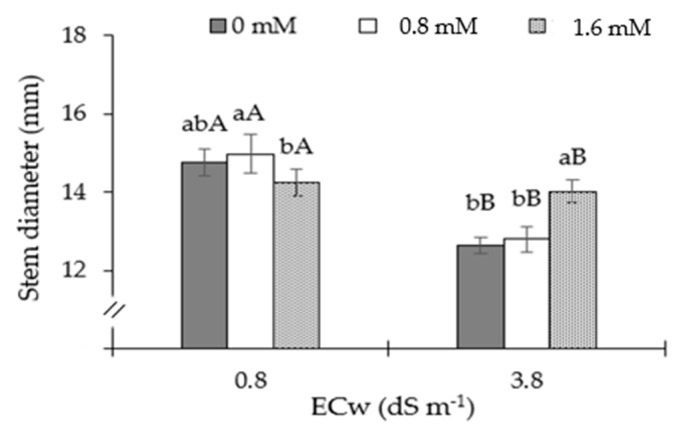
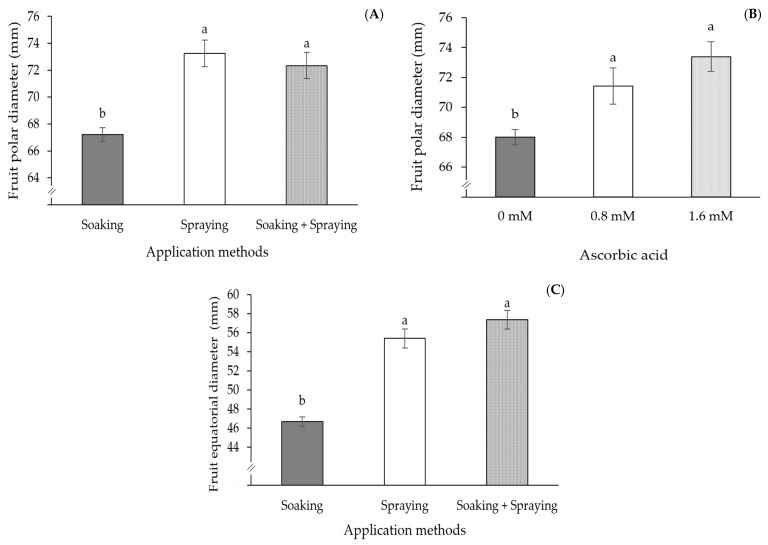
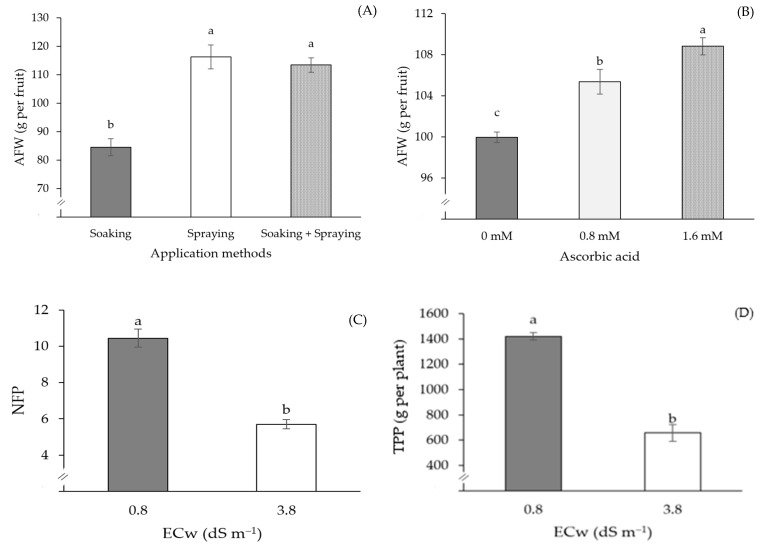
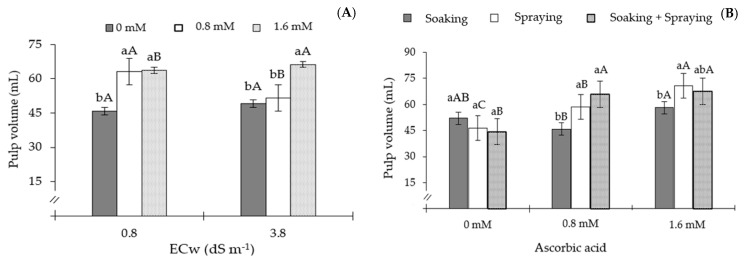
Salinity restricts the growth of irrigated fruit crops in semi-arid areas, making it crucial to find ways to reduce salt stress. One effective strategy is using eliciting substances like ascorbic acid. In this context, the objective of this study was to evaluate the effects of application methods and concentrations of ascorbic acid on the morphophysiology and production of sour passion fruit irrigated with saline water. The experiment was organized using a factorial randomized block design (3 × 3 × 2) with three application methods (soaking, spraying, and soaking and spraying), three concentrations of ascorbic acid (0, 0.8, and 1.6 mM) and two levels of electrical conductivity of irrigation water-ECw (0.8 and 3.8 dS m). Foliar spraying of ascorbic acid at a concentration of 0.8 mM mitigated the effects of salt stress on the relative water content of leaves, the synthesis of photosynthetic pigments, gas exchange, and total production of sour passion fruit when irrigated with ECw of 3.8 dS m. Plants grown with water of 0.8 dS m and under foliar application of 0.8 mM of ascorbic acid achieved the maximum growth in stem diameter and the greatest volume of pulp in the fruits.
盐分限制了半干旱地区灌溉水果作物的生长,因此找到减轻盐胁迫的方法至关重要。一种有效的策略是使用抗坏血酸等诱导物质。在此背景下,本研究的目的是评估抗坏血酸的施用方法和浓度对用盐水灌溉的酸西番莲形态生理和产量的影响。试验采用析因随机区组设计(3×3×2),有三种施用方法(浸泡、喷施以及浸泡和喷施)、三种抗坏血酸浓度(0、0.8和1.6 mM)以及两种灌溉水的电导率水平-ECw(0.8和3.8 dS m)。当用3.8 dS m的ECw灌溉时,喷施浓度为0.8 mM的抗坏血酸可减轻盐胁迫对叶片相对含水量、光合色素合成、气体交换以及酸西番莲总产量的影响。用0.8 dS m的水种植且叶面施用0.8 mM抗坏血酸的植株,茎直径增长最大,果实果肉体积最大。