Bangash Aun Ali, Alvi Sahir Sultan, Bangash Muhammad Ali, Ahsan Haider, Khan Shiza, Shareef Rida, Villanueva Georgina, Bansal Divyam, Ahmad Mudassier, Kim Dae Joon, Chauhan Subhash C, Hafeez Bilal Bin
South Texas Center of Excellence for Cancer Research, School of Medicine, University of Texas Rio Grande Valley, McAllen, TX 78504, USA.
Department of Medicine and Oncology ISU, Division of Immunology and Microbiology, School of Medicine, University of Texas Rio Grande Valley, McAllen, TX 78504, USA.
Cancers (Basel). 2024 Oct 9;16(19):3431. doi: 10.3390/cancers16193431.
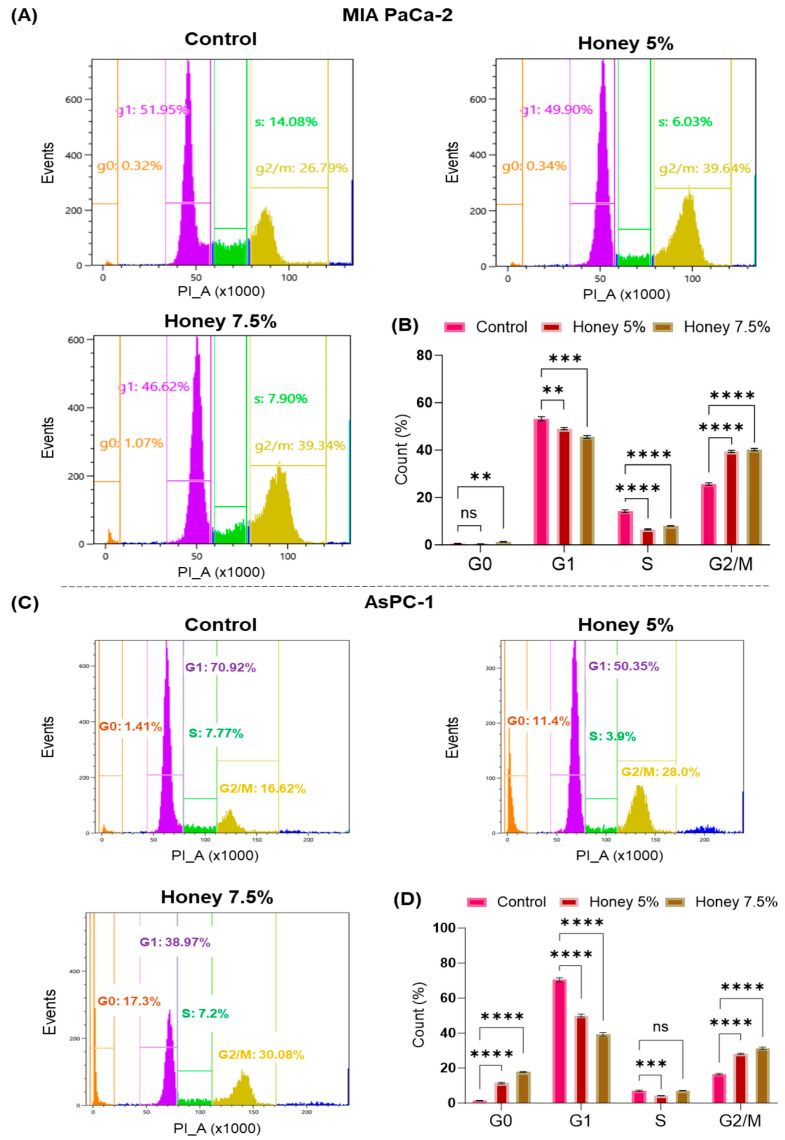
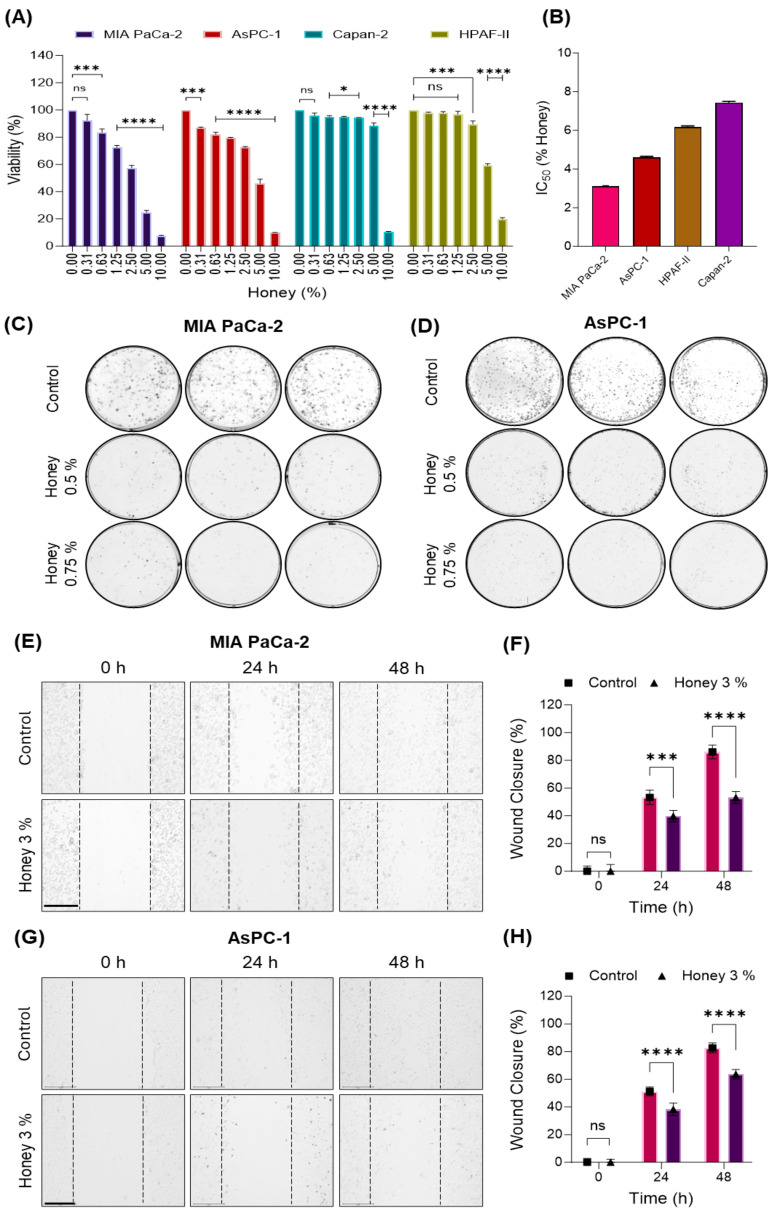
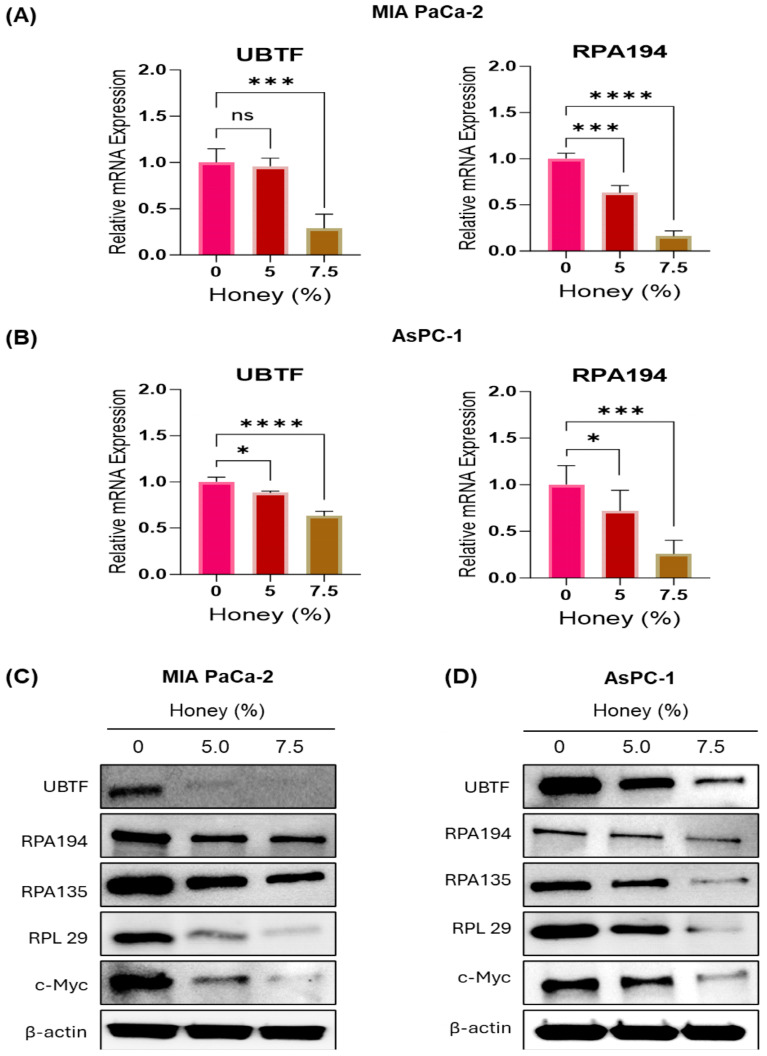
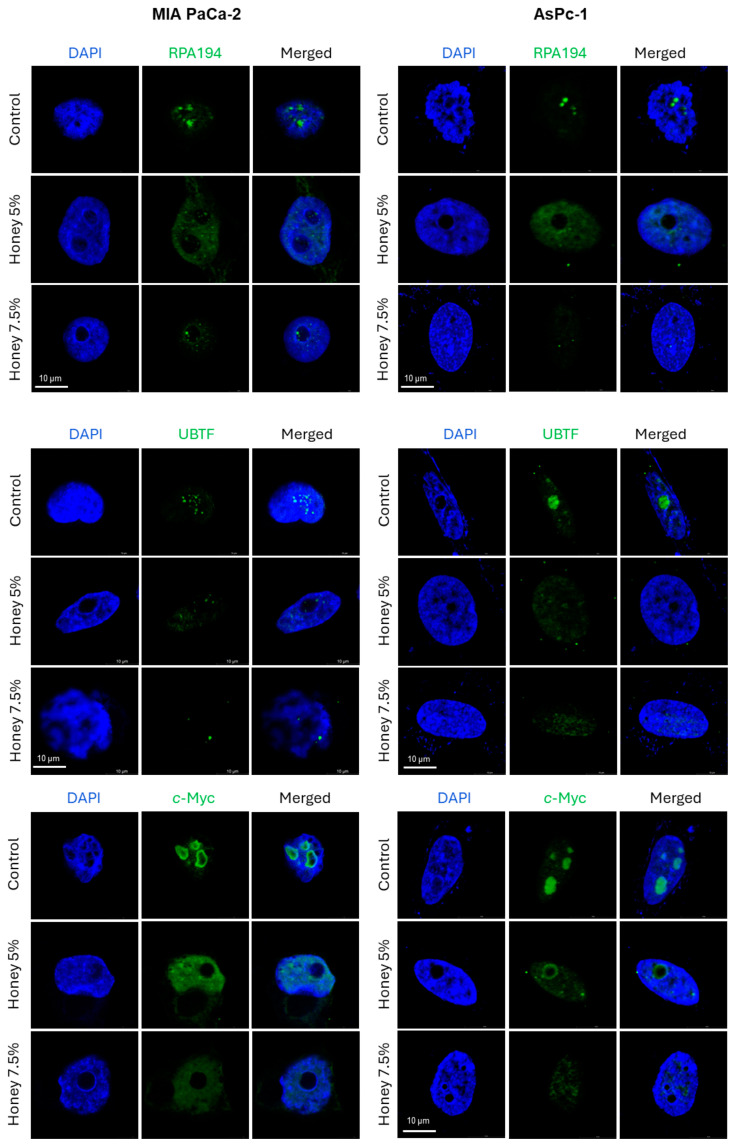
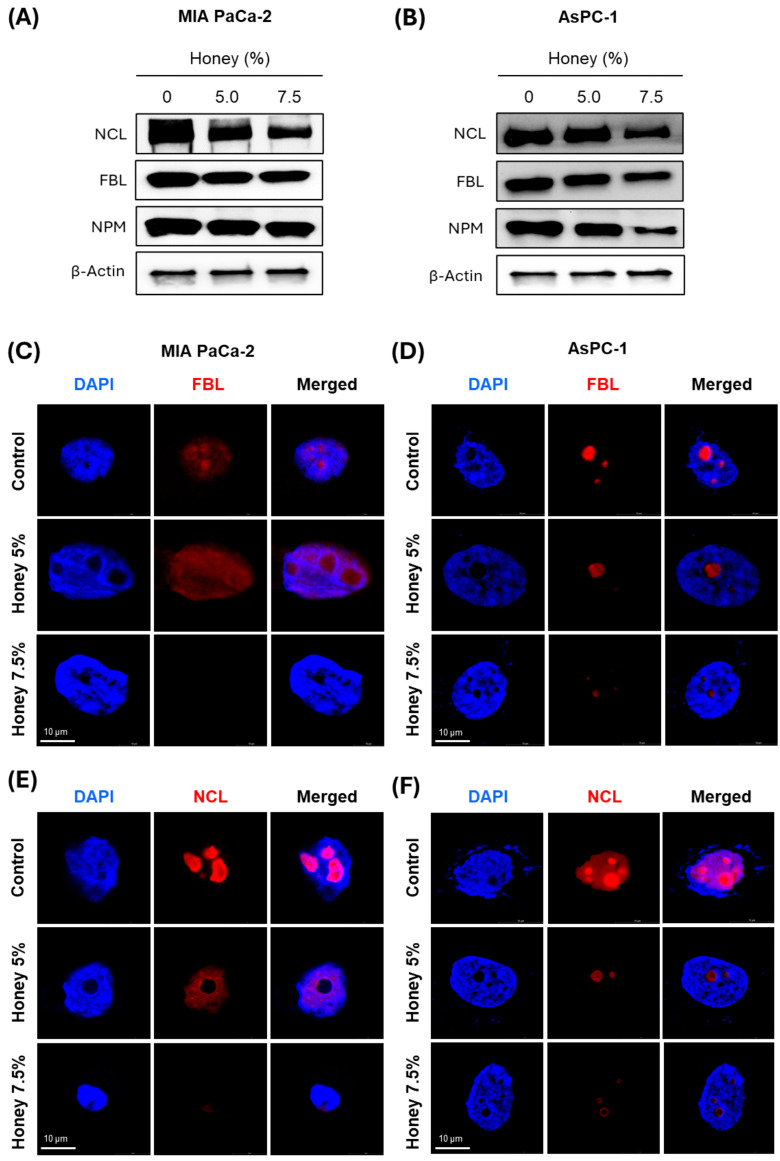
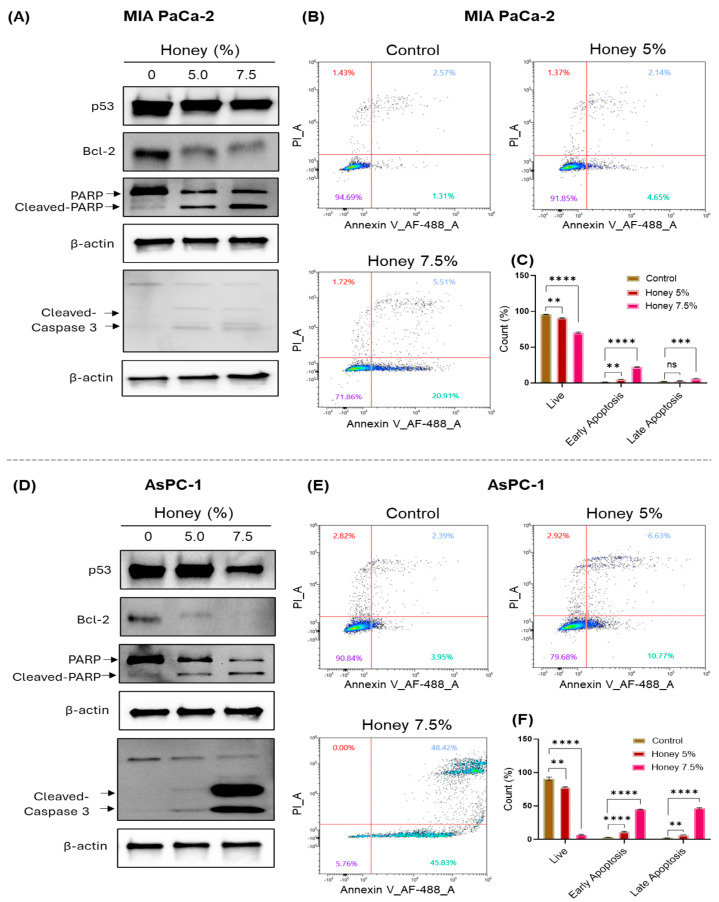
Pancreatic cancer (PanCa) is one of the deadliest cancers, with limited therapeutic response. Various molecular oncogenic events, including dysregulation of ribosome biogenesis, are linked to the induction, progression, and metastasis of PanCa. Thus, the discovery of new therapies suppressing these oncogenic events and ribosome biogenesis could be a novel therapeutic approach for the prevention and treatment of PanCa. The current study was designed to investigate the anti-cancer effect of honey against PanCa. Our results indicated that honey markedly inhibited the growth and invasive characteristics of pancreatic cancer cells by suppressing the mRNA expression and protein levels of key components of ribosome biogenesis, including RNA Pol-I subunits (RPA194 and RPA135) along with its transcriptional regulators, i.e., UBTF and c-Myc. Honey also induced nucleolar stress in PanCa cells by reducing the expression of various nucleolar proteins (NCL, FBL, and NPM). Honey-mediated regulation on ribosome biogenesis components and nucleolar organization-associated proteins significantly arrested the cell cycle in the G2M phase and induced apoptosis in PanCa cells. These results, for the first time, demonstrated that honey, being a natural remedy, has the potential to induce apoptosis and inhibit the growth and metastatic phenotypes of PanCa by targeting ribosome biogenesis.
胰腺癌(PanCa)是最致命的癌症之一,治疗反应有限。包括核糖体生物合成失调在内的各种分子致癌事件与胰腺癌的诱导、进展和转移有关。因此,发现抑制这些致癌事件和核糖体生物合成的新疗法可能是预防和治疗胰腺癌的一种新的治疗方法。本研究旨在探讨蜂蜜对胰腺癌的抗癌作用。我们的结果表明,蜂蜜通过抑制核糖体生物合成关键成分的mRNA表达和蛋白质水平,包括RNA聚合酶I亚基(RPA194和RPA135)及其转录调节因子,即UBTF和c-Myc,显著抑制胰腺癌细胞的生长和侵袭特性。蜂蜜还通过降低各种核仁蛋白(NCL、FBL和NPM)的表达,在胰腺癌细胞中诱导核仁应激。蜂蜜对核糖体生物合成成分和核仁组织相关蛋白的调节作用显著使细胞周期停滞在G2M期,并诱导胰腺癌细胞凋亡。这些结果首次表明,作为一种天然药物,蜂蜜有可能通过靶向核糖体生物合成来诱导凋亡并抑制胰腺癌的生长和转移表型。