Tse Timothy J, Chicilo Farley, Wiens Daniel J, Shen Jianheng, Anleu Alegria Javier, Kim Young Jun, Hong Ji Youn, Kim Jae Kyeom, Shin Eui-Cheol, Reaney Martin J T, Shim Youn Young
Department of Food and Bioproduct Sciences, University of Saskatchewan, 51 Campus Drive, Saskatoon, SK S7N 5A8, Canada.
Department of Food and Biotechnology, Korea University, 2511 Sejong-ro, Sejong 30019, Republic of Korea.
Foods. 2024 Sep 27;13(19):3085. doi: 10.3390/foods13193085.
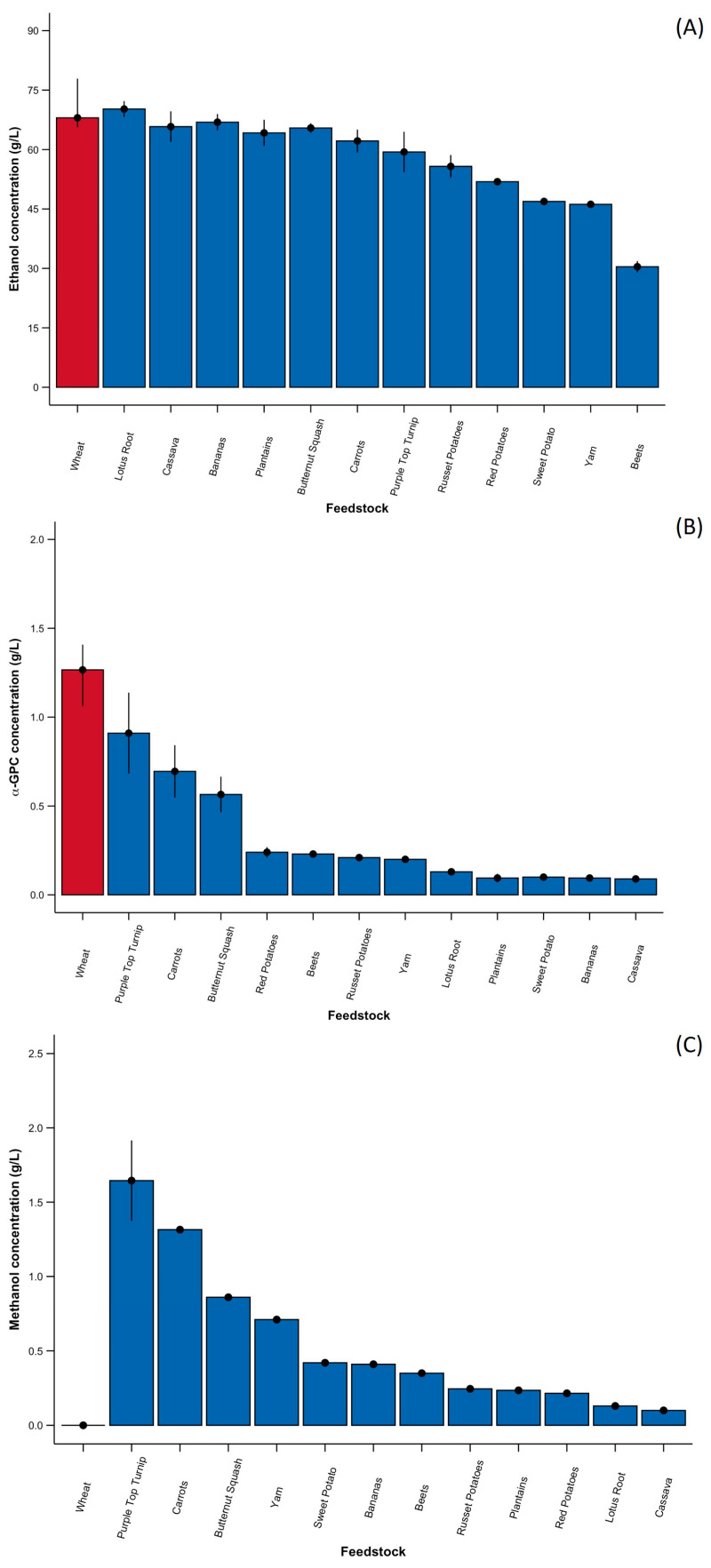
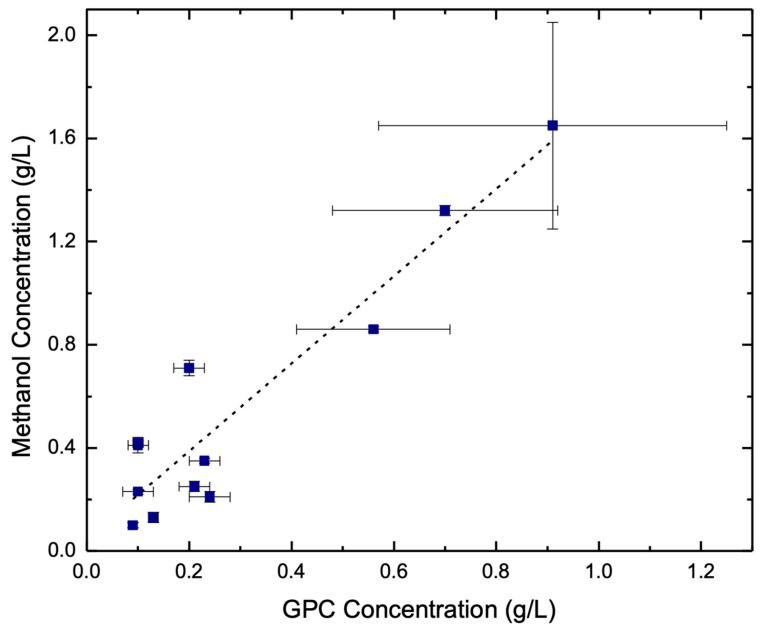
Vegetables and fruits, high in starch and sugars, are promising substrates for bioethanol production, but can also yield valuable nootropic compounds, such as α-glycerylphosphorylcholine (α-GPC). This compound is a known cognitive enhancer that works by increasing the release of acetylcholine, a neurotransmitter essential for learning and memory. In this study, select root and tuber crops, as well as fruits, were subjected to fermentation to observe the co-production of ethanol and α-GPC. The ethanol yields from these substrates were comparable to those from wheat (var. AC Andrew), ranging from 30.44 g/L (beet) to 70.04 g/L (lotus root). Aside from ethanol, α-GPC was also produced, with purple top turnip yielding 0.91 g/L, the second highest concentration after wheat (used as a reference), which produced 1.25 g/L. Although α-GPC yields in the tested substrates were lower than those from cereal grains (e.g., wheat and barley), a noteworthy observation was the production of methanol in many of these substrates. Methanol was detected in all feedstocks except wheat, with concentrations ranging from 0.10 g/L (cassava) to 1.69 g/L (purple top turnip). A linear regression analysis revealed a strong correlation between methanol and α-GPC content (R = 0.876; slope = 0.52), suggesting a potential link in their biosynthetic pathways. These feedstocks not only proved effective as substrates for bioethanol production, but also showed potential for generating value-added compounds such as α-GPC. This dual-purpose potential presents new market opportunities for producers by leveraging both biofuel and nootropic compound production. Furthermore, the observed relationship between methanol and α-GPC production warrants further investigation to elucidate the metabolic pathways involved.
富含淀粉和糖类的蔬菜和水果是生物乙醇生产的理想底物,但也能产生有价值的促智化合物,如α-甘油磷酰胆碱(α-GPC)。这种化合物是一种已知的认知增强剂,其作用机制是增加乙酰胆碱的释放,乙酰胆碱是学习和记忆所必需的神经递质。在本研究中,选择了根茎类作物以及水果进行发酵,以观察乙醇和α-GPC的联产情况。这些底物的乙醇产量与小麦(品种AC Andrew)相当,范围从30.44克/升(甜菜)到70.04克/升(莲藕)。除乙醇外,还产生了α-GPC,紫顶芜菁的产量为0.91克/升,是仅次于小麦(用作参考,产量为1.25克/升)的第二高浓度。尽管测试底物中α-GPC的产量低于谷物(如小麦和大麦),但一个值得注意的现象是许多这些底物中产生了甲醇。除小麦外,所有原料中都检测到了甲醇,浓度范围从0.10克/升(木薯)到1.69克/升(紫顶芜菁)。线性回归分析显示甲醇与α-GPC含量之间存在强相关性(R = 0.876;斜率 = 0.52),表明它们的生物合成途径可能存在联系。这些原料不仅被证明是生物乙醇生产的有效底物,还显示出产生α-GPC等增值化合物的潜力。这种两用潜力通过利用生物燃料和促智化合物生产为生产商带来了新的市场机会。此外,观察到的甲醇与α-GPC生产之间的关系值得进一步研究,以阐明其中涉及的代谢途径。