Oyeneye Adebimpe, Shen Jianheng, Shim Youn Young, Tse Timothy J, Reaney Martin J T
Department of Plant Sciences, University of Saskatchewan, 51 Campus Drive, Saskatoon, Saskatchewan S7N 5A8, Canada.
Prairie Tide Diversified Inc., 102 Melville Street, Saskatoon, Saskatchewan S7J 0R1, Canada.
ACS Omega. 2020 May 20;5(21):12486-12494. doi: 10.1021/acsomega.0c01352. eCollection 2020 Jun 2.
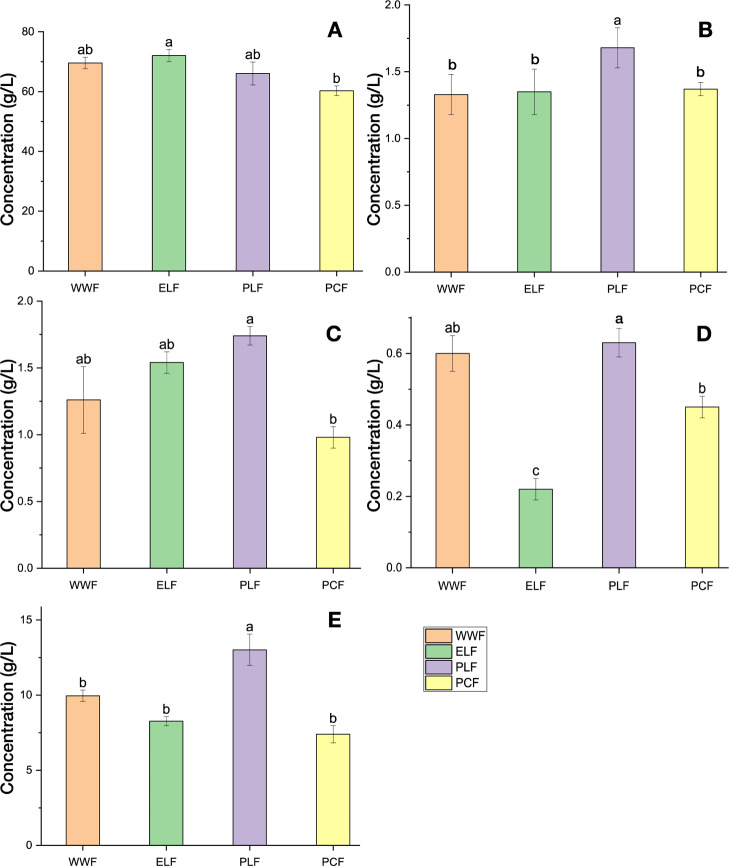
The liquified mash of milled grains from the Canadian wheat cultivar, AC Andrew, was fermented to determine whether α-glycerylphosphorylcholine (α-GPC) accumulated and whether the accumulation was dependent on fermentation-related factors. Fermentation was conducted at a temperature of 37 °C for 7 days (168 h) with samples collected every 24 h. The samples were analyzed using a proton nuclear magnetic resonance water suppression pulse sequence to allow the quantitation of ethanol, acetic acid, lactic acid, succinic acid, glycerol, phenethyl alcohol, betaine, and α-GPC. A Gompertz model was used to interpret fermentation kinetics for each analyte, and during fermentation, ethanol accumulated to a concentration of 72.1 g/L while α-GPC accumulated to a concentration of 1.68 g/L over 72 h. There were significant and positive correlations between the accumulation of α-GPC, ethanol, lactic acid, and glycerol and acetic acid production. Furthermore, there were no significant negative correlations between the productions of these compounds; hence, all the compounds accumulated during fermentation were produced simultaneously with no observed decrease measured in any compound. This indicates that α-GPC can be successfully produced industrially without any negative impact on ethanol or other useful compounds.
对加拿大小麦品种AC Andrew磨碎后的谷物制成的液化醪液进行发酵,以确定α-甘油磷酰胆碱(α-GPC)是否积累以及这种积累是否依赖于与发酵相关的因素。发酵在37°C下进行7天(168小时),每24小时采集一次样品。使用质子核磁共振水抑制脉冲序列对样品进行分析,以定量乙醇、乙酸、乳酸、琥珀酸、甘油、苯乙醇、甜菜碱和α-GPC。采用Gompertz模型解释每种分析物的发酵动力学,在发酵过程中,乙醇在72小时内积累至浓度72.1 g/L,而α-GPC积累至浓度1.68 g/L。α-GPC、乙醇、乳酸和甘油的积累与乙酸产生之间存在显著正相关。此外,这些化合物的产生之间没有显著负相关;因此,发酵过程中积累的所有化合物都是同时产生的,未观察到任何化合物有减少。这表明α-GPC可以在工业上成功生产,而不会对乙醇或其他有用化合物产生任何负面影响。