Aniśko Joanna, Kosmela Paulina, Cichocka Joanna, Andrzejewski Jacek, Barczewski Mateusz
Institute of Materials Technology, Poznan University of Technology, Piotrowo 3, 61-138 Poznan, Poland.
Department of Polymer Technology, Gdansk University of Technology, Narutowicza 11/12, 80-233 Gdansk, Poland.
Materials (Basel). 2024 Sep 30;17(19):4825. doi: 10.3390/ma17194825.
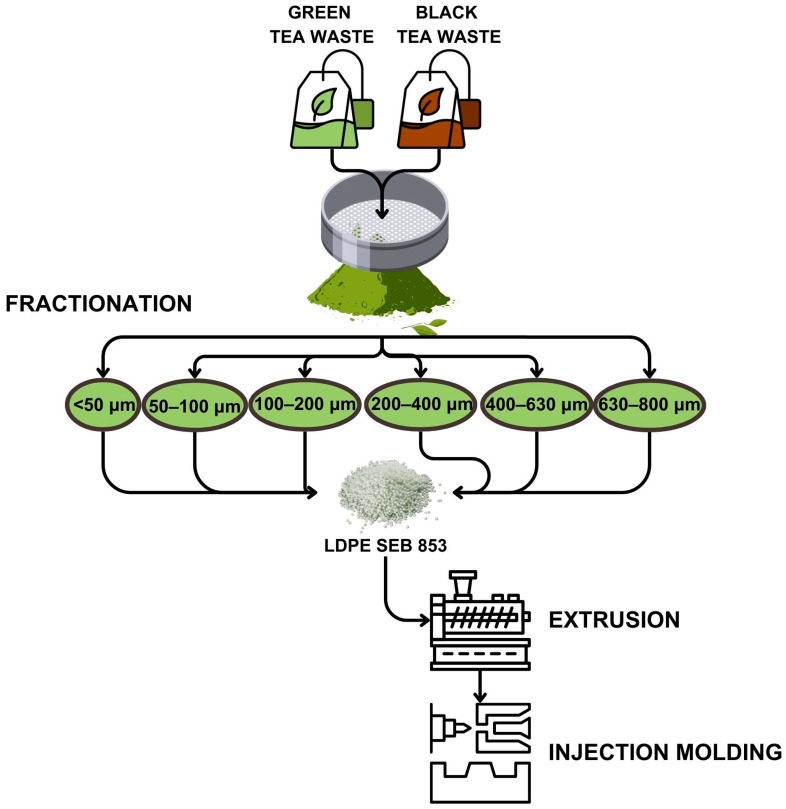
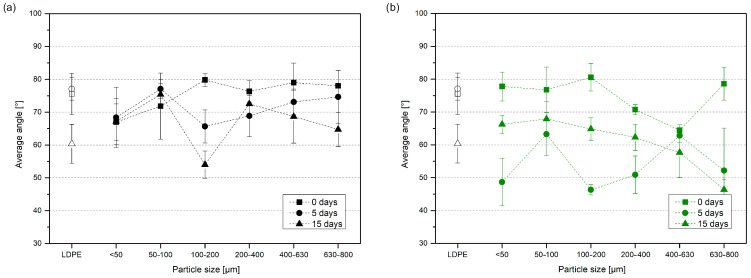
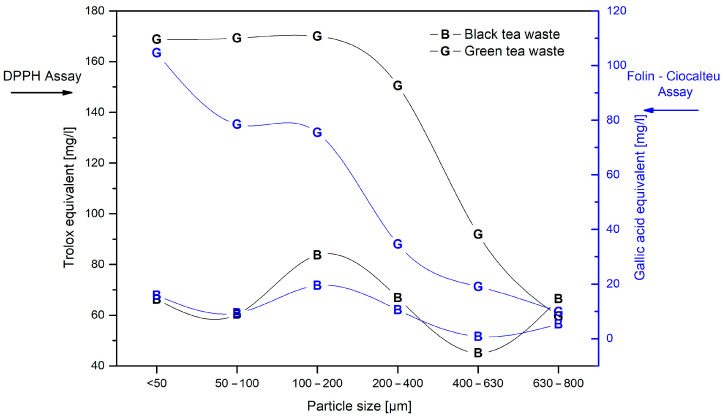
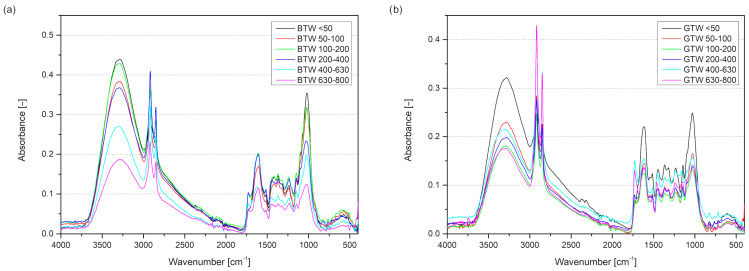
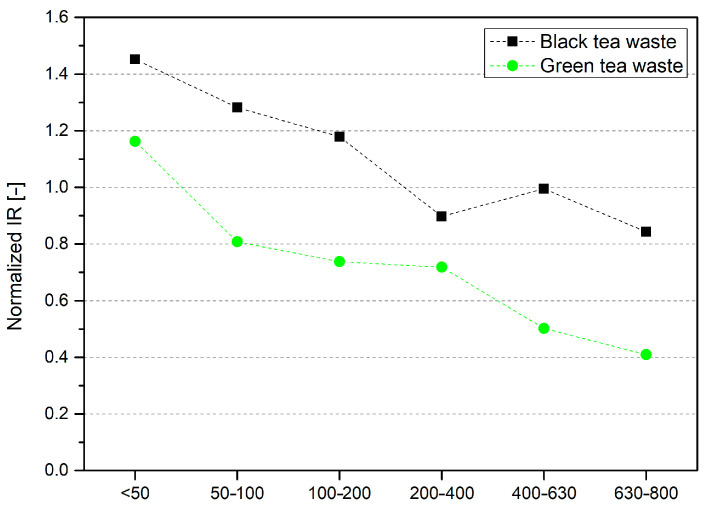
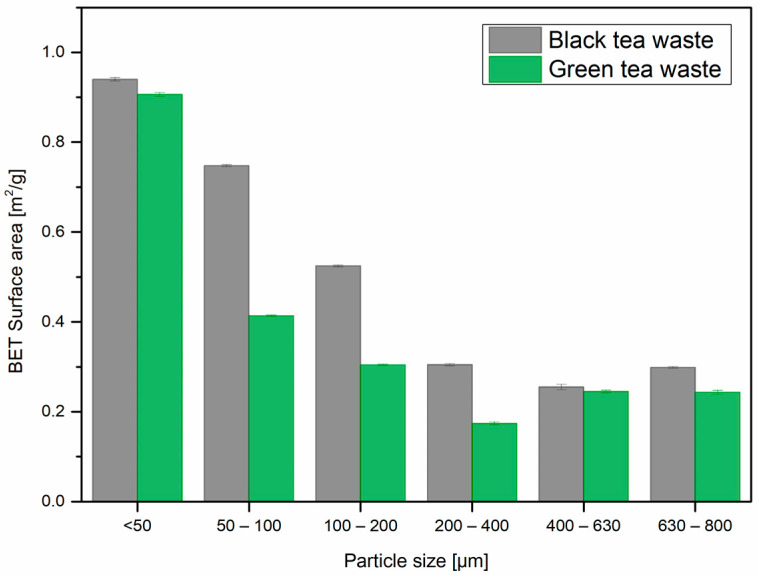
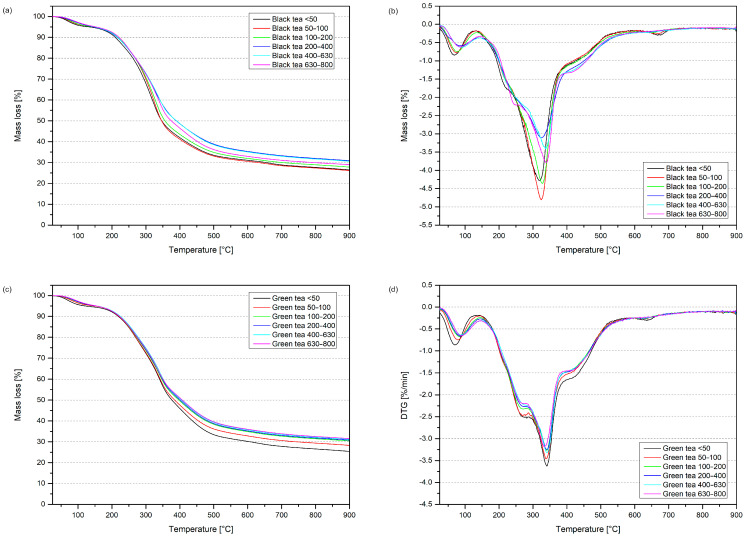
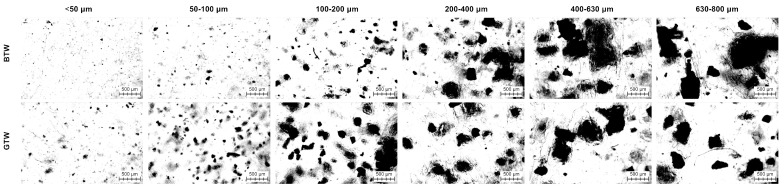
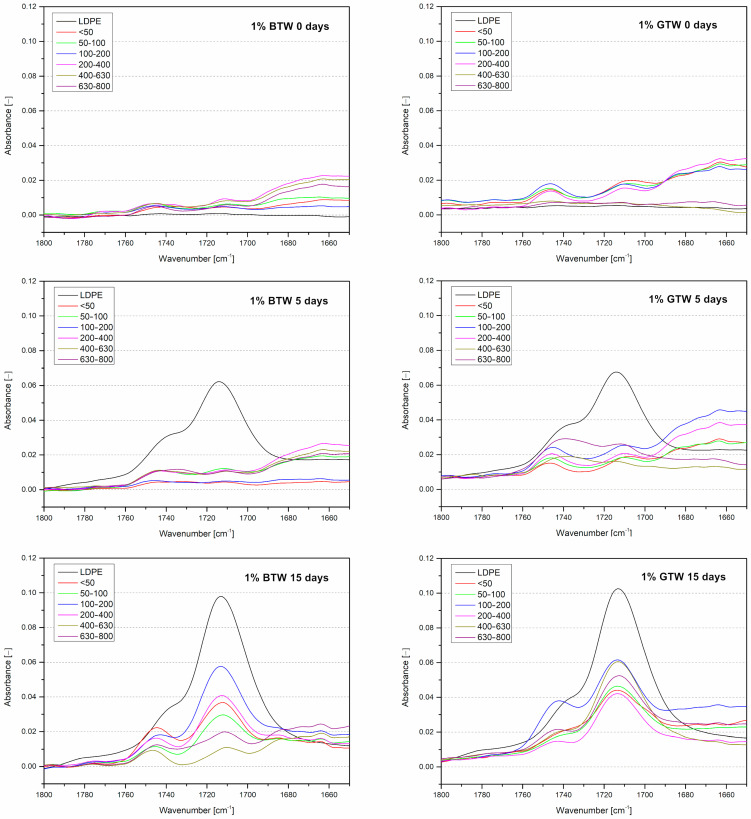
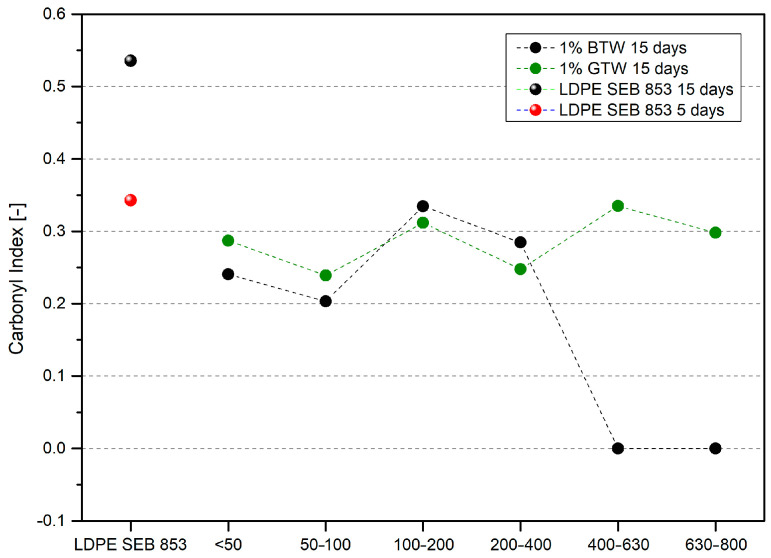
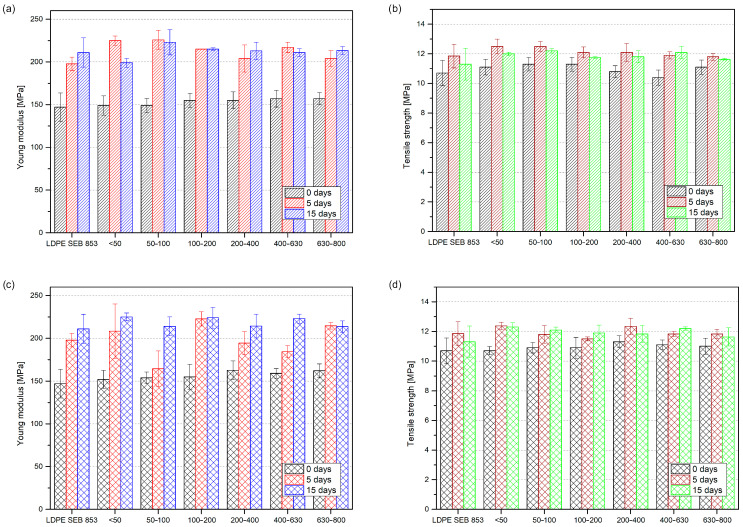
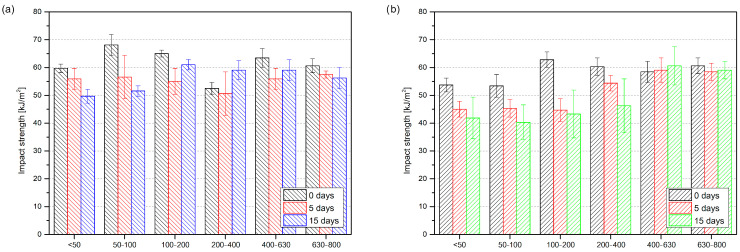
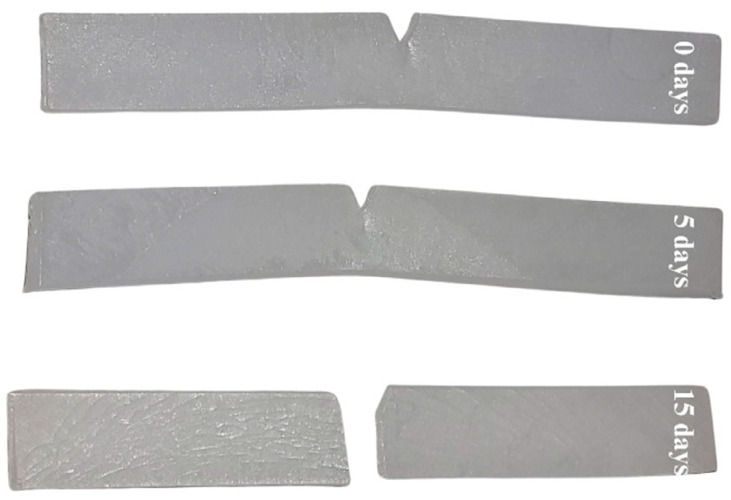
This study analyzed the possibility of using plant-originated waste materials (black and green tea dust) as functional polyethylene fillers. The dependence between the size of the filler particles and their antioxidant potential is discussed. Six fractions were selected: below 50 µm, 50-100 µm, 100-200 µm, 200-400 µm, 400-630 µm and 630-800 µm. Significant differences between the effect of particle size and the antioxidant properties of black and green tea were found using the extraction method to analyze antioxidant activity (DPPH method) and total phenolic content (Folin-Ciocalteu method), suggesting a higher potential for using green tea as a filler with antioxidant properties, as well as the benefits of finer active filler distribution. Biomass waste fillers were mixed with low-density polyethylene LDPE SEB 853 I'm Green, Braskem. Those samples were oxidized at 100 °C for 5 and 15 days to investigate the radical scavenging properties of fillers in composites. Fourier transform infrared spectroscopic studies show that the addition of both types of filler prevents the thermo-oxidation of polyethylene for 5 days. After 15 days, all samples except the BTW 400-630 and 630-800 µm exhibited oxidation. The mechanical properties of the LDPE and its' composites were tested, and we noted an increased brittleness of neat LDPE after thermal oxidation. The addition of black tea particles above 100 µm in size prevents this behavior.
本研究分析了使用植物源废料(红茶和绿茶茶粉)作为功能性聚乙烯填料的可能性。讨论了填料颗粒大小与其抗氧化潜力之间的关系。选取了六个粒径范围:小于50 µm、50 - 100 µm、100 - 200 µm、200 - 400 µm、400 - 630 µm和630 - 800 µm。采用抗氧化活性分析提取方法(DPPH法)和总酚含量测定方法(福林 - 西奥尔特法),发现红茶和绿茶在粒径效应与抗氧化性能之间存在显著差异,这表明绿茶作为具有抗氧化性能的填料具有更高的潜力,以及更细的活性填料分布的益处。将生物质废料填料与低密度聚乙烯LDPE SEB 853 I'm Green(巴西Braskem公司生产)混合。将这些样品在100°C下氧化5天和15天,以研究复合材料中填料的自由基清除性能。傅里叶变换红外光谱研究表明,添加两种类型的填料均可在5天内防止聚乙烯的热氧化。15天后,除BTW 400 - 630 µm和630 - 800 µm粒径范围的样品外,所有样品均发生了氧化。对LDPE及其复合材料的力学性能进行了测试,我们注意到热氧化后纯LDPE的脆性增加。添加粒径大于100 µm的红茶颗粒可防止这种情况发生。