University of Michigan, Molecular, Cellular, and Developmental Biology Department, Ann Arbor, MI, USA.
University of Michigan, Molecular, Cellular, and Developmental Biology Department, Ann Arbor, MI, USA.
Cell Rep Methods. 2024 Oct 21;4(10):100879. doi: 10.1016/j.crmeth.2024.100879. Epub 2024 Oct 15.
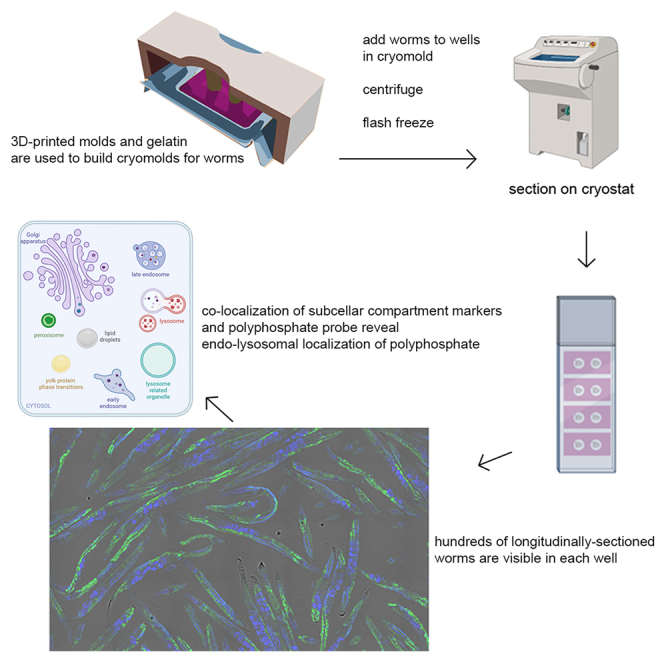
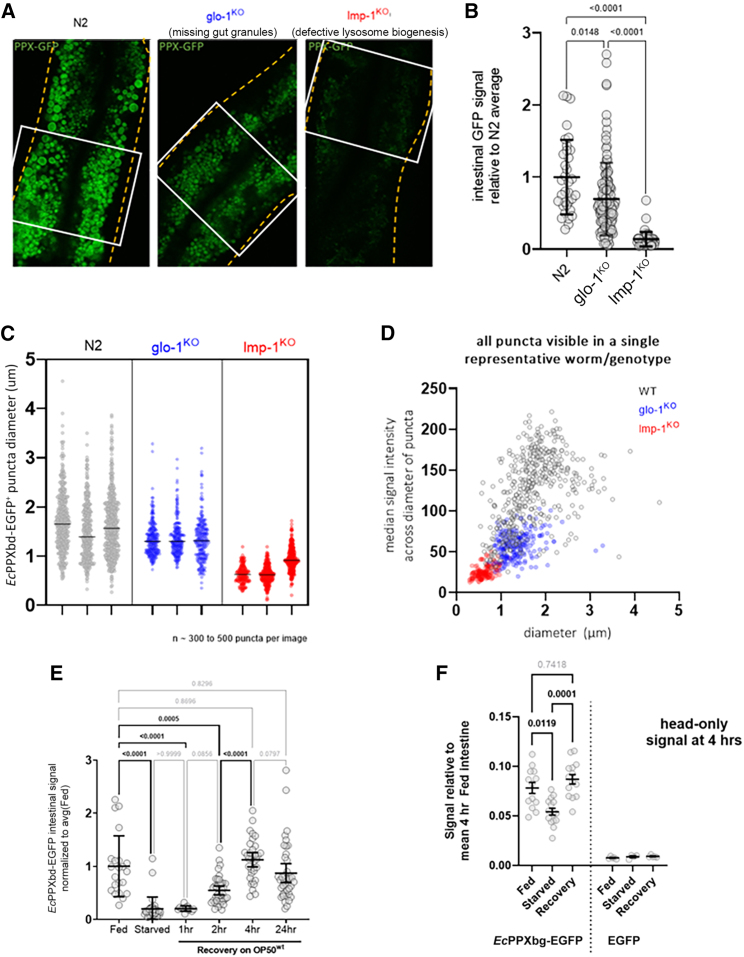
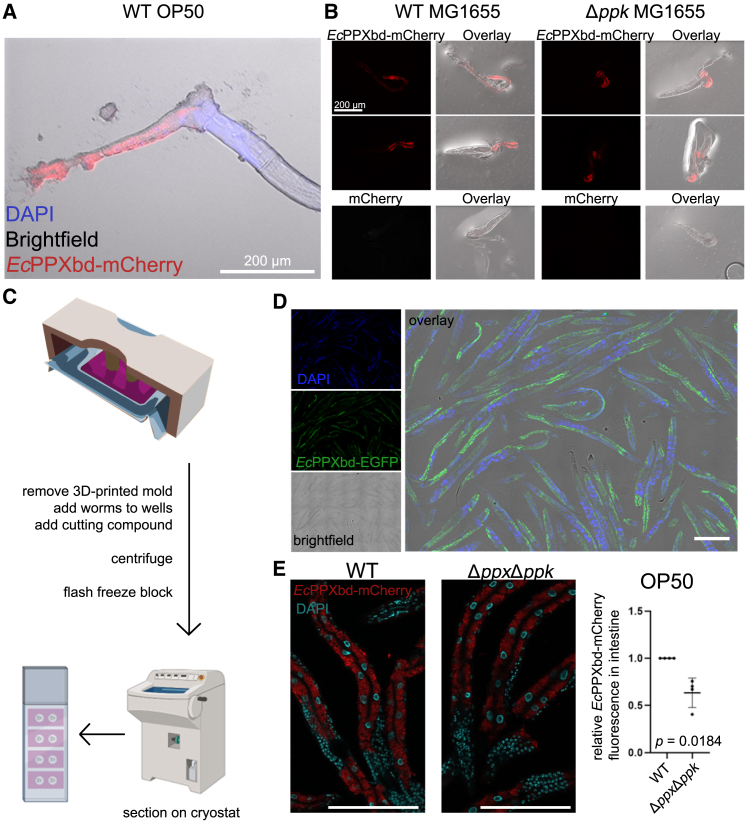
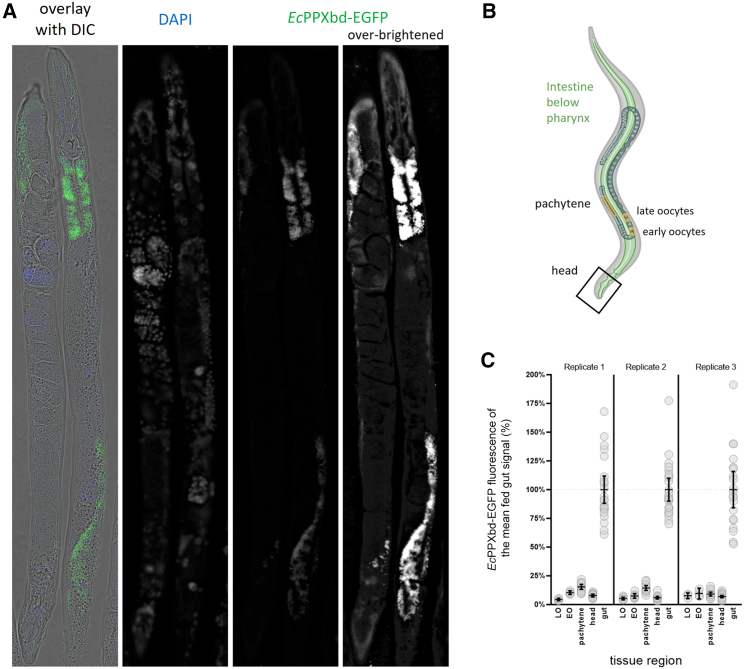
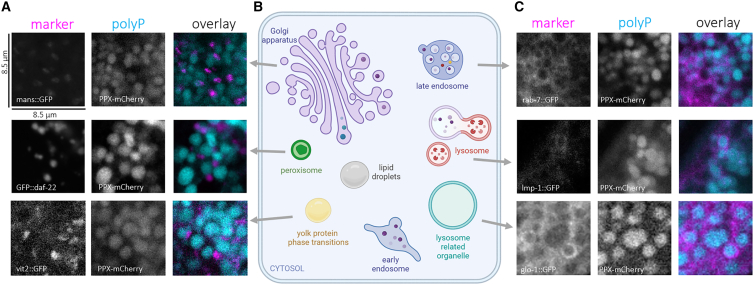
Polyphosphate (polyP) is a ubiquitous polyanion present throughout the tree of life. While polyP's widely varied functions have been interrogated in single-celled organisms, little is known about the cellular distribution and function of polyP in multicellular organisms. To study polyP in metazoans, we developed the nematode Caenorhabditis elegans as a model system. We designed a high-throughput, longitudinal-orientation cryosectioning method that allowed us to scrutinize the intracellular localization of polyP in fixed C. elegans using fluorescent polyP probes and co-immunostaining targeting appropriate marker proteins. We discovered that the vast majority of polyP is localized within the endo-lysosomal compartments of the intestinal cells and is highly sensitive toward the disruption of endo-lysosomal compartment generation and food availability. This study lays the groundwork for further mechanistic research of polyPs in multicellular organisms and provides a reliable method for immunostaining hundreds of fixed worms in a single experiment.
多聚磷酸盐(polyP)是一种普遍存在的多阴离子,存在于生命之树的各个分支中。虽然多聚磷酸盐的广泛功能已经在单细胞生物中进行了研究,但对于多聚磷酸盐在多细胞生物中的细胞分布和功能知之甚少。为了在后生动物中研究多聚磷酸盐,我们以秀丽隐杆线虫(Caenorhabditis elegans)为模型系统进行研究。我们设计了一种高通量、纵向取向的冷冻切片方法,该方法允许我们使用荧光多聚磷酸盐探针和针对适当标记蛋白的共免疫染色,仔细研究固定秀丽隐杆线虫中多聚磷酸盐的细胞内定位。我们发现,绝大多数多聚磷酸盐位于肠道细胞的内体-溶酶体隔室中,并且对内体-溶酶体隔室生成和食物供应的破坏非常敏感。这项研究为进一步研究多聚磷酸盐在多细胞生物中的机制奠定了基础,并为在单个实验中对数百个固定线虫进行免疫染色提供了可靠的方法。