Divisão de Endocrinologia Hospital das Clínicas Universidade Federal de Pernambuco RecifePE Brasil Divisão de Endocrinologia, Hospital das Clínicas, Universidade Federal de Pernambuco, Recife, PE, Brasil.
Centro de Pesquisas Endócrinas de Pernambuco RecifePE Brasil Centro de Pesquisas Endócrinas de Pernambuco, Recife, PE, Brasil.
Arch Endocrinol Metab. 2024 Sep 11;68:e230391. doi: 10.20945/2359-4292-2023-0391. eCollection 2024.
Determining the etiology of hyperprolactinemia is fundamental for selecting the most appropriate treatment strategy. The aim of this study was to evaluate the usefulness and accuracy of prolactin levels in predicting the etiology of nonphysiological hyperprolactinemia.
In this retrospective study, we reviewed medical records of patients with nonphysiological hyperprolactinemia seen at two neuroendocrine reference centers located in Recife, Brazil, from January 2000 to December 2019.
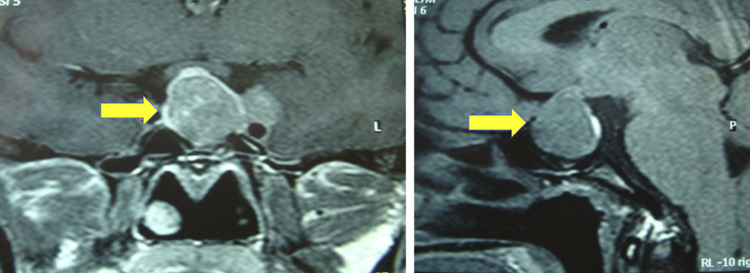
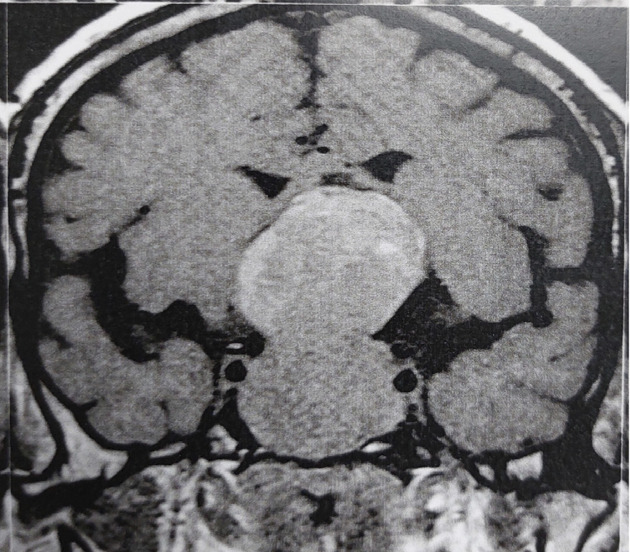
The study included 770 patients aged 12-73 years (65% female). The three most frequent etiologies of hyperprolactinemia were prolactinomas (n = 263; 34.2%), drug-induced hyperprolactinemia (n = 160; 20.8%), and macroprolactinemia (n = 120; 15.6%). The highest mean prolactin levels were observed in cases of prolactinomas and idiopathic hyperprolactinemia. Most patients with hyperprolactinemia due to other etiologies had prolactin levels < 100 ng/mL, but these levels were also found in 16.5% of patients with microproplactinomas and in 20% of those with idiopathic hyperprolactinemia. Likewise, prolactin levels largely overlapped among patients with microprolactinomas, macroprolactinemia, and drug-induced hyperprolactinemia. Notably, prolactin levels > 250 ng/mL enabled a clear distinction between the etiologies of macroprolactinoma and nonfunctioning pituitary adenoma. Moreover, prolactin levels > 500 ng/mL were highly suggestive of macroprolactinomas, although they were also found in very few patients (<2%) with microprolactinomas or drug-induced hyperprolactinemia.
Despite considerable overlap in prolactin levels among the different etiologies of hyperprolactinemia, values > 250 ng/mL allowed a clear distinction between macroprolactinomas and nonfunctioning pituitary adenomas. Furthermore, prolactin levels > 500 ng/mL were almost exclusively found in patients with prolactinomas.
确定高泌乳素血症的病因对于选择最合适的治疗策略至关重要。本研究旨在评估泌乳素水平在预测非生理性高泌乳素血症病因中的有用性和准确性。
在这项回顾性研究中,我们查阅了 2000 年 1 月至 2019 年 12 月期间在巴西累西腓的两个神经内分泌参考中心就诊的非生理性高泌乳素血症患者的病历。
研究纳入了 770 名年龄在 12-73 岁之间的患者(65%为女性)。高泌乳素血症的三种最常见病因是泌乳素瘤(n=263;34.2%)、药物诱导的高泌乳素血症(n=160;20.8%)和巨泌乳素血症(n=120;15.6%)。泌乳素水平最高的是泌乳素瘤和特发性高泌乳素血症患者。其他病因引起的高泌乳素血症患者的泌乳素水平大多<100ng/mL,但微泌乳素瘤患者中有 16.5%和特发性高泌乳素血症患者中有 20%也存在这种情况。同样,微泌乳素瘤、巨泌乳素血症和药物诱导的高泌乳素血症患者的泌乳素水平也有很大的重叠。值得注意的是,泌乳素水平>250ng/mL可明确区分大泌乳素瘤和无功能垂体腺瘤的病因。此外,泌乳素水平>500ng/mL高度提示为巨泌乳素瘤,尽管在微泌乳素瘤或药物诱导的高泌乳素血症患者中也发现了非常低比例的患者(<2%)存在这种情况。
尽管不同病因的高泌乳素血症患者的泌乳素水平有相当大的重叠,但>250ng/mL的值可明确区分大泌乳素瘤和无功能垂体腺瘤。此外,>500ng/mL 的泌乳素水平几乎仅见于泌乳素瘤患者。