Bruzina Angela S, Raymond-Pope Christiana J, Murray Kevin J, Lillquist Thomas J, Castelli Katelyn M, Bijwadia Shefali R, Call Jarrod A, Greising Sarah M
School of Kinesiology, University of Minnesota, Minneapolis, MN 55455, USA.
Center for Metabolomics and Proteomics, University of Minnesota, Minneapolis, MN 55455, USA.
NPJ Metab Health Dis. 2024;2. doi: 10.1038/s44324-024-00006-5. Epub 2024 Apr 6.
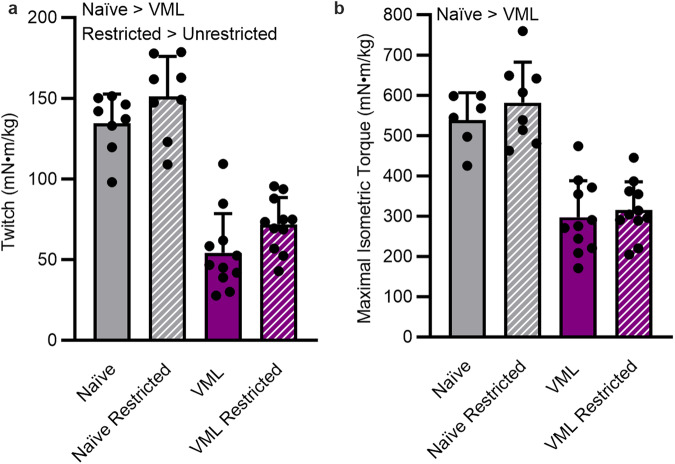
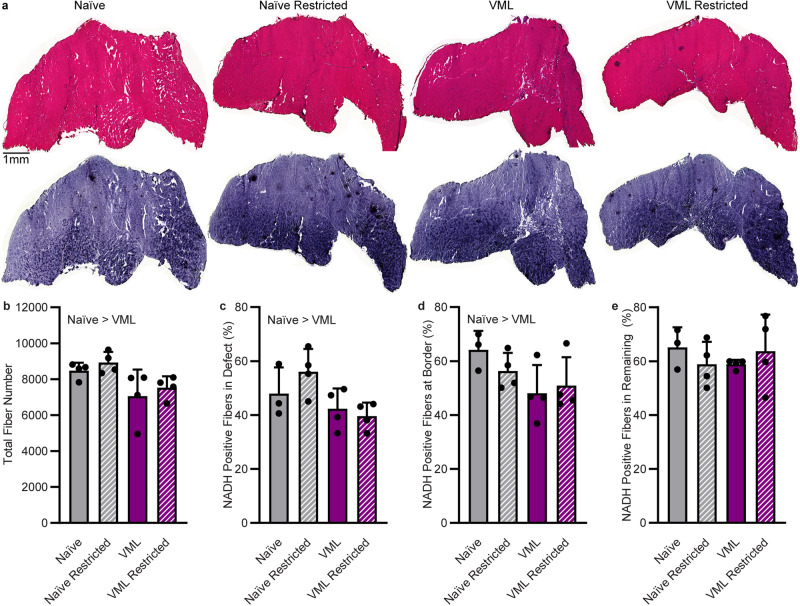
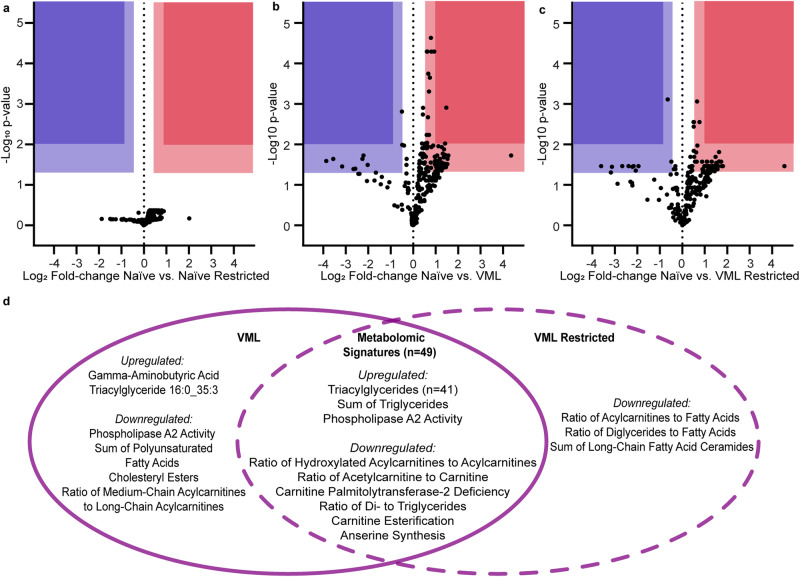
Following traumatic musculoskeletal injuries, prolonged bedrest and loss of physical activity may limit muscle plasticity and drive metabolic dysfunction. One specific injury, volumetric muscle loss (VML), results in frank loss of muscle and is characterized by whole-body and cellular metabolic dysfunction. However, how VML and restricted physical activity limit plasticity of the whole-body, cellular, and metabolomic environment of the remaining uninjured muscle remains unclear. Adult mice were randomized to posterior hindlimb compartment VML or were age-matched injury naïve controls, then randomized to standard or restricted activity cages for 8-wks. Activity restriction in naïve mice resulted in 5% greater respiratory exchange ratio (RER); combined with VML, carbohydrate oxidation was ~23% greater than VML alone, but lipid oxidation was largely unchanged. Activity restriction combined with VML increased whole-body carbohydrate usage. Together there was a greater pACC:ACC ratio in the muscle remaining, which may contribute to decreased fatty acid synthesis. Further, β-HAD activity normalized to mitochondrial content was decreased following VML, suggesting a diminished capacity to oxidize fatty acids. The muscle metabolome was not altered by the restriction of physical activity. The combination of VML and activity restriction resulted in similar (91%) up- and down-regulated metabolites and/or ratios, suggesting that VML injury alone is regulating changes in the metabolome. Data supports possible VML-induced alterations in fatty acid metabolism are exacerbated by activity restriction. Collectively, this work adds to the sequala of VML injury, exhausting the ability of the muscle remaining to oxidize fatty acids resulting in a possible accumulation of triglycerides.
在创伤性肌肉骨骼损伤后,长期卧床休息和身体活动减少可能会限制肌肉可塑性并导致代谢功能障碍。一种特定的损伤,即体积性肌肉损失(VML),会导致肌肉明显丧失,并以全身和细胞代谢功能障碍为特征。然而,VML和身体活动受限如何限制剩余未受伤肌肉的全身、细胞和代谢组学环境的可塑性仍不清楚。将成年小鼠随机分为后肢后室VML组或年龄匹配的未受伤对照,然后随机分为标准或活动受限笼饲养8周。未受伤小鼠的活动受限导致呼吸交换率(RER)增加约5%;与VML相结合,碳水化合物氧化比单独的VML增加约23%,但脂质氧化基本不变。活动受限与VML相结合增加了全身碳水化合物的使用。总的来说,剩余肌肉中的pACC:ACC比值更高,这可能有助于减少脂肪酸合成。此外,VML后归一化线粒体含量的β-HAD活性降低,表明氧化脂肪酸的能力减弱。肌肉代谢组不受身体活动限制的影响。VML和活动受限的组合导致类似(约91%)的代谢物上调和下调及/或比值变化,表明仅VML损伤就调节了代谢组的变化。数据支持活动受限会加剧VML诱导的脂肪酸代谢改变。总的来说,这项研究增加了VML损伤的后遗症,耗尽了剩余肌肉氧化脂肪酸的能力,导致甘油三酯可能积累。