Au Sandra, Chen Wei, Vance Iris, Wegermann Kara
Department of Medicine, Duke University Health System, Durham, NC.
Department of Pathology, Duke University Health System, Durham, NC.
ACG Case Rep J. 2024 Oct 14;11(10):e01539. doi: 10.14309/crj.0000000000001539. eCollection 2024 Oct.
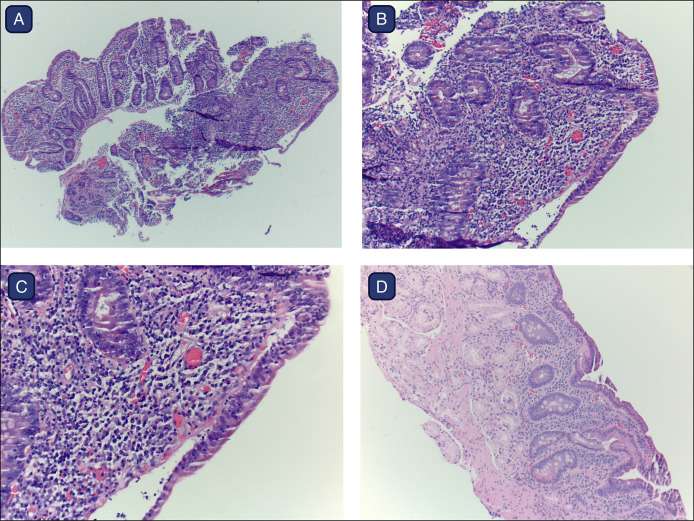
Immune checkpoint inhibitors improve patient survival in multiple cancers, but immune-related adverse events, including new immunologic conditions arising during therapy, pose a significant challenge. Gastrointestinal immune-related adverse events, although common, exhibit diverse presentations. We present a case of duodenitis resembling celiac disease because of the anti-programmed cell death protein-1 antibody, pembrolizumab. Despite diagnostic uncertainty and therapeutic interventions, including gluten-free diet, symptoms stabilized even with resuming gluten. In addition, endoscopic abnormalities after pembrolizumab therapy have neither progressed nor completely resolved. This case underscores the need for investigation into the pathogenesis of immune checkpoint inhibitor-induced duodenitis, with implications for care of patients on immunotherapies.
免疫检查点抑制剂可提高多种癌症患者的生存率,但免疫相关不良事件,包括治疗期间出现的新免疫状况,构成了重大挑战。胃肠道免疫相关不良事件虽然常见,但表现多样。我们报告一例因抗程序性细胞死亡蛋白1抗体帕博利珠单抗导致的类似乳糜泻的十二指肠炎症病例。尽管诊断存在不确定性且采取了包括无麸质饮食在内的治疗干预措施,但即便恢复食用麸质,症状仍趋于稳定。此外,帕博利珠单抗治疗后的内镜检查异常情况既未进展也未完全缓解。该病例强调了对免疫检查点抑制剂诱导的十二指肠炎症发病机制进行研究的必要性,这对接受免疫治疗的患者的护理具有重要意义。