Mireles Miguel, Jiménez-Valerio Gabriela, Morales-Dalmau Jordi, Johansson Johannes D, Martínez-Lozano Mar, Vidal-Rosas Ernesto E, Navarro-Pérez Valentí, Busch David R, Casanovas Oriol, Durduran Turgut, Vilches Clara
ICFO - Institut de Ciències Fotòniques, The Barcelona Institute of Science and Technology, 08860 Barcelona, Spain.
Computational Optics and Translational Imaging Lab, Northeastern University, Boston, Massachusetts 02115, USA.
Biomed Opt Express. 2024 Sep 6;15(10):5773-5789. doi: 10.1364/BOE.532052. eCollection 2024 Oct 1.
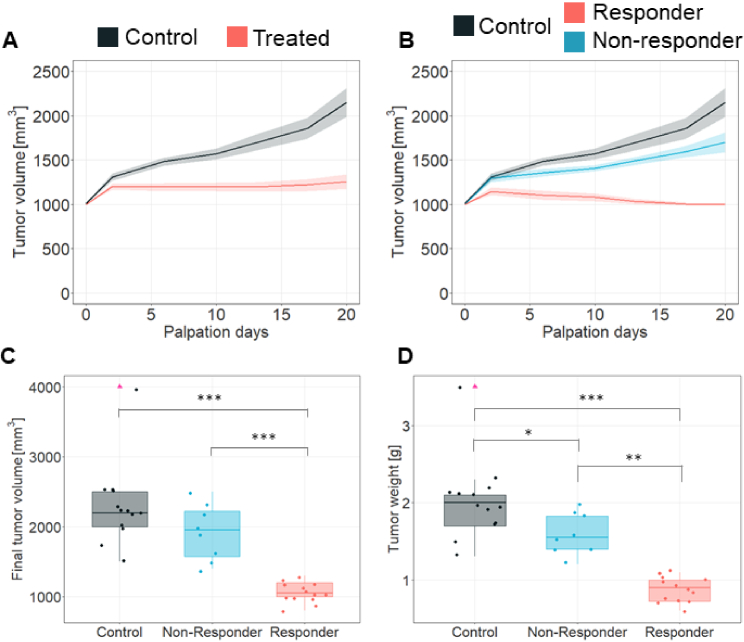
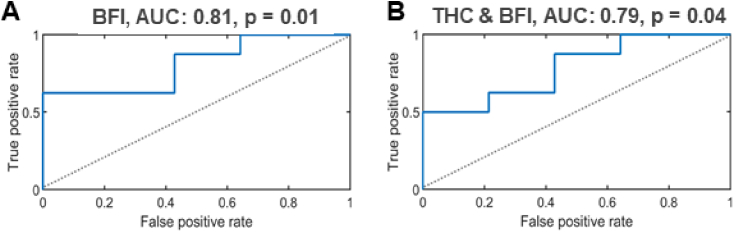
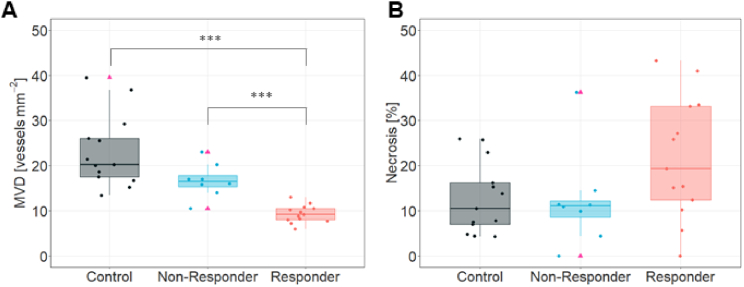
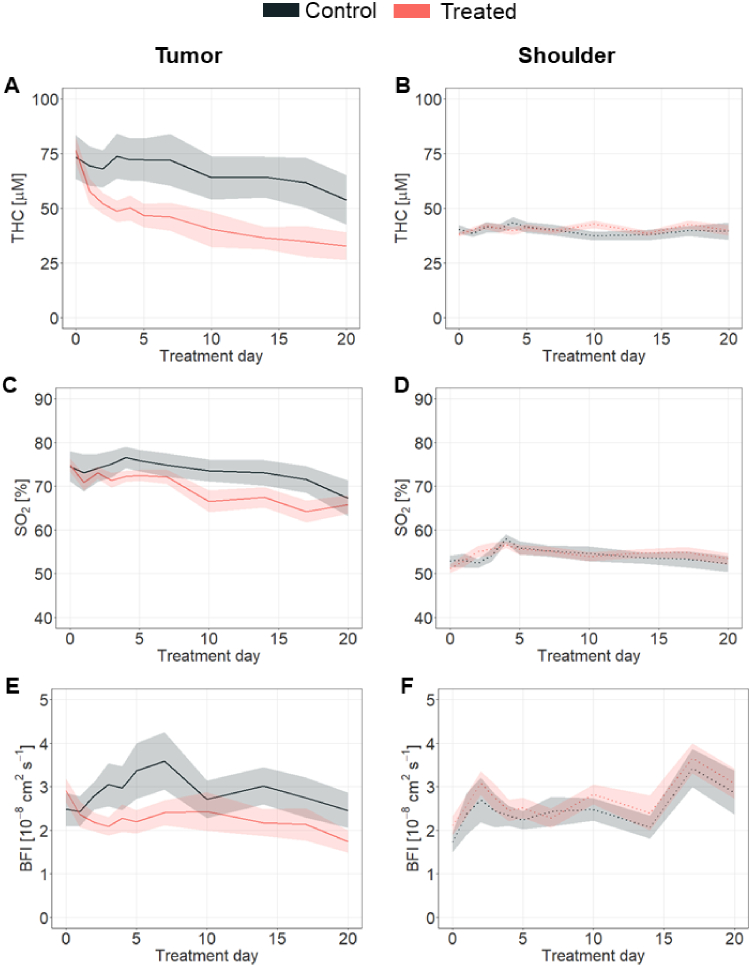
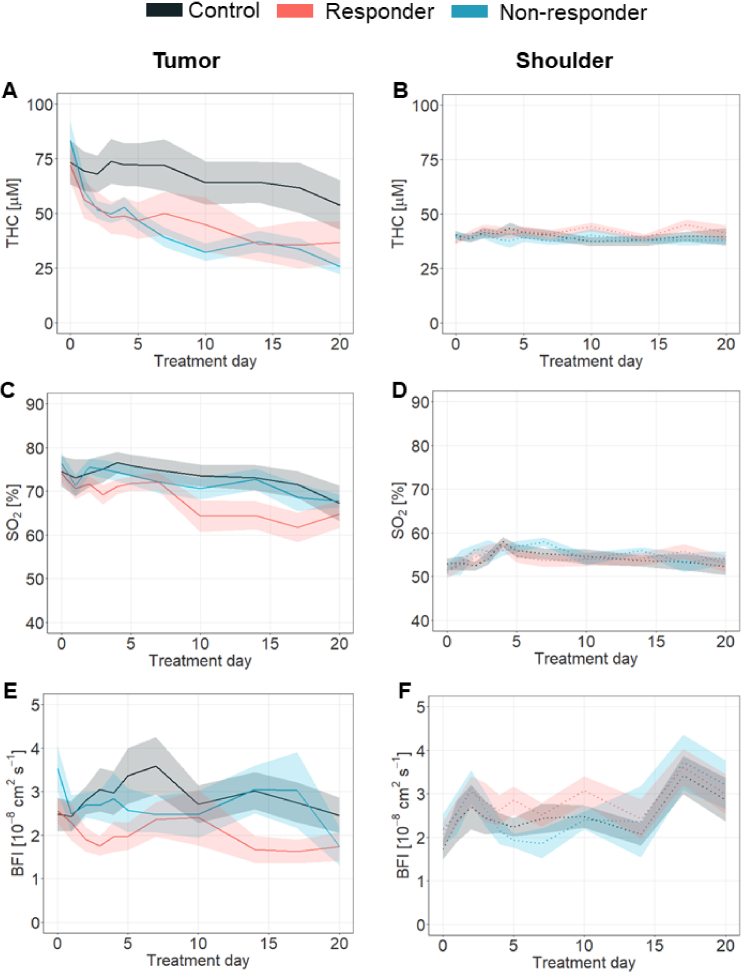
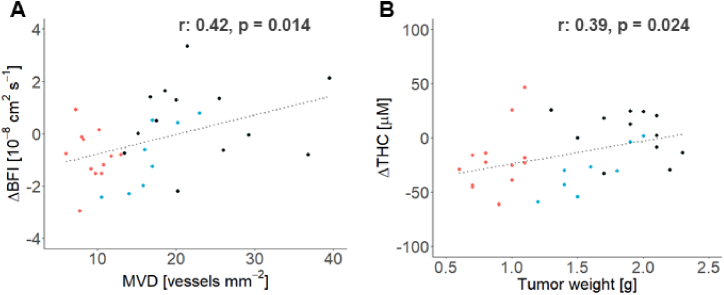
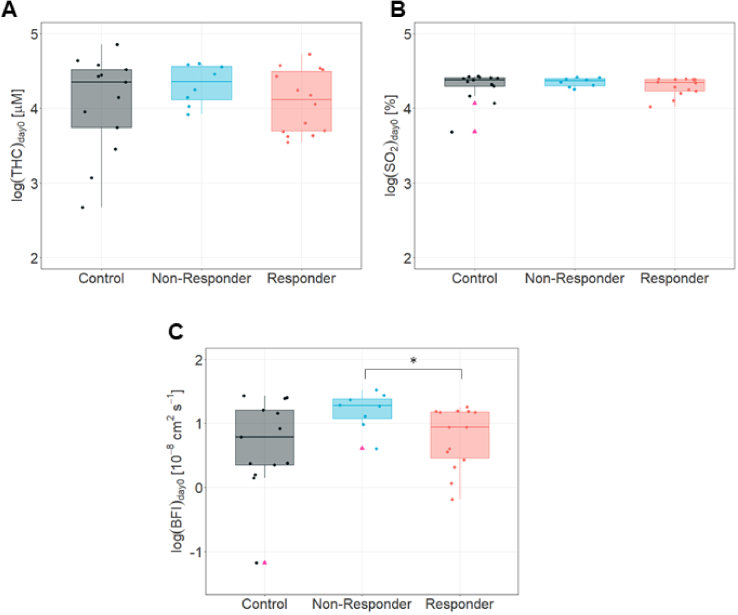
In this work, broadband diffuse reflectance spectroscopy (DRS) and diffuse correlation spectroscopy (DCS) were used to quantify deep tissue hemodynamics in a patient-derived orthotopic xenograft mouse model of clear cell renal cancer undergoing antiangiogenic treatment. A cohort of twenty-two mice were treated with sunitinib and compared to thirteen control untreated mice, and monitored by DRS/DCS. A reduction in total hemoglobin concentration (THC, p = 0.03), oxygen saturation (SO p = 0.03) and blood flow index (BFI, p = 0.02) was observed over the treatment course. Early changes in tumor microvascular blood flow and total hemoglobin concentration were correlated with the final microvessel density (p = 0.014) and tumor weight (p = 0.024), respectively. Higher pre-treatment tumor microvascular blood flow was observed in non-responder mice with respect to responder mice, which was statistically predictive of the tumor intrinsic resistance (p = 0.01). This hybrid diffuse optical technique provides a method for predicting tumor intrinsic resistance to antiangiogenic therapy and could be used as predictive biomarker of response to antiangiogenic therapies in pre-clinical models.
在这项研究中,采用宽带漫反射光谱(DRS)和漫散射相关光谱(DCS)技术,对接受抗血管生成治疗的肾透明细胞癌患者原位异种移植小鼠模型的深部组织血流动力学进行定量分析。22只小鼠接受舒尼替尼治疗,并与13只未治疗的对照小鼠进行比较,通过DRS/DCS进行监测。在整个治疗过程中,观察到总血红蛋白浓度(THC,p = 0.03)、血氧饱和度(SO,p = 0.03)和血流指数(BFI,p = 0.02)均有所降低。肿瘤微血管血流和总血红蛋白浓度的早期变化分别与最终微血管密度(p = 0.014)和肿瘤重量(p = 0.024)相关。在无反应小鼠中观察到的治疗前肿瘤微血管血流高于有反应小鼠,这在统计学上可预测肿瘤的内在抗性(p = 0.01)。这种混合漫射光学技术提供了一种预测肿瘤对抗血管生成治疗内在抗性的方法,可作为临床前模型中抗血管生成治疗反应的预测生物标志物。