Luo Wenqin, Xu Zhehao, Li Fan, Ding Lifeng, Wang Ruyue, Lin Yudong, Mao Xudong, Chen Xianjiong, Li Yang, Lu Zeyi, Xie Haiyun, Wang Huan, Zhu Ziwei, Lu Yi, Guo Luying, Yu Xiaojing, Xia Liqun, He Housheng Hansen, Li Gonghui
Department of Urology, Sir Run Run Shaw Hospital, Zhejiang University School of Medicine, Hangzhou, 310016, China.
Kidney Disease Center of First Affiliated Hospital, Zhejiang University School of Medicine, Hangzhou, 310000, China.
Adv Sci (Weinh). 2024 Dec;11(46):e2404033. doi: 10.1002/advs.202404033. Epub 2024 Oct 18.
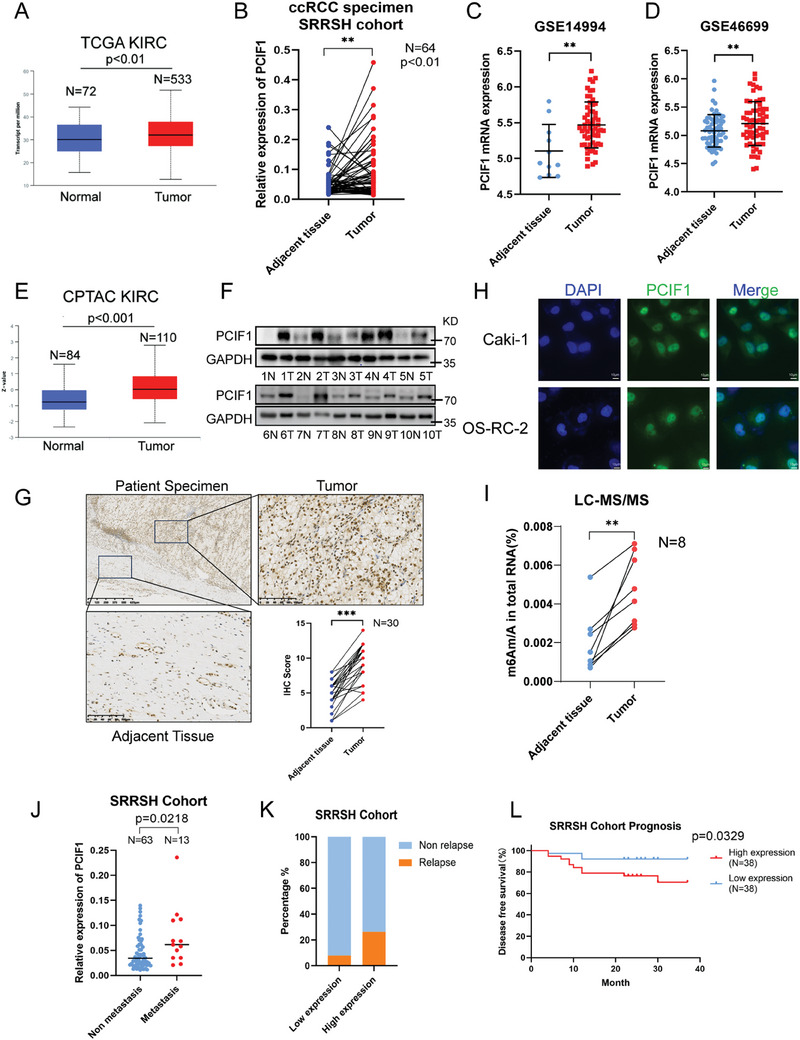
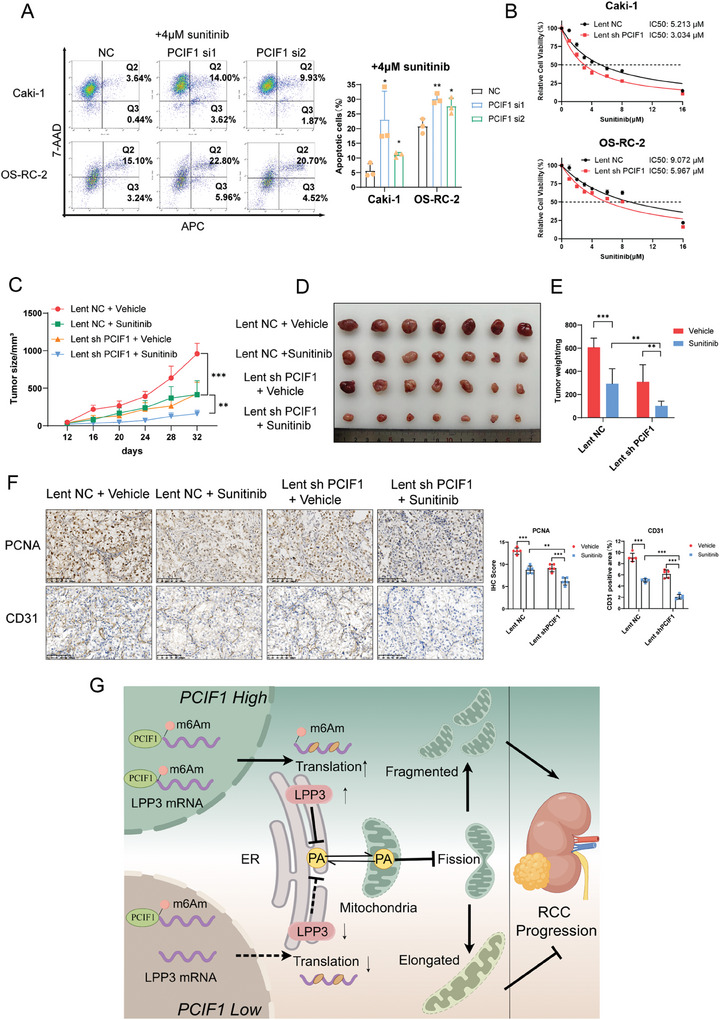
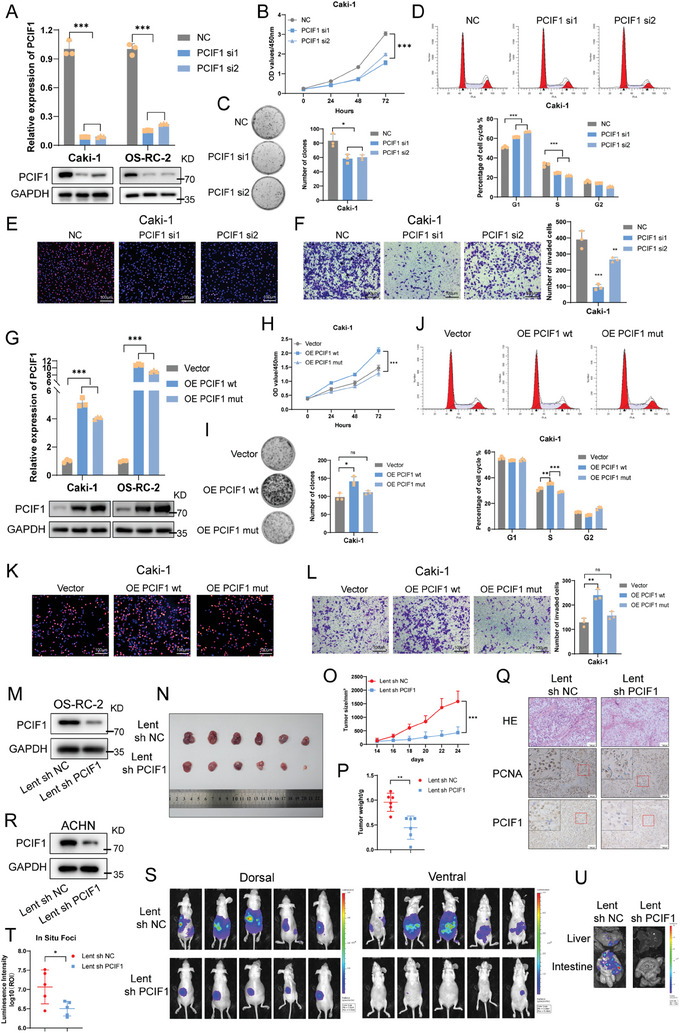
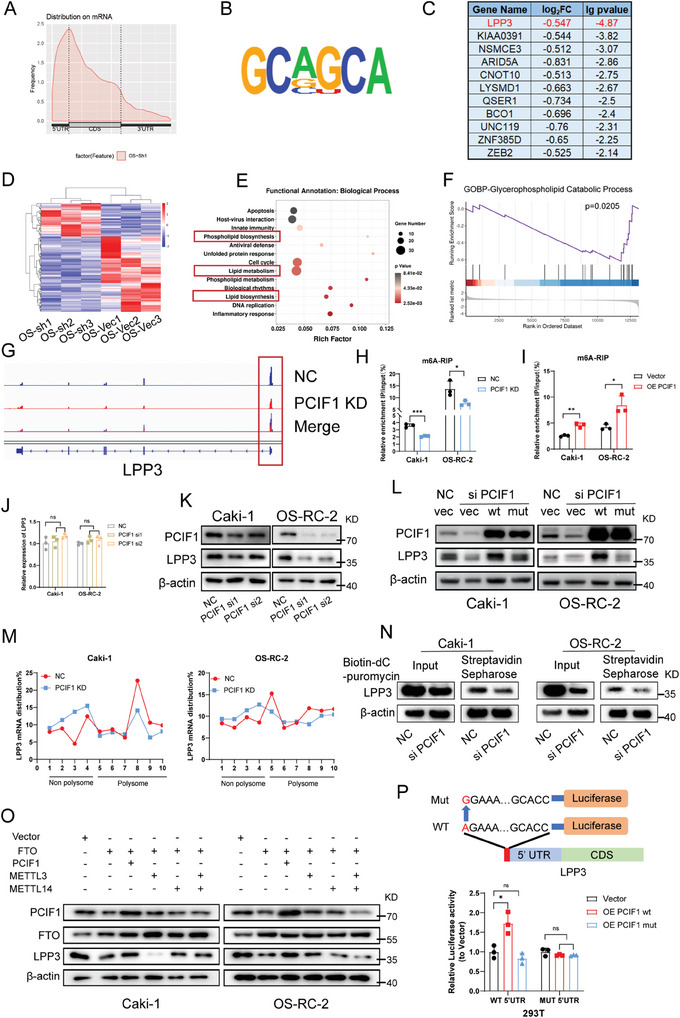
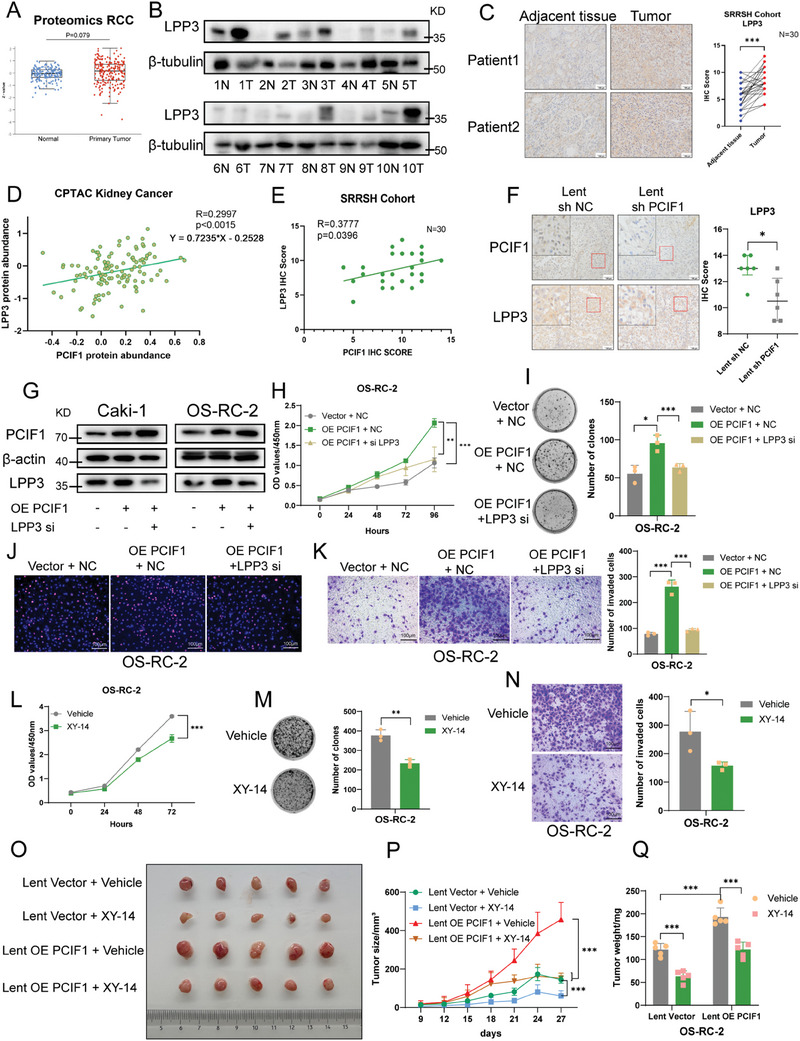
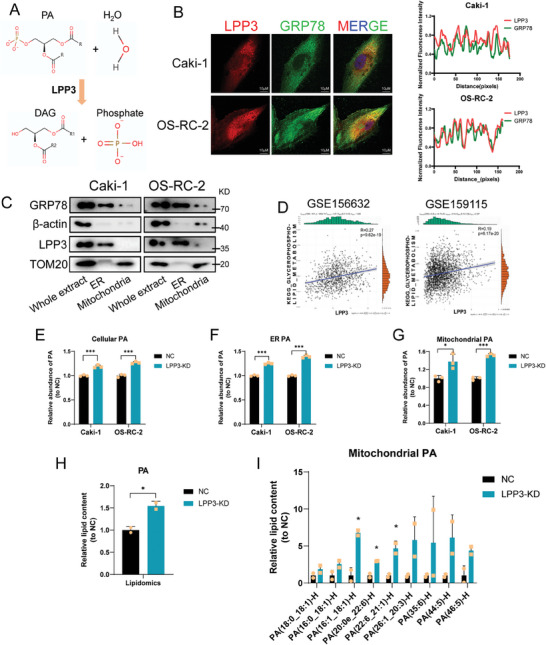
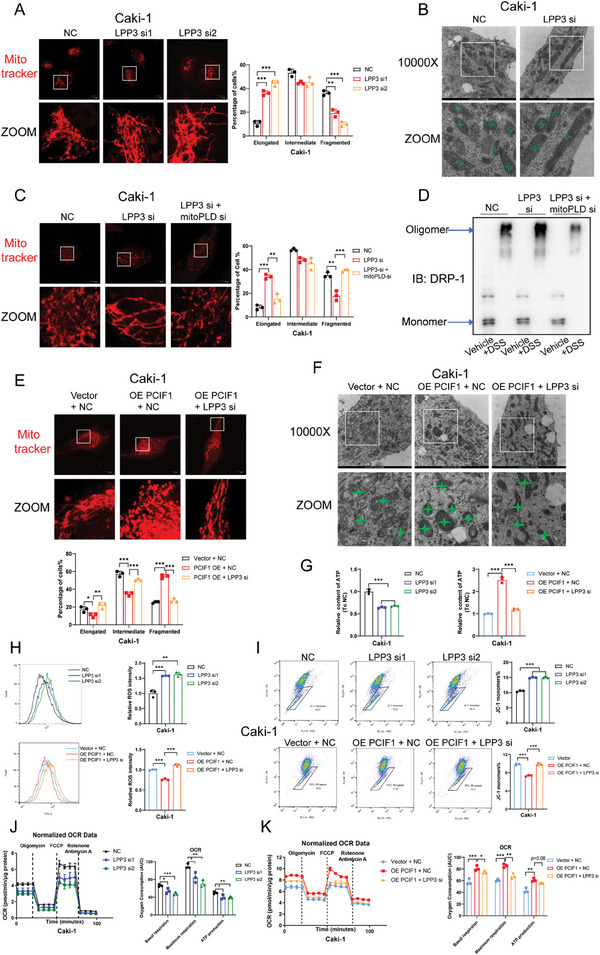
N6-methyl-2'-O-methyladenosine (m6Am), occurring adjacent to the 7-methylguanosine (m7G) cap structure and catalyzed by the newly identified writer PCIF1 (phosphorylated CTD interacting factor 1), has been implicated in the pathogenesis of various diseases. However, its involvement in renal cell carcinoma (RCC) remains unexplored. Here, significant upregulation of PCIF1 and m6Am levels in RCC tissues are identified, unveiling their oncogenic roles both in vitro and in vivo. Mechanically, employing m6Am-Exo-Seq, LPP3 (phospholipid phosphatase 3) mRNA is identified as a key downstream target whose translation is enhanced by m6Am modification. Furthermore, LPP3 is revealed as a key regulator of phosphatidic acid metabolism, critical for preventing its accumulation in mitochondria and facilitating mitochondrial fission. Consequently, Inhibition of the PCIF1/LPP3 axis significantly altered mitochondrial morphology and reduced RCC tumor progression. In addition, depletion of PCIF1 sensitizes RCC to sunitinib treatment. This study highlights the intricate interplay between m6Am modification, phosphatidic acid metabolism, and mitochondrial dynamics, offering a promising therapeutic avenue for RCC.
N6-甲基-2'-O-甲基腺苷(m6Am)紧邻7-甲基鸟苷(m7G)帽结构,由新发现的写入因子PCIF1(磷酸化CTD相互作用因子1)催化形成,与多种疾病的发病机制有关。然而,其在肾细胞癌(RCC)中的作用尚不清楚。在此,研究发现RCC组织中PCIF1和m6Am水平显著上调,揭示了它们在体外和体内的致癌作用。机制上,通过m6Am-Exo-Seq技术,鉴定出LPP3(磷脂磷酸酶3)mRNA是一个关键的下游靶点,其翻译通过m6Am修饰得到增强。此外,LPP3被揭示为磷脂酸代谢的关键调节因子,对防止其在线粒体中积累和促进线粒体分裂至关重要。因此,抑制PCIF1/LPP3轴显著改变了线粒体形态并降低了RCC肿瘤进展。此外,PCIF1的缺失使RCC对舒尼替尼治疗敏感。本研究突出了m6Am修饰、磷脂酸代谢和线粒体动力学之间的复杂相互作用,为RCC提供了一条有前景的治疗途径。