Division of Genetics, Program in Immunology, Bioinformatics and Systems Biology Program, Institute for Genomic Medicine, Department of Pediatrics, University of California San Diego, La Jolla, CA 92093.
Division of Infectious Diseases and Global Public Health, Department of Medicine, Department of Pathology, University of California San Diego, La Jolla, CA 92093.
Proc Natl Acad Sci U S A. 2023 Jan 31;120(5):e2210361120. doi: 10.1073/pnas.2210361120. Epub 2023 Jan 23.
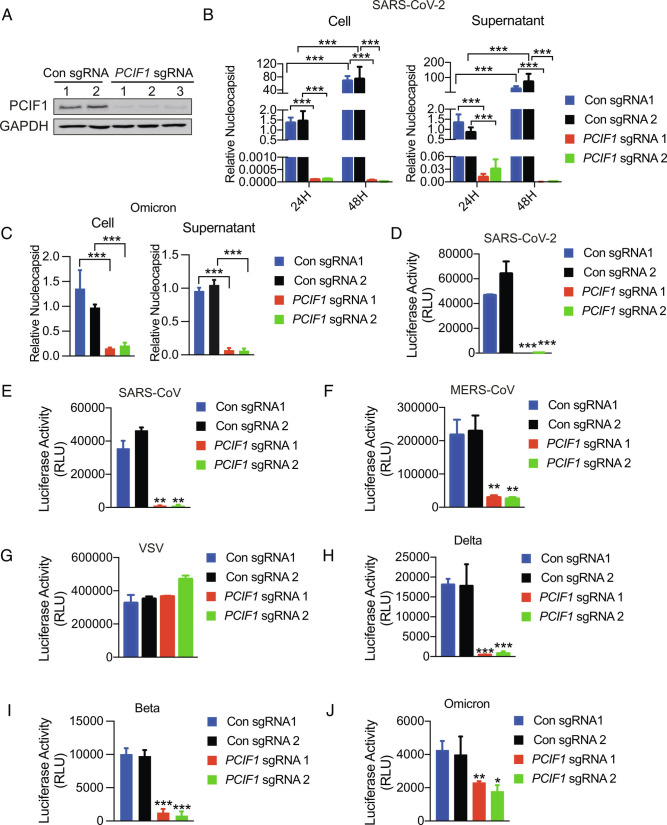
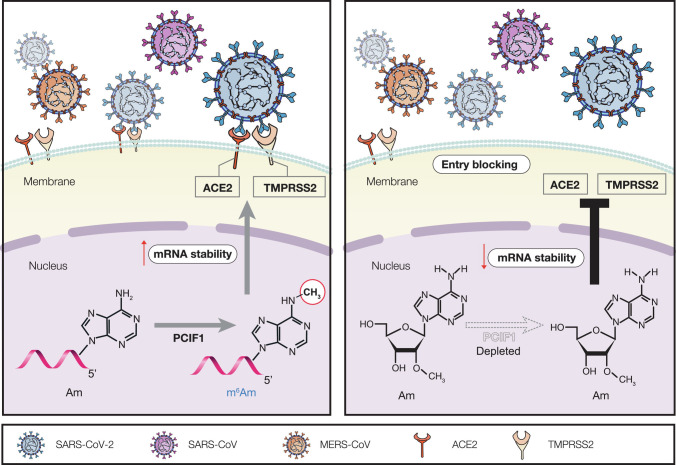
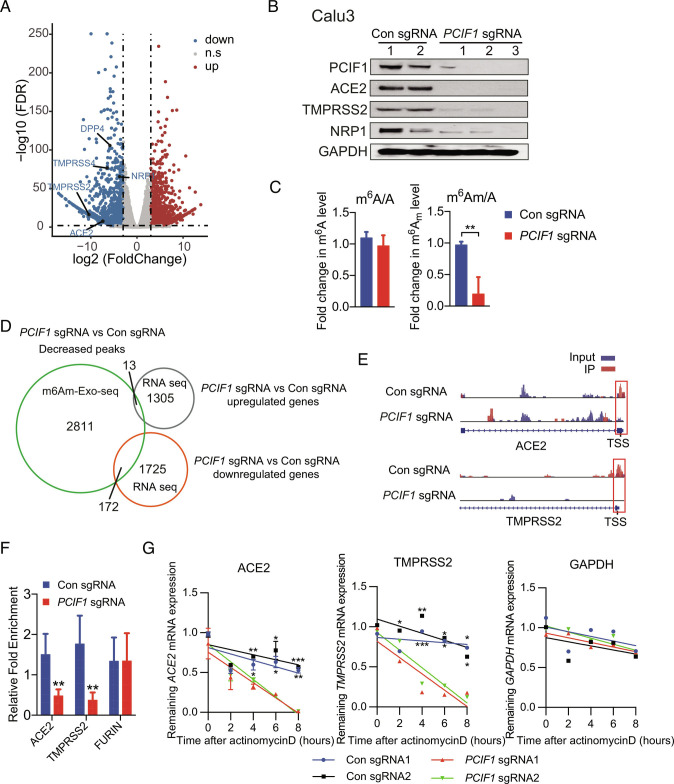
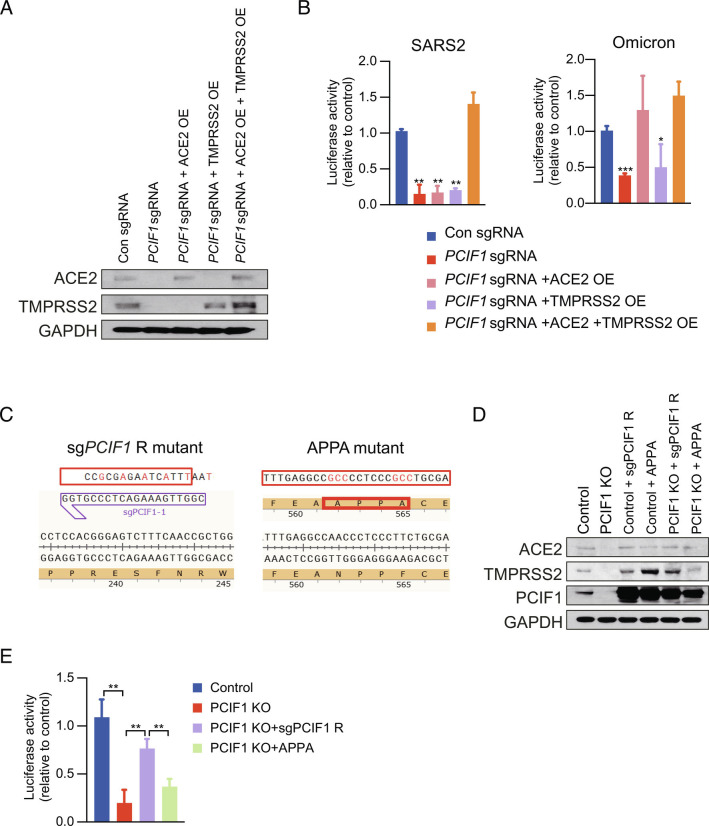
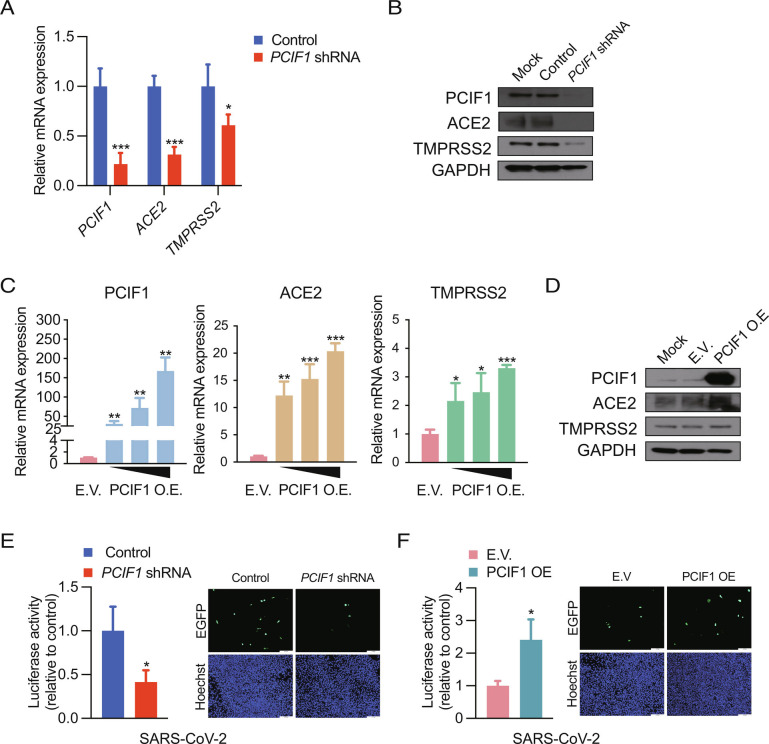
Infection with severe acute respiratory syndrome coronavirus 2 (SARS-CoV-2) continues to be a major health problem worldwide. Due to the fast emergence of SARS-CoV-2 variants, understanding the molecular mechanisms of viral pathogenesis and developing novel inhibitors are essential and urgent. Here, we investigated the potential roles of ,2'--dimethyladenosine (mA), one of the most abundant modifications of eukaryotic messenger ribonucleic acid (mRNAs), in SARS-CoV-2 infection of human cells. Using genome-wide mA-exo-seq, RNA sequencing analysis, and Clustered regularly interspaced short palindromic repeats (CRISPR)/Cas9 genome editing, we demonstrate that phosphorylated C-terminal domain (CTD)-interacting factor 1 (PCIF1), a cap-specific adenine -methyltransferase, plays a major role in facilitating infection of primary human lung epithelial cells and cell lines by SARS-CoV-2, variants of concern, and other coronaviruses. We show that PCIF1 promotes infection by sustaining expression of the coronavirus receptors angiotensin-converting enzyme 2 (ACE2) and transmembrane serine protease 2 (TMPRSS2) via mA-dependent mRNA stabilization. In PCIF1-depleted cells, both ACE2/TMPRSS2 expression and viral infection are rescued by re-expression of wild-type, but not catalytically inactive, PCIF1. These findings suggest a role for PCIF1 and cap mA in regulating SARS-CoV-2 susceptibility and identify a potential therapeutic target for prevention of infection.
严重急性呼吸综合征冠状病毒 2 (SARS-CoV-2) 的感染仍然是全球主要的健康问题。由于 SARS-CoV-2 变体的快速出现,了解病毒发病机制的分子机制和开发新型抑制剂是至关重要和紧迫的。在这里,我们研究了 2'--二甲基腺苷 (mA) 的潜在作用,mA 是真核信使核糖核酸 (mRNAs) 中最丰富的修饰之一,在人类细胞中 SARS-CoV-2 的感染中。我们使用全基因组 mA-exo-seq、RNA 测序分析和 Clustered regularly interspaced short palindromic repeats (CRISPR)/Cas9 基因组编辑,证明磷酸化 C 末端结构域 (CTD)-相互作用因子 1 (PCIF1),一种帽特异性腺嘌呤 -甲基转移酶,在促进 SARS-CoV-2、关注变体和其他冠状病毒感染原代人肺上皮细胞和细胞系方面发挥主要作用。我们表明,PCIF1 通过 mA 依赖性 mRNA 稳定化来维持冠状病毒受体血管紧张素转换酶 2 (ACE2) 和跨膜丝氨酸蛋白酶 2 (TMPRSS2) 的表达,从而促进感染。在 PCIF1 耗尽的细胞中,ACE2/TMPRSS2 表达和病毒感染均可通过野生型但不是无催化活性的 PCIF1 的重新表达来挽救。这些发现表明 PCIF1 和帽 mA 在调节 SARS-CoV-2 易感性方面发挥作用,并确定了预防感染的潜在治疗靶点。