Department of Obstetrics, Hainan General Hospital, Hainan Affiliated Hospital of Hainan Medical University, Haikou, China.
Hainan Medical University, Haikou, China.
Sci Rep. 2024 Oct 18;14(1):24529. doi: 10.1038/s41598-024-76563-y.
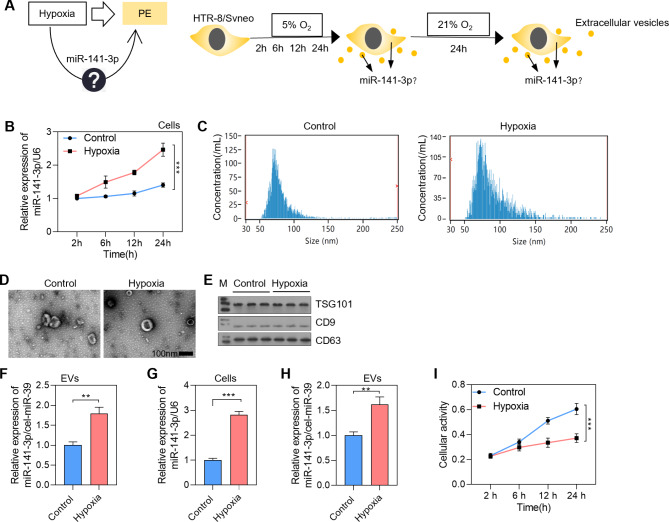
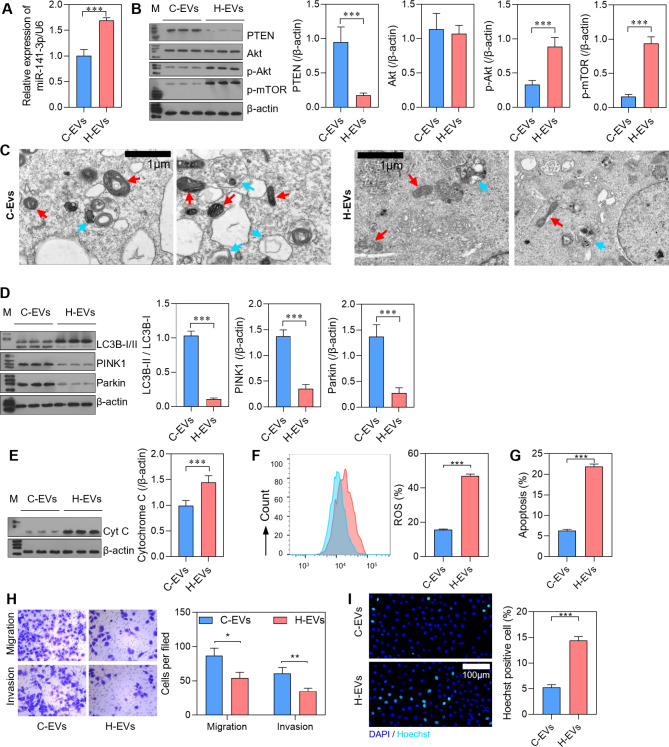
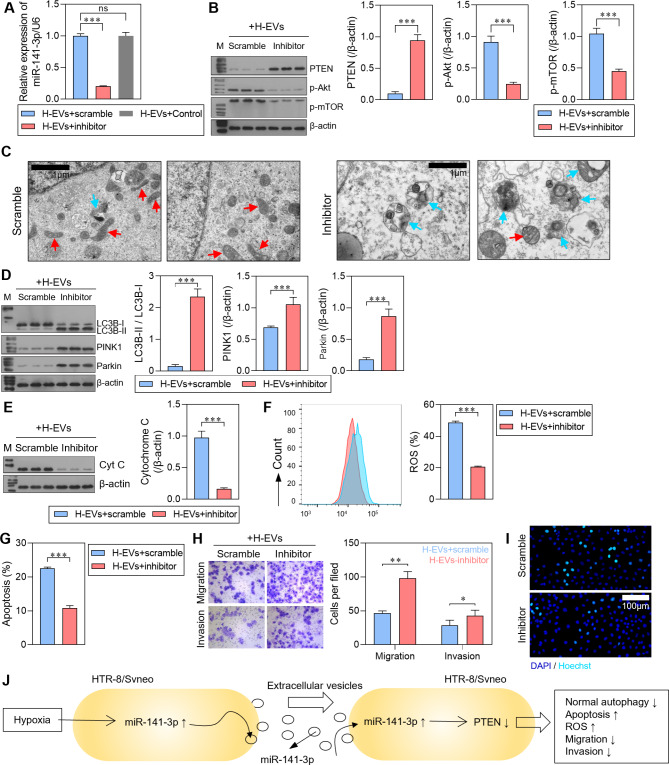
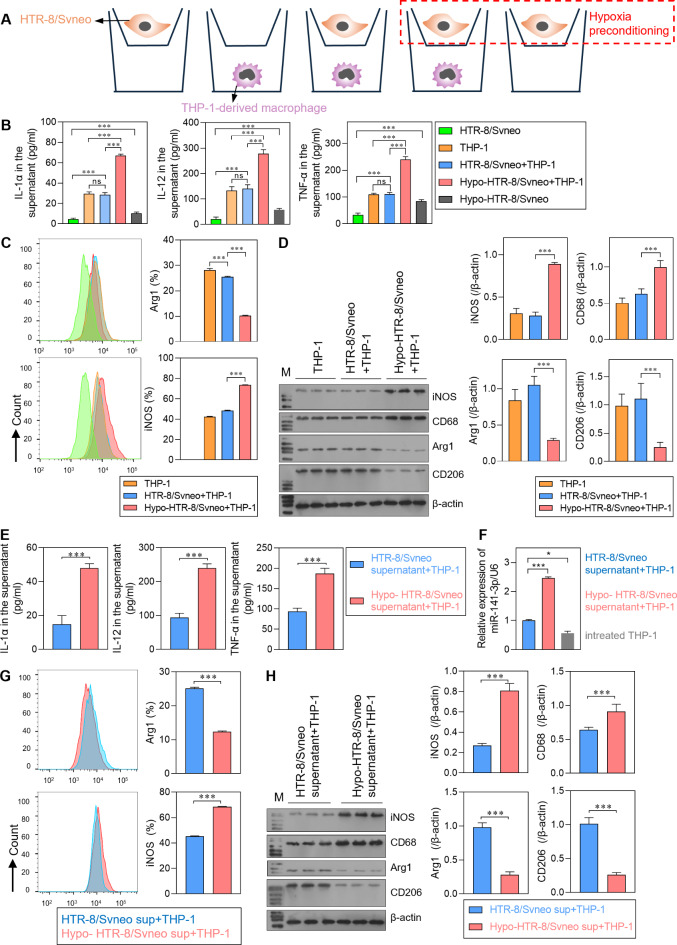
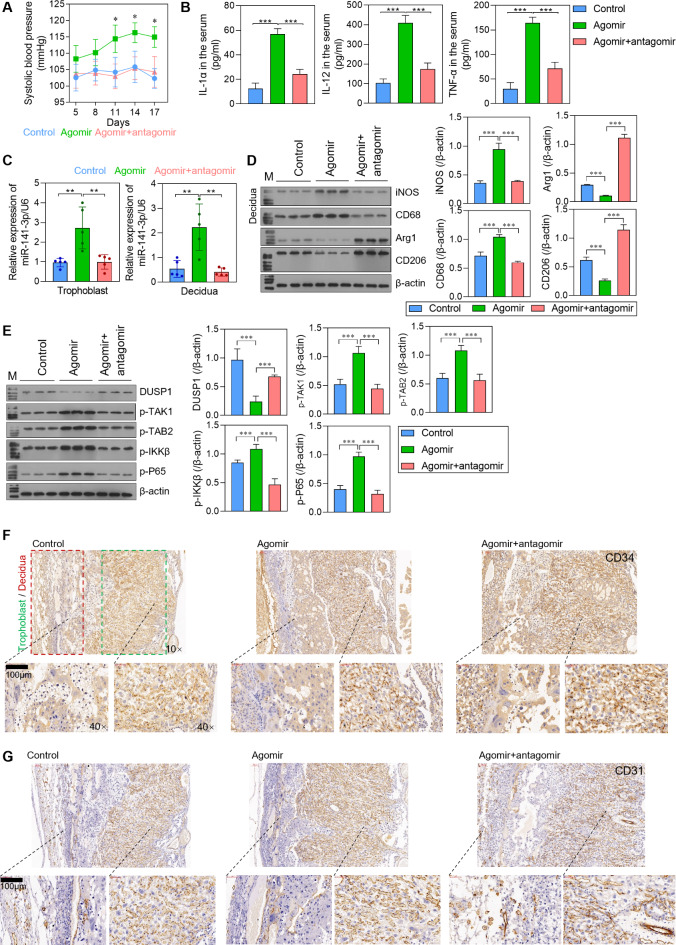
Dysregulation of macrophage polarization can prevent the invasion of trophoblast cells and further limit spiral artery remodeling in preeclampsia (PE). However, its mechanism is obscure. HTR8-/Svneo cells were cultured under normoxic or hypoxic conditions and extracellular vesicles (EVs) in the culture supernatants were extracted. Next, the cells were incubated with those EVs to investigate their effects on trophoblasts. A co-culture system consisting of HTR8-/Svneo cells and macrophages was used to reveal how the trophoblast-derived EVs affected the macrophage subtype. Finally, a PE mouse model and miR-141-3p knockout mice were used to verify the function of miR-141-3p in PE. Hypoxia induced abnormal increases in the levels of miR-141-3p in HTR8-/Svneo cells and EVs. EVs from hypoxia-treated HTR8-/Svneo cells could downregulate PTEN, a potential target of miR-141-3p, and inhibit trophoblast mitophagy and invasion. However, HTR8-/Svneo cells transfected with an miR-141-3p inhibitor could attenuate the influence of EVs. In an HTR8-/Svneo cell plus macrophage co-culture system, hypoxia-pretreated cells promoted the transformation of macrophages into the M1-phenotye, and HTR8-/Svneo invasion was inhibited by the macrophages. MiR-141 from EVs could target and downregulate dual specificity phosphatase 1 (DUSP1) expression in macrophages, induce formation of the M1 macrophage phenotype in THP-1 cells, downregulate DUSP1 expression, and upregulate TAB2/TAK1 signaling. These results were also demonstrated in normal pregnant mice and PE pregnant mice. A hypoxic environment could upregulate miR-141 expression in the EVs of HTR8-/Svneo cells, and THP-1-derived macrophages could uptake EVs releasing miR-141 to downregulate DUSP1 expression and induce the formation of M1 macrophages, which can lead to the development of PE.
巨噬细胞极化失调可阻止滋养细胞浸润,并进一步限制子痫前期(PE)中的螺旋动脉重塑。然而,其机制尚不清楚。在常氧或低氧条件下培养 HTR8-/Svneo 细胞,并提取培养上清液中的细胞外囊泡(EVs)。然后,将这些 EVs 孵育细胞,以研究它们对滋养细胞的影响。使用 HTR8-/Svneo 细胞和巨噬细胞的共培养系统来揭示滋养细胞衍生的 EVs 如何影响巨噬细胞亚型。最后,使用 PE 小鼠模型和 miR-141-3p 敲除小鼠来验证 miR-141-3p 在 PE 中的功能。低氧诱导 HTR8-/Svneo 细胞和 EVs 中 miR-141-3p 水平异常升高。来自低氧处理的 HTR8-/Svneo 细胞的 EVs 可以下调 miR-141-3p 的潜在靶标 PTEN,并抑制滋养细胞自噬和浸润。然而,用 miR-141-3p 抑制剂转染的 HTR8-/Svneo 细胞可以减弱 EVs 的影响。在 HTR8-/Svneo 细胞加巨噬细胞共培养系统中,低氧预处理的细胞促进巨噬细胞向 M1 表型转化,并且巨噬细胞抑制 HTR8-/Svneo 细胞的侵袭。EVs 中的 miR-141 可以靶向并下调巨噬细胞中的双特异性磷酸酶 1(DUSP1)表达,诱导 THP-1 细胞形成 M1 巨噬细胞表型,下调 DUSP1 表达,并上调 TAB2/TAK1 信号。这些结果在正常妊娠小鼠和 PE 妊娠小鼠中也得到了证实。低氧环境可上调 HTR8-/Svneo 细胞 EVs 中的 miR-141 表达,THP-1 衍生的巨噬细胞可摄取释放 miR-141 的 EVs 以下调 DUSP1 表达并诱导 M1 巨噬细胞形成,从而导致 PE 的发生。