Riscassi Ami L, Scanlon Todd M, Galloway James N
Environmental Sciences Department, University of Virginia, Charlottesville, VA USA.
Biogeochemistry. 2024;167(10):1175-1201. doi: 10.1007/s10533-024-01163-x. Epub 2024 Aug 6.
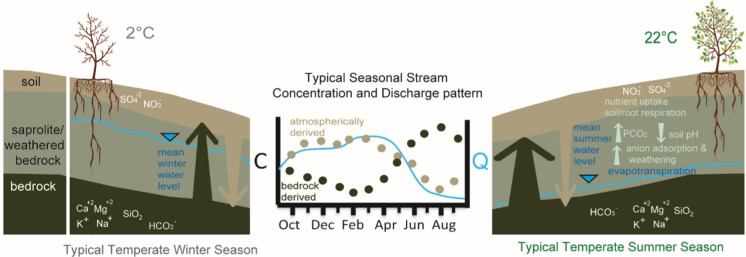
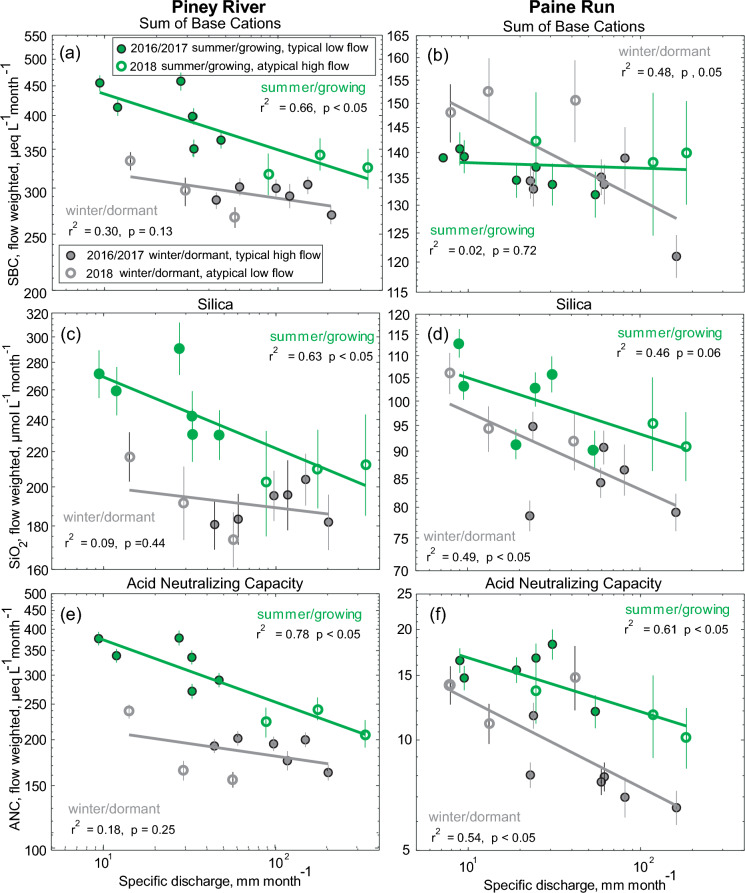
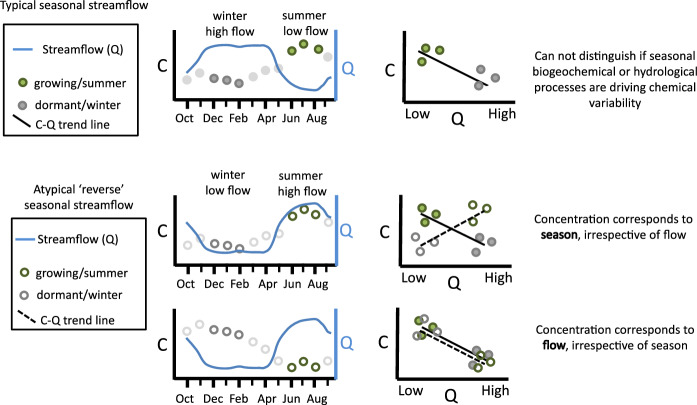
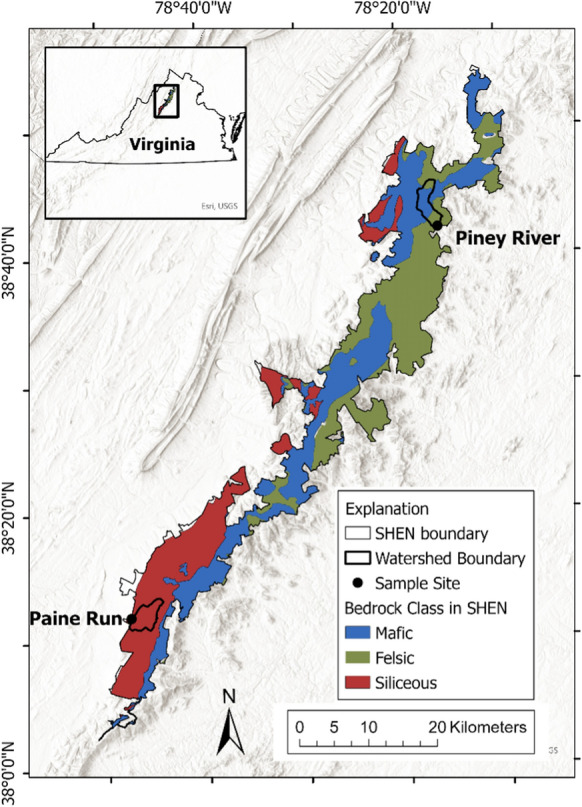
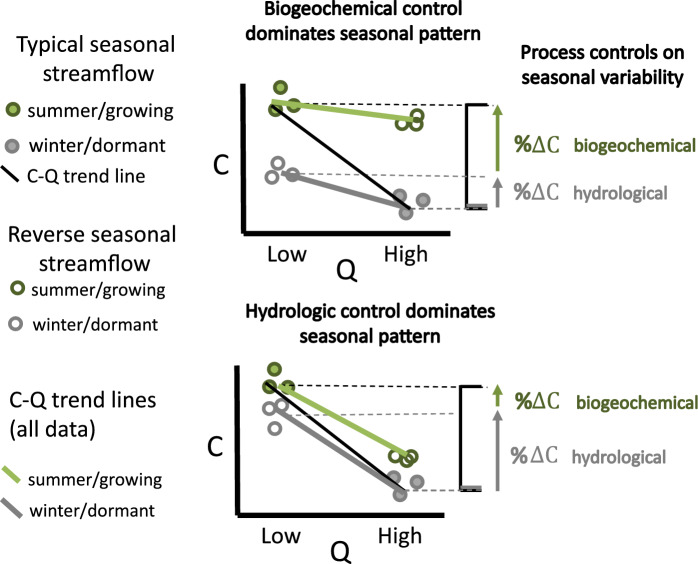
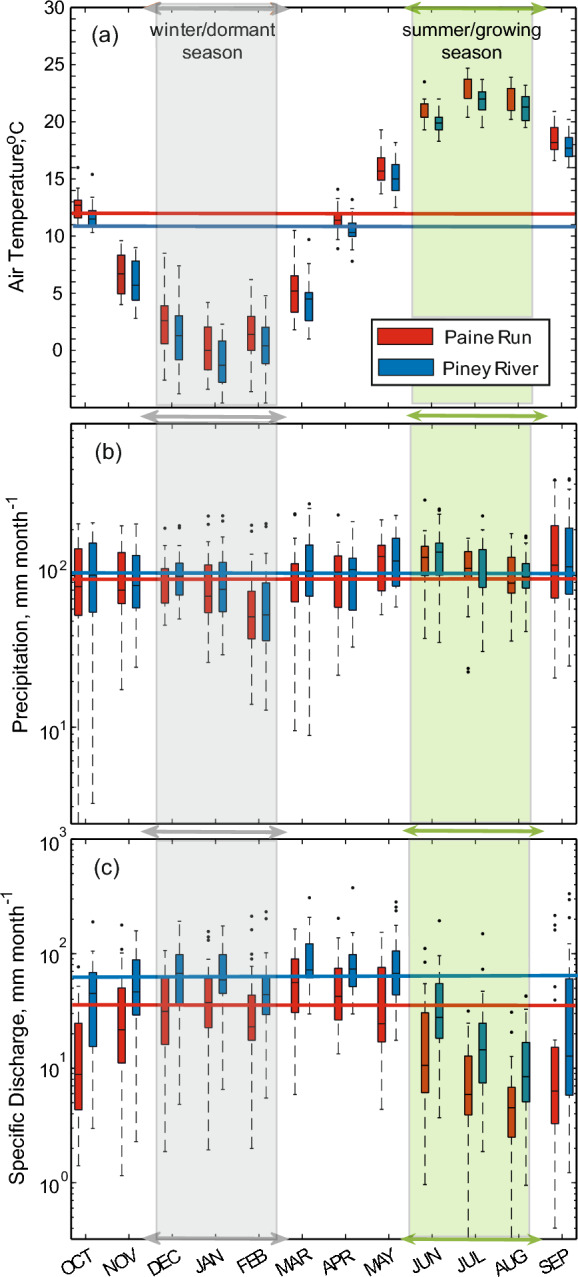
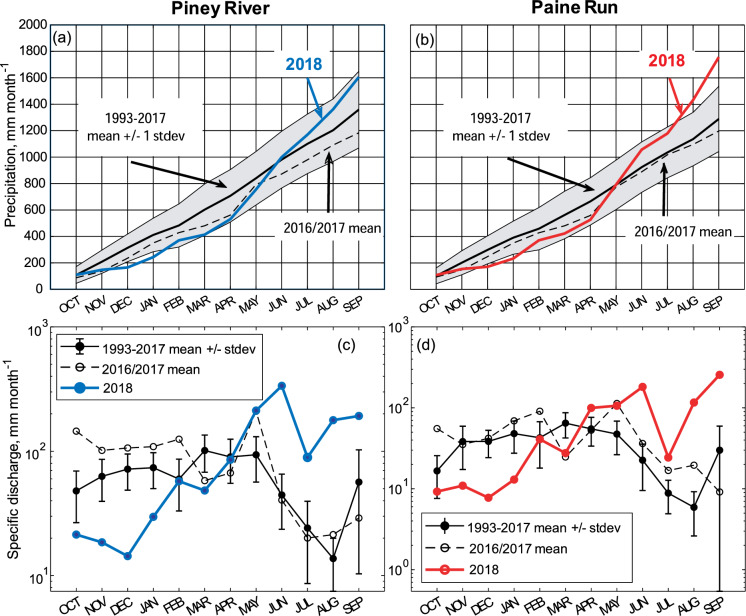
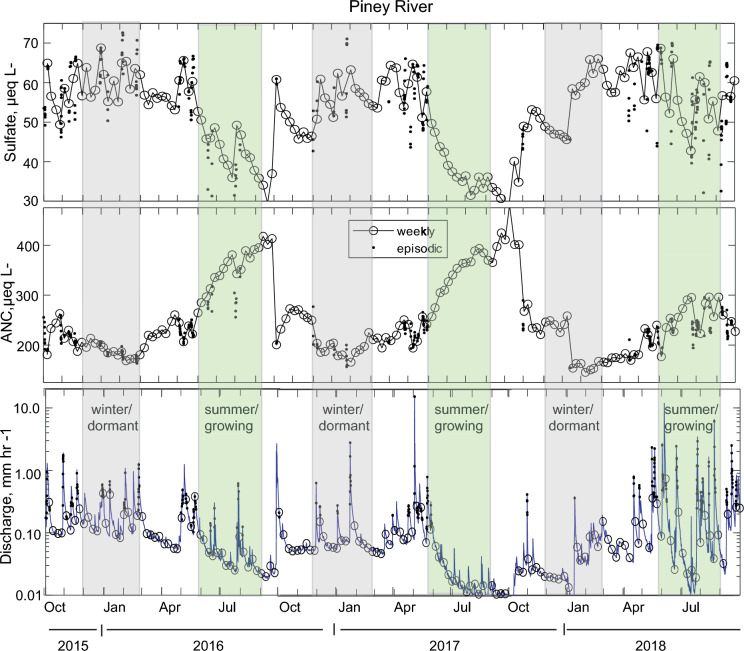
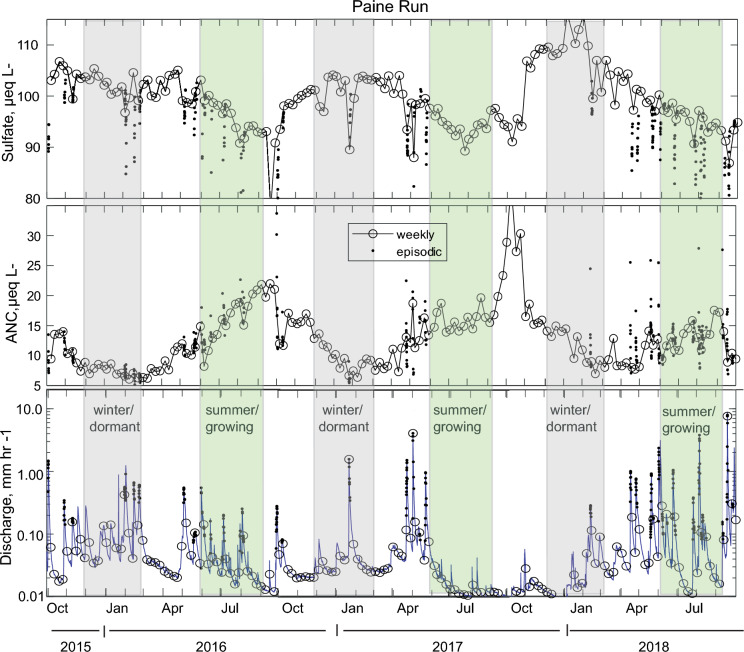
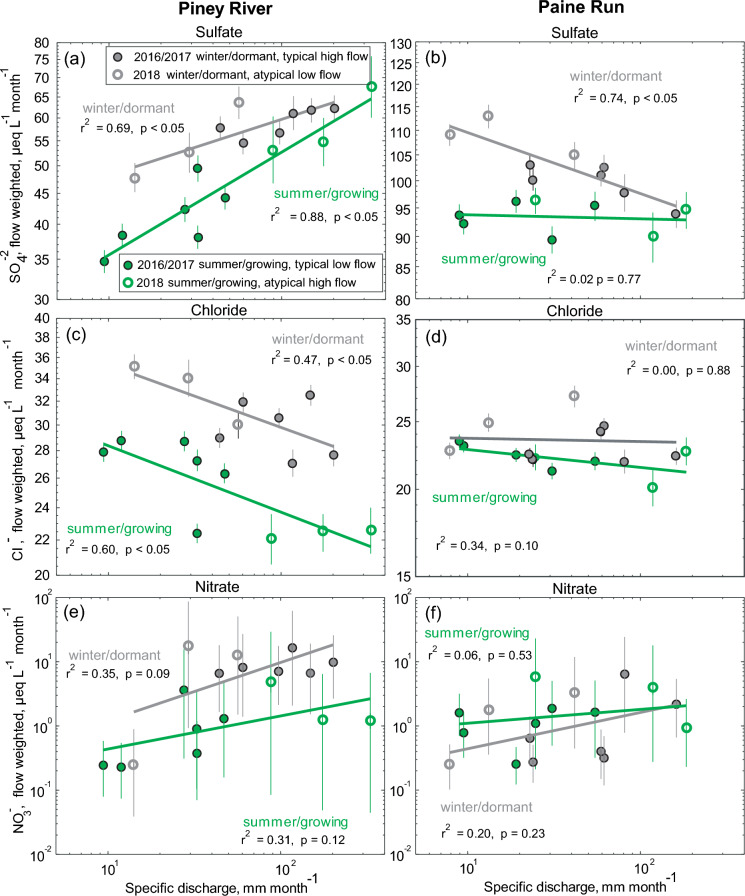
The relative influence of seasonal patterns in hydrological flow and seasonal differences in biological and geochemical activity on stream chemistry patterns is difficult to discern because they covary; temperate systems are characterized by lower mean flow in the summer (i.e. corresponding to deeper flow paths, elevated temperature, and biological activity), and higher mean flow in the winter (i.e. corresponding to shallower flow paths, depressed temperature, and biological dormancy). Using 2018 data, when seasonal stream flow conditions reversed, and two prior conventional water years, the relationship between monthly acid-relevant analyte concentrations and streamflow were compared within and between winter and summer to provide insight into controls on characteristic seasonal chemistry patterns at two mid-Appalachian sites with distinct geology (weatherable mafic and weather resistant siliciclastic). Acid neutralizing capacity (ANC) increased (1) with lower flow, in both seasons and (2) in summer, for all flow conditions. The compounding impacts resulted in a doubling of concentration from typical winter with high flow to summer with low flow at both sites. Base cation patterns tracked ANC at the mafic site, resulting in an ~ 60% increase of from winter with high flow to summer with low flow; distinctions between summer and winter contributed more to the seasonal pattern (72%) than changes in flow. Sulfate increased at the mafic site (1) with higher flow, in both seasons and (2) in winter, for all flow conditions, resulting in an ~ 50% increase from summer with low flow to winter with high flow; distinctions between winter and summer conditions and flow contributed similarly (40-60%) to the typical seasonal chemical pattern. The biogeochemical mechanism driving differences in stream chemistry between summer and winter for the same flow conditions is likely increased rates of natural acidification from elevated soil respiration in summer, resulting in greater bedrock weathering and sulfate adsorption. Findings highlight the significance and consistency of growing vs dormant season variations in temperature and biological activity in driving intra-annual patterns of stream solutes. This data set informs parameterization of hydro-biogeochemical models of stream chemistry in a changing climate at a biologically relevant, seasonal, timescale.
The online version contains supplementary material available at 10.1007/s10533-024-01163-x.
水文流量的季节性模式与生物和地球化学活动的季节性差异对溪流化学模式的相对影响难以区分,因为它们相互关联;温带系统的特征是夏季平均流量较低(即对应于更深的水流路径、升高的温度和生物活动),冬季平均流量较高(即对应于较浅的水流路径、降低的温度和生物休眠)。利用2018年的数据(当时季节性溪流流量条件发生了逆转)以及之前的两个常规水年,比较了冬季和夏季内部以及冬季和夏季之间每月与酸相关的分析物浓度与溪流流量之间的关系,以深入了解阿巴拉契亚中部两个地质不同(可风化的镁铁质和耐风化的硅质碎屑岩)地点特征性季节性化学模式的控制因素。酸中和能力(ANC)在两个季节中均随流量降低而增加,并且在夏季,对于所有流量条件均如此。这些综合影响导致两个地点从典型的高流量冬季到低流量夏季浓度增加了一倍。在镁铁质地点,碱金属阳离子模式与ANC相关,从高流量冬季到低流量夏季增加了约60%;夏季和冬季之间的差异对季节性模式的贡献更大(72%),而不是流量变化。在镁铁质地点,硫酸盐在两个季节中均随流量增加而增加,并且在冬季,对于所有流量条件均如此,导致从低流量夏季到高流量冬季增加了约50%;冬季和夏季条件以及流量之间的差异对典型季节性化学模式的贡献相似(40 - 60%)。对于相同流量条件,驱动夏季和冬季溪流化学差异的生物地球化学机制可能是夏季土壤呼吸增加导致自然酸化速率加快,从而导致更大的基岩风化和硫酸盐吸附。研究结果突出了生长季与休眠季温度和生物活动变化在驱动溪流溶质年内模式方面的重要性和一致性。该数据集为在生物相关的季节性时间尺度上变化的气候条件下溪流化学的水文 - 生物地球化学模型参数化提供了信息。
在线版本包含可在10.1007/s10533 - 024 - 01163 - x获取的补充材料。