Sinha Mohit, Maged Rafik, Tarar Pakeeza, Bandi Venkata Varshitha, Koneru Hema Manvi, Sarwar Hooria
Internal Medicine, Jawaharlal Nehru Medical College, Belgaum, IND.
Internal Medicine, Ain Shams University, Cairo, EGY.
Cureus. 2024 Sep 20;16(9):e69824. doi: 10.7759/cureus.69824. eCollection 2024 Sep.
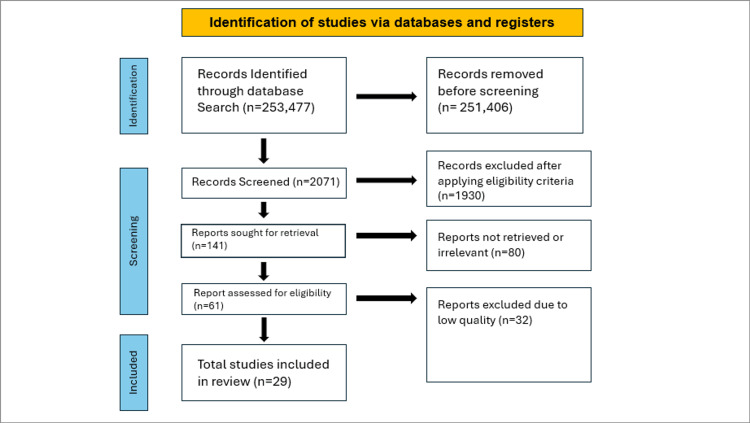
Lipoprotein(a), or Lp(a), was identified in the early 1960. Its role as an independent risk factor for atherosclerotic cardiovascular disease (ASCVD) became widely recognized by the late 20th century, regardless of other traditional risk markers such as low-density lipoproteins and high-density lipoproteins. This study aimed to systematically review available literature and compare the efficacy of different lipid-lowering drugs, both approved for clinical use and currently undergoing trials, in lowering Lp(a) levels. A comprehensive search of medical databases including PubMed, PubMed Central (PMC), Medline, ScienceDirect, Cochrane Library, and Google Scholar was conducted to identify relevant studies. A total of 29 research papers met the inclusion criteria, focusing on the impact of various lipid-lowering drugs on Lp(a) concentration in patients with significantly elevated baseline Lp(a) levels. Plasma Lp(a) levels exceeding 30 mg/dL are associated with a higher risk of ASCVD, including myocardial infarction, stroke, aortic valve stenosis, heart failure, peripheral arterial disease, and increased all-cause mortality. Most commonly used lipid-lowering agents, such as statins, fibrates, ezetimibe, and nutraceuticals like coenzyme Q10 (CoQ10), showed no significant effect on Lp(a) plasma levels. However, Lp(a) apheresis and proprotein convertase subtilisin/kexin type 9 (PCSK-9) inhibitors were found to effectively reduce plasma Lp(a) concentrations. Emerging therapies targeting apolipoprotein(a) RNA, including anti-sense oligonucleotides (ASO) and small interfering RNA (siRNA), significantly reduced Lp(a) levels in Phase 2 trials. While several lipid-lowering agents have minimal impact on Lp(a) levels, therapies like Lp(a) apheresis, PCSK-9 inhibitors, and novel RNA-targeting drugs show promise in effectively reducing Lp(a) concentrations. However, whether these reductions translate into decreased cardiovascular events remains to be determined.
脂蛋白(a),即Lp(a),于20世纪60年代初被发现。到20世纪末,其作为动脉粥样硬化性心血管疾病(ASCVD)独立危险因素的作用已得到广泛认可,而不受其他传统风险标志物如低密度脂蛋白和高密度脂蛋白的影响。本研究旨在系统回顾现有文献,比较已批准用于临床和目前正在进行试验的不同降脂药物在降低Lp(a)水平方面的疗效。对包括PubMed、PubMed Central (PMC)、Medline、ScienceDirect、Cochrane图书馆和谷歌学术在内的医学数据库进行了全面检索,以识别相关研究。共有29篇研究论文符合纳入标准,重点关注各种降脂药物对基线Lp(a)水平显著升高的患者Lp(a)浓度的影响。血浆Lp(a)水平超过30mg/dL与ASCVD风险较高相关,包括心肌梗死、中风、主动脉瓣狭窄、心力衰竭、外周动脉疾病以及全因死亡率增加。最常用的降脂药物,如他汀类药物、贝特类药物、依折麦布以及辅酶Q10 (CoQ10)等营养保健品,对血浆Lp(a)水平均无显著影响。然而,发现Lp(a)血浆置换和前蛋白转化酶枯草杆菌蛋白酶/kexin 9型(PCSK-9)抑制剂可有效降低血浆Lp(a)浓度。针对载脂蛋白(a) RNA的新兴疗法,包括反义寡核苷酸(ASO)和小干扰RNA (siRNA),在2期试验中显著降低了Lp(a)水平。虽然几种降脂药物对Lp(a)水平影响极小,但Lp(a)血浆置换、PCSK-9抑制剂和新型RNA靶向药物等疗法在有效降低Lp(a)浓度方面显示出前景。然而,这些降低是否会转化为心血管事件的减少仍有待确定。