Ethiopian Public Health Institute (EPHI), Addis Ababa, Ethiopia.
Global Health, The Association of Public Health Laboratories (APHL), Addis Ababa, Ethiopia.
Front Public Health. 2024 Oct 7;12:1394798. doi: 10.3389/fpubh.2024.1394798. eCollection 2024.
Although wastewater-based epidemiology (WBE) successfully functioned as a tool for monitoring the coronavirus disease 2019 (COVID-19) pandemic globally, relatively little is known about its utility in low-income countries. This study aimed to quantify severe acute respiratory syndrome coronavirus 2 (SARS-CoV-2) RNA in wastewater, estimate the number of infected individuals in the catchment areas, and correlate the results with the clinically reported COVID-19 cases in Addis Ababa, Ethiopia.
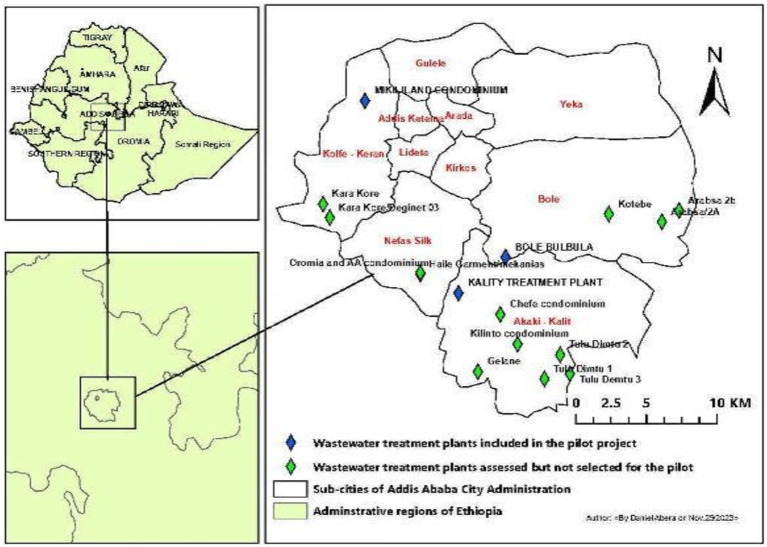
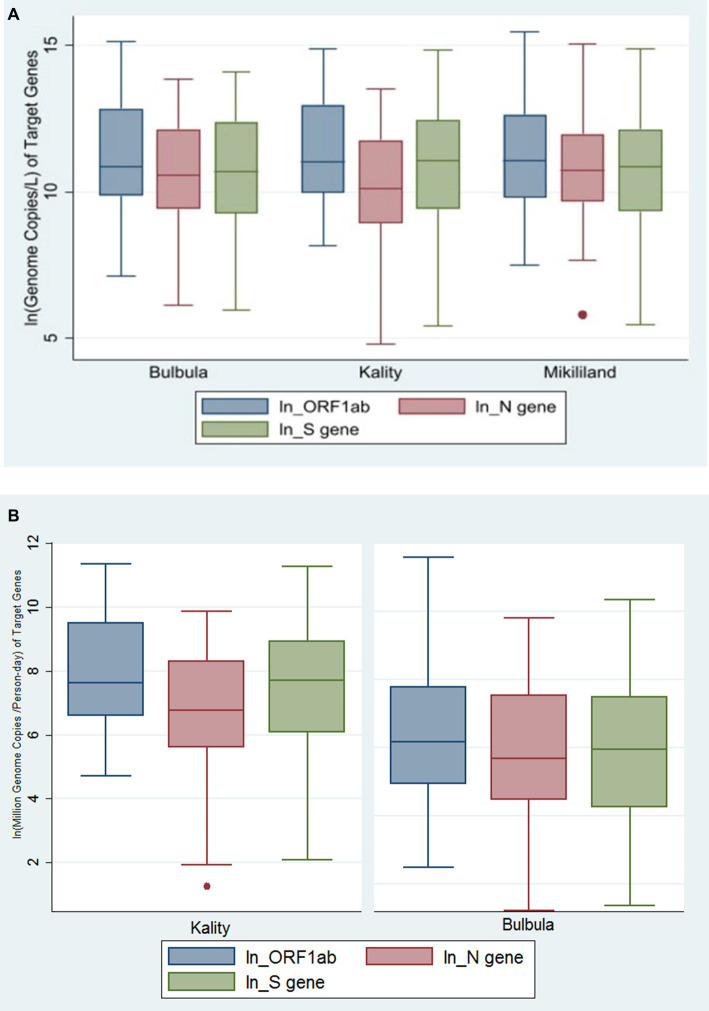
A total of 323 influent and 33 effluent wastewater samples were collected from three Wastewater Treatment Plants (WWTPs) using a 24-h composite Moore swab sampling method from February to November 2023. The virus was captured using Ceres Nanotrap® Enhancement Reagent 2 and Nanotrap® Microbiome A Particles, and then nucleic acids were extracted using the Qiagen QIAamp Viral RNA Mini Kit. The ThermoFisher TaqPath™ COVID-19 kit was applied to perform real-time reverse transcriptase polymerase chain reaction (qRT-PCR) to quantify the SARS-CoV-2 RNA. Wastewater viral concentrations were normalized using flow rate and number of people served. In the sampling period, spearman correlation was used to compare the SARS-CoV-2 target gene concentration to the reported COVID-19 cases. The numbers of infected individuals under each treatment plant were calculated considering the target genes' concentration, the flow rate of treatment plants, a gram of feces per person-day, and RNA copies per gram of feces.
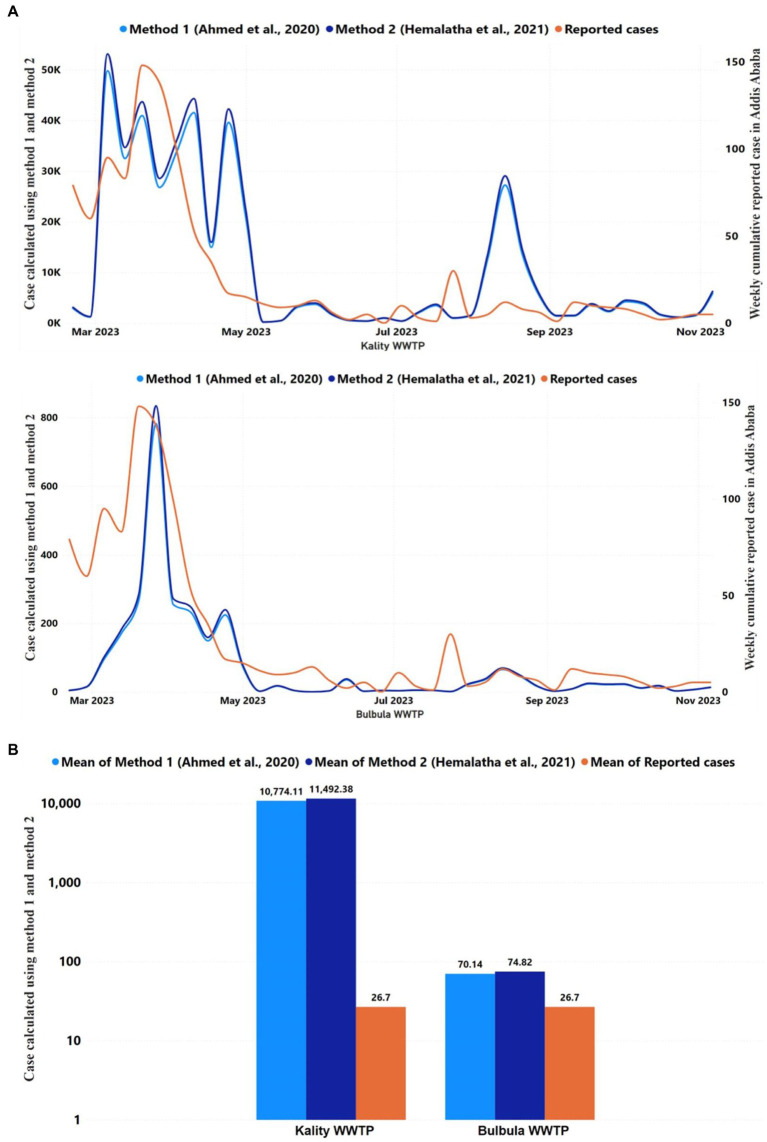
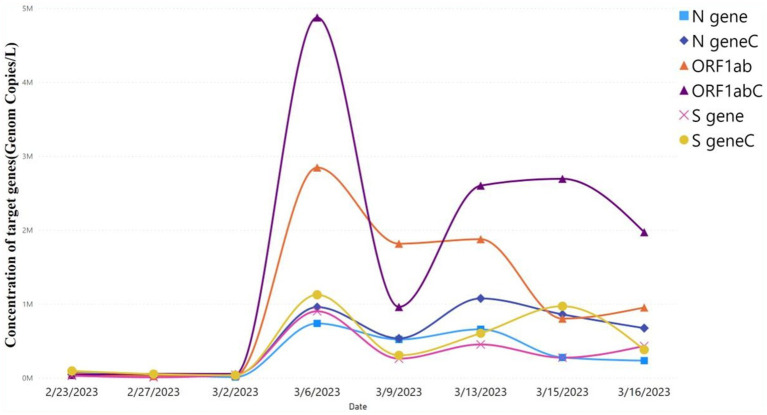
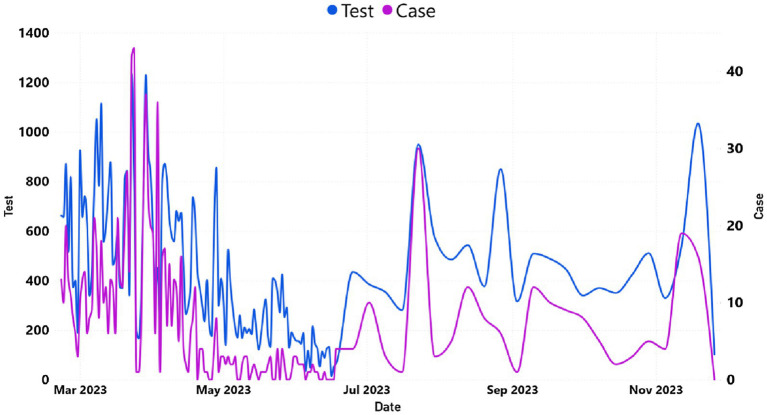
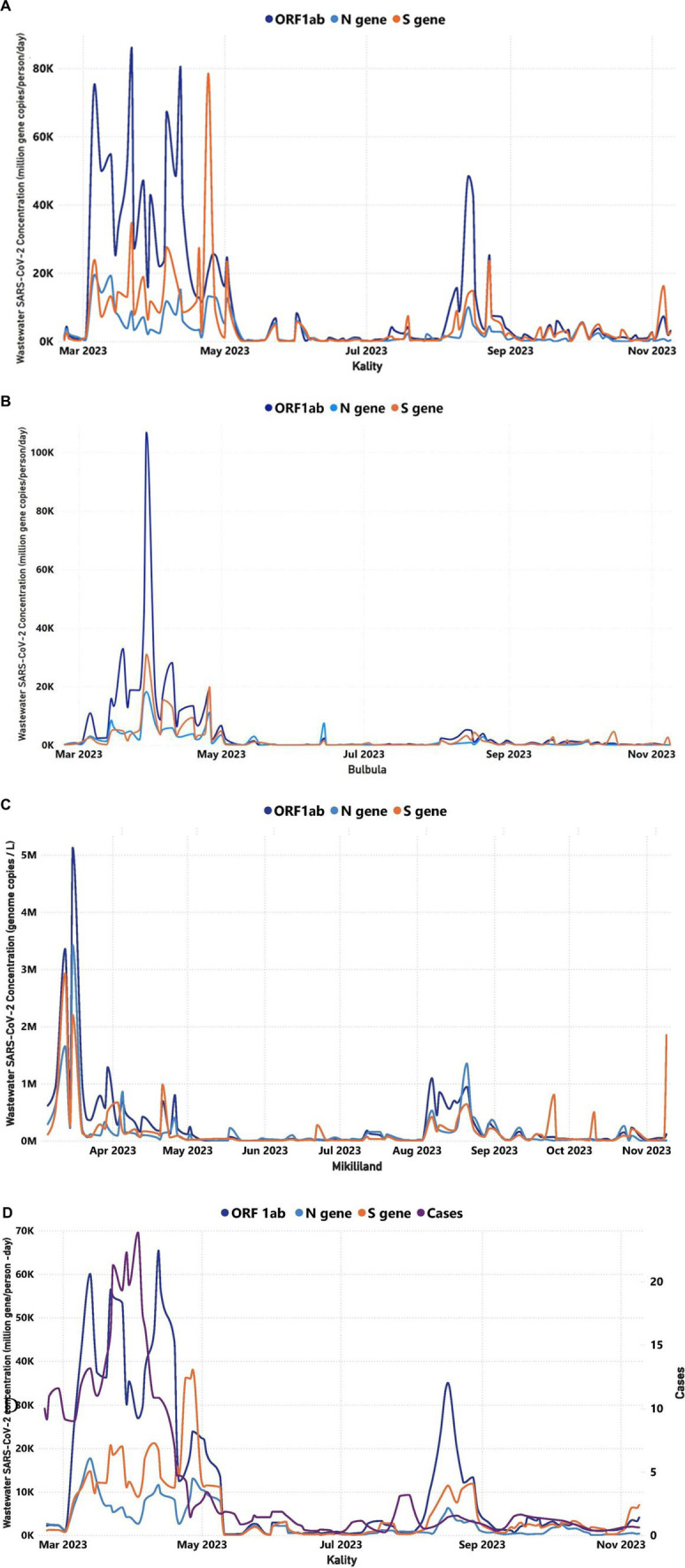
SARS-CoV-2 was detected in 94% of untreated wastewater samples. All effluent wastewater samples ( = 22) from the upflow anaerobic sludge blanket (UASB) reactor and membrane bioreactor (MBR) technology were SARS-COV-2 RNA negative. In contrast, two out of 11 effluents from Waste Stabilization Pond were found positive. Positive correlations were observed between the weekly average SARS-CoV-2 concentration and the cumulative weekly reported COVID-19 cases in Addis Ababa. The estimated number of infected people in the Kality Treatment catchment area was 330 times the number of COVID-19 cases reported during the study period in Addis Ababa.
This study revealed that SARS-CoV-2 was circulating in the community and confirmed previous reports of more asymptomatic COVID-19 cases in Ethiopia. Additionally, this study provides further evidence of the importance of wastewater-based surveillance in general to monitor infectious diseases in low-income settings.
Wastewater-based surveillance of SARS-CoV-2 can be a useful method for tracking the increment of COVID-19 cases before it spreads widely throughout the community.
尽管基于废水的流行病学(WBE)成功地作为一种监测全球 2019 年冠状病毒病(COVID-19)大流行的工具,但对于其在低收入国家的应用知之甚少。本研究旨在定量检测废水中的严重急性呼吸综合征冠状病毒 2(SARS-CoV-2)RNA,估算集水区内感染个体的数量,并将结果与埃塞俄比亚亚的斯亚贝巴临床报告的 COVID-19 病例进行相关性分析。
本研究于 2023 年 2 月至 11 月期间,采用 24 小时复合 Moore 拭子采样方法,从三个污水处理厂(WWTP)共采集了 323 份进水和 33 份出水废水样本。使用 Ceres Nanotrap® Enhancement Reagent 2 和 Nanotrap® Microbiome A Particles 捕获病毒,然后使用 Qiagen QIAamp Viral RNA Mini Kit 提取核酸。应用 ThermoFisher TaqPath™ COVID-19 试剂盒进行实时逆转录聚合酶链反应(qRT-PCR)以定量 SARS-CoV-2 RNA。通过流量和服务人数对废水病毒浓度进行归一化。在采样期间,采用 Spearman 相关性分析比较 SARS-CoV-2 靶基因浓度与报告的 COVID-19 病例。考虑到目标基因浓度、处理厂流量、每人每天粪便量和粪便中 RNA 拷贝数,计算每个处理厂下感染个体的数量。
未经处理的废水样本中 94%检测到 SARS-CoV-2。上流式厌氧污泥床(UASB)反应器和膜生物反应器(MBR)技术的所有出水废水样本( = 22)均为 SARS-COV-2 RNA 阴性。相比之下,有两个来自污水稳定塘的出水样本呈阳性。每周平均 SARS-CoV-2 浓度与亚的斯亚贝巴每周累计报告 COVID-19 病例呈正相关。估计在 Kality 处理集水区感染的人数是该研究期间报告的亚的斯亚贝巴 COVID-19 病例的 330 倍。
本研究表明 SARS-CoV-2 在社区中传播,并证实了之前在埃塞俄比亚报告的更多无症状 COVID-19 病例。此外,本研究进一步证明了在低收入环境中,基于废水的监测对监测传染病的重要性。
基于废水的 SARS-CoV-2 监测可以作为一种有用的方法,在社区广泛传播之前跟踪 COVID-19 病例的增加。