State Key Laboratory of Pathogenesis, Prevention and Treatment of High Incidence Diseases in Central Asia, Clinical Medicine Institute, The First Affiliated Hospital of Xinjiang Medical University, Xinjiang, China.
Department of Hepatobiliary and Hydatid Disease, Digestive and Vascular Surgery Center Therapy Center, The First Affiliated Hospital of Xinjiang Medical University, Xinjiang, China.
PLoS Negl Trop Dis. 2024 Oct 22;18(10):e0012587. doi: 10.1371/journal.pntd.0012587. eCollection 2024 Oct.
Cystic Echinococcosis (CE) is a zoonotic disease causing fibrosis and necrosis of diseased livers caused by infection with Echinococcus granulosus (E.g). There is evidence that E.g is susceptible to immune escape and tolerance when host expression of immunoinflammation and fibrosis is suppressed, accelerating the progression of CE. Ghrelin has the effect of suppressing immunoinflammation and fibrosis, and whether it is involved in regulating the progression of E.g-infected liver lesions is not clear.
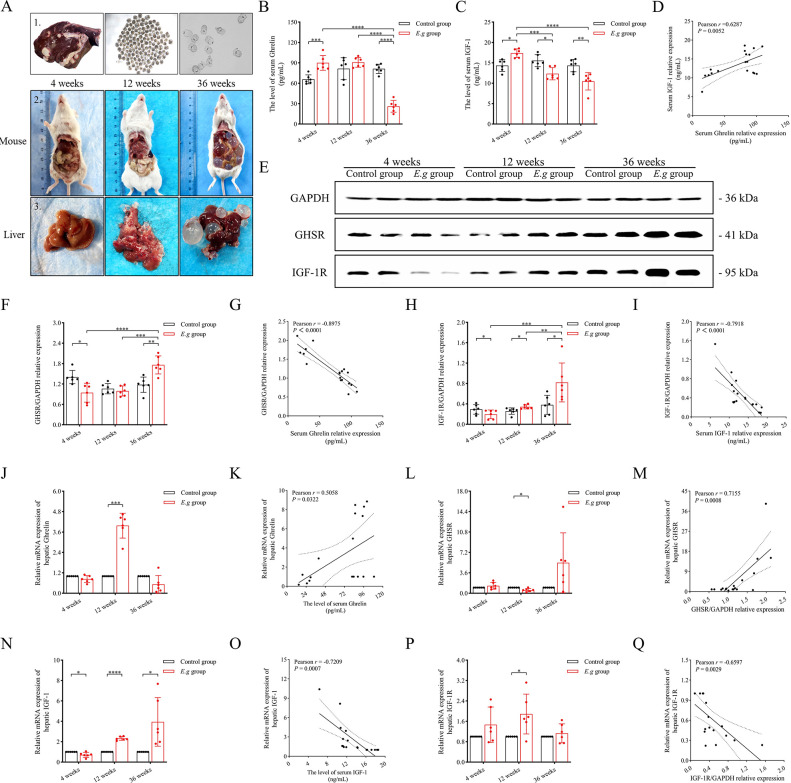
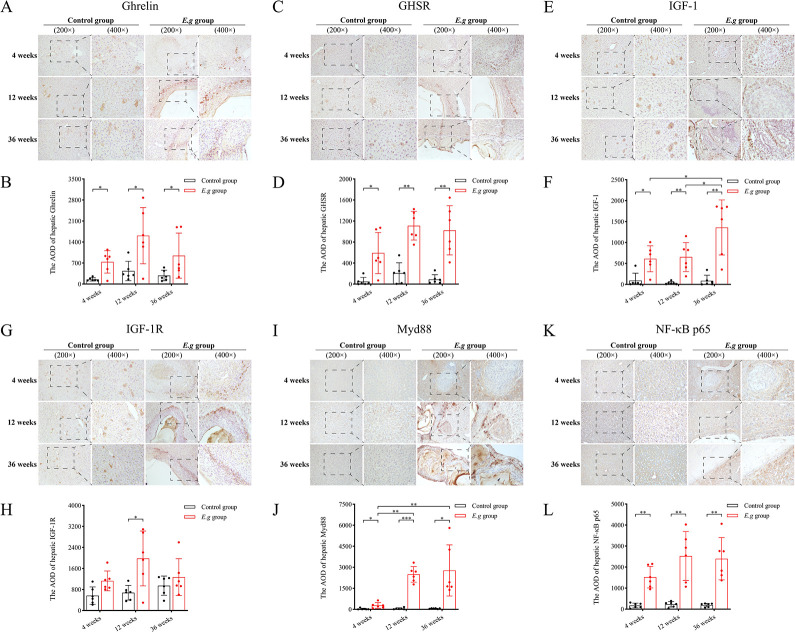
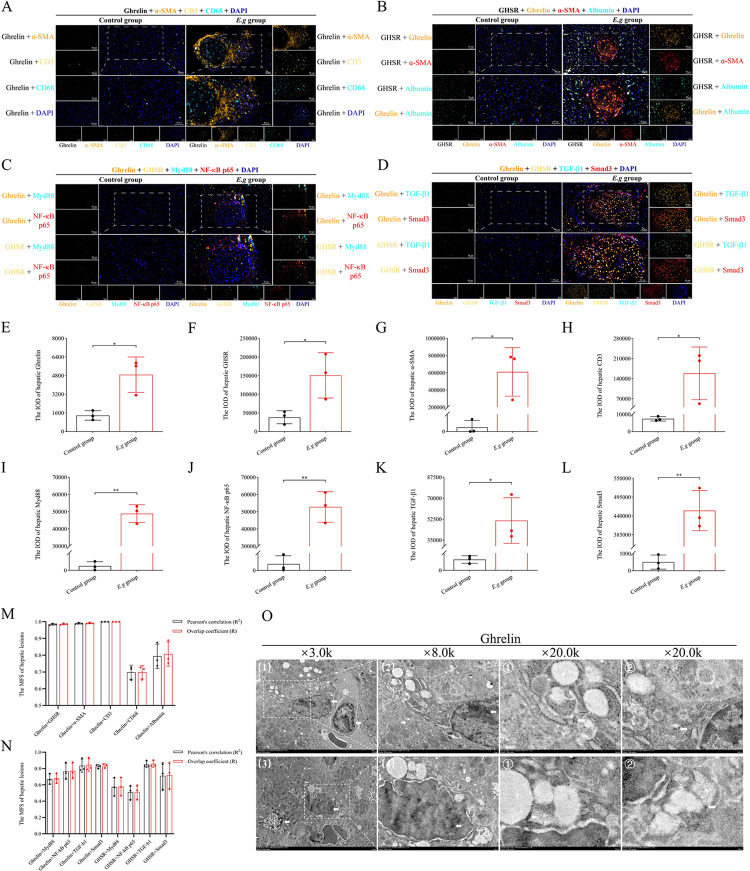
Serum and hepatic Ghrelin levels were observed in E.g-infected mice (4, 12 and 36 weeks) and compared with healthy control groups. Co-localization analysis is performed between protein expression of Ghrelin in and around the hepatic lesions of E.g-infected 12-week mice and protein expression of different hepatic histiocytes by mIHC. HepG2 cells and protoscoleces (PSCs) protein were co-cultured in vitro, as well as PSCs were alone in vitro, followed by exogenously administered of Ghrelin and its receptor blocker, [D-Lys3]-GHRP-6, to assess their regulatory effects on immunoinflammation, fibrosis and survival rate of PSCs.
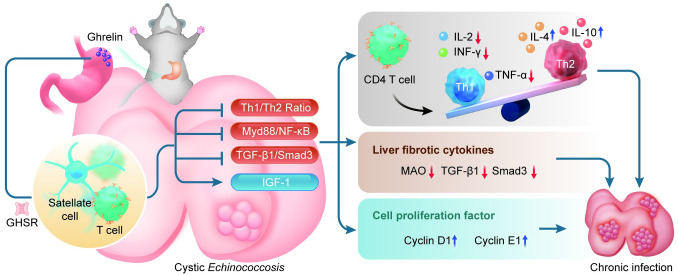
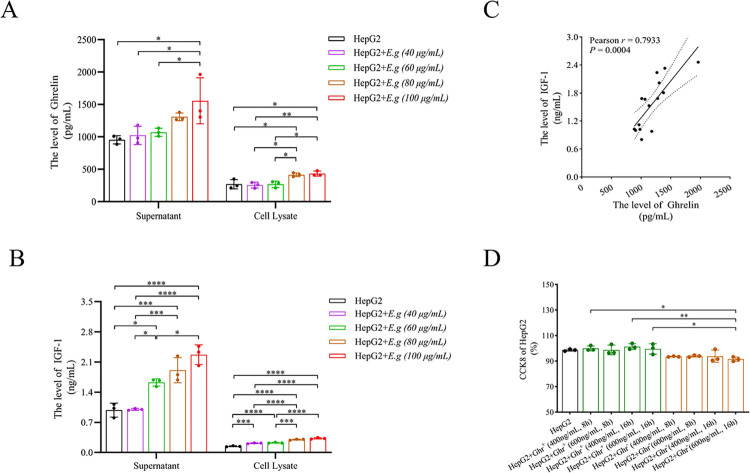
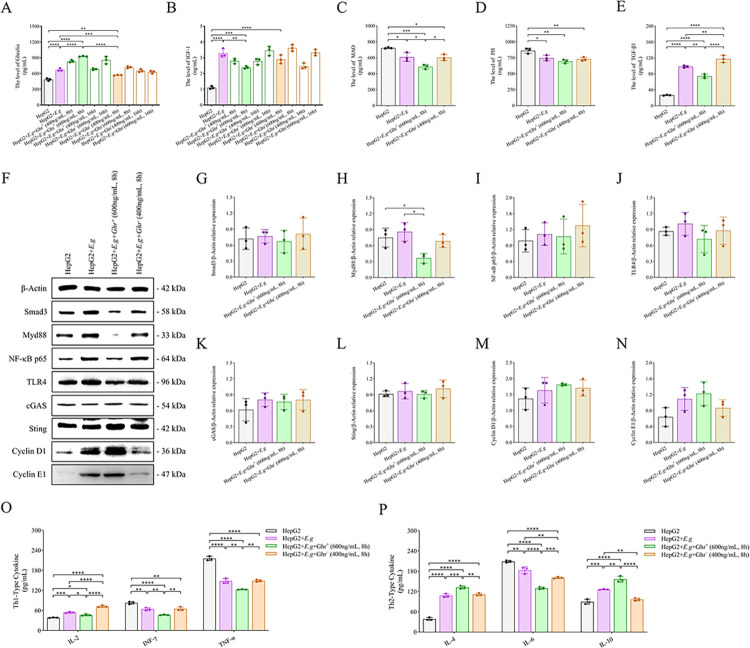
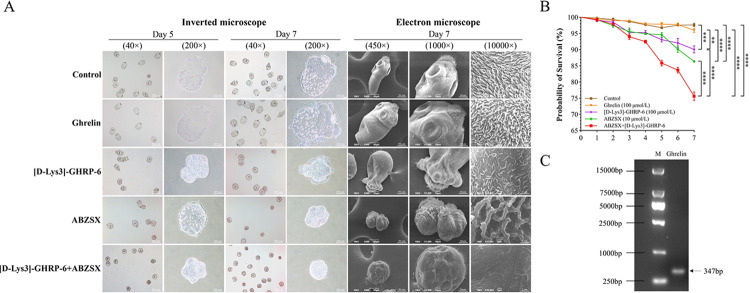
Serum Ghrelin levels were increased in E.g-infected 4- and 12-week mice, and reduced in 36-week mice. E.g-infected mice consistently recruited Ghrelin in and around the hepatic lesions, which was extremely strongly co-localized with the protein expression of hepatic stellate cells (HSCs), T cells and the TGF-β1/Smad3 pathway. The secretion of Ghrelin was increased with increasing concentrations of PSCs protein in HepG2 cells culture medium. Moreover, Ghrelin could significantly inhibit the secretion of IL-2, INF-γ and TNF-α, as well as the expression of Myd88/NF-κB and TGF-β1/Smad3 pathway protein, and promoted the secretion of IL-4 and IL-10. Blocking Ghrelin receptor could significantly inhibit PSCs growth in in vitro experiment.
Ghrelin is highly expressed in the early stages of hepatic E.g infection and may be involved in regulating the progression of liver lesions by suppression immunoinflammation and fibrosis.
包虫病(CE)是一种人畜共患疾病,由细粒棘球绦虫(E.g)感染引起肝脏纤维化和坏死。有证据表明,当宿主的免疫炎症和纤维化表达受到抑制时,E.g 容易发生免疫逃逸和耐受,从而加速 CE 的进展。Ghrelin 具有抑制免疫炎症和纤维化的作用,但它是否参与调节 E.g 感染肝病变的进展尚不清楚。
观察 E.g 感染小鼠(4、12 和 36 周)的血清和肝 Ghrelin 水平,并与健康对照组进行比较。通过 mIHC 对 12 周 E.g 感染小鼠肝病变内和周围 Ghrelin 蛋白的表达与不同肝组织细胞的蛋白表达进行共定位分析。体外共培养 HepG2 细胞和原头节(PSCs)蛋白,以及单独培养 PSCs,然后外源性给予 Ghrelin 和其受体阻断剂[D-Lys3]-GHRP-6,评估它们对 PSCs 免疫炎症、纤维化和存活率的调节作用。
E.g 感染 4 周和 12 周的小鼠血清 Ghrelin 水平升高,36 周的小鼠血清 Ghrelin 水平降低。E.g 感染的小鼠持续募集 Ghrelin 在肝病变内和周围,与肝星状细胞(HSCs)、T 细胞和 TGF-β1/Smad3 通路的蛋白表达呈极强的共定位。随着 HepG2 细胞培养基中 PSCs 蛋白浓度的增加,Ghrelin 的分泌量增加。此外,Ghrelin 可显著抑制 IL-2、INF-γ 和 TNF-α的分泌以及 Myd88/NF-κB 和 TGF-β1/Smad3 通路蛋白的表达,并促进 IL-4 和 IL-10 的分泌。在体外实验中,阻断 Ghrelin 受体可显著抑制 PSCs 的生长。
Ghrelin 在肝 E.g 感染的早期阶段高表达,可能通过抑制免疫炎症和纤维化参与调节肝病变的进展。