Neuromuscular Diseases Research Section, National Institute on Aging, National Institutes of Health (NIH), Bethesda, MD 20892, USA; Department of Neurology, Ohio State University, Columbus, OH 43210, USA.
Sheffield Institute for Translational Neuroscience, University of Sheffield, Sheffield S10 2HQ, UK.
Cell Genom. 2024 Nov 13;4(11):100679. doi: 10.1016/j.xgen.2024.100679. Epub 2024 Oct 21.
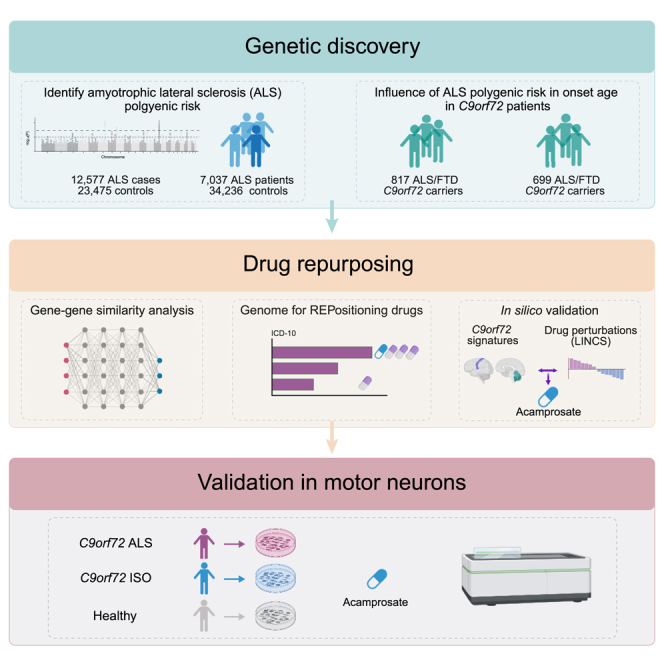
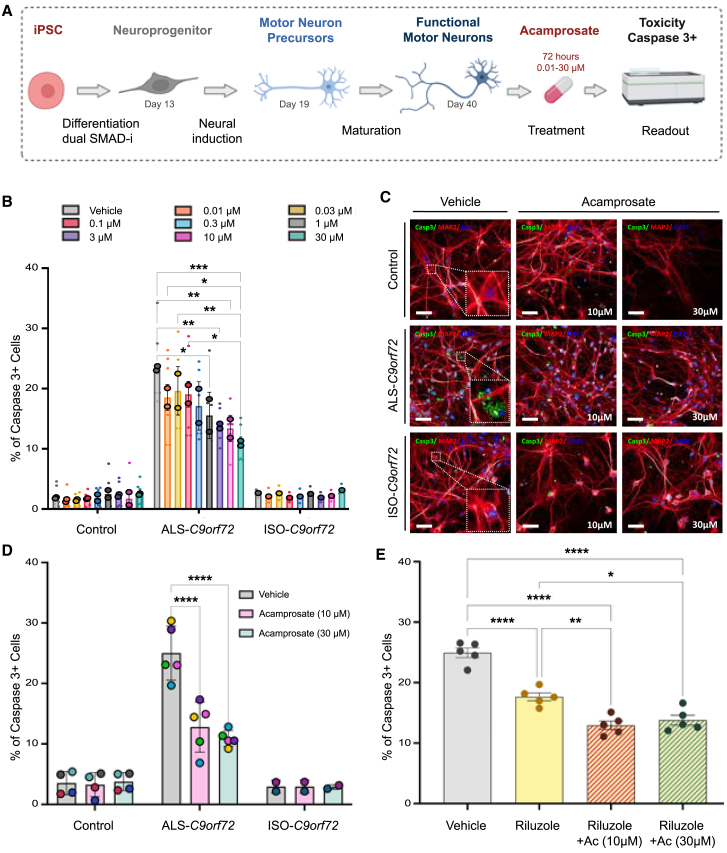
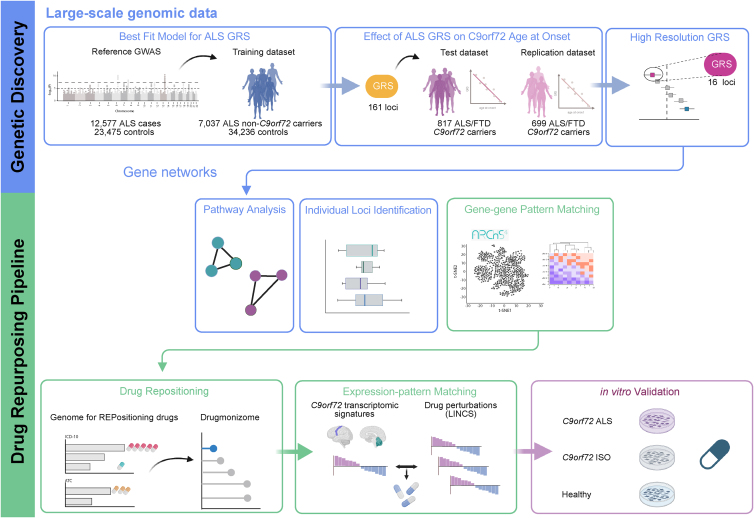
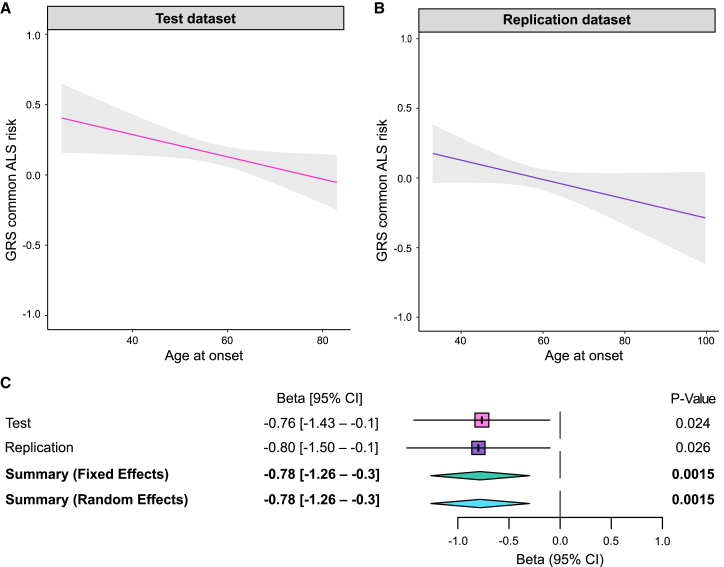
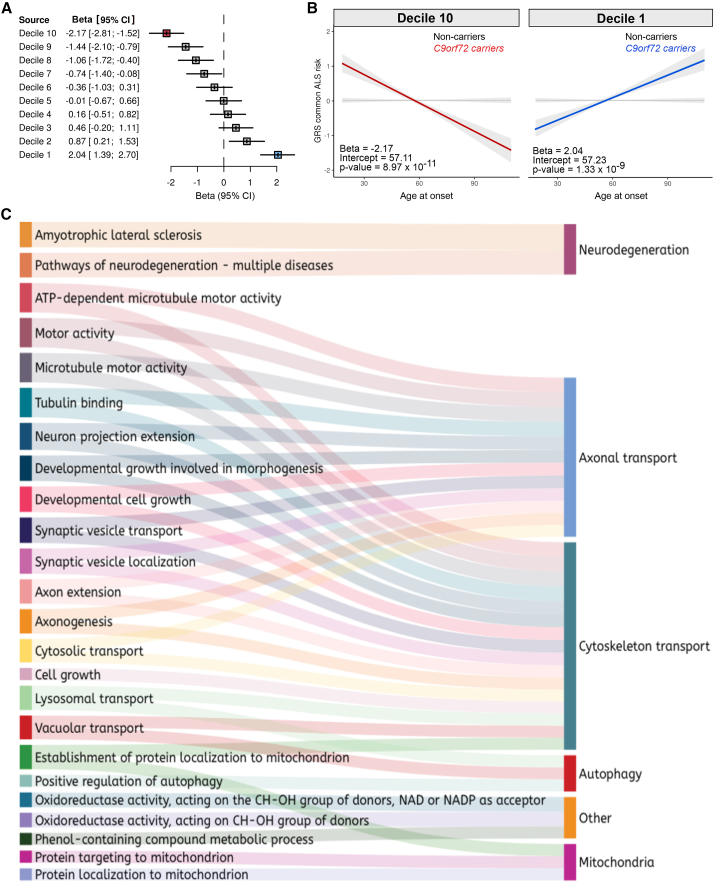
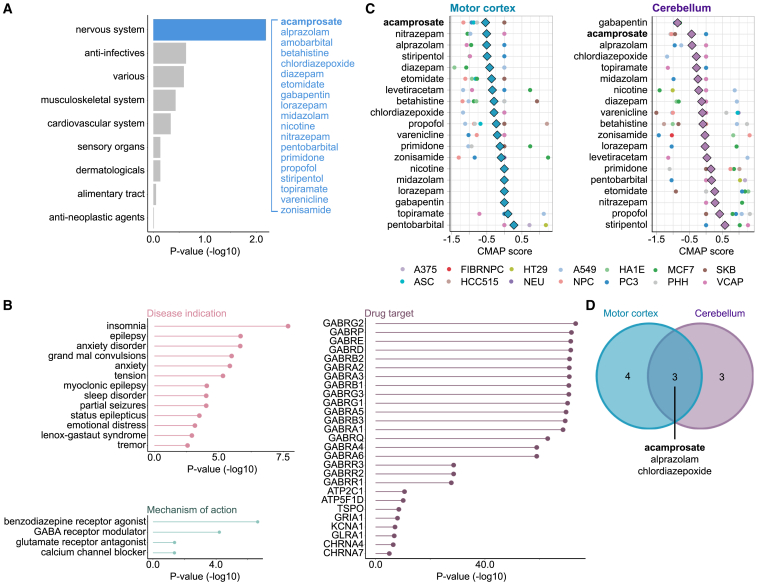
Repeat expansions in the C9orf72 gene are the most common genetic cause of (ALS) and frontotemporal dementia (FTD). Like other genetic forms of neurodegeneration, pinpointing the precise mechanism(s) by which this mutation leads to neuronal death remains elusive, and this lack of knowledge hampers the development of therapy for C9orf72-related disease. We used an agnostic approach based on genomic data (n = 41,273 ALS and healthy samples, and n = 1,516 C9orf72 carriers) to overcome these bottlenecks. Our drug-repurposing screen, based on gene- and expression-pattern matching and information about the genetic variants influencing onset age among C9orf72 carriers, identified acamprosate, a γ-aminobutyric acid analog, as a potentially repurposable treatment for patients carrying C9orf72 repeat expansions. We validated its neuroprotective effect in cell models and showed comparable efficacy to riluzole, the current standard of care. Our work highlights the potential value of genomics in repurposing drugs in situations where the underlying pathomechanisms are inherently complex. VIDEO ABSTRACT.
C9orf72 基因中的重复扩展是(ALS)和额颞叶痴呆(FTD)最常见的遗传原因。与其他神经退行性变的遗传形式一样,确定该突变导致神经元死亡的确切机制仍然难以捉摸,这种知识的缺乏阻碍了针对 C9orf72 相关疾病的治疗的发展。我们使用基于基因组数据的非特定方法(n=41273 例 ALS 和健康样本,n=1516 例 C9orf72 携带者)来克服这些瓶颈。我们的药物再利用筛选基于基因和表达模式匹配以及影响 C9orf72 携带者发病年龄的遗传变异信息,鉴定出丙戊酸钠,一种γ-氨基丁酸类似物,作为携带 C9orf72 重复扩展的患者的潜在可再利用治疗方法。我们在细胞模型中验证了其神经保护作用,并显示出与目前的标准治疗药物利鲁唑相当的疗效。我们的工作强调了基因组学在重新利用药物方面的潜在价值,特别是在潜在的病理机制固有的复杂情况下。视频摘要。