Institute of Sport Sciences, University of Lausanne, Lausanne, 1015, Switzerland.
Human Performance Lab, Schulthess Clinic, Zurich, Switzerland.
Sci Rep. 2024 Oct 22;14(1):24918. doi: 10.1038/s41598-024-75145-2.
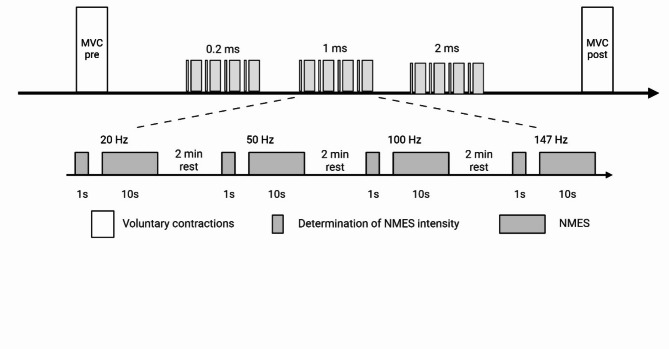
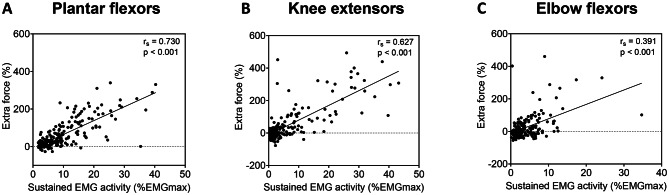
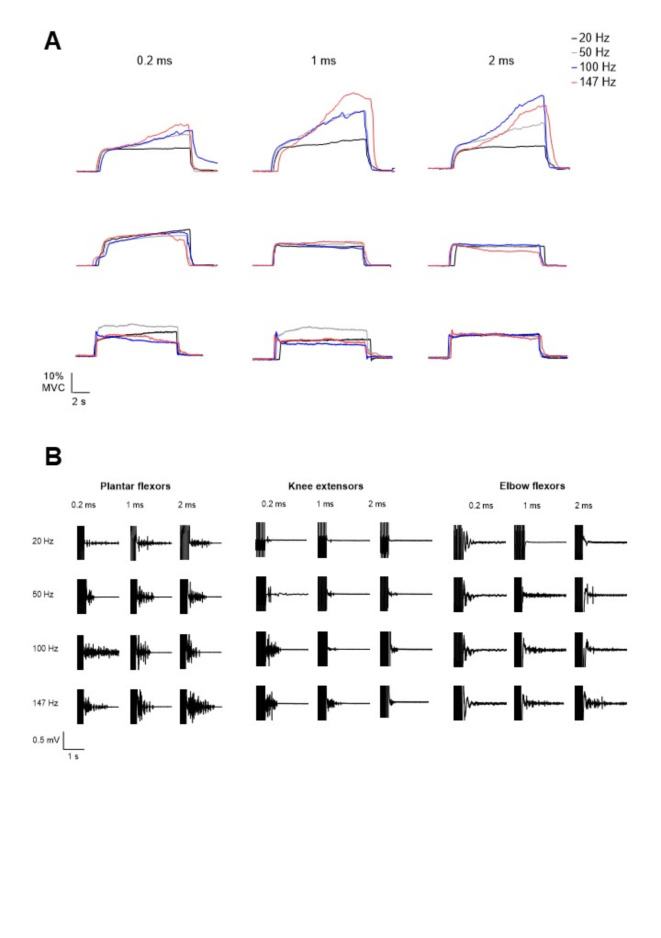
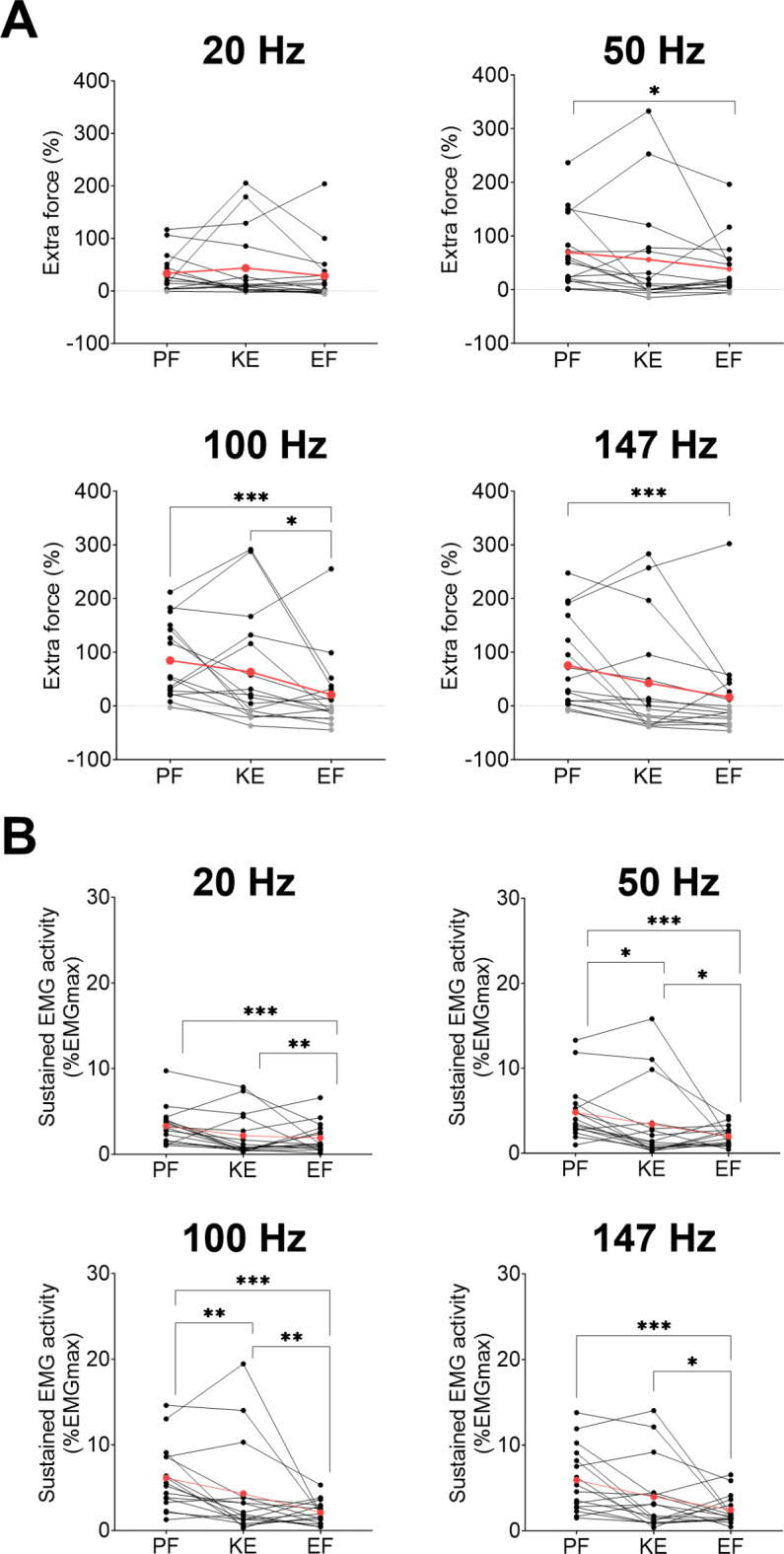
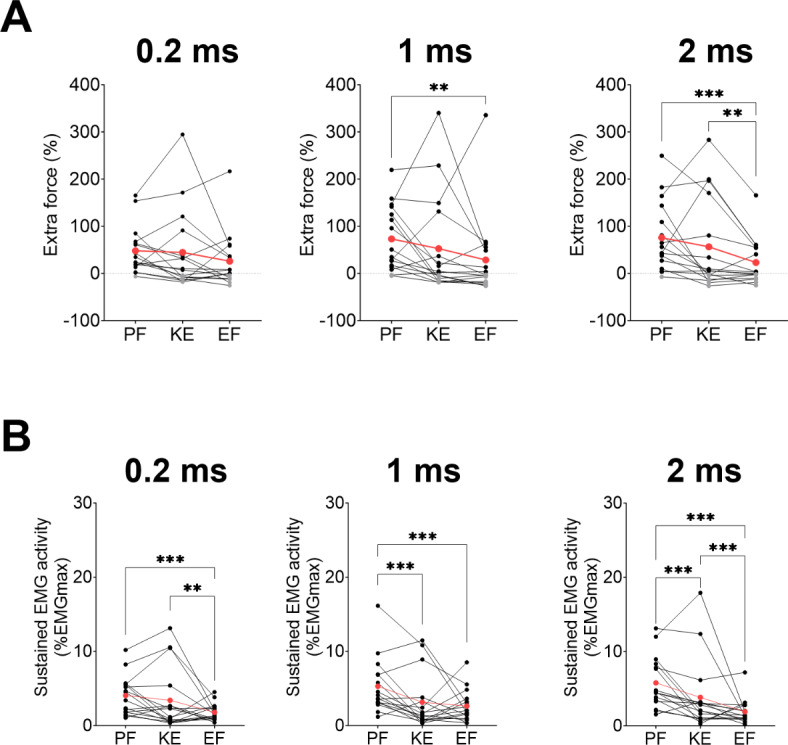
Wide-pulse high-frequency neuromuscular electrical stimulation (WPHF NMES) can generate a progressive increase in tetanic force through reflexive recruitment of motor units, called extra force. This phenomenon has previously been observed on different muscle groups, but little is known on potential inter-muscle differences. We compared extra force and sustained electromyographic (EMG) activity induced by NMES between plantar flexors, knee extensors, elbow flexors and within muscle groups using pulse durations of 0.2, 1 and 2 ms and stimulation frequencies of 20, 50, 100 and 147 Hz. Extra force production and sustained EMG activity were higher for plantar flexors compared to elbow flexors at all tested parameters (except 0.2 ms for extra force). When compared to elbow flexors, extra force of the knee extensors was only higher at 100 Hz and with 1 ms while sustained EMG activity was higher at all frequencies with pulse durations of 0.2 and 2 ms. Peripheral nerve architecture as well as muscle typology and function could influence the occurrence and magnitude of centrally-mediated responses to NMES. The present findings suggest that the use of wide-pulse high-frequency NMES to promote reflexive recruitment seems to be more pertinent for lower limb muscles, plantar flexors in particular.
宽脉冲高频神经肌肉电刺激(WPHF NMES)可以通过反射性募集运动单位来产生递增的强直力,称为额外力量。这一现象已在不同的肌肉群中观察到,但对于潜在的肌肉间差异知之甚少。我们比较了使用 0.2、1 和 2 ms 脉冲宽度和 20、50、100 和 147 Hz 刺激频率的 NMES 在足底屈肌、膝伸肌、肘屈肌之间以及肌肉群内引起的额外力量和持续肌电图(EMG)活动。与肘屈肌相比,在所有测试参数下(除了 0.2 ms 时的额外力量),足底屈肌产生的额外力量和持续的 EMG 活动都更高。与肘屈肌相比,膝伸肌的额外力量仅在 100 Hz 和 1 ms 时更高,而在所有频率下,0.2 和 2 ms 时的持续 EMG 活动都更高。周围神经结构以及肌肉类型和功能可能会影响 NMES 引起的中枢介导反应的发生和幅度。本研究结果表明,使用宽脉冲高频 NMES 来促进反射性募集似乎更适用于下肢肌肉,特别是足底屈肌。