Canzler Sebastian, Schubert Kristin, Rolle-Kampczyk Ulrike E, Wang Zhipeng, Schreiber Stephan, Seitz Hervé, Mockly Sophie, Kamp Hennicke, Haake Volker, Huisinga Maike, Bergen Martin von, Buesen Roland, Hackermüller Jörg
Helmholtz Centre for Environmental Research, UFZ, 04318, Leipzig, Germany.
Institut de Génétique Humaine UMR 9002 CNRS-Université de Montpellier, 34396, Montpellier Cedex 5, France.
Arch Toxicol. 2025 Jan;99(1):309-332. doi: 10.1007/s00204-024-03876-2. Epub 2024 Oct 23.
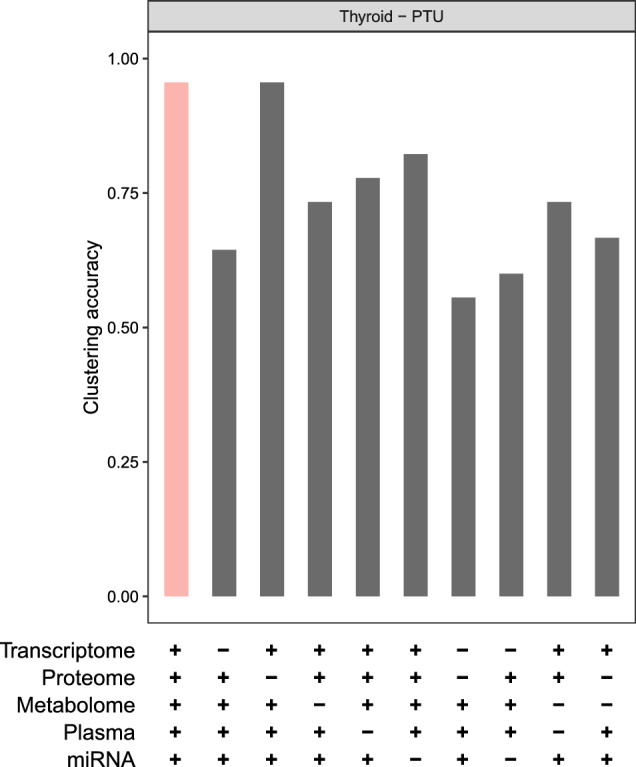
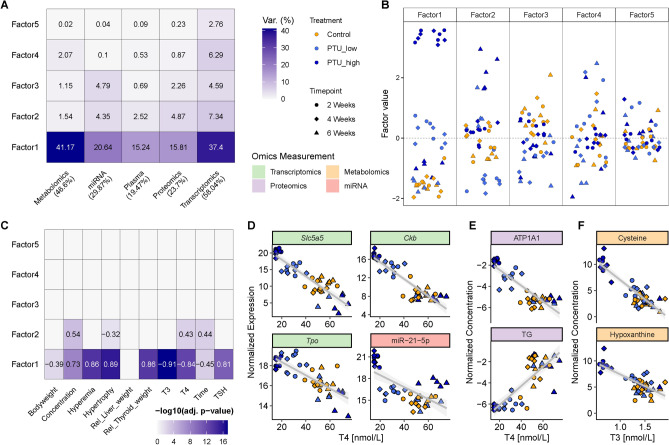
Multi-omics data integration has been repeatedly discussed as the way forward to more comprehensively cover the molecular responses of cells or organisms to chemical exposure in systems toxicology and regulatory risk assessment. In Canzler et al. (Arch Toxicol 94(2):371-388. https://doi.org/10.1007/s00204-020-02656-y ), we reviewed the state of the art in applying multi-omics approaches in toxicological research and chemical risk assessment. We developed best practices for the experimental design of multi-omics studies, omics data acquisition, and subsequent omics data integration. We found that multi-omics data sets for toxicological research questions were generally rare, with no data sets comprising more than two omics layers adhering to these best practices. Due to these limitations, we could not fully assess the benefits of different data integration approaches or quantitatively evaluate the contribution of various omics layers for toxicological research questions. Here, we report on a multi-omics study on thyroid toxicity that we conducted in compliance with these best practices. We induced direct and indirect thyroid toxicity through Propylthiouracil (PTU) and Phenytoin, respectively, in a 28-day plus 14-day recovery oral rat toxicity study. We collected clinical and histopathological data and six omics layers, including the long and short transcriptome, proteome, phosphoproteome, and metabolome from plasma, thyroid, and liver. We demonstrate that the multi-omics approach is superior to single-omics in detecting responses at the regulatory pathway level. We also show how combining omics data with clinical and histopathological parameters facilitates the interpretation of the data. Furthermore, we illustrate how multi-omics integration can hint at the involvement of non-coding RNAs in post-transcriptional regulation. Also, we show that multi-omics facilitates grouping, and we assess how much information individual and combinations of omics layers contribute to this approach.
多组学数据整合已被反复讨论,认为这是在系统毒理学和监管风险评估中更全面地涵盖细胞或生物体对化学暴露的分子反应的前进方向。在Canzler等人(《毒理学档案》94(2):371-388。https://doi.org/10.1007/s00204-020-02656-y )的研究中,我们回顾了在毒理学研究和化学风险评估中应用多组学方法的现状。我们制定了多组学研究的实验设计、组学数据采集以及后续组学数据整合的最佳实践。我们发现,针对毒理学研究问题的多组学数据集通常很少,没有超过两个组学层面的数据集遵循这些最佳实践。由于这些限制,我们无法充分评估不同数据整合方法的益处,也无法定量评估各个组学层面对毒理学研究问题的贡献。在此,我们报告一项按照这些最佳实践进行的关于甲状腺毒性的多组学研究。在一项为期28天加14天恢复的口服大鼠毒性研究中,我们分别通过丙硫氧嘧啶(PTU)和苯妥英诱导直接和间接甲状腺毒性。我们收集了临床和组织病理学数据以及六个组学层面的数据,包括来自血浆、甲状腺和肝脏的长链和短链转录组、蛋白质组、磷酸蛋白质组和代谢组。我们证明,多组学方法在检测调控通路水平的反应方面优于单一组学方法。我们还展示了将组学数据与临床和组织病理学参数相结合如何有助于数据解读。此外,我们阐述了多组学整合如何能够提示非编码RNA在转录后调控中的作用。同时,我们表明多组学有助于分组,并且我们评估了各个组学层面及其组合对这种方法的贡献程度。