Research Laboratory in Immunology of Renal Transplantation and Immunopathology (LR03SP01), Charles Nicolle Hospital, Tunis El Manar University, Bab Saadoun, Tunis, Tunisia.
Int J Immunopathol Pharmacol. 2024 Jan-Dec;38:3946320241296903. doi: 10.1177/03946320241296903.
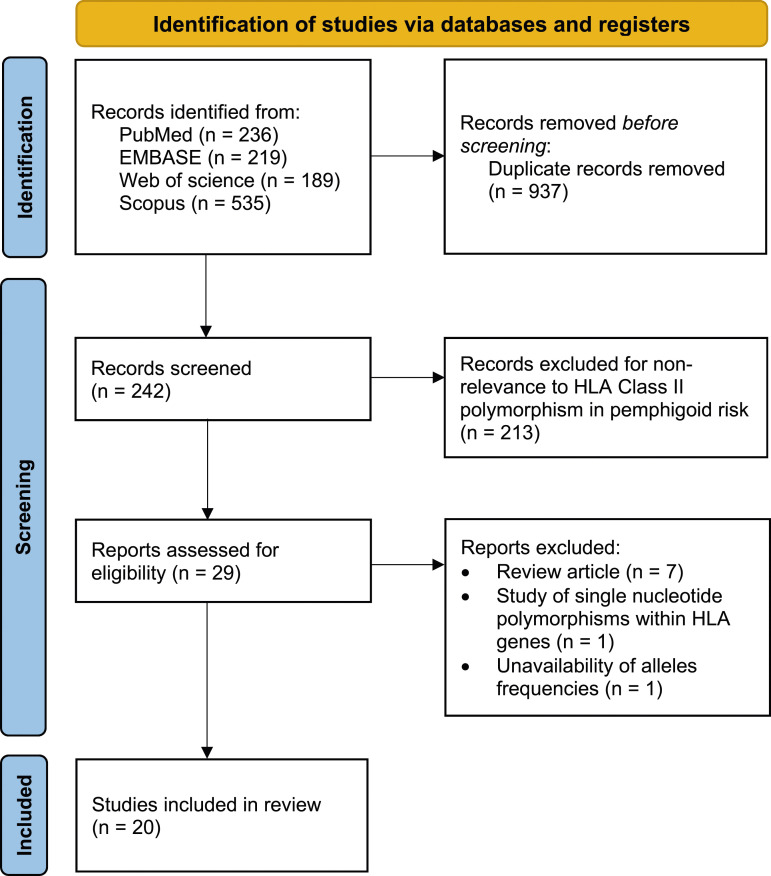
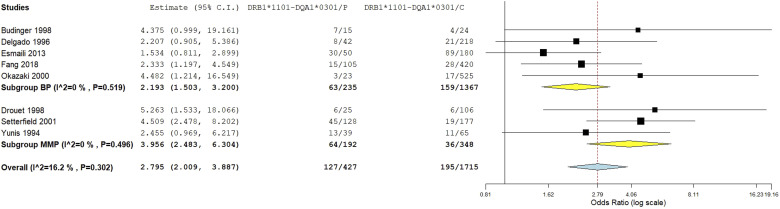
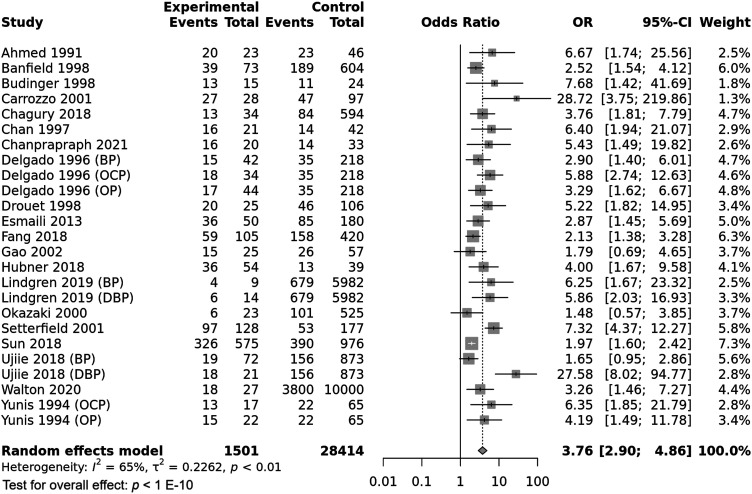
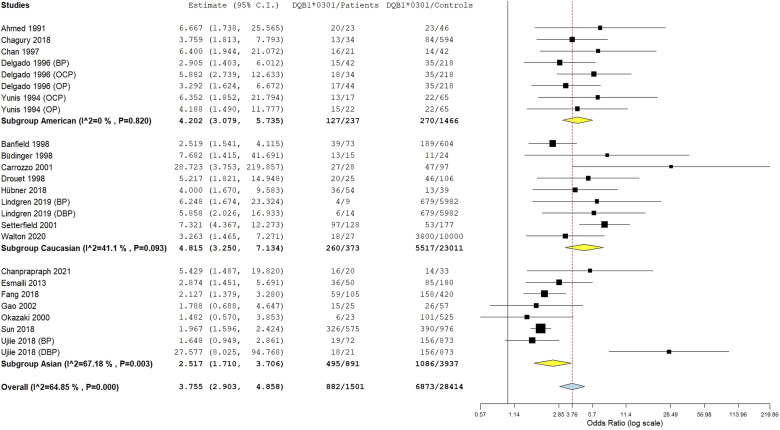
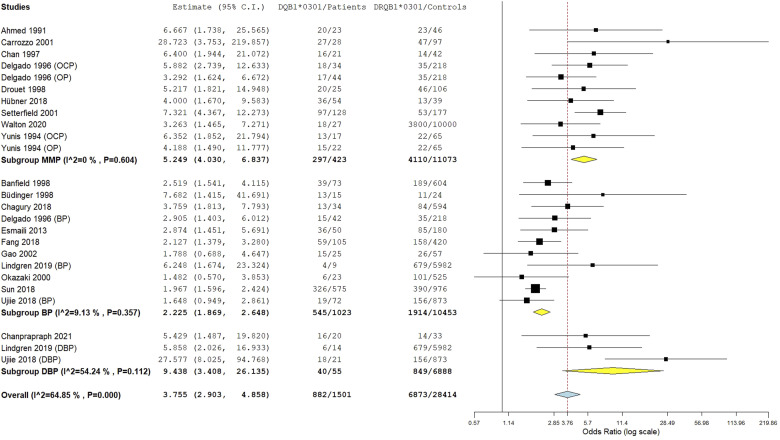
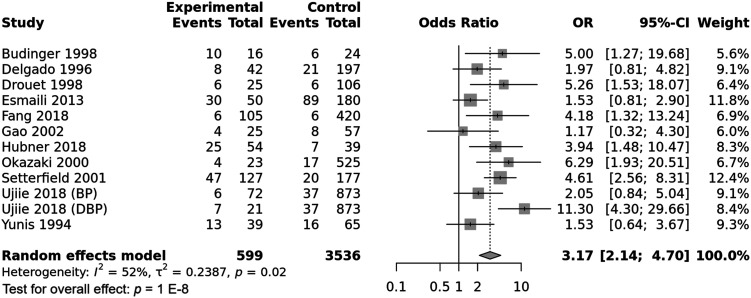
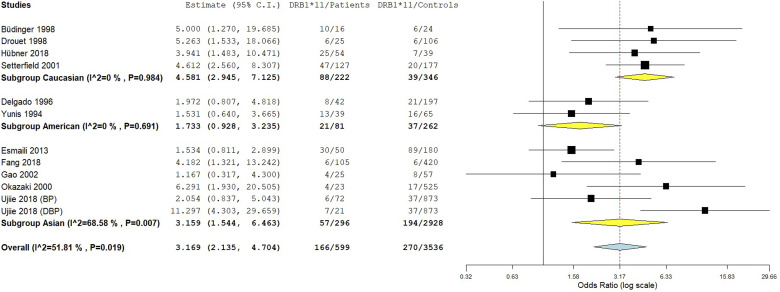
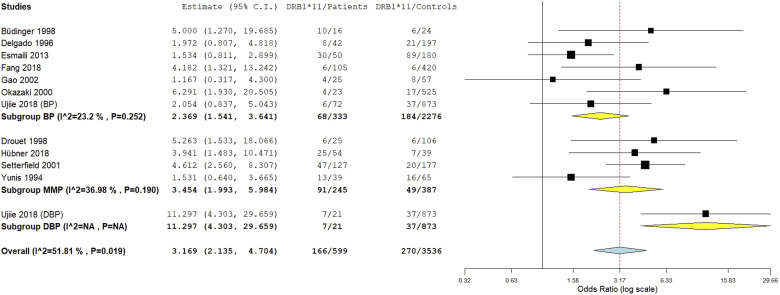
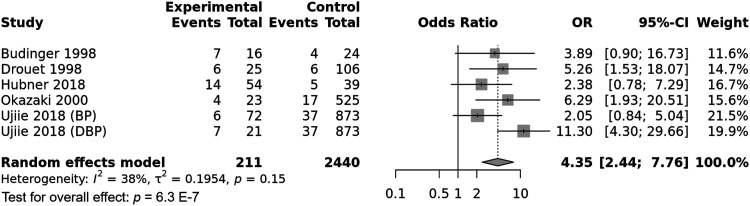
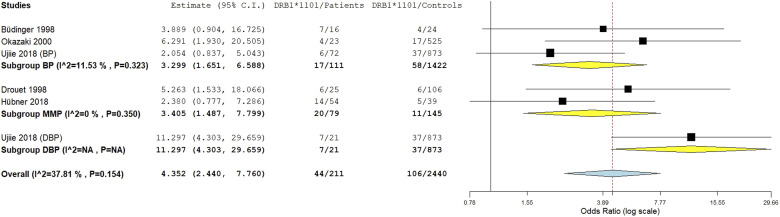
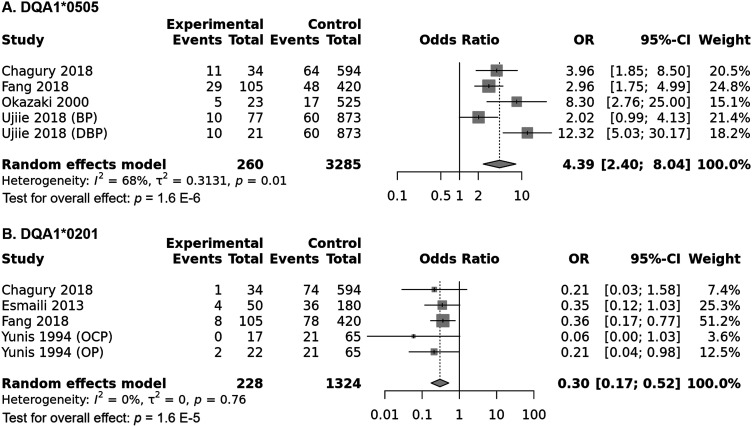
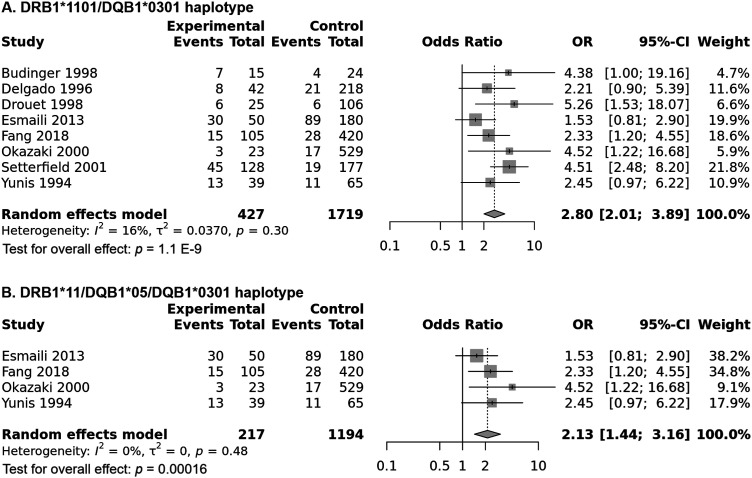
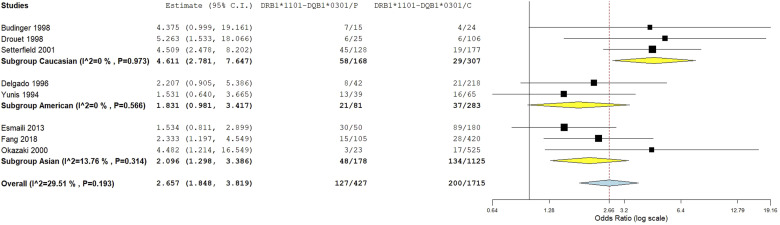
Although, several studies have assessed the association of HLA Class II and genes with bullous pemphigoid (BP) and mucous membrane pemphigoid (MMP), results were inconsistent and between-studies heterogeneity needs to be investigated. An electronic literature search for eligible studies among all papers published prior to May 31, 2024, was conducted through PubMed, EMBASE, Web of science and Scopus databases. Meta-analyses together with subgroup analyses and meta-regressions were performed for the three following HLA genes: DRB1, DQA1 and DQB1. Combined analyses revealed a significant increase in pemphigoid risk conferred by the following alleles: DQB10301, DRB111, DRB11101 subtype and DQA10505, all -values <.001. However, there was a moderate to high level of between-studies heterogeneity. Subgroup analyses revealed that the risk conferred by the aforementioned alleles was significantly higher in case of dipeptidyl peptidase-4 inhibitors induced BP (DBP) comparatively to idiopathic BP and MMP. In addition, the risk conferred by the DQB10301 was significantly higher in MMP (OR [95% CI] = 5.25 [4.03-6.84]) than in BP (OR [95% CI] = 2.22 [1.87-2.65]), = .007. Besides, the DRB11101-DQB10301 and DRB111-DQA105-DQB10301 haplotypes were significantly associated with an increased pemphigoid risk, both -values <.001. Conversely, the DQA10201 allele was significantly associated with reduced pemphigoid risk (OR [95% CI] = 0.3 [0.17-0.52]), with no between-studies heterogeneity (I = 0%, = .76). This meta-analysis demonstrated that the DRB11101, DQA10505 and DQB10301 were significantly associated with increased pemphigoid risk. These associations were found to be significantly stronger in case of DBP comparatively to idiopathic pemphigoid. The DQA1*0201 allele seems to play a protective role against pemphigoid. : This review has been registered on PROSPERO: CRD42024552821, Available from: https://www.crd.york.ac.uk/prospero/display_record.php?ID=CRD42024552821.
尽管已有几项研究评估了 HLA Ⅱ类和基因与大疱性类天疱疮 (BP) 和黏膜类天疱疮 (MMP) 的关联,但结果不一致,需要研究研究间的异质性。通过 PubMed、EMBASE、Web of science 和 Scopus 数据库,对截至 2024 年 5 月 31 日之前发表的所有论文进行了合格研究的电子文献检索。对以下三个 HLA 基因进行了荟萃分析和亚组分析和荟萃回归:DRB1、DQA1 和 DQB1。联合分析显示,以下等位基因显著增加了天疱疮的风险:DQB10301、DRB111、DRB11101 亚型和 DQA10505,所有 P 值均 <.001。然而,存在中度至高度的研究间异质性。亚组分析显示,与特发性 BP 和 MMP 相比,二肽基肽酶-4 抑制剂诱导的 BP (DBP) 中上述等位基因所带来的风险显著更高。此外,DQB10301 所带来的风险在 MMP 中显著更高(OR [95%CI] = 5.25 [4.03-6.84]),而非 BP 中(OR [95%CI] = 2.22 [1.87-2.65]), P 值为.007。此外,DRB11101-DQB10301 和 DRB111-DQA105-DQB10301 单倍型与天疱疮风险增加显著相关,均 P 值 <.001。相反,DQA10201 等位基因与天疱疮风险降低显著相关(OR [95%CI] = 0.3 [0.17-0.52]),研究间无异质性(I = 0%, P 值 =.76)。这项荟萃分析表明,DRB11101、DQA10505 和 DQB10301 与天疱疮风险增加显著相关。这些关联在 DBP 中比特发性天疱疮更显著。DQA1*0201 等位基因似乎对天疱疮有保护作用。结论:这项综述已在 PROSPERO 上注册:CRD42024552821,可在以下网址获取:https://www.crd.york.ac.uk/prospero/display_record.php?ID=CRD42024552821。