Biomedical Sciences and Engineering, Koç University, 34450, Istanbul, Turkey.
Koç University Research Center for Translational Medicine (KUTTAM), Koç University, 34450, Istanbul, Turkey.
Sci Rep. 2024 Oct 23;14(1):25042. doi: 10.1038/s41598-024-71871-9.
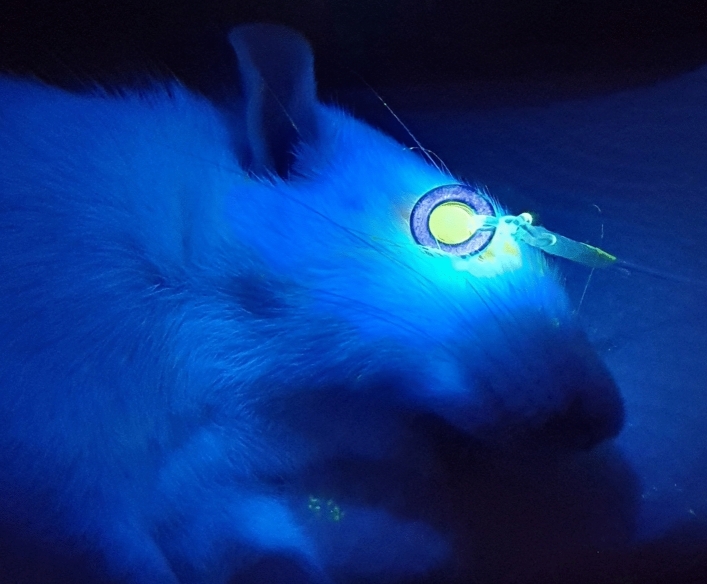
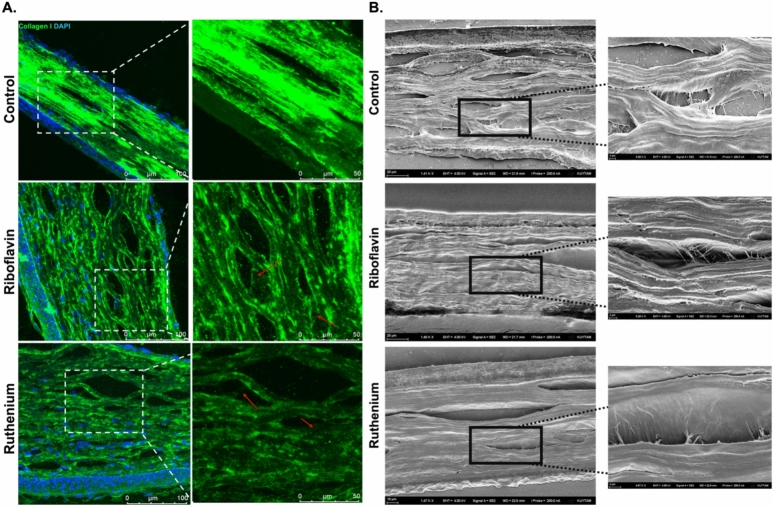
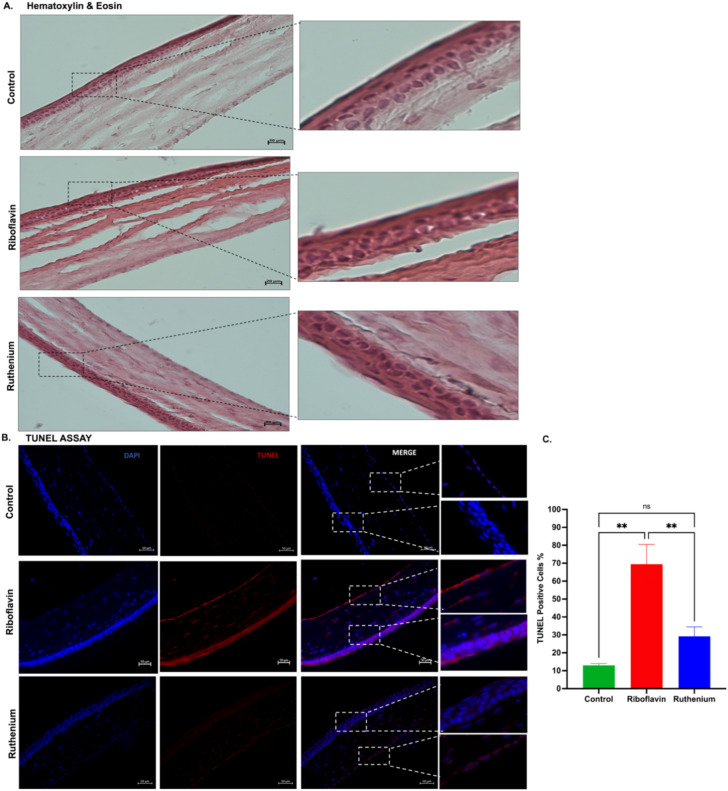
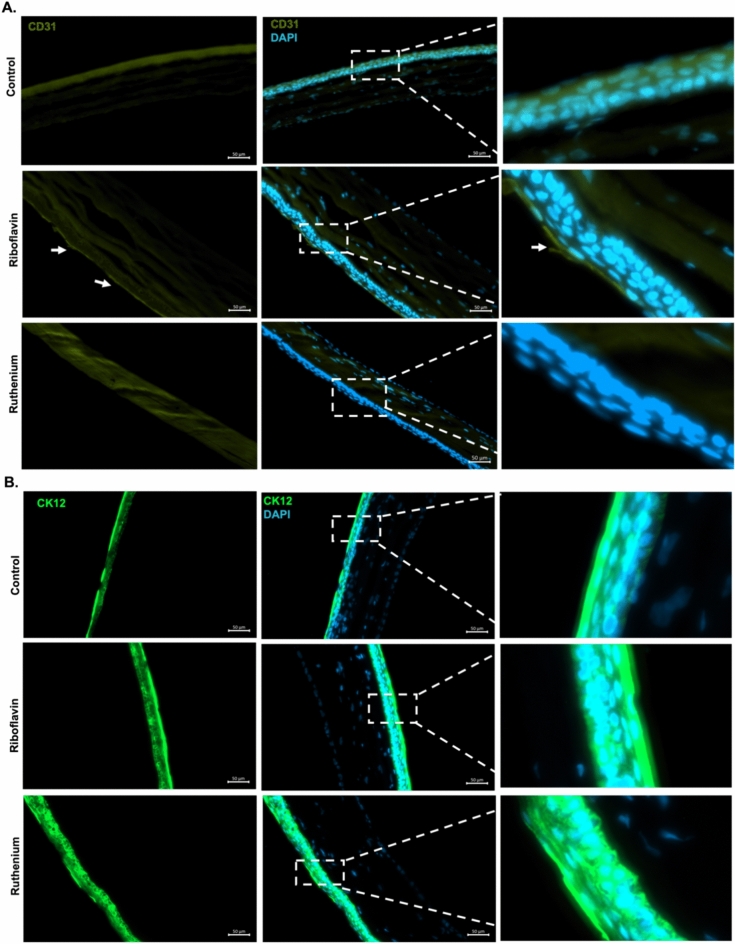
Corneal crosslinking (CXL) is a widely applied technique to halt the progression of ectatic diseases through increasing the thickness and mechanical stiffness of the cornea. This study investigated the biocompatibility and efficiency of a novel CXL procedure using ruthenium and blue light in rat corneas and evaluated parameters important for clinical application. To perform the CXL procedure, the corneal epithelium of rats was removed under anaesthesia, followed by the application of a solution containing ruthenium and sodium persulfate (SPS). The corneas were then exposed to blue light at 430 nm at 3 mW/cm for 5 min. Rat corneas were examined and evaluated for corneal opacity, corneal and limbal neovascularization, and corneal epithelial regeneration on days 0, 1, 3, 6, 8, and 14. On day 28, the corneas were isolated for subsequent tissue follow-up and analysis. CXL with ruthenium and blue light showed rapid epithelial healing, with 100% regeneration of the corneal epithelium and no corneal opacity on day 6. The ruthenium group also exhibited significantly reduced corneal (p < 0.01) and limbal neovascularization (p < 0.001). Histological analysis revealed no signs of cellular damage or apoptosis, which further confirms the biocompatibility and nontoxicity of our method. Confocal and scanning electron microscopy (SEM) images confirmed high density of collagen fibrils, indicating efficient crosslinking and enhanced structural integrity. This study is unique that demonstrates in vivo safety, biocompatibility, and functionality of ruthenium and blue light CXL. This approach can prevent toxicity caused by UV-A light and can be an immediate alternative compared to the existing crosslinking procedures that have side effects and clinical risks for the patients.
角膜交联术(CXL)是一种广泛应用的技术,通过增加角膜的厚度和机械硬度来阻止扩张性疾病的进展。本研究旨在调查使用钌和蓝光的新型 CXL 程序在大鼠角膜中的生物相容性和效率,并评估对临床应用很重要的参数。为了进行 CXL 程序,在麻醉下去除大鼠的角膜上皮,然后应用含有钌和过硫酸钠(SPS)的溶液。然后,将角膜暴露在 430nm 蓝光下,强度为 3mW/cm2,持续 5 分钟。在第 0、1、3、6、8 和 14 天检查和评估大鼠角膜的混浊度、角膜和缘部新生血管形成以及角膜上皮再生情况。在第 28 天,分离角膜以进行后续组织随访和分析。用钌和蓝光进行 CXL 显示出快速的上皮愈合,第 6 天角膜上皮 100%再生,无角膜混浊。钌组的角膜(p<0.01)和缘部新生血管形成(p<0.001)也显著减少。组织学分析显示没有细胞损伤或细胞凋亡的迹象,这进一步证实了我们方法的生物相容性和无毒。共聚焦和扫描电子显微镜(SEM)图像证实了胶原纤维的高密度,表明交联效率高,结构完整性增强。本研究的独特之处在于证明了体内安全性、生物相容性和钌与蓝光 CXL 的功能。这种方法可以防止 UV-A 光引起的毒性,并且可以作为现有交联程序的直接替代方法,现有交联程序对患者有副作用和临床风险。