Jung Jonathan, Zoppe Simon F, Söte Till, Moretti Simone, Duprey Nicolas N, Foreman Alan D, Wald Tanja, Vonhof Hubert, Haug Gerald H, Sigman Daniel M, Mulch Andreas, Schindler Eberhard, Janussen Dorte, Martínez-García Alfredo
Climate Geochemistry Department, Max Planck Institute for Chemistry, Mainz, Germany.
Goethe University Frankfurt, Institute of Geosciences, Frankfurt am Main, Germany.
Nature. 2024 Dec;636(8043):647-653. doi: 10.1038/s41586-024-08101-9. Epub 2024 Oct 23.
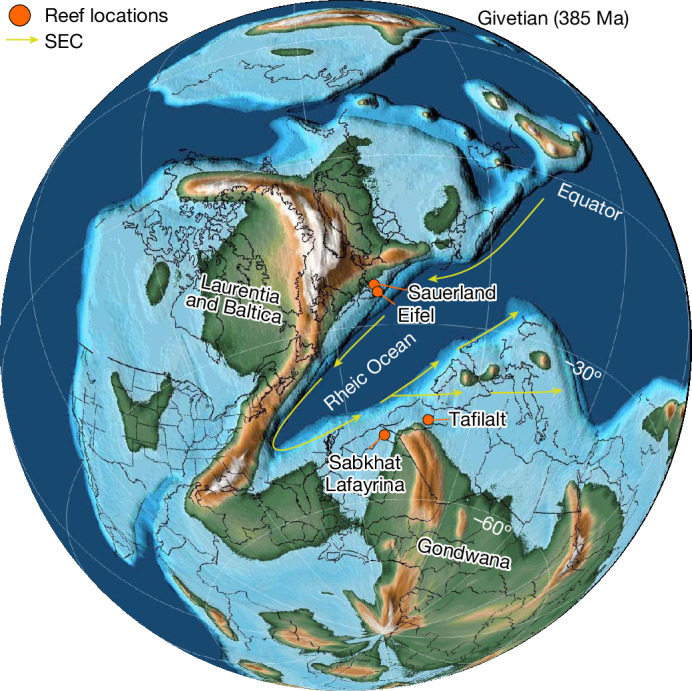
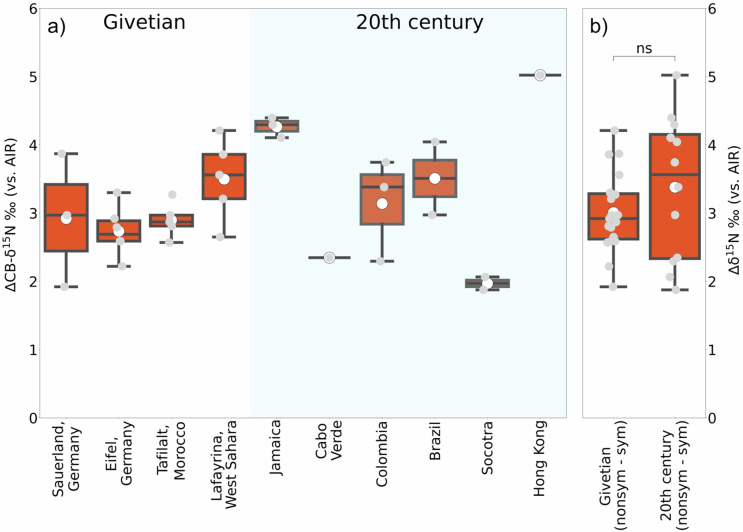
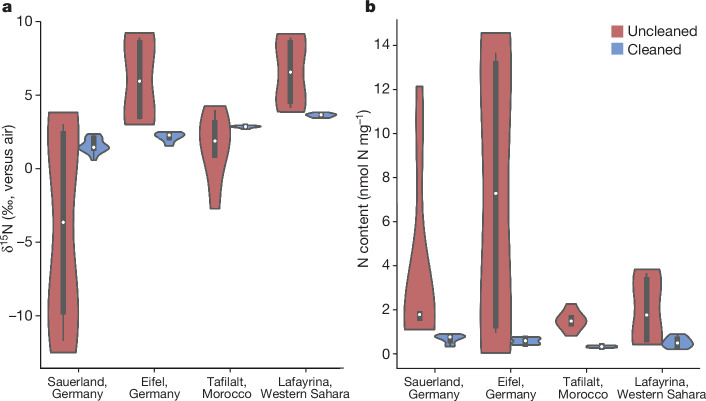
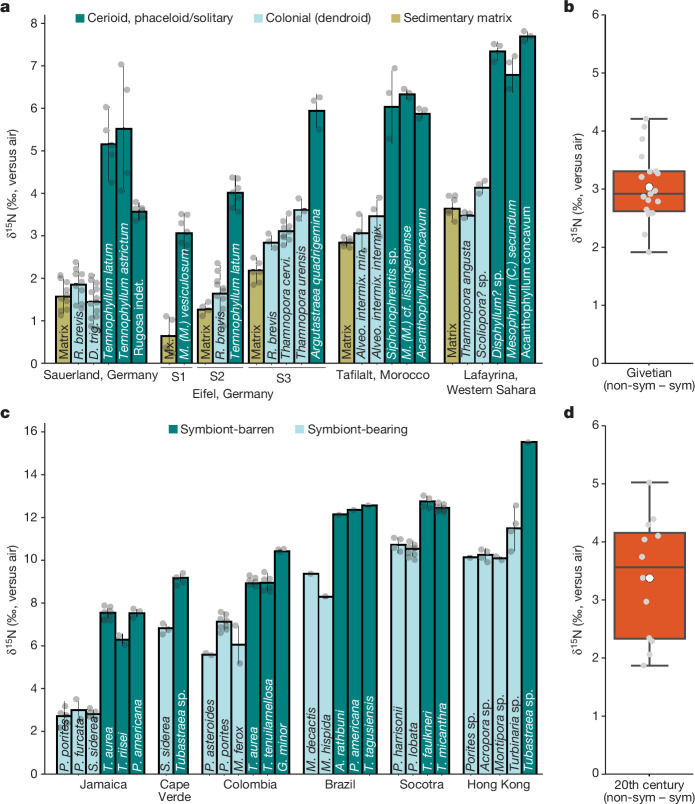
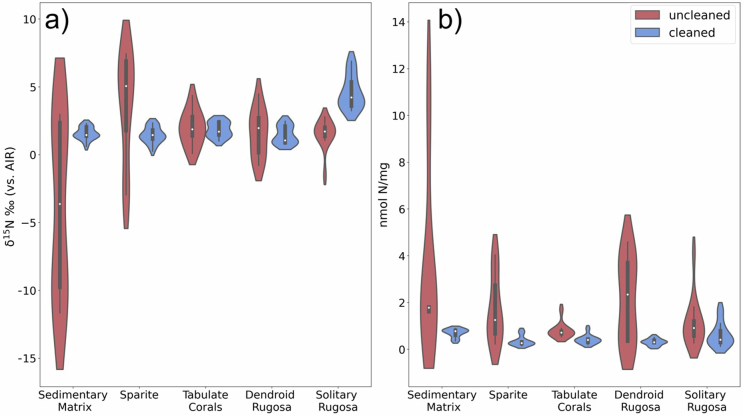
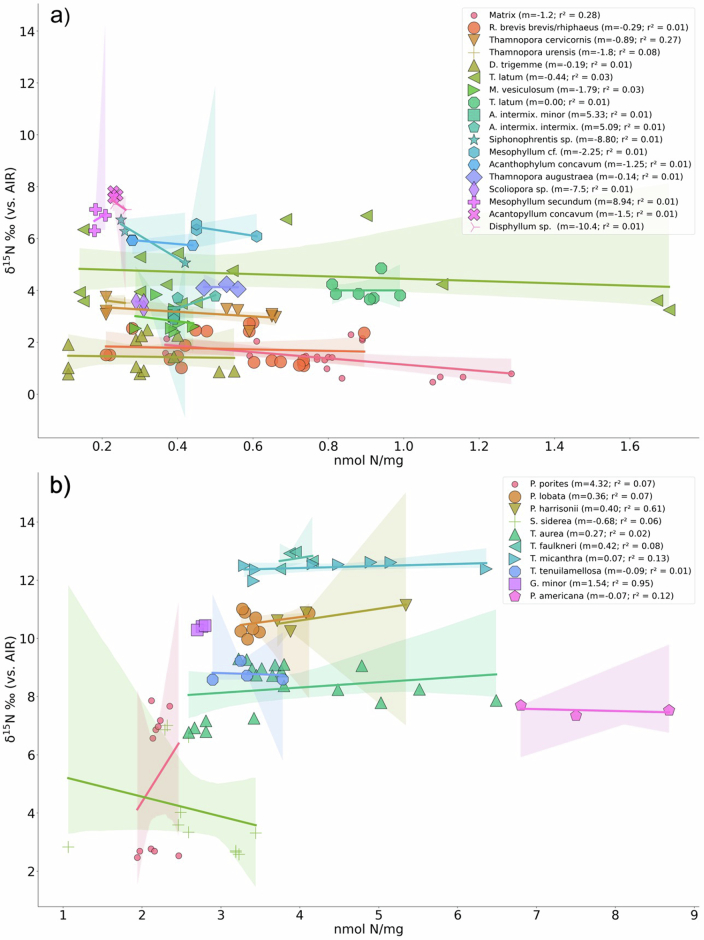
The ability of stony corals to thrive in the oligotrophic (low-nutrient, low-productivity) surface waters of the tropical ocean is commonly attributed to their symbiotic relationship with photosynthetic dinoflagellates. The evolutionary history of this symbiosis might clarify its organismal and environmental roles, but its prevalence through time, and across taxa, morphologies and oceanic settings, is currently unclear. Here we report measurements of the nitrogen isotope (N/N) ratio of coral-bound organic matter (CB-δN) in samples from Mid-Devonian reefs (Givetian, around 385 million years ago), which represent a constraint on the evolution of coral photosymbiosis. Colonial tabulate and fasciculate (dendroid) rugose corals have low CB-δN values (2.51 ± 0.97‰) in comparison with co-occurring solitary and (pseudo)colonial (cerioid or phaceloid) rugose corals (5.52 ± 1.63‰). The average of the isotopic difference per deposit (3.01 ± 0.58‰) is statistically indistinguishable from that observed between modern symbiont-barren and symbiont-bearing corals (3.38 ± 1.05‰). On the basis of this evidence, we infer that Mid-Devonian tabulate and some fasciculate (dendroid) rugose corals hosted active photosymbionts, while solitary and some (pseudo)colonial (cerioid or phaceloid) rugose corals did not. The low CB-δN values of the Devonian tabulate and fasciculate rugose corals relative to the modern range suggest that Mid-Devonian reefs formed in biogeochemical regimes analogous to the modern oligotrophic subtropical gyres. Widespread oligotrophy during the Devonian may have promoted coral photosymbiosis, the occurrence of which may explain why Devonian reefs were the most productive reef ecosystems of the Phanerozoic.
石珊瑚能够在热带海洋贫营养(低营养、低生产力)的表层水域中茁壮成长,这通常归因于它们与光合性双鞭毛虫的共生关系。这种共生关系的进化史或许能阐明其在生物体和环境中的作用,但其在不同时期以及不同分类群、形态和海洋环境中的普遍程度,目前尚不清楚。在此,我们报告了来自中泥盆世珊瑚礁(吉维特阶,约3.85亿年前)样本中与珊瑚结合的有机质的氮同位素(N/N)比值(CB-δN)的测量结果,这为珊瑚光合共生的进化提供了一个限制条件。与同时出现的单体和(假)群体(角柱状或束状)皱纹珊瑚(5.52±1.63‰)相比,群体板状和束状(树状)皱纹珊瑚的CB-δN值较低(2.51±0.97‰)。每个沉积物的同位素差异平均值(3.01±0.58‰)与现代无共生体和有共生体珊瑚之间观察到的差异(3.38±1.05‰)在统计学上没有区别。基于这一证据,我们推断中泥盆世的板状珊瑚和一些束状(树状)皱纹珊瑚拥有活跃的光合共生体,而单体和一些(假)群体(角柱状或束状)皱纹珊瑚则没有。泥盆纪板状和束状皱纹珊瑚相对于现代范围较低的CB-δN值表明,中泥盆世珊瑚礁形成于类似于现代贫营养亚热带环流的生物地球化学环境中。泥盆纪广泛存在的贫营养状态可能促进了珊瑚光合共生,其出现或许可以解释为什么泥盆纪珊瑚礁是显生宙最具生产力的珊瑚礁生态系统。