Key Laboratory of Livestock and Poultry Multi-omics of MARA, Instihte of Animal Science and veterinary Medicine, Shandong Academy of Agricultural Sciences, Jinan, 250100, P. R. China.
School of Life Sciences, Shandong Normal University, Jinan, 250014, China.
J Nanobiotechnology. 2024 Oct 24;22(1):654. doi: 10.1186/s12951-024-02932-4.
Animal and human health are seriously threatened by bacterial infections, which can lead to bacteremia and extremely high rates of morbidity and mortality. Recently, there have been reports indicating the involvement of exosomal circular RNAs (circRNAs) in a range of human disorders and tumor types. However, the role of exosomal circRNAs in bacterial infection remains elusive.
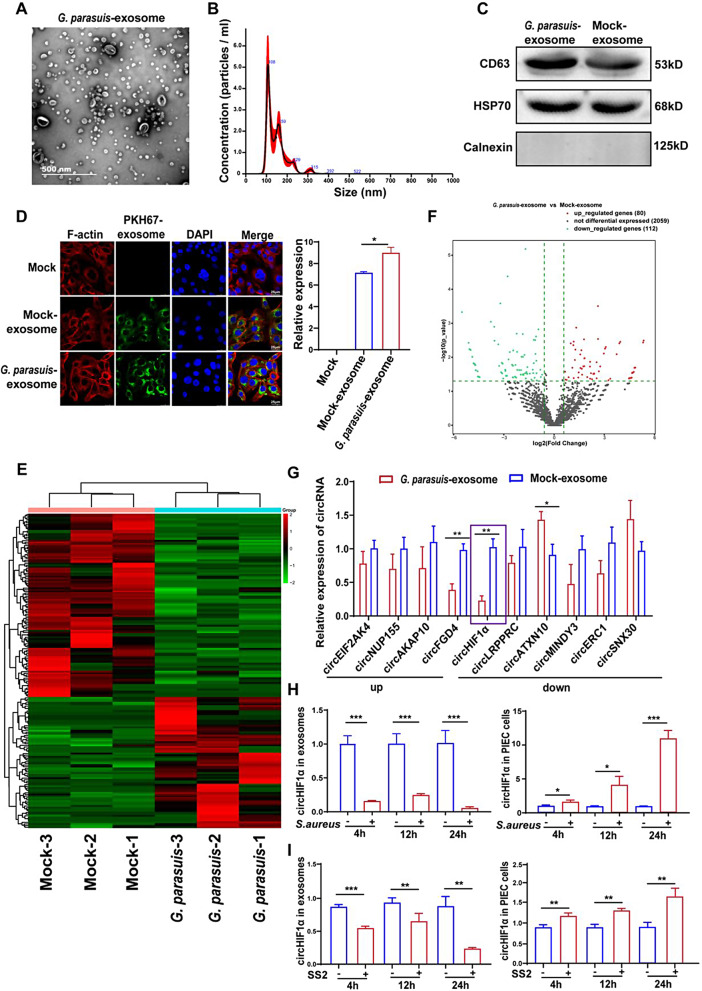
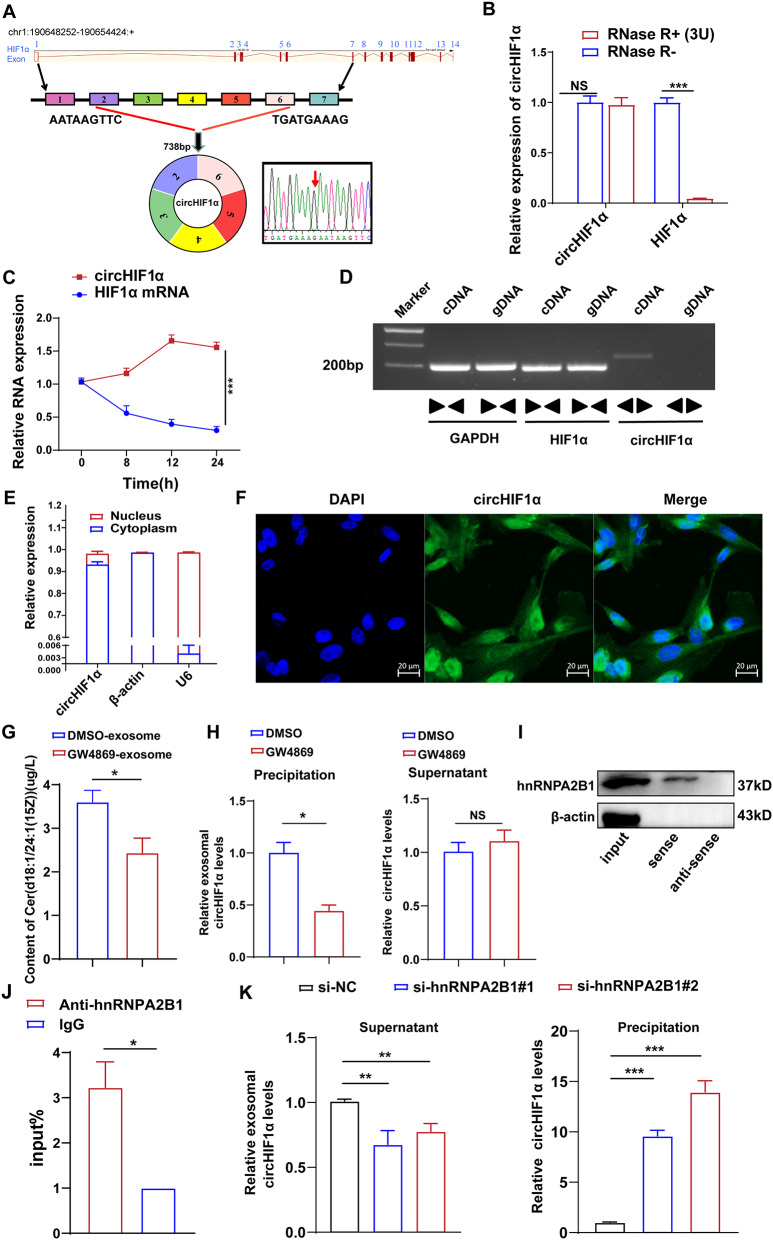
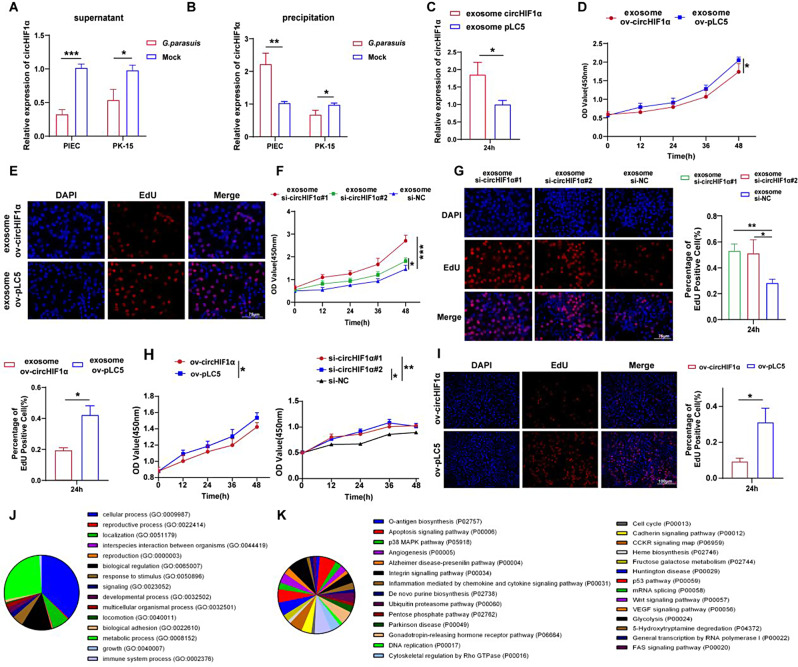
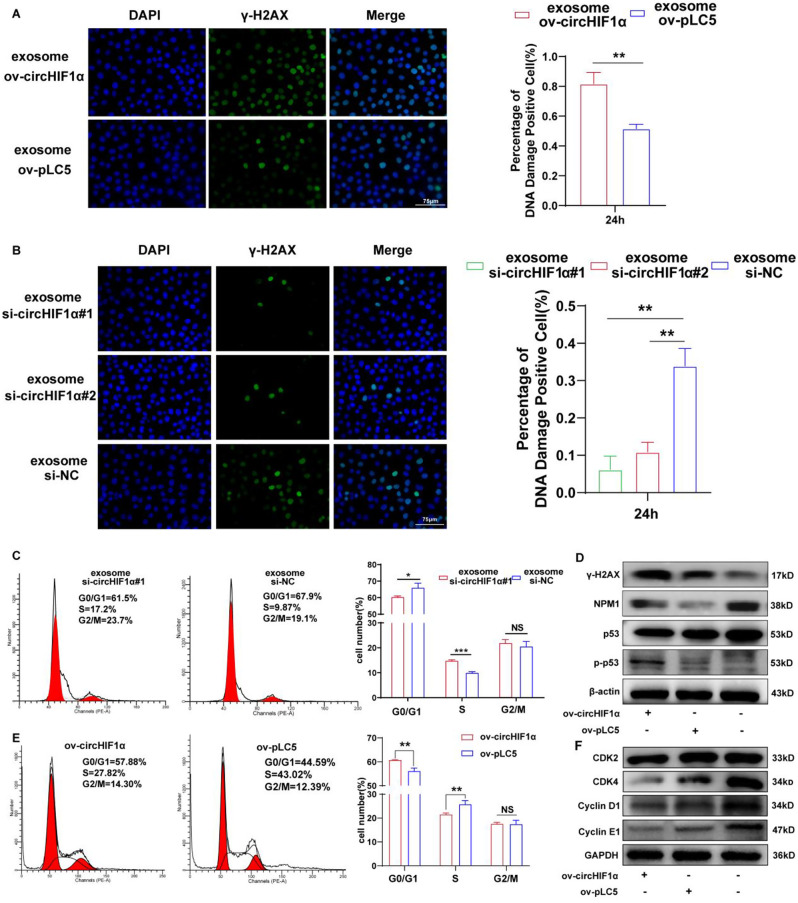
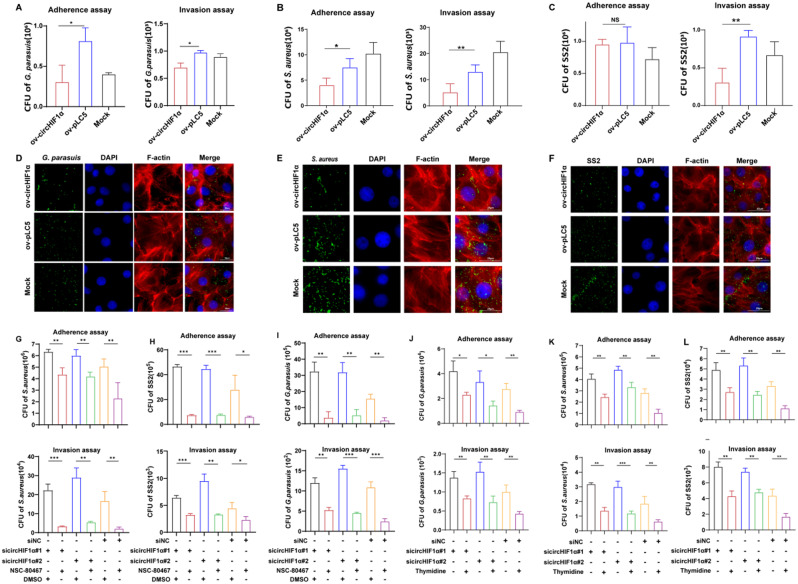
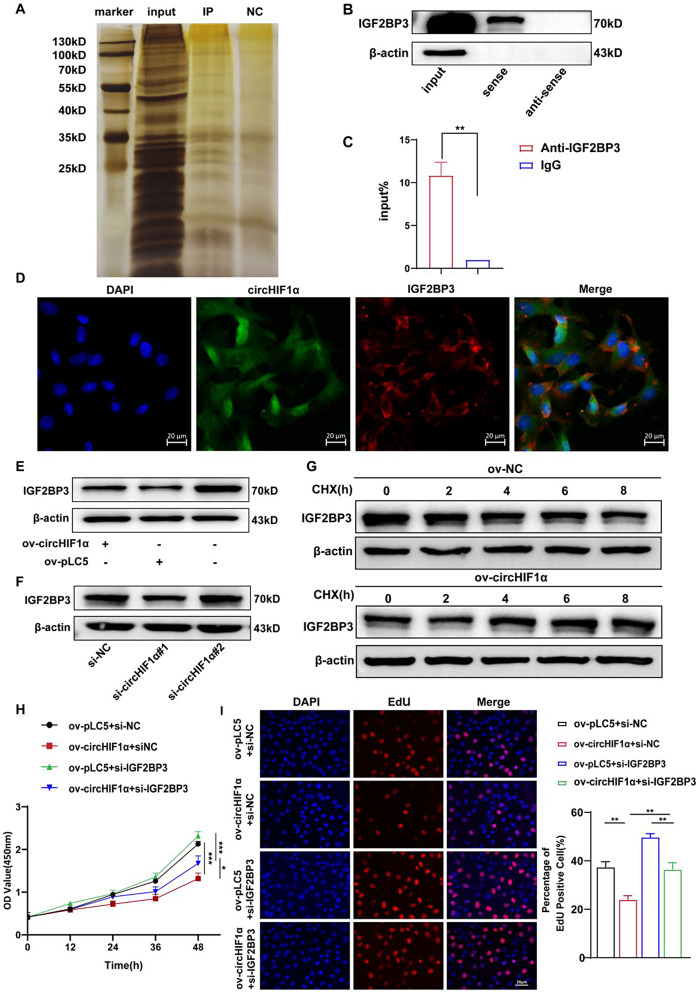
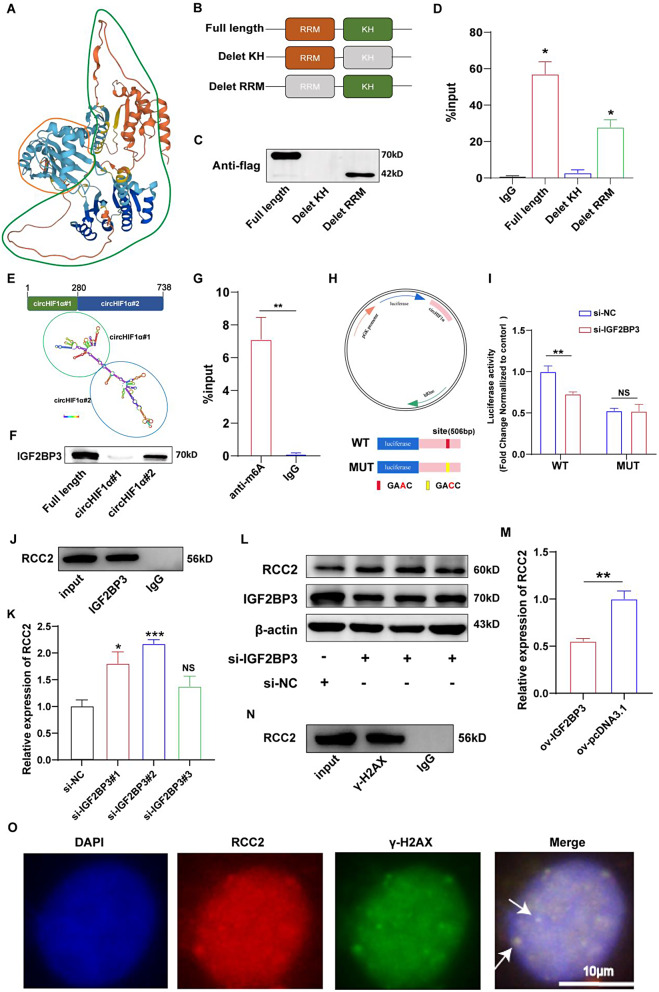
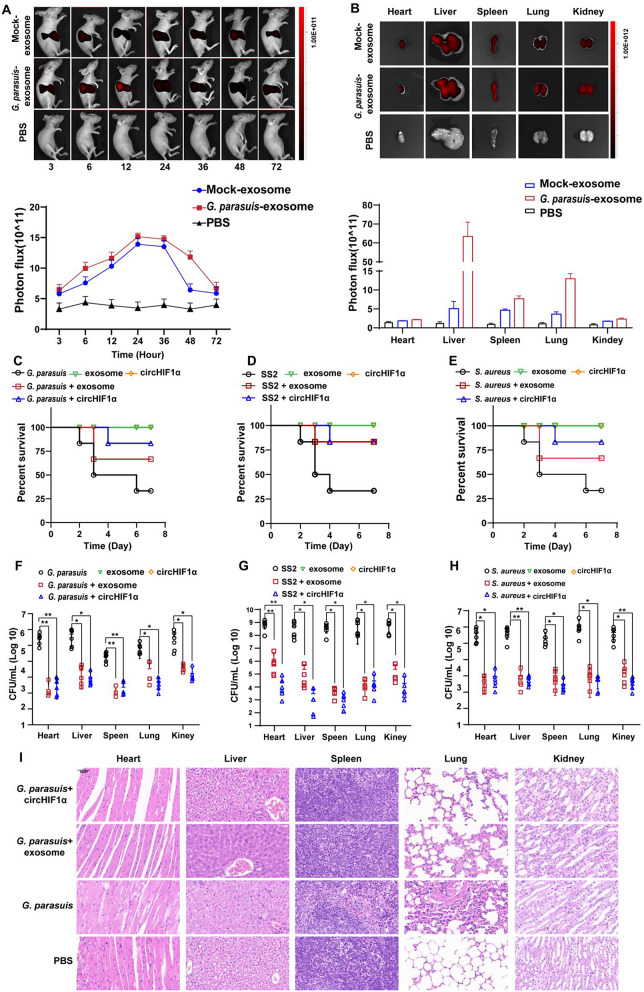
We extracted and identified exosomes from the culture medium of PIEC cells infected with or without Glaesserella parasuis. RNA sequencing analysis was performed on the exosomes to screen and identify circRNAs (circHIF1α) associated with Glaesserella parasuis infection. PIEC cells were infected with Staphylococcus aureus or Streptococcus suis 2 to further determine whether exosome-derived circHIF1α was the crucial circHIF1α associated with bacterial infections. The transmission process of exosomes and their circHIF1α between cells was clarified via exosome tracing and co-culture assay. Moreover, the mechanism of circHIF1α being packaged into exosomes was explored, and the effects of exosomes and their circHIF1α on cell proliferation, DNA damage and cell cycle were analyzed. In addition, the binding mode and site of interacting proteins with circHIF1α were further determined. In vivo and in vitro, the role of exosomes and their circHIF1α in host resistance to bacterial infection was confirmed.
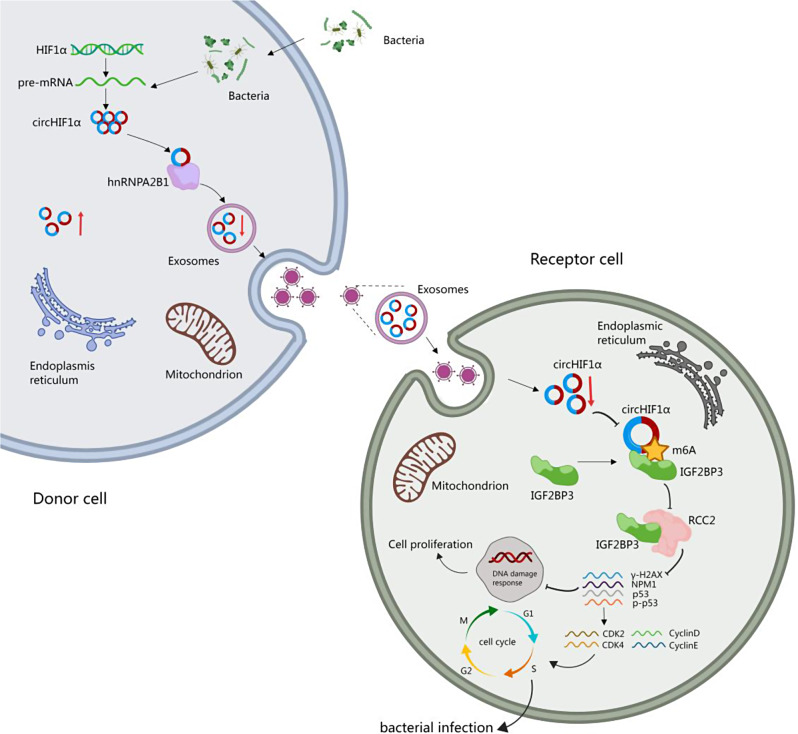
We first discovered a new circHIF1α that was very stable and detectable, encapsulated into exosomes by hnRNPA2B1, and whose expression in exosomes of bacterially infected PIEC cells significantly decreased. Additionally, exosomal circHIF1α reduced bacterial infection both in vitro and in vivo and suppressed the growth of reception cells. Mechanistically, the circHIF1α interacted with the KH domain of IGF2BP3 in an m6A-modified manner, which mediated DNA damage to arrest the cells at the G1/S phase through the interaction between the regulator of Chromosome Condensation 2 (RCC2) and γ-H2AX protein. Exosomal circHIF1α is a unique therapeutic target for bacterial infection since this work highlights its critical function in fighting bacterial infection.
动物和人类的健康受到细菌感染的严重威胁,这可能导致菌血症和极高的发病率和死亡率。最近有报道表明,外泌体环状 RNA(circRNA)参与了一系列人类疾病和肿瘤类型。然而,外泌体 circRNA 在细菌感染中的作用尚不清楚。
我们从感染或未感染副猪嗜血杆菌的猪肺上皮细胞(PIEC)培养液中提取并鉴定外泌体。对这些外泌体进行 RNA 测序分析,以筛选和鉴定与副猪嗜血杆菌感染相关的 circRNA(circHIF1α)。我们用金黄色葡萄球菌或猪链球菌 2 感染 PIEC 细胞,进一步确定外泌体来源的 circHIF1α是否是与细菌感染相关的关键 circHIF1α。通过外泌体示踪和共培养实验,阐明了外泌体及其 circHIF1α在细胞间的传递过程。此外,还探索了 circHIF1α被包装到外泌体中的机制,并分析了外泌体及其 circHIF1α对细胞增殖、DNA 损伤和细胞周期的影响。此外,还进一步确定了与 circHIF1α相互作用的蛋白的结合模式和结合位点。在体内和体外,证实了外泌体及其 circHIF1α在宿主抵抗细菌感染中的作用。
我们首次发现了一种新型的 circHIF1α,它非常稳定且可检测,由 hnRNPA2B1 包装到外泌体中,并且在感染细菌的 PIEC 细胞的外泌体中的表达显著降低。此外,外泌体 circHIF1α在体外和体内均能减少细菌感染,并抑制受体细胞的生长。机制上,circHIF1α以 m6A 修饰的方式与 IGF2BP3 的 KH 结构域相互作用,通过调节染色体凝聚 2(RCC2)和 γ-H2AX 蛋白之间的相互作用,将细胞阻滞在 G1/S 期,从而介导 DNA 损伤。外泌体 circHIF1α是细菌感染的一个独特的治疗靶点,因为这项工作突出了它在对抗细菌感染中的关键作用。