Sowa Marcin A, Sun Haoyu, Wang Tricia T, Virginio Vitor W, Schlamp Florencia, El Bannoudi Hanane, Cornwell MacIntosh, Bash Hannah, Izmirly Peter M, Belmont H Michael, Ruggles Kelly V, Buyon Jill P, Voora Deepak, Barrett Tessa J, Berger Jeffrey S
Department of Medicine, New York University Grossman School of Medicine, New York, New York, USA.
Institute for Systems Genetics, New York University Grossman School of Medicine, New York, New York, USA.
JACC Basic Transl Sci. 2024 Jul 24;9(9):1126-1140. doi: 10.1016/j.jacbts.2024.05.014. eCollection 2024 Sep.
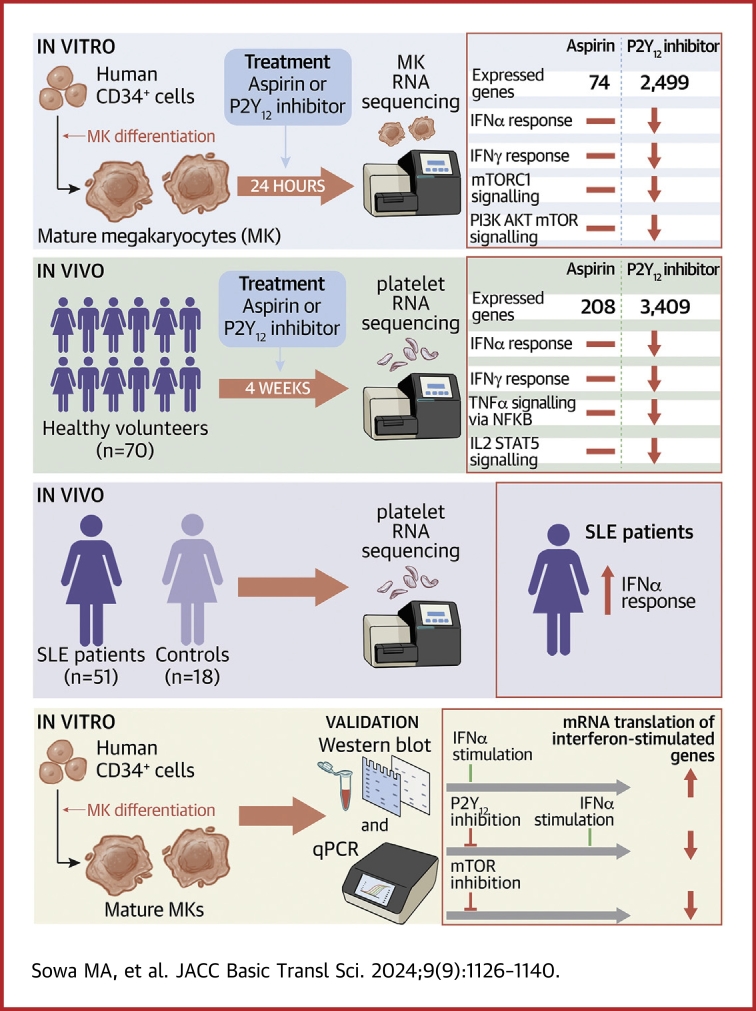
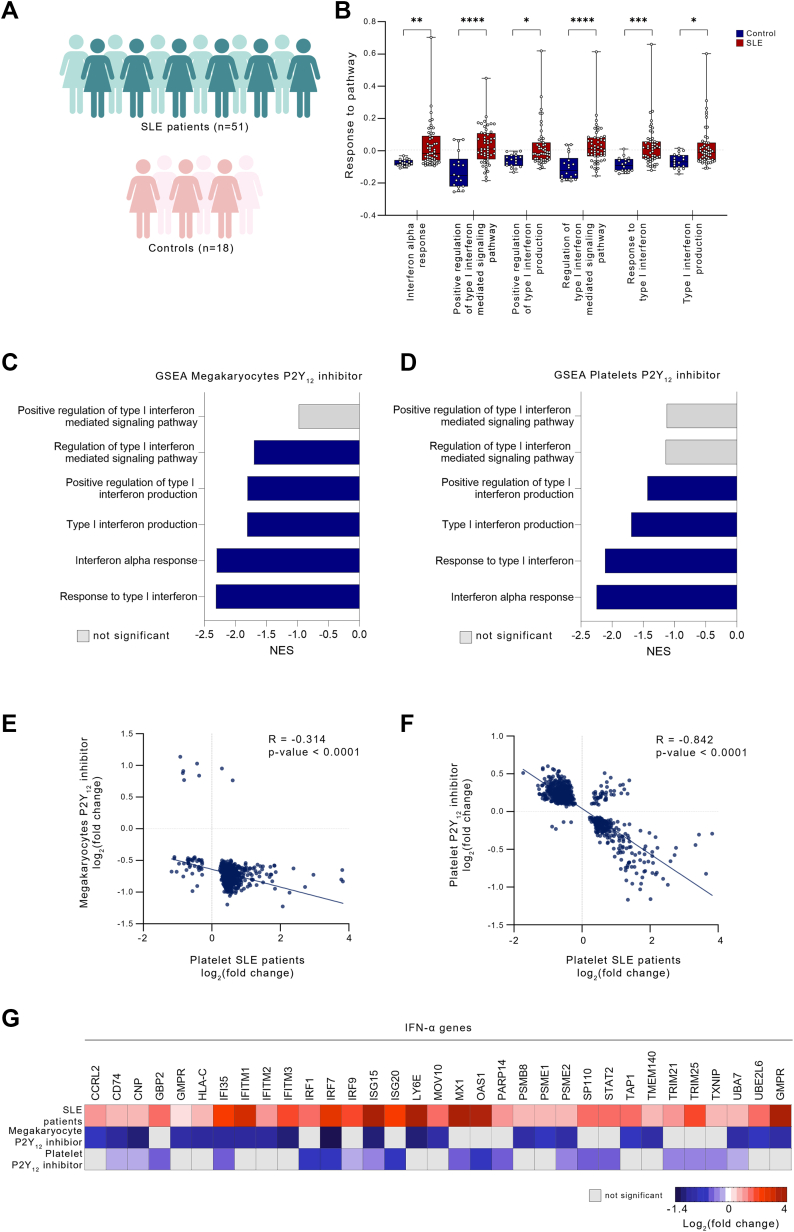
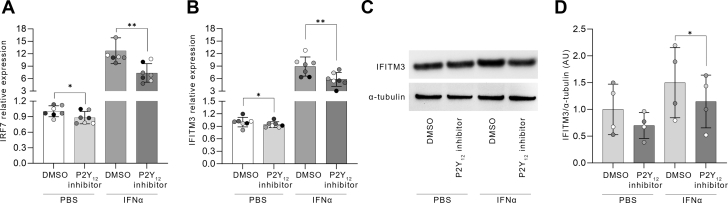
The authors investigated the impact of antiplatelet therapy on the megakaryocyte (MK) and platelet transcriptome. RNA-sequencing was performed on MKs treated with aspirin or P2Y inhibitor, platelets from healthy volunteers receiving aspirin or P2Y inhibition, and platelets from patients with systemic lupus erythematosus (SLE). P2Y inhibition reduced gene expression and inflammatory pathways in MKs and platelets. In SLE, the interferon (IFN) pathway was elevated. In vitro experiments demonstrated the role of P2Y inhibition in reducing IFNα-induced platelet-leukocyte interactions and IFN signaling pathways. These results suggest that P2Y inhibition may have therapeutic potential for proinflammatory and autoimmune conditions like SLE.
作者研究了抗血小板治疗对巨核细胞(MK)和血小板转录组的影响。对用阿司匹林或P2Y抑制剂处理的MK、接受阿司匹林或P2Y抑制的健康志愿者的血小板以及系统性红斑狼疮(SLE)患者的血小板进行了RNA测序。P2Y抑制降低了MK和血小板中的基因表达及炎症途径。在SLE中,干扰素(IFN)途径升高。体外实验证明了P2Y抑制在减少IFNα诱导的血小板-白细胞相互作用和IFN信号通路中的作用。这些结果表明,P2Y抑制可能对SLE等促炎和自身免疫性疾病具有治疗潜力。