Infectious Diseases Research Center, Gonabad University of Medical Sciences, Gonabad, Iran.
Health Management and Economics Research Center, Health Management Research Institute, Iran University of Medical Sciences, Tehran, Iran.
PLoS One. 2024 Oct 24;19(10):e0309722. doi: 10.1371/journal.pone.0309722. eCollection 2024.
In Persian medicine, early diagnosis and treatment of stomach dystemperament is crucial for preventing other diseases. However, traditional medicine diagnosis often involves ambiguous and less structured information making it challenging for practitioners. Integrating fuzzy ontology with case-based reasoning (CBR) systems can enhance diagnostic accuracy in this filed.
This study aimed to develop and evaluate a fuzzy ontology-based CBR system for diagnosing and treating stomach dystemperament in Persian medicine.
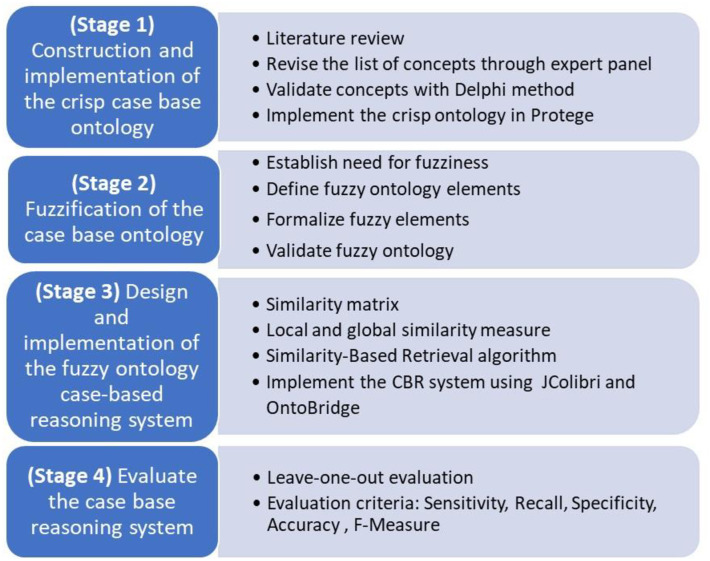
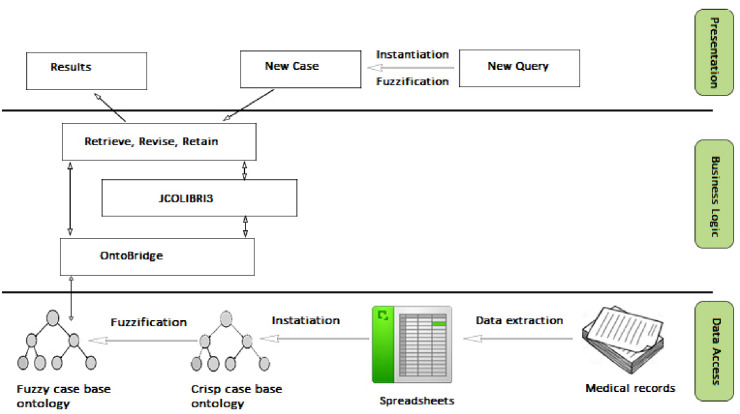
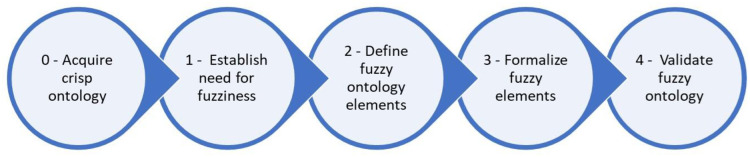
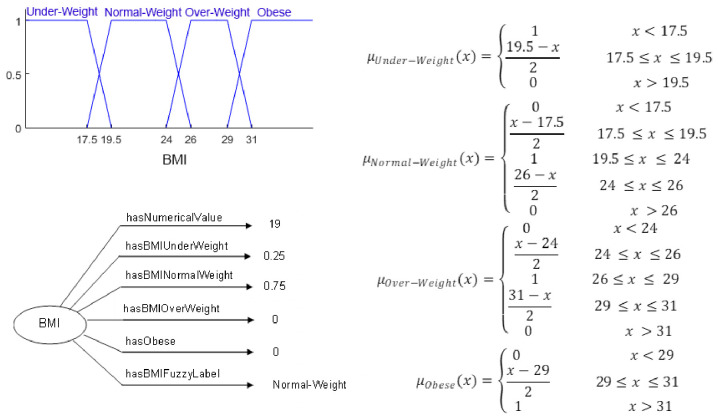
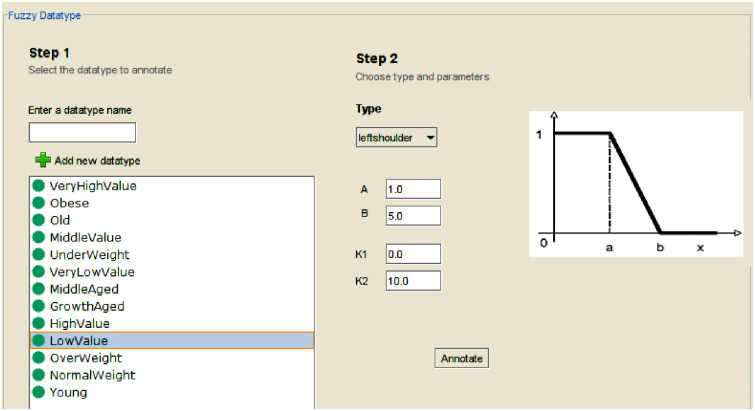
This was a mixed-methods research in which a fuzzy ontology-based CBR system was developed based on the fuzzy features, utilizing trapezoidal, triangular, right shoulder and left shoulder membership functions to represent linguistic variables such as hunger level and digestion power. The research phases included identifying relevant terms, concepts, and relationships, developing the fuzzy case-base ontology using the IKARUS-Onto methodology, and subsequently designing and implementing the CBR system. The system performance was evaluated in terms of its sensitivity, specificity, accuracy, precision, and F1-score.
Initially, a case-base fuzzy ontology was created. Then, the database was built up using 88 expert-validated medical records. Of these cases, 72% (63 cases) were diagnosed with phlegmatic dystemperament, 18% (16 cases) with cold-dry dystemperament, and 10% (9 cases) had no stomach dystemperament. The CBR system was developed and evaluated using sensitivity, specificity, accuracy, precision, and F1-score which were 97.5%, 87.5%, 96.6%, 98.7%, and 98.1%, respectively.
Our fuzzy ontology-based CBR demonstrated high performance in diagnosing stomach dystemperament in Persian medicine. This system shows promise in improving diagnostic accuracy and facilitating the identification of similar cases. While initial results are encouraging, further evaluation in a real clinical environment is recommended to fully assess its practical utility.
在波斯医学中,早期诊断和治疗胃部失调对于预防其他疾病至关重要。然而,传统医学的诊断常常涉及模糊和结构化程度较低的信息,这使得从业者面临挑战。将模糊本体论与基于案例的推理(CBR)系统相结合,可以提高该领域的诊断准确性。
本研究旨在开发和评估一种基于模糊本体论的 CBR 系统,用于诊断和治疗波斯医学中的胃部失调。
这是一项混合方法研究,其中基于模糊特征开发了一个基于模糊本体论的 CBR 系统,利用梯形、三角形、右肩和左肩隶属函数来表示饥饿程度和消化能力等语言变量。研究阶段包括确定相关术语、概念和关系,使用 IKARUS-Onto 方法开发模糊案例库本体,然后设计和实现 CBR 系统。系统性能通过灵敏度、特异性、准确性、精度和 F1 分数进行评估。
最初创建了一个案例库模糊本体。然后,使用 88 个经过专家验证的医疗记录构建了数据库。在这些病例中,72%(63 例)被诊断为痰湿失调,18%(16 例)为寒燥失调,10%(9 例)无胃部失调。使用灵敏度、特异性、准确性、精度和 F1 分数评估开发和评估的 CBR 系统,分别为 97.5%、87.5%、96.6%、98.7%和 98.1%。
我们基于模糊本体论的 CBR 在诊断波斯医学中的胃部失调方面表现出了很高的性能。该系统有望提高诊断准确性,并有助于识别类似病例。虽然初步结果令人鼓舞,但建议在实际临床环境中进一步评估,以充分评估其实用性。