Sorbonne University, INSERM, CNRS UMR8246, Neuroscience Paris Seine-Institut de Biologie Paris Seine (NPS-IBPS), Paris, France.
ESPCI Paris, PSL Research University, Brain Plasticity laboratory, CNRS UMR8249, Paris, France.
PLoS Biol. 2024 Oct 24;22(10):e3002850. doi: 10.1371/journal.pbio.3002850. eCollection 2024 Oct.
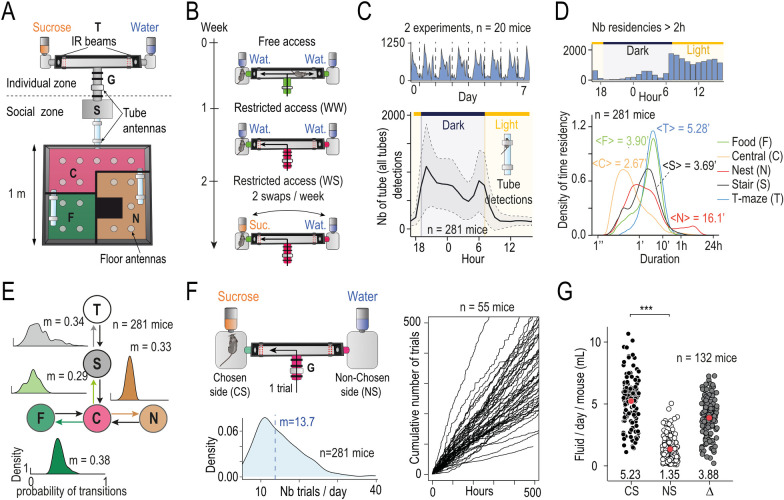
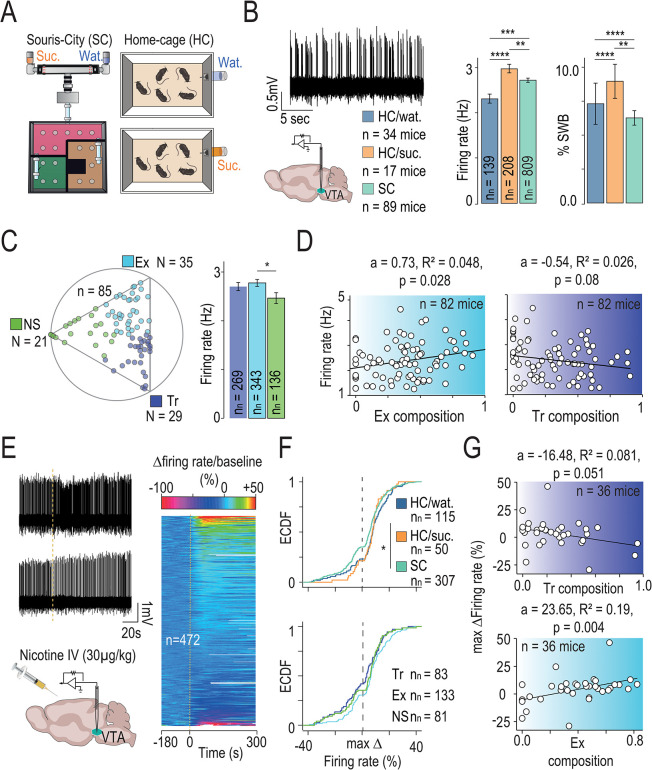
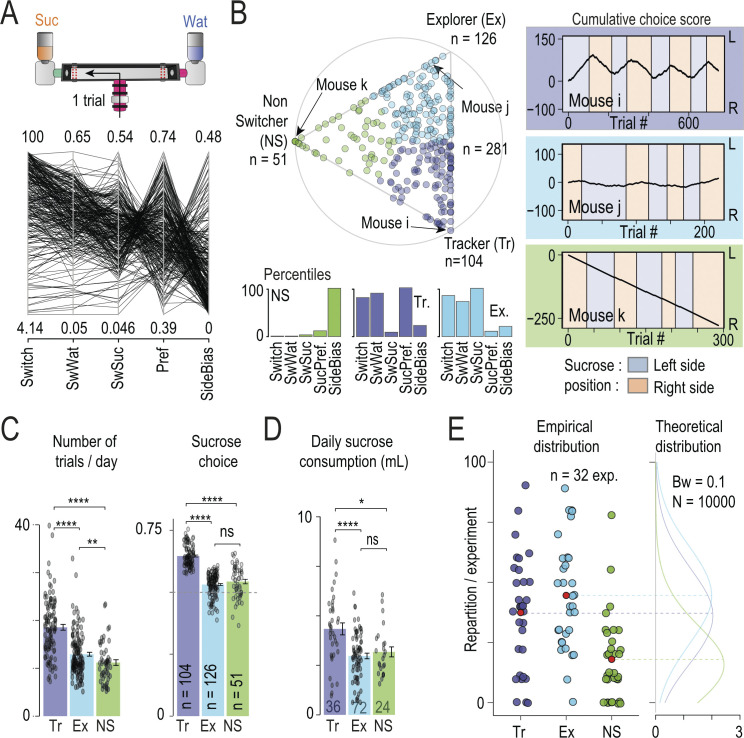
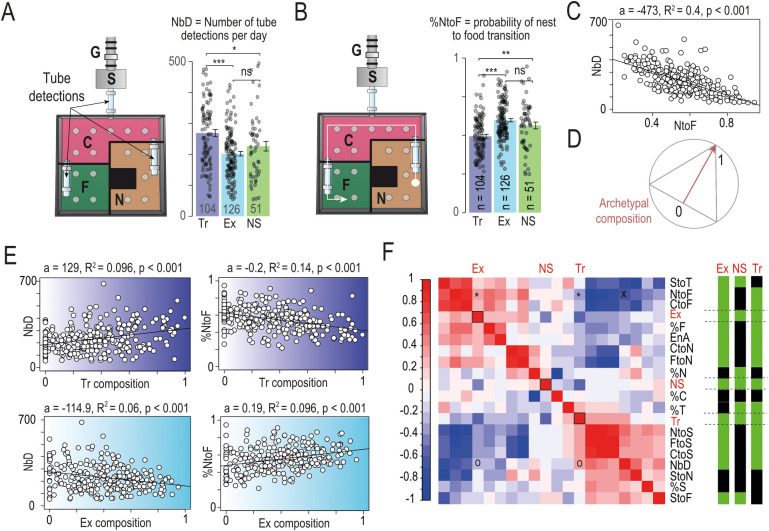
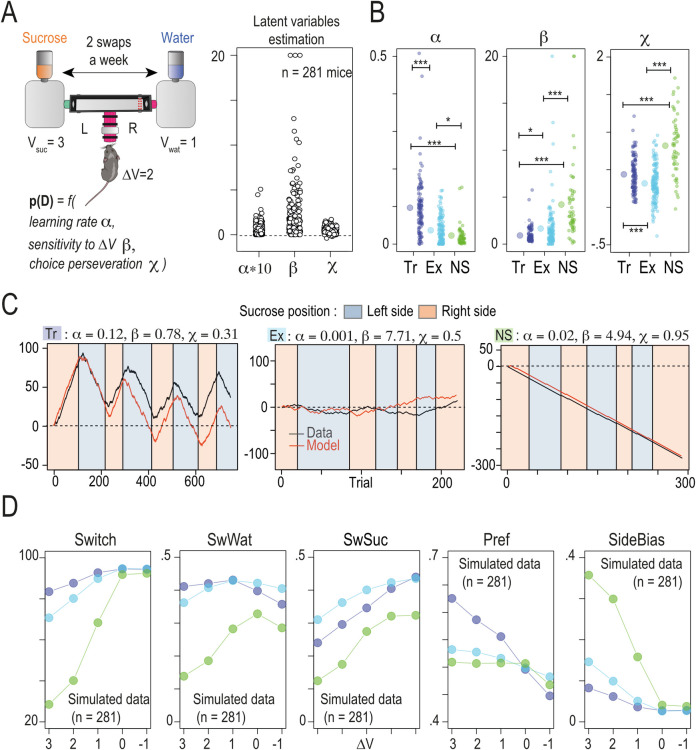
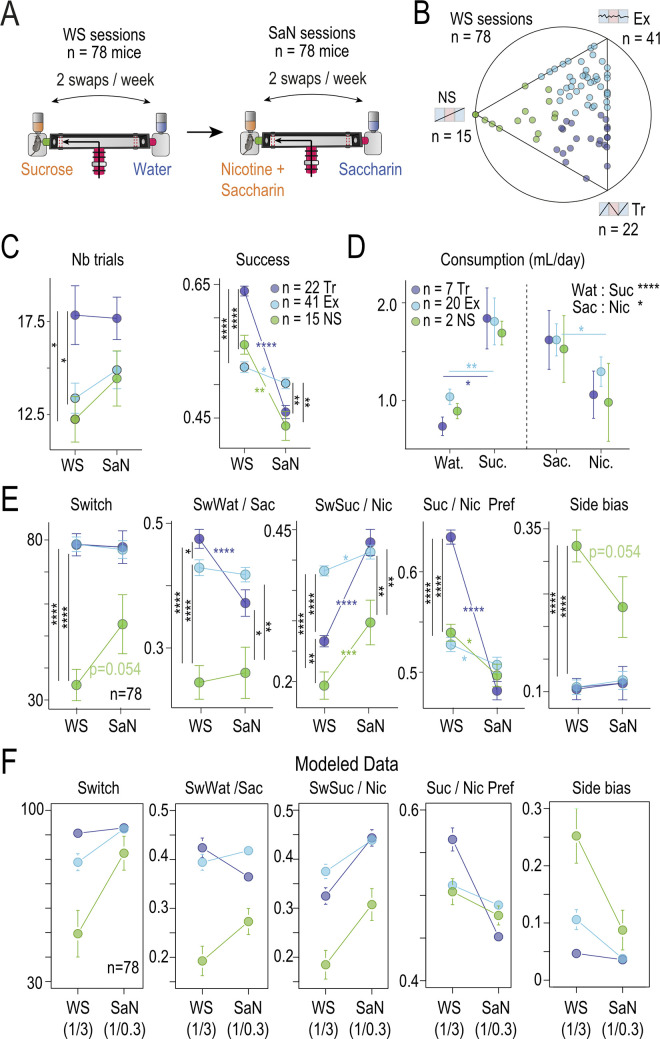
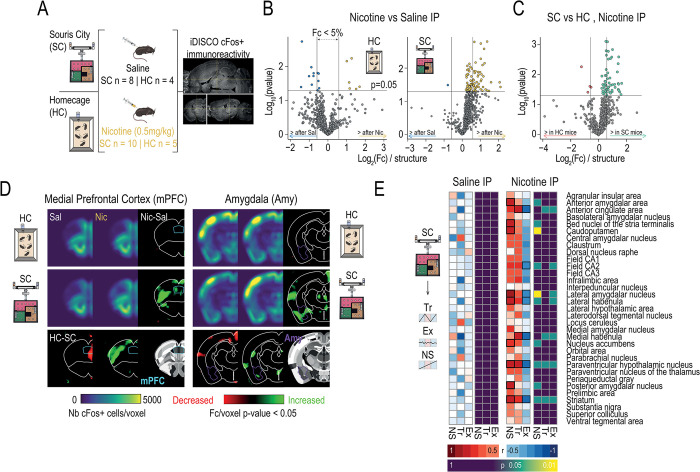
Individual animals differ in their traits and preferences, which shape their social interactions, survival, and susceptibility to disease, including addiction. Nicotine use is highly heterogenous and has been linked to the expression of personality traits. Although these relationships are well documented, we have limited understanding of the neurophysiological mechanisms that give rise to distinct behavioral profiles and their connection to nicotine susceptibility. To address this question, we conducted a study using a semi-natural and social environment called "Souris-City" to observe the long-term behavior of individual male mice. Souris-City provided both a communal living area and a separate test area where mice engaged in a reward-seeking task isolated from their peers. Mice developed individualistic reward-seeking strategies when choosing between water and sucrose in the test compartment, which, in turn, predicted how they adapted to the introduction of nicotine as a reinforcer. Moreover, the profiles mice developed while isolated in the test area correlated with their behavior within the social environment, linking decision-making strategies to the expression of behavioral traits. Neurophysiological markers of adaptability within the dopamine system were apparent upon nicotine challenge and were associated with specific profiles. Our findings suggest that environmental adaptations influence behavioral traits and sensitivity to nicotine by acting on dopaminergic reactivity in the face of nicotine exposure, potentially contributing to addiction susceptibility. These results further emphasize the importance of understanding interindividual variability in behavior to gain insight into the mechanisms of decision-making and addiction.
个体动物在其特征和偏好上存在差异,这些差异塑造了它们的社交互动、生存和对疾病(包括成瘾)的易感性。尼古丁的使用具有高度的异质性,并与个性特征的表达有关。尽管这些关系已经得到充分的记录,但我们对导致不同行为特征的神经生理机制及其与尼古丁易感性的联系知之甚少。为了解决这个问题,我们进行了一项研究,使用了一个称为“Souris-City”的半自然和社交环境来观察雄性小鼠的长期行为。Souris-City 提供了一个公共生活区域和一个单独的测试区域,老鼠可以在那里进行与同伴隔离的奖励寻求任务。当老鼠在测试隔间中选择水和蔗糖时,它们会发展出个性化的奖励寻求策略,而这些策略反过来又预测了它们如何适应尼古丁作为强化物的引入。此外,老鼠在测试区域中隔离时形成的特征与它们在社交环境中的行为相关联,将决策策略与行为特征的表达联系起来。多巴胺系统中的适应性神经生理标志物在尼古丁挑战时表现明显,并且与特定的特征相关。我们的发现表明,环境适应通过在暴露于尼古丁时影响多巴胺反应,影响行为特征和对尼古丁的敏感性,从而可能导致成瘾易感性。这些结果进一步强调了理解行为个体差异的重要性,以深入了解决策和成瘾的机制。