Department of Neurology, University Hospital Leuven, Leuven, Belgium.
Department of Cognitive Neurology, Referral Centre for Cognitive Neurology and Neurophysiology, University Hospital Centre Zagreb, Zagreb, Croatia.
Eur J Neurol. 2024 Dec;31(12):e16446. doi: 10.1111/ene.16446. Epub 2024 Oct 24.
Frontotemporal dementia (FTD) is a neurodegenerative disorder characterized by pervasive personality and behavioural disturbances with severe impact on patients and caregivers. In current clinical practice, treatment is based on nonpharmacological and pharmacological approaches. Unfortunately, trial-based evidence supporting symptomatic pharmacological treatment for the behavioural disturbances in FTD is scarce despite the significant burden this poses on the patients and caregivers.
The study examined drug management decisions for several behavioural disturbances in patients with FTD by 21 experts across European expert centres affiliated with the European Reference Network for Rare Neurological Diseases (ERN-RND).
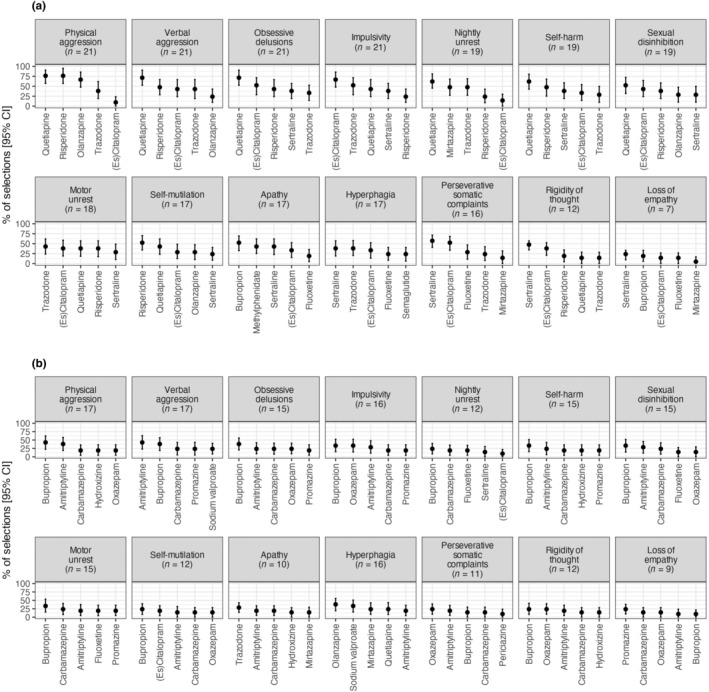
The study revealed the highest consensus on drug treatments for physical and verbal aggression, impulsivity and obsessive delusions. Antipsychotics (primarily quetiapine) were recommended for behaviours posing safety risks to both patients and caregivers (aggression, self-injury and self-harm) and nightly unrest. Selective serotonin reuptake inhibitors were recommended for perseverative somatic complaints, rigidity of thought, hyperphagia, loss of empathy and for impulsivity. Trazodone was specifically recommended for motor unrest, mirtazapine for nightly unrest, and bupropion and methylphenidate for apathy. Additionally, bupropion was strongly advised against in 10 out of the 14 behavioural symptoms, emphasizing a clear recommendation against its use in the majority of cases.
The survey data can provide expert guidance that is helpful for healthcare professionals involved in the treatment of behavioural symptoms. Additionally, they offer insights that may inform prioritization and design of therapeutic studies, particularly for existing drugs targeting behavioural disturbances in FTD.
额颞叶痴呆(FTD)是一种神经退行性疾病,其特征为普遍存在的人格和行为障碍,对患者和护理人员造成严重影响。在当前的临床实践中,治疗基于非药物和药物方法。不幸的是,尽管这些行为障碍给患者和护理人员带来了巨大负担,但支持 FTD 行为障碍症状性药物治疗的试验证据仍然很少。
本研究通过欧洲罕见神经疾病参考网络(ERN-RND)附属的 21 个欧洲专家中心的专家,研究了 FTD 患者几种行为障碍的药物管理决策。
该研究显示,在针对躯体攻击、言语攻击、冲动和强迫观念等行为的药物治疗方面,专家意见高度一致。抗精神病药(主要是喹硫平)被推荐用于对患者和护理人员都存在安全风险的行为(攻击、自残和自伤)和夜间不安。选择性 5-羟色胺再摄取抑制剂被推荐用于持续性躯体抱怨、思维僵化、食欲过盛、同理心丧失和冲动。曲唑酮专门用于治疗运动不安,米氮平用于治疗夜间不安,而安非他酮和哌甲酯则用于治疗淡漠。此外,在 14 种行为症状中有 10 种强烈建议不使用安非他酮,这强调了在大多数情况下强烈反对使用该药的明确建议。
调查数据可以为参与治疗行为症状的医疗保健专业人员提供有益的专家指导。此外,它们还提供了可能有助于确定治疗研究优先级和设计的见解,特别是对于针对 FTD 行为障碍的现有药物。