Institute of Anatomy and Cell Biology, Faculty of Medicine, University of Freiburg, Freiburg, Germany.
Faculty of Biology, University of Freiburg, Freiburg, Germany.
Nat Commun. 2024 Oct 24;15(1):9095. doi: 10.1038/s41467-024-53217-1.
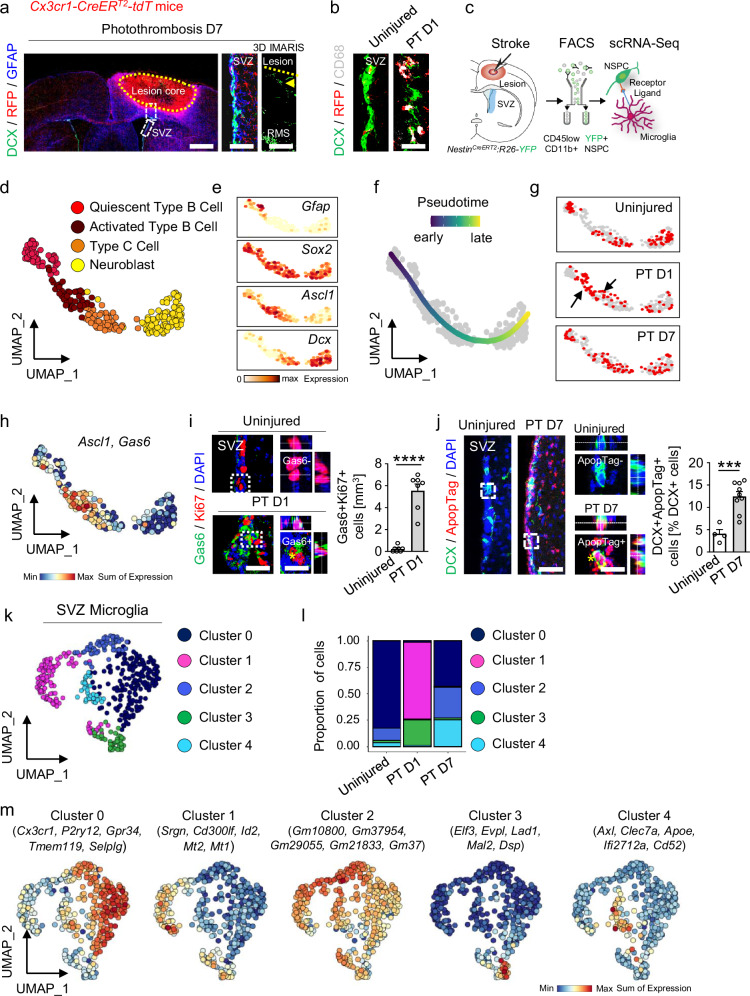
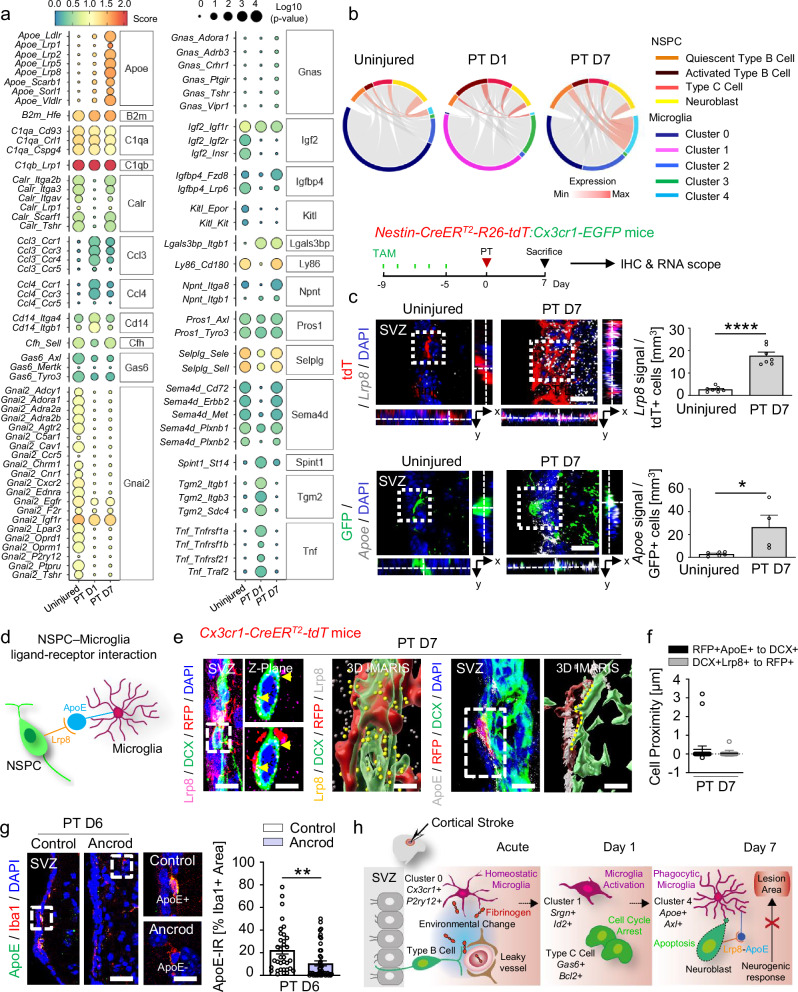
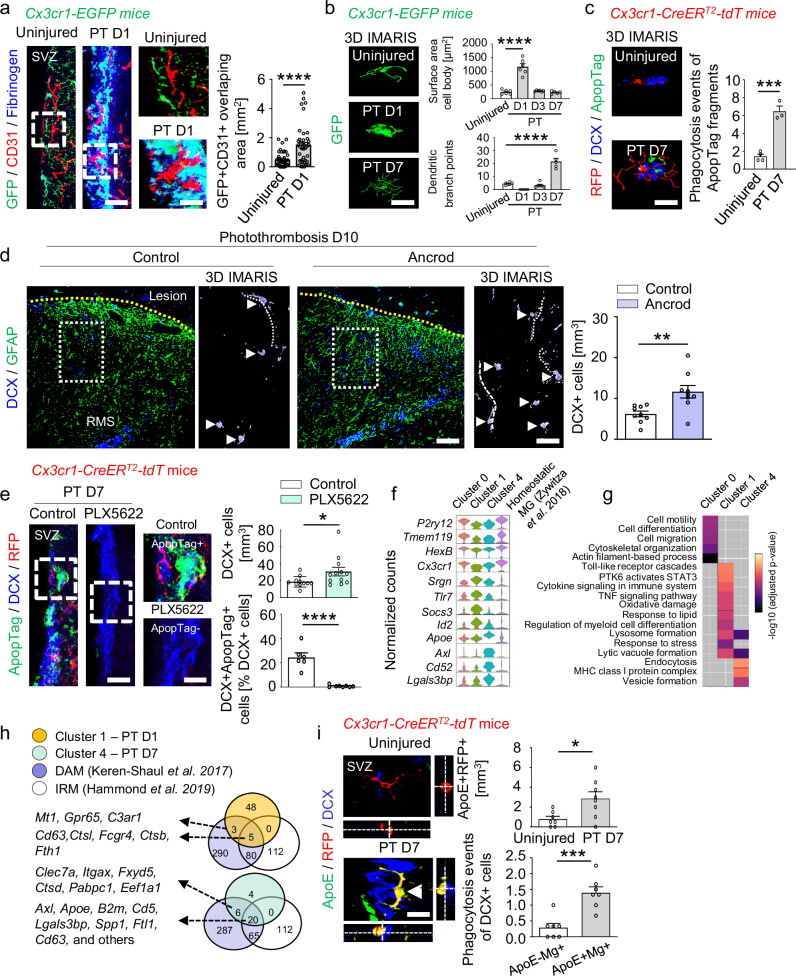
After a stroke, the neurogenic response from the subventricular zone (SVZ) to repair the brain is limited. Microglia, as an integral part of the distinctive SVZ microenvironment, control neural stem / precursor cell (NSPC) behavior. Here, we show that discrete stroke-associated SVZ microglial clusters negatively impact the innate neurogenic response, and we propose a repository of relevant microglia-NSPC ligand-receptor pairs. After photothrombosis, a mouse model of ischemic stroke, the altered SVZ niche environment leads to immediate activation of microglia in the niche and an abnormal neurogenic response, with cell-cycle arrest of neural stem cells and neuroblast cell death. Pharmacological restoration of the niche environment increases the SVZ-derived neurogenic repair and microglial depletion increases the formation and survival of newborn neuroblasts in the SVZ. Therefore, we propose that altered cross-communication between microglial subclusters and NSPCs regulates the extent of the innate neurogenic repair response in the SVZ after stroke.
中风后,侧脑室下区(SVZ)的神经发生反应对于修复大脑是有限的。小胶质细胞作为独特的 SVZ 微环境的一个组成部分,控制神经干细胞/前体细胞(NSPC)的行为。在这里,我们表明,与中风相关的 SVZ 小胶质细胞簇会对固有神经发生反应产生负面影响,并且我们提出了相关小胶质细胞-NSPC 配体-受体对的储存库。在光血栓形成后,一种缺血性中风的小鼠模型中,改变的 SVZ 生态位环境导致生态位中小胶质细胞的立即激活和异常的神经发生反应,伴随着神经干细胞的细胞周期停滞和神经母细胞的死亡。生态位环境的药理学恢复增加了 SVZ 衍生的神经发生修复,而小胶质细胞耗竭增加了 SVZ 中新生神经母细胞的形成和存活。因此,我们提出,小胶质细胞亚群和 NSPC 之间改变的交叉通讯调节了中风后 SVZ 中固有神经发生修复反应的程度。