College of Horticulture, Gansu Agricultural University, Lanzhou, 730070, China.
Gansu Academy of Agricultural Sciences, Lanzhou, 730070, China.
BMC Plant Biol. 2024 Oct 24;24(1):998. doi: 10.1186/s12870-024-05724-y.
Balancing nutrient application is crucial for plant growth. However, excessive fertilizer use, especially imbalanced applications of macronutrients such as phosphate (P), can hinder plant uptake of micronutrients. Balanced P and zinc (Zn) are vital for apple yield and quality, and apple trees are highly sensitive to deficiencies in these nutrients. Therefore, this study was conducted in May 2022, employed a sand culture experiment to investigate the effects of varying P and Zn levels on the growth phenotype, photosynthetic capacity, antioxidant enzyme activity, sugar composition, endogenous hormone levels, and nutrient absorption and utilization of M9-T337 seedlings. Three levels of P (low, medium, high) and three levels of Zn (low, medium, high) were combined to create a total of nine distinct treatment.
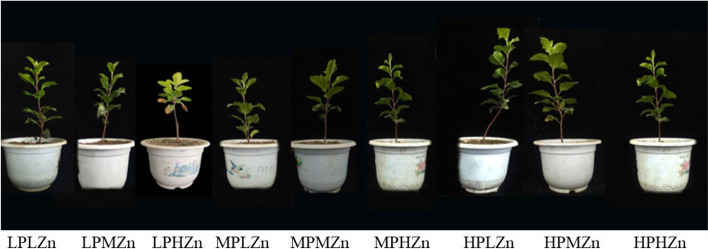
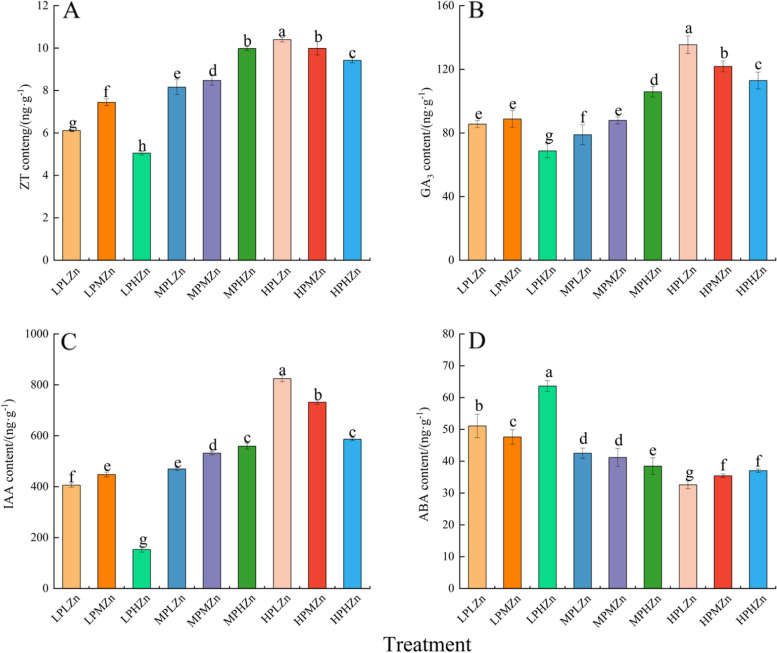
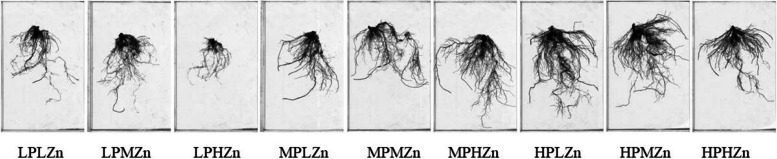
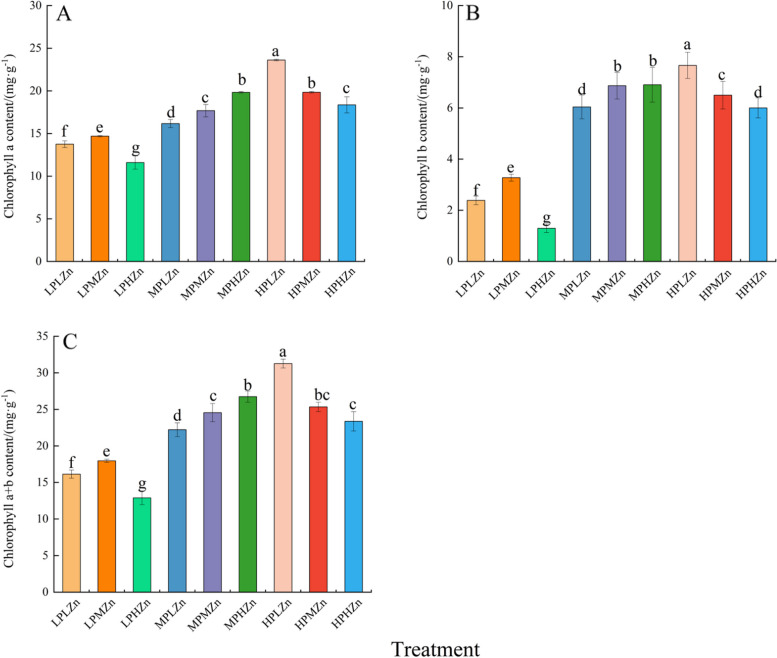
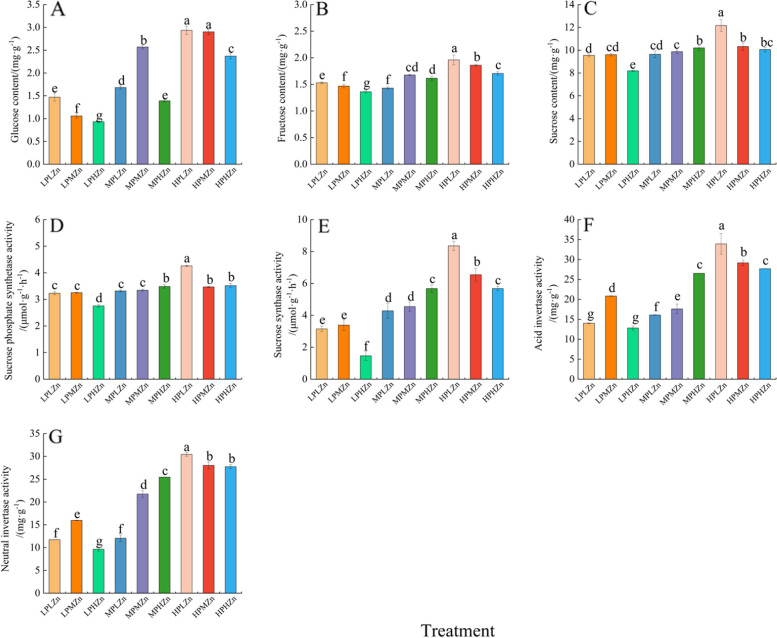
The results indicate that combined P and Zn fertilization at various levels exerts either synergistic or antagonistic effects on the growth, nutrient absorption, and utilization of M9-T337 seedlings. Compared to low and medium levels of P, a combination of high P (4 mmol·L) and an adequate amount of Zn significantly enhanced plant growth, root system development, and the microstructure of leaves. Notably, seedlings treated with high P and low Zn (HPLZn) reached a height 1.54 times that of the medium P and medium Zn (MPMZn, control). Physiological indicators under HP conditions revealed significant increases in antioxidant enzyme activity, leaf water retention, photosynthetic pigment concentration, osmotic adjustment substances, and the contents of glucose, sucrose, fructose, endogenous hormones, as well as P and Zn accumulation in the leaves, compared to the control. However, an increase in Zn application led to a declining trend in these parameters. Specifically, the HPLZn treatment exhibited substantial increases in Net photosynthetic rate (Pn), Total chlorophyll (Chl a + b), glucose, fructose, sucrose, and Auxin(IAA), with increments of 7.12%, 27.32%, 11.40%, 23.20%, 16.67%, and 55.11%, respectively, compared to the control.
Based on the comprehensive ranking from principal component analysis, the combination of HP ( 4 mmol·L) and LZn (0.5 µmol·L) was found to be the most effective in enhancing the antioxidant capacity, sugar accumulation, osmotic regulation ability, photosynthetic capacity, endogenous hormone levels, as well as P and Zn nutrient absorption and utilization in M9-T337 seedlings.
养分的平衡施用对植物的生长至关重要。然而,过量施肥,尤其是大量营养元素(如磷(P))的不平衡施用,会阻碍植物对微量元素的吸收。平衡的 P 和锌(Zn)对苹果的产量和质量至关重要,而苹果树对这些养分的缺乏非常敏感。因此,本研究于 2022 年 5 月进行,采用沙培实验,研究不同 P 和 Zn 水平对 M9-T337 幼苗生长表型、光合能力、抗氧化酶活性、糖组成、内源激素水平以及养分吸收和利用的影响。三个 P 水平(低、中、高)和三个 Zn 水平(低、中、高)组合,共形成 9 种不同处理。
结果表明,不同水平的 P 和 Zn 组合对 M9-T337 幼苗的生长、养分吸收和利用具有协同或拮抗作用。与低和中 P 水平相比,高 P(4 mmol·L)和适量 Zn 的组合显著促进了植物的生长、根系发育和叶片的微观结构。值得注意的是,高 P 和低 Zn(HPLZn)处理的幼苗高度是中 P 和中 Zn(MPMZn,对照)处理的 1.54 倍。在 HP 条件下,生理指标显示抗氧化酶活性、叶片水分保持、光合色素浓度、渗透调节物质以及叶片中葡萄糖、蔗糖、果糖、内源激素和 P、Zn 积累显著增加,与对照相比。然而,Zn 用量的增加导致这些参数呈下降趋势。具体而言,HPLZn 处理的净光合速率(Pn)、总叶绿素(Chl a+b)、葡萄糖、果糖、蔗糖和生长素(IAA)分别增加了 7.12%、27.32%、11.40%、23.20%、16.67%和 55.11%,与对照相比。
基于主成分分析的综合排名,发现 HP(4 mmol·L)和 LZn(0.5 μmol·L)的组合最能有效提高 M9-T337 幼苗的抗氧化能力、糖积累、渗透调节能力、光合能力、内源激素水平以及 P 和 Zn 养分吸收和利用。