
2015年至2022年加泰罗尼亚地区镰状细胞病的新生儿筛查——流行病学及对临床事件的影响
Newborn Screening for Sickle Cell Disease in Catalonia between 2015 and 2022-Epidemiology and Impact on Clinical Events.
作者信息
González de Aledo-Castillo José Manuel, Argudo-Ramírez Ana, Beneitez-Pastor David, Collado-Gimbert Anna, Almazán Castro Francisco, Roig-Bosch Sílvia, Andrés-Masó Anna, Ruiz-Llobet Anna, Pedrals-Portabella Georgina, Medina-Santamaria David, Nadal-Rey Gemma, Espigares-Salvia Marina, Coll-Sibina Maria Teresa, Algar-Serrano Marcelina, Torrent-Español Montserrat, Leoz-Allegretti Pilar, Rodríguez-Pebé Anabel, García-Bernal Marta, Solà-Segura Elisabet, García-Gallego Amparo, Prats-Viedma Blanca, López-Galera Rosa María, Paredes-Fuentes Abraham J, Pajares García Sonia, Delgado-López Giovanna, Blanco-Álvarez Adoración, Tazón-Vega Bárbara, Díaz de Heredia Cristina, Mañú-Pereira María Del Mar, Marín-Soria José Luis, García-Villoria Judit, Velasco-Puyó Pablo
机构信息
Section of Inborn Errors of Metabolism, Department of Biochemistry and Molecular Genetics, Hospital Clínic de Barcelona, 08028 Barcelona, Spain.
Hematology Department, Hospital Universitari Vall d'Hebron, 08035 Barcelona, Spain.
出版信息
Int J Neonatal Screen. 2024 Oct 3;10(4):69. doi: 10.3390/ijns10040069.
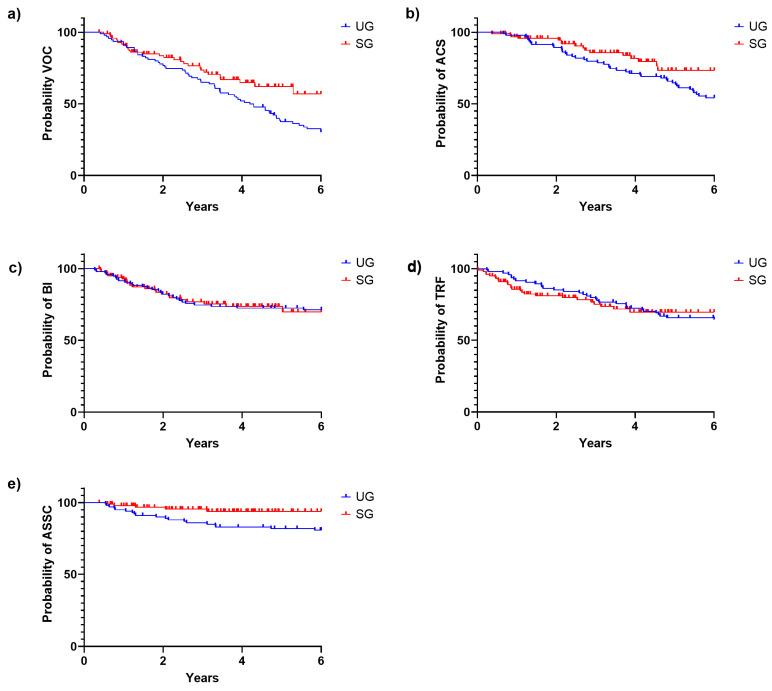
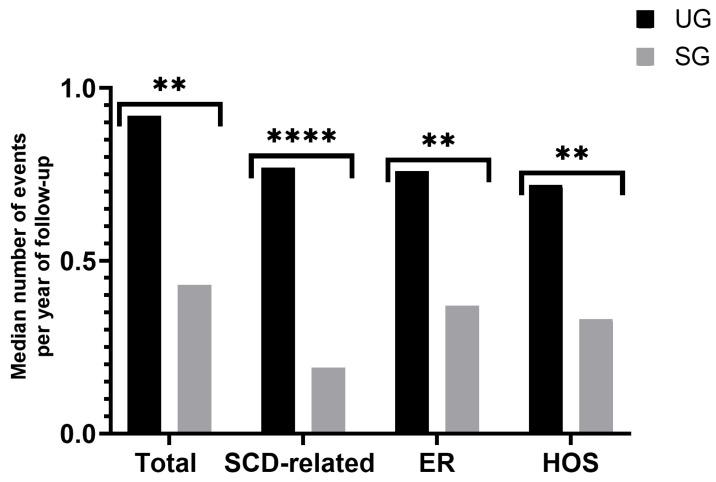
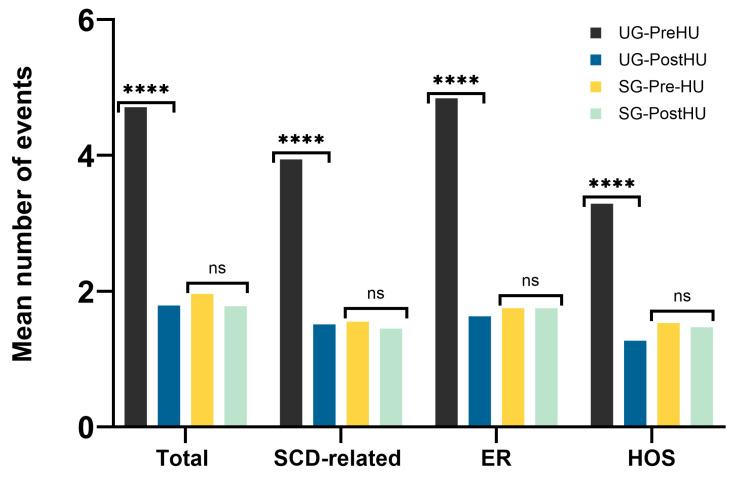
In 2015, Catalonia introduced sickle cell disease (SCD) screening in its newborn screening (NBS) program along with standard-of-care treatments like penicillin, hydroxyurea, and anti-pneumococcal vaccination. Few studies have assessed the clinical impact of introducing NBS programs on SCD patients. We analyzed the incidence of SCD and related hemoglobinopathies in Catalonia and the change in clinical events occurring after introducing NBS. Screening 506,996 newborns from 2015 to 2022, we conducted a retrospective multicenter study including 100 screened (SG) and 95 unscreened (UG) SCD patients and analyzed SCD-related clinical events over the first six years of life. We diagnosed 160 cases of SCD, with an incidence of 1 in 3169 newborns. The SG had a significantly lower median age at diagnosis (0.1 y vs. 1.68 y, < 0.0001), and initiated penicillin prophylaxis (0.12 y vs. 1.86 y, < 0.0001) and hydroxyurea treatment earlier (1.42 y vs. 4.5 y, < 0.0001). The SG experienced fewer median SCD-related clinical events (vaso-occlusive crisis, acute chest syndrome, infections of probable bacterial origin, acute anemia requiring transfusion, acute splenic sequestration, and pathological transcranial Doppler echography) per year of follow-up (0.19 vs. 0.77, < 0.0001), a reduced number of annual emergency department visits (0.37 vs. 0.76, < 0.0001), and fewer hospitalizations (0.33 vs. 0.72, < 0.0001). SCD screening in Catalonia's NBS program has effectively reduced morbidity and improved affected children's quality of life.
2015年,加泰罗尼亚在其新生儿筛查(NBS)项目中引入了镰状细胞病(SCD)筛查,并同时开展了青霉素、羟基脲和抗肺炎球菌疫苗接种等标准治疗。很少有研究评估引入NBS项目对SCD患者的临床影响。我们分析了加泰罗尼亚SCD及相关血红蛋白病的发病率,以及引入NBS后临床事件的变化。我们对2015年至2022年期间的506,996名新生儿进行了筛查,开展了一项回顾性多中心研究,纳入了100名经筛查的(SG)和95名未经筛查的(UG)SCD患者,并分析了其生命最初六年中与SCD相关的临床事件。我们诊断出160例SCD病例,发病率为每3169名新生儿中有1例。SG组的诊断中位年龄显著更低(0.1岁对1.68岁,<0.0001),更早开始青霉素预防治疗(0.12岁对1.86岁,<0.0001)以及羟基脲治疗(1.42岁对4.5岁,<0.0001)。SG组在每年的随访中发生的与SCD相关的临床事件(血管闭塞性危机、急性胸综合征、可能由细菌引起的感染、需要输血的急性贫血、急性脾梗死和病理性经颅多普勒超声检查)的中位数更少(0.19对0.77,<0.0001),每年的急诊就诊次数减少(0.37对0.76,<0.0001),住院次数也更少(0.33对0.72,<0.0001)。加泰罗尼亚NBS项目中的SCD筛查有效降低了发病率,提高了患病儿童的生活质量。



 Zotero 插件