Alcalá-Santiago Ángela, Rodriguez-Barranco Miguel, Sánchez María-José, Gil Ángel, García-Villanova Belén, Molina-Montes Esther
Department of Nutrition and Food Science, Faculty of Pharmacy, University of Granada, 18071 Granada, Spain.
Instituto de Investigación Biosanitaria ibs.Granada, 18012 Granada, Spain.
Nutr Rev. 2025 Jul 1;83(7):e1383-e1405. doi: 10.1093/nutrit/nuae152.
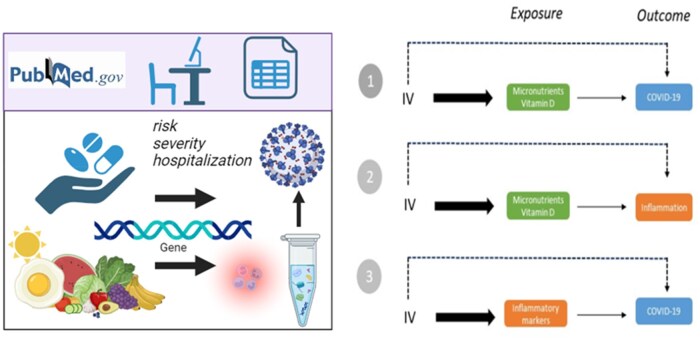
Experimental and observational studies suggest that circulating micronutrients, including vitamin D (VD), may increase COVID-19 risk and its associated outcomes. Mendelian randomization (MR) studies provide valuable insight into the causal relationship between an exposure and disease outcomes.
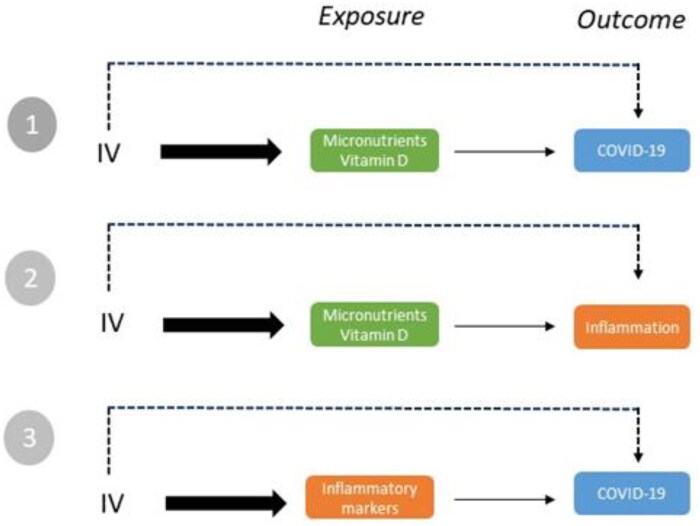
The aim was to conduct a systematic review and meta-analysis of causal inference studies that apply MR approaches to assess the role of these micronutrients, particularly VD, in COVID-19 risk, infection severity, and related inflammatory markers.
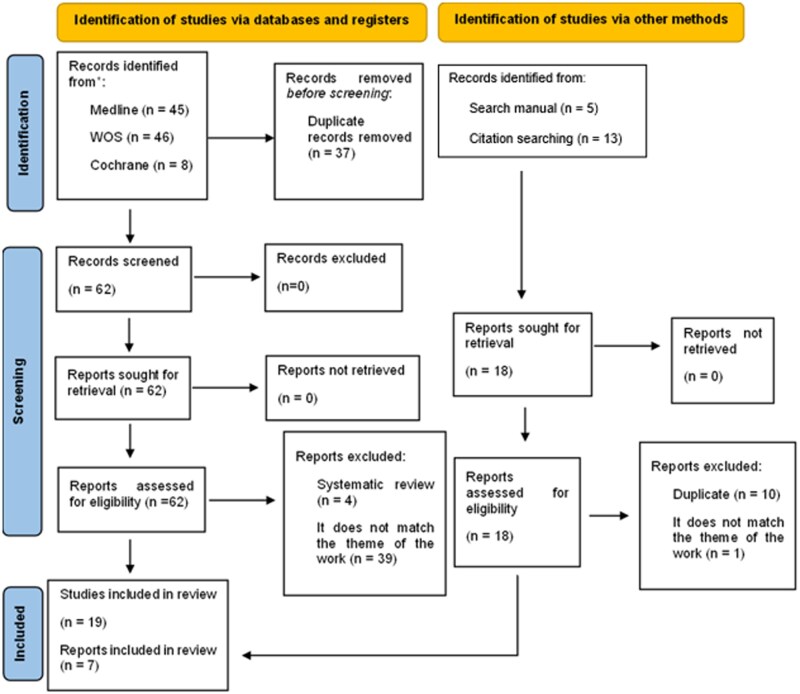
Searches (up to July 2023) were conducted in 4 databases.
The quality of the studies was evaluated based on the MR-STROBE guidelines. Random-effects meta-analyses were conducted where possible.
There were 28 studies (2 overlapped) including 12 on micronutrients (8 on VD) and COVID-19, 4 on micronutrients (all on VD) and inflammation, and 12 on inflammatory markers and COVID-19. Some of these studies reported significant causal associations between VD or other micronutrients (vitamin C, vitamin B6, iron, zinc, copper, selenium, and magnesium) and COVID-19 outcomes. Associations in terms of causality were also nonsignificant with regard to inflammation-related markers, except for VD levels below 25 nmol/L and C-reactive protein (CRP). Some studies reported causal associations between cytokines, angiotensin-converting enzyme 2 (ACE2), and other inflammatory markers and COVID-19. Pooled MR estimates showed that VD was not significantly associated with COVID-19 outcomes, whereas ACE2 increased COVID-19 risk (MR odds ratio = 1.10; 95% CI: 1.01-1.19) but did not affect hospitalization or severity of the disease. The methodological quality of the studies was high in 13 studies, despite the majority (n = 24) utilizing 2-sample MR and evaluated pleiotropy.
MR studies exhibited diversity in their approaches but do not support a causal link between VD/micronutrients and COVID-19 outcomes. Whether inflammation mediates the VD-COVID-19 relationship remains uncertain, and highlights the need to address this aspect in future MR studies exploring micronutrient associations with COVID-19 outcomes.
PROSPERO registration no. CRD42022328224.
实验性和观察性研究表明,包括维生素D(VD)在内的循环微量营养素可能会增加感染新型冠状病毒肺炎(COVID-19)的风险及其相关后果。孟德尔随机化(MR)研究为暴露因素与疾病后果之间的因果关系提供了有价值的见解。
旨在对因果推断研究进行系统评价和荟萃分析,这些研究采用MR方法来评估这些微量营养素,特别是VD,在COVID-19风险、感染严重程度和相关炎症标志物方面的作用。
在4个数据库中进行检索(截至2023年7月)。
根据MR-STROBE指南评估研究质量。尽可能进行随机效应荟萃分析。
共有28项研究(2项重叠),其中12项关于微量营养素(8项关于VD)与COVID-19,4项关于微量营养素(均关于VD)与炎症,12项关于炎症标志物与COVID-19。其中一些研究报告了VD或其他微量营养素(维生素C、维生素B6、铁、锌、铜、硒和镁)与COVID-19结局之间存在显著的因果关联。除了VD水平低于25 nmol/L和C反应蛋白(CRP)外,炎症相关标志物在因果关系方面的关联也不显著。一些研究报告了细胞因子、血管紧张素转换酶2(ACE2)和其他炎症标志物与COVID-19之间的因果关联。汇总的MR估计显示,VD与COVID-19结局无显著关联,而ACE2增加了COVID-19风险(MR比值比=1.10;95%可信区间:1.01-1.19),但不影响疾病的住院率或严重程度。尽管大多数研究(n=24)采用双样本MR并评估了多效性,但13项研究的方法学质量较高。
MR研究在方法上存在多样性,但不支持VD/微量营养素与COVID-19结局之间存在因果联系。炎症是否介导VD与COVID-19的关系仍不确定,这突出表明在未来探索微量营养素与COVID-19结局关联的MR研究中需要解决这一方面的问题。
PROSPERO注册号CRD42022328224。