
飞燕清热汤通过微生物群衍生的乙酸盐增强宿主抗病毒反应来减轻流感病毒感染。
Fei-Yan-Qing-Hua decoction attenuates influenza virus infection by enhancing host antiviral response through microbiota-derived acetate.
作者信息
Dou Biao, Wu Xiao, He Yurong, Xu Guihua, Zhang Huan, Huang Qilin, Chen Xuan, Duan Naifan, Zhou Linqiong, Zhang Wei, An Huazhang, Zheng Yuejuan
机构信息
The Research Center for Traditional Chinese Medicine, Shanghai Institute of Infectious Diseases and Biosecurity, Shanghai University of Traditional Chinese Medicine, Shanghai, China.
Center for Traditional Chinese Medicine and Immunology Research, School of Integrative Medicine, Shanghai University of Traditional Chinese Medicine, Shanghai, China.
出版信息
Front Pharmacol. 2024 Oct 10;15:1446749. doi: 10.3389/fphar.2024.1446749. eCollection 2024.
BACKGROUND
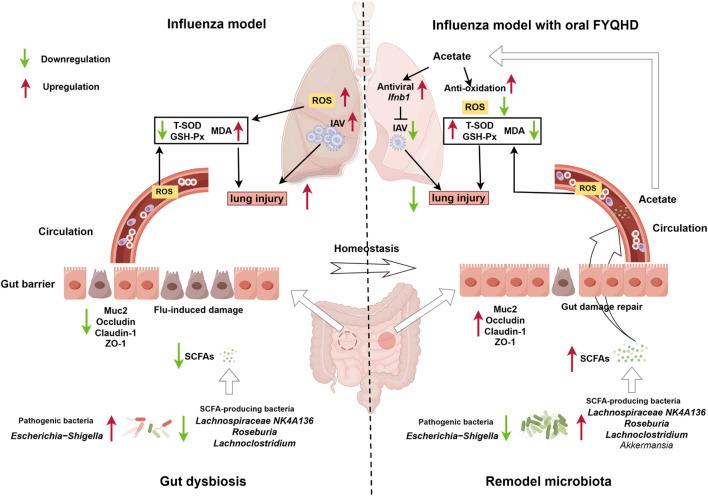
Fei-Yan-Qing-Hua decoction (FYQHD) is derived from the well-known Ma Xing Shi Gan decoction, which was documented in Zhang Zhong Jing's "Treatise on Exogenous Febrile Disease" during the Han Dynasty. Although FYQHD has been used in the treatment of pneumonia and has demonstrated clinical efficacy for decades, the underlying mechanism by which FYQHD protects against influenza virus infection through modulation of gut flora remains unclear. Here, we examined the regulatory impacts of FYQHD on an influenza virus-infected mouse model and explored the mechanisms involved.
METHODS
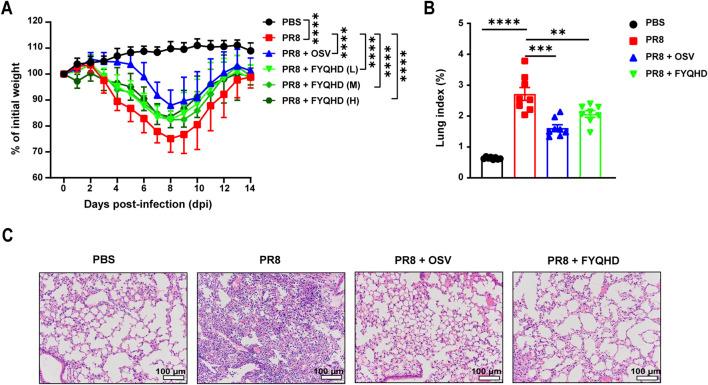
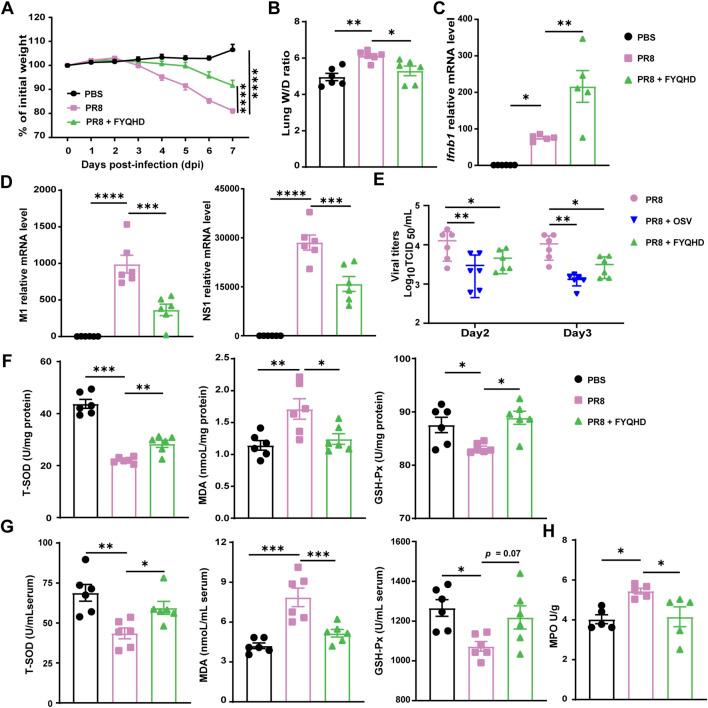
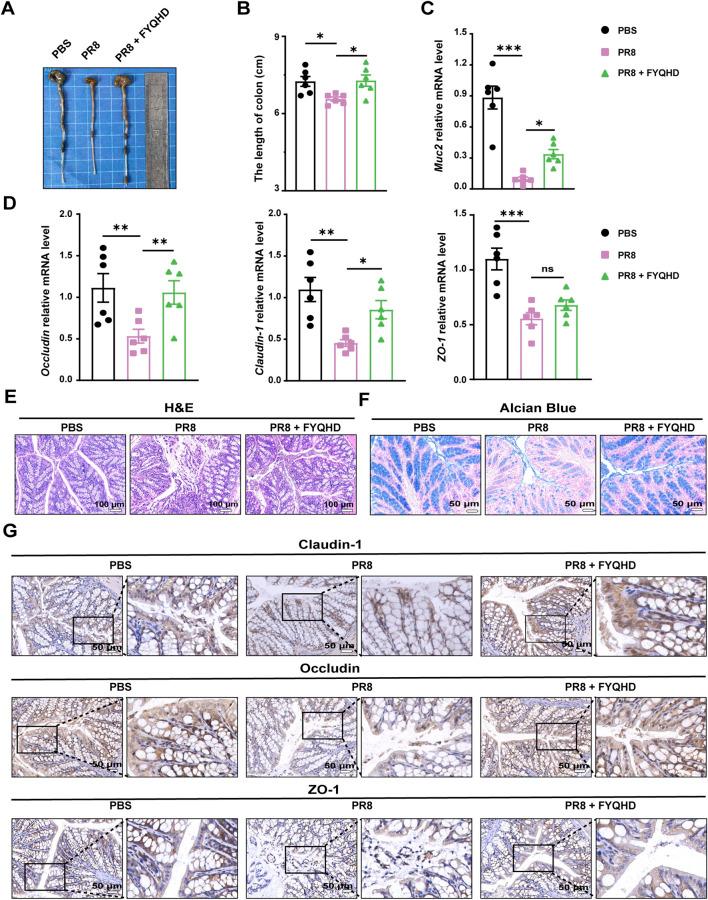
An infectious mouse model was created by intranasal instillation of influenza A virus (IAV). The effectiveness of FYQHD was assessed through various measures, including weight loss, lung wet/dry ratio, oxidative stress levels, viral load in lung tissues, and intestinal injuries. Changes in gut microbiota and SCFA production were also examined.
RESULTS
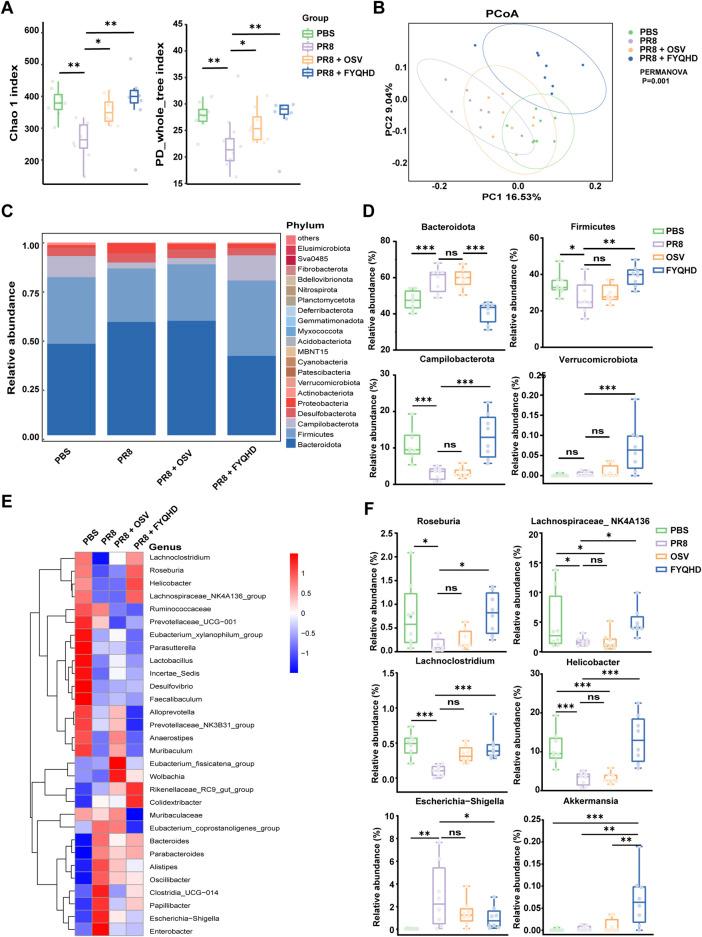
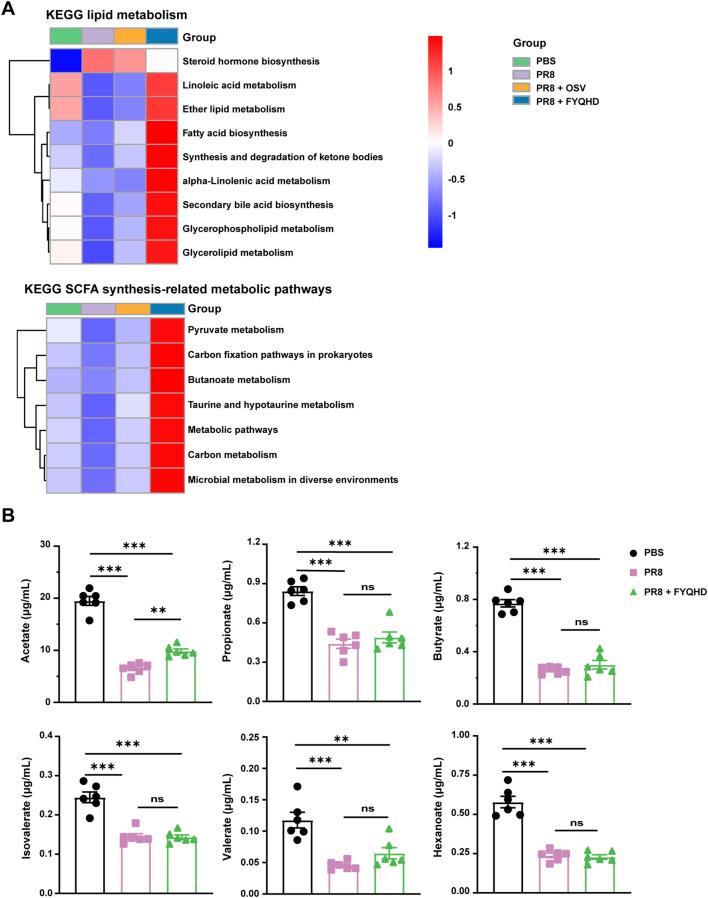
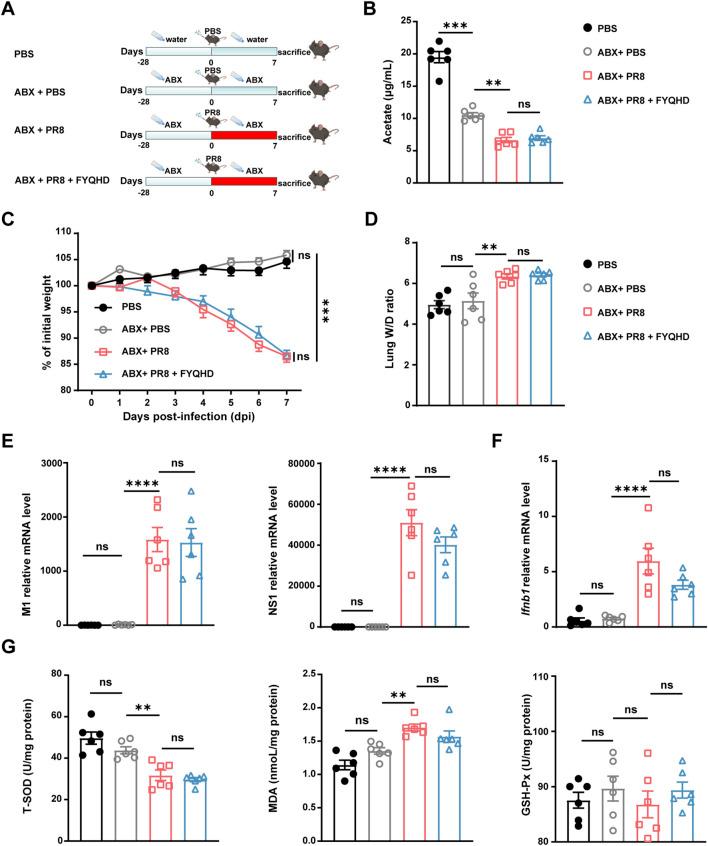
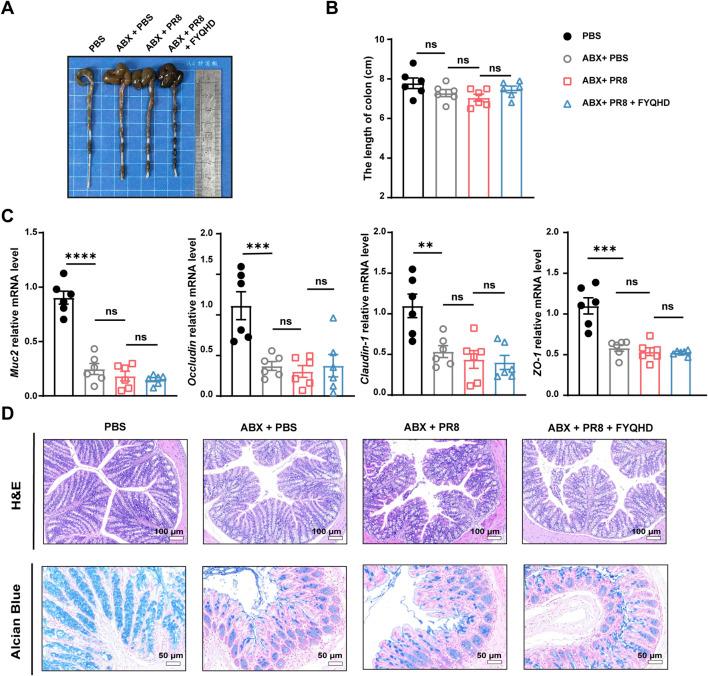
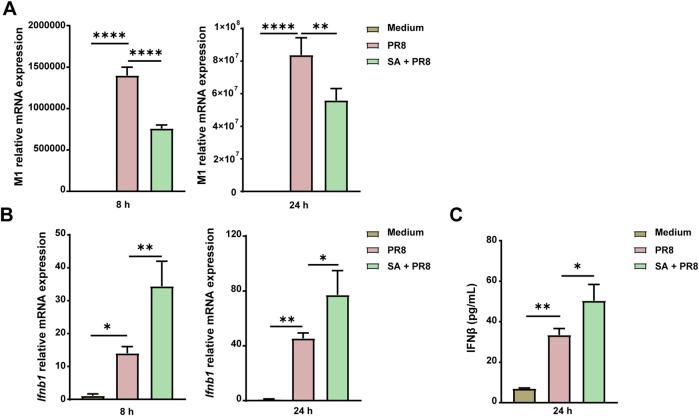
The results showed that FYQHD significantly reduced viral load, increased the production of type I interferon (IFN-I), and restored the integrity of the intestinal barrier following IAV challenge. Additionally, FYQHD significantly corrected the dysbiosis of gut microbiota induced by influenza virus infection, enhancing the abundance of SCFA-producing bacteria and acetate production. However, the depletion of gut microbiota significantly attenuated the protective effects of FYQHD against influenza virus infection. , the antiviral effect of acetate was demonstrated through the upregulation of concentrations of IFN-β.
CONCLUSION
FYQHD attenuates influenza virus-induced lung and intestinal injuries by boosting the host antiviral response through increasing the abundance of and along with elevated acetate levels. The study advances our understanding of the therapeutic mechanisms of FYQHD and provides a theoretical basis for the application of FYQHD in the treatment of influenza.
背景
肺炎清化汤(FYQHD)源自汉代张仲景《伤寒论》中记载的著名方剂麻杏石甘汤。尽管肺炎清化汤已用于治疗肺炎并在数十年间显示出临床疗效,但其通过调节肠道菌群预防流感病毒感染的潜在机制仍不清楚。在此,我们研究了肺炎清化汤对流感病毒感染小鼠模型的调节作用,并探讨了其中涉及的机制。
方法
通过鼻内滴注甲型流感病毒(IAV)建立感染性小鼠模型。通过多种指标评估肺炎清化汤的疗效,包括体重减轻、肺组织湿/干比、氧化应激水平、肺组织中的病毒载量以及肠道损伤。还检测了肠道微生物群的变化和短链脂肪酸(SCFA)的产生。
结果
结果表明,肺炎清化汤在IAV攻击后显著降低了病毒载量,增加了I型干扰素(IFN-I)的产生,并恢复了肠道屏障的完整性。此外,肺炎清化汤显著纠正了流感病毒感染诱导的肠道微生物群失调,增加了产生SCFA的细菌丰度和乙酸盐的产生。然而,肠道微生物群的耗竭显著减弱了肺炎清化汤对流感病毒感染的保护作用。通过上调IFN-β浓度证明了乙酸盐的抗病毒作用。
结论
肺炎清化汤通过增加[具体细菌名称1]和[具体细菌名称2]的丰度以及提高乙酸盐水平来增强宿主抗病毒反应,从而减轻流感病毒诱导的肺部和肠道损伤。该研究增进了我们对肺炎清化汤治疗机制的理解,并为肺炎清化汤在流感治疗中的应用提供了理论依据。
 Zotero 插件