Cook Christian J, Serpell Benjamin G, Hanna Lauren J
School of Science and Technology, University of New England, Armidale, NSW, Australia.
Hamlyn Centre, Imperial College, London, United Kingdom.
Front Sports Act Living. 2024 Oct 10;6:1458268. doi: 10.3389/fspor.2024.1458268. eCollection 2024.
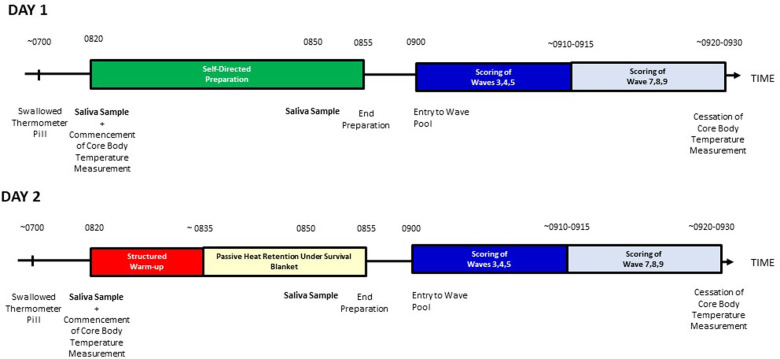
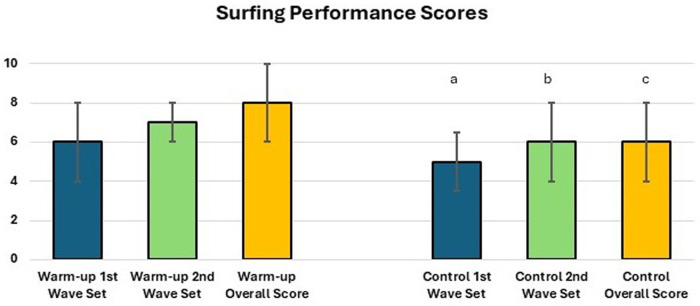
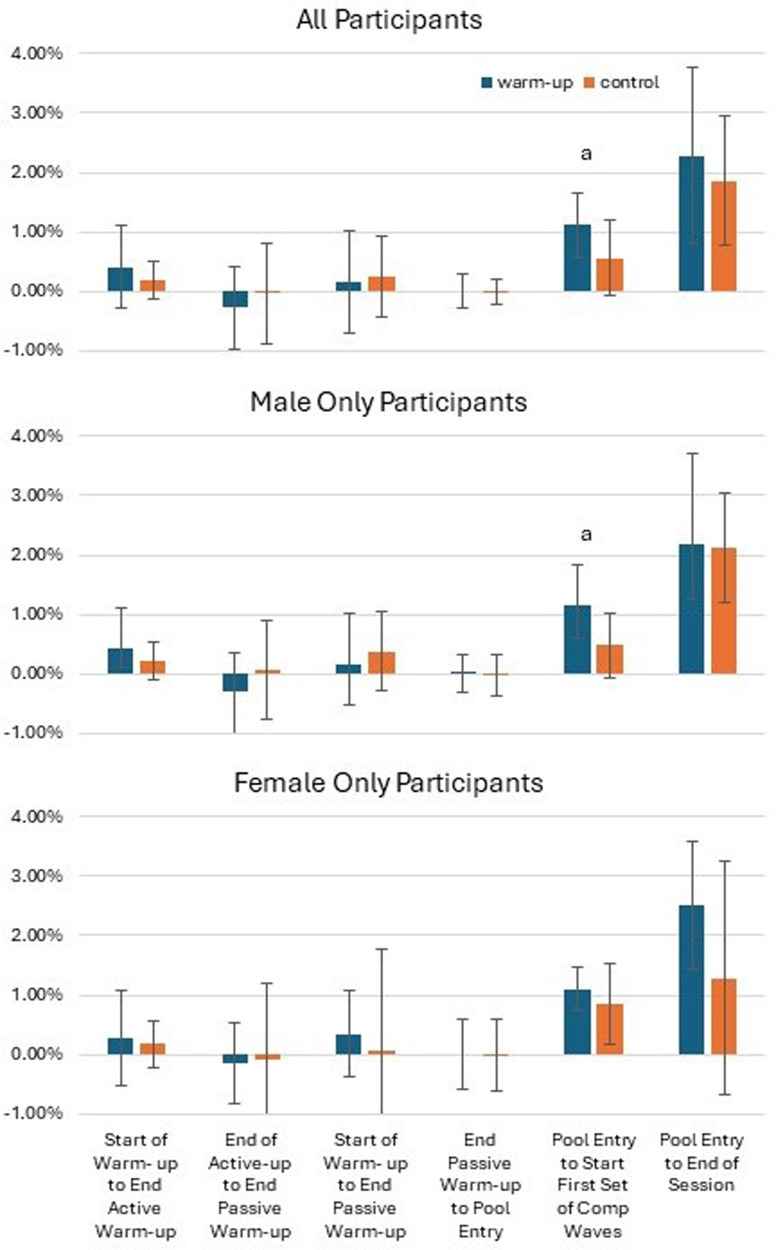
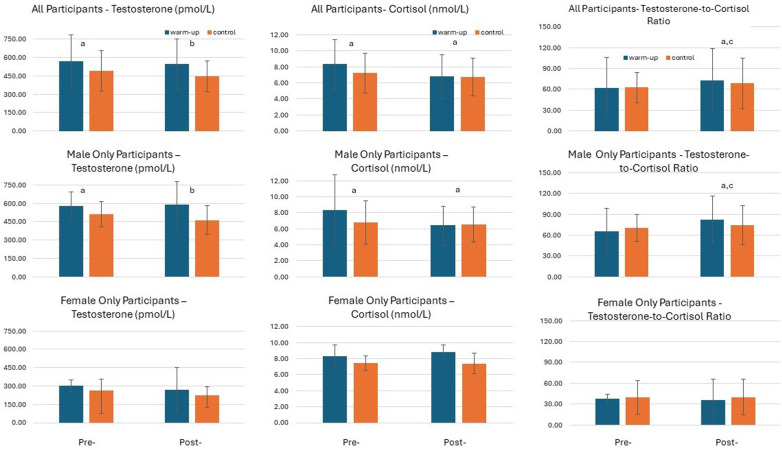
Surfing is a high participation sport, yet little sport science research exists regarding competitive performance in surfing. Given surfing's inclusion as an Olympic sport from the 2020 Tokyo Olympics onwards, an examination of performance would seem useful. In numerous land-based sports, and in swimming, the importance of a warm-up and muscle heat is well documented. However, surfing is a unique sport in that it is undertaken both above and below water. Therefore, the aim of this study was to explore the effectiveness of a warm-up in terms of readiness to perform in surfing. We discuss this in the context of thermal regulation, hormone profile change, and the subsequent expression of "power" on waves-a key criteria that surfers are scored for. Nineteen advanced level surfers (i.e., competitive at just below national level in Australia; = 15 males and = 4 females) with mean (±SD) age, height, and weight of 24.5 ± 11.6 years, 174.7 ± 9.1 cm, and 67.7 ± 10.2 kg, respectively, were recruited. We adopted a repeated measures pre- and post-design whereby participants engaged in several simulated surfing competitions in an artificial wave pool; once after an active warm-up combined with a passive heat retention strategy (i.e., wrapping themselves in survival blankets-treatment), and once after no warm-up (control). Saliva samples were collected pre- and post-active warm-up, or at equivalent times under control conditions, for the measurement of testosterone and cortisol. Increases in these hormones have previously been associated with an enhanced readiness to compete. Our results demonstrate a clear thermoregulatory benefit from the treatment, with the participants' core body temperatures typically higher from the end of the warm-up to the end of the surf session following treatment ( 0.03), and a magnitude of increase in core body temperature once in the water that is greater following treatment ( = 0.01). A small magnitude upward change in testosterone ( = 0.01) and cortisol ( 0.001) following warm-up was also observed. Finally, warm-up was associated with an improved wave performance compared with the control, with a 20% increase in the performance score typically observed ( 0.01). We argue that the improved thermal profile may have influenced power and, as such, surfing performance was enhanced.
冲浪是一项参与度很高的运动,但关于冲浪竞技表现的体育科学研究却很少。鉴于从2020年东京奥运会起冲浪被纳入奥运会项目,对其表现进行考察似乎很有必要。在众多陆上运动以及游泳项目中,热身和肌肉升温的重要性已有充分记载。然而,冲浪是一项独特的运动,因为它既在水面之上进行,也在水面之下进行。因此,本研究的目的是探讨热身对于冲浪准备状态的有效性。我们将在体温调节、激素水平变化以及随后在海浪上“发力”的表现(这是给冲浪者评分的一项关键标准)的背景下进行讨论。招募了19名高级水平的冲浪者(即在澳大利亚略低于国家级别的比赛中具有竞争力;15名男性,4名女性),他们的平均(±标准差)年龄、身高和体重分别为24.5±11.6岁、174.7±9.1厘米和67.7±10.2千克。我们采用了重复测量的前后设计,让参与者在人工造浪池中参加几场模拟冲浪比赛;一次是在进行主动热身并结合被动保暖策略(即裹上保温毯——处理组)之后,另一次是在没有热身(对照组)之后。在主动热身前后或在对照条件下的相同时间采集唾液样本,以测量睾酮和皮质醇。此前已表明,这些激素水平的升高与增强的竞技准备状态有关。我们的结果表明,该处理具有明显的体温调节益处,处理后从热身结束到冲浪时段结束,参与者的核心体温通常更高(P<0.03),并且一旦进入水中,处理后的核心体温升高幅度更大(P = 0.01)。热身之后还观察到睾酮(P = 0.01)和皮质醇(P<0.001)有小幅上升变化。最后,与对照组相比,热身与冲浪表现的改善有关,通常观察到表现得分提高了20%(P<0.01)。我们认为,改善后的体温状况可能影响了力量,因此冲浪表现得到了提升。