Pérez López L A, Almansa Ruiz J C, Steenkamp G, Holdsworth A
Davies Veterinary Specialists, Hitchin, United Kingdom.
Department of Companion Animal Clinical Studies, Faculty of Veterinary Science, University of Pretoria, Onderstepoort, South Africa.
Front Vet Sci. 2024 Sep 30;11:1436356. doi: 10.3389/fvets.2024.1436356. eCollection 2024.
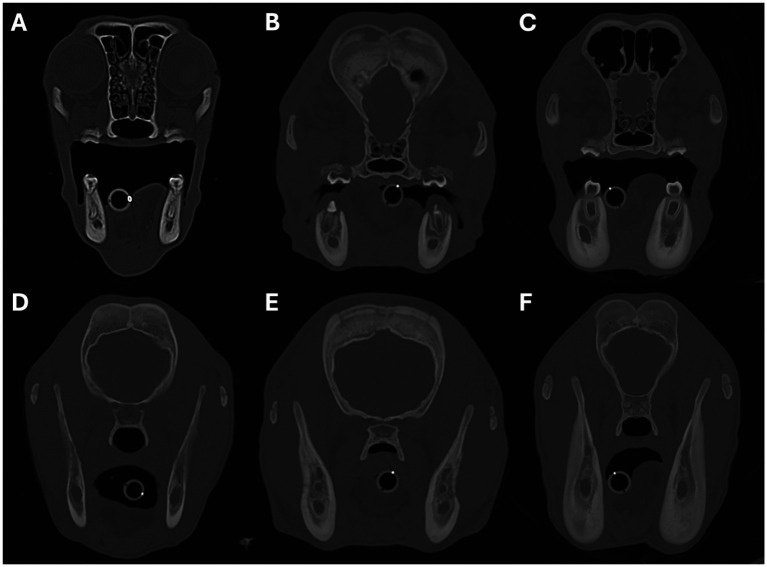
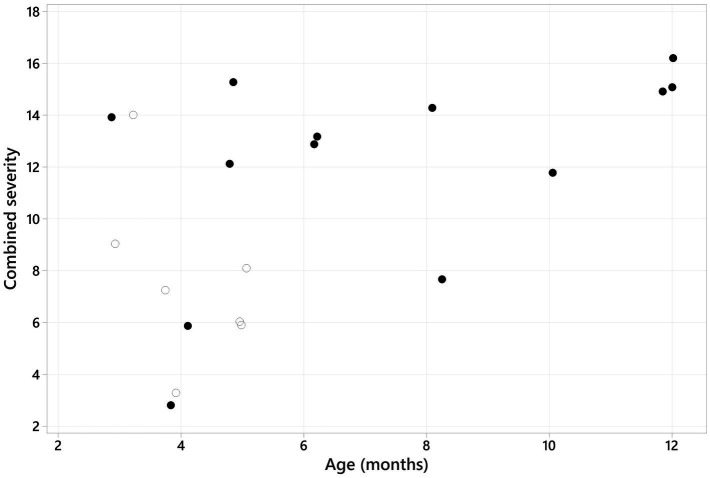
Craniomandibular osteopathy (CMO) is a proliferative, self-limiting, non-neoplastic disease of growing dogs characterised by excessive new bone formation on the skull and mandible. The radiographic findings of CMO are well described; however, limited reports of the computed tomographic (CT) appearance are available. This paper aims to characterise the spectrum of CT findings that can occur with CMO. The study is retrospective, descriptive, multicenter, and includes 20 cases. Age at presentation ranged from 6 weeks to 12 months, with no sex predisposition. Scottish terriers were overrepresented (65%); other breeds included Cairn terrier, Jack Russell terrier, Staffordshire bull terrier, labrador retriever, golden retriever, akita and Slovakian rough-haired pointer (one of each breed). Terrier breeds represented 80% (16/20) of the patient cohort. Mandibular osteoproliferation was present in all patients (marked in 80%, bilateral in 95%), affecting the rostral mandible in 25%, body in 85%, and ramus in 80%. Tympanic bulla osteoproliferation was present in 60% (12/20) of patients (all marked, bilateral in 75%). Cranial osteoproliferation (frontal, parietal, temporal, occipital bones or maxilla, or combinations of them) was present in 90% (18/20) of patients (40% marked, 27% moderate, 33% mild). Nasopharyngeal narrowing was seen in all 12 patients with tympanic bulla osteoproliferation (67% marked, 27% moderate) and caused nearly complete occlusion in two of them. External ear canal stenosis was seen in 55% (11/20) of patients (63% marked, 37% moderate, all bilateral). Temporomandibular joint (TMJ) impingement was suspected in 83% (10/12) of patients with marked tympanic bulla osteoproliferation (75% bilateral). Osteolysis with a moth-eaten pattern was seen in the mandible of 10/20 dogs, the calvarium of 5/20 dogs, and the maxilla of 1/20 dogs (5%). Lymphadenomegaly (mandibular and medial retropharyngeal) was found in 15/20 patients (70% mild, 30% moderate). The most severe CT changes were seen in Scottish terriers. CT allows for detailed characterisation of the bony changes associated with CMO, including the effects occurring secondary to osteoproliferation surrounding the tympanic bullae such as TMJ impingement, external ear canal stenosis, and nasopharyngeal narrowing. Osteoproliferation affecting the cranium and the presence of osteolysis were seen more frequently in this study than previously reported in CMO.
颅下颌骨病(CMO)是一种发生于生长发育阶段犬类的增殖性、自限性、非肿瘤性疾病,其特征为颅骨和下颌骨出现过多新骨形成。CMO 的 X 线表现已有详尽描述;然而,关于计算机断层扫描(CT)表现的报道有限。本文旨在描述 CMO 可能出现的 CT 表现谱。本研究为回顾性、描述性、多中心研究,共纳入 20 例病例。就诊时年龄范围为 6 周龄至 12 月龄,无性别倾向。苏格兰梗犬占比过高(65%);其他品种包括凯恩梗犬、杰克罗素梗犬、斯塔福郡斗牛梗犬、拉布拉多寻回犬、金毛寻回犬、秋田犬和斯洛伐克粗毛指示犬(各品种 1 例)。梗类犬种占患者队列的 80%(16/20)。所有患者均存在下颌骨骨质增生(80%明显,95%双侧),25%累及下颌骨前部,85%累及体部,80%累及升支。60%(12/20)的患者存在鼓泡骨质增生(均明显,75%双侧)。90%(18/20)的患者存在颅骨骨质增生(额骨、顶骨、颞骨、枕骨或上颌骨,或其组合)(40%明显,27%中度,33%轻度)。12 例鼓泡骨质增生患者均出现鼻咽部狭窄(67%明显,27%中度),其中 2 例几乎完全闭塞。55%(11/20)的患者出现外耳道狭窄(63%明显,37%中度,均双侧)。83%(10/12)明显鼓泡骨质增生的患者疑似存在颞下颌关节(TMJ)受压(75%双侧)。10/20 的犬下颌骨、5/20 的犬颅骨和 1/20 的犬上颌骨(5%)出现虫蚀样骨质溶解。15/20 的患者发现淋巴结肿大(下颌和咽后内侧)(70%轻度,30%中度)。最严重的 CT 改变见于苏格兰梗犬。CT 能够详细描述与 CMO 相关的骨质改变,包括鼓泡周围骨质增生继发的影响,如 TMJ 受压、外耳道狭窄和鼻咽部狭窄。本研究中,影响颅骨的骨质增生和骨质溶解的出现频率高于以往 CMO 报道。